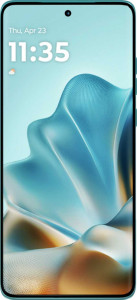
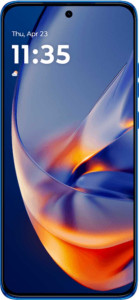
Motorola Edge 60
Motorola Edge 60 Neo

Motorola Edge 60 Motorola Edge 60 Neo

Overview

Welcome to our in-depth comparison of the Motorola Edge 60 and the Motorola Edge 60 Neo, two closely matched mid-range smartphones that share a surprising amount of DNA. Both phones bring IP68 waterproofing, a 120Hz OLED display, and 68W fast charging to the table, yet each makes distinct trade-offs across display size, camera hardware, and battery capacity. Read on to discover which of these two Motorola siblings is the right fit for your needs.

Common Features

  • Both phones are waterproof with an IP68 ingress protection rating.
  • Neither phone has a rugged build.
  • Neither phone can be folded.
  • Both phones feature an OLED/AMOLED display with a 120Hz refresh rate.
  • Both displays are protected by Gorilla Glass 7i.
  • HDR10 support is available on both phones.
  • HDR10+ support is available on both phones.
  • Dolby Vision support is not available on either phone.
  • Neither phone has a secondary screen.
  • Both phones have a touchscreen.
  • Both phones come with 12GB of RAM running at 6400 MHz and 512GB of internal storage.
  • Both phones use a Mali G615 MC2 GPU clocked at 1047 MHz.
  • Both phones are built on a 4 nm semiconductor process and support 64-bit.
  • Both phones have integrated LTE and 5G support.
  • Both main cameras support optical image stabilization and can record video at 2160x30 fps.
  • Both phones run Android 15 with theme customization, location privacy options, and app tracking controls.
  • Both phones support 68W fast charging and come with a charger included.
  • Neither phone has a removable battery.
  • Neither phone has a 3.5mm audio jack, but both feature stereo speakers.
  • Both phones support dual SIM, NFC, USB Type-C (USB 2.0), have an external memory slot, and include a fingerprint scanner.

Main Differences

  • Weight is 179 g on the Motorola Edge 60 and 174.5 g on the Motorola Edge 60 Neo.
  • Thickness is 7.9 mm on the Motorola Edge 60 and 8.1 mm on the Motorola Edge 60 Neo.
  • Width is 73.1 mm on the Motorola Edge 60 and 71.2 mm on the Motorola Edge 60 Neo.
  • Height is 161.2 mm on the Motorola Edge 60 and 154.1 mm on the Motorola Edge 60 Neo.
  • Screen size is 6.7″ on the Motorola Edge 60 and 6.36″ on the Motorola Edge 60 Neo.
  • Pixel density is 446 ppi on the Motorola Edge 60 and 460 ppi on the Motorola Edge 60 Neo.
  • Resolution is 1220 x 2712 px on the Motorola Edge 60 and 1200 x 2670 px on the Motorola Edge 60 Neo.
  • The chipset is a MediaTek Dimensity 7300 on the Motorola Edge 60 and a MediaTek Dimensity 7400 on the Motorola Edge 60 Neo.
  • CPU speed is 4 x 2.5 & 4 x 2 GHz on the Motorola Edge 60 and 4 x 2.6 & 4 x 2 GHz on the Motorola Edge 60 Neo.
  • AnTuTu benchmark score is 675600 on the Motorola Edge 60 and 678400 on the Motorola Edge 60 Neo.
  • Main camera megapixels are 50 & 50 & 10 MP on the Motorola Edge 60 and 50 & 13 & 10 MP on the Motorola Edge 60 Neo.
  • Main camera wide aperture is f/1.8 & f/2 & f/2 on the Motorola Edge 60 and f/1.8 & f/2.2 & f/2 on the Motorola Edge 60 Neo.
  • Front camera resolution is 50 MP on the Motorola Edge 60 and 32 MP on the Motorola Edge 60 Neo.
  • Front camera aperture is f/2 on the Motorola Edge 60 and f/2.4 on the Motorola Edge 60 Neo.
  • Main camera pixel size is 1 & 1 & 0.64 µm on the Motorola Edge 60 and 1 & 1.12 & 1 µm on the Motorola Edge 60 Neo.
  • Minimum focal length is 12 mm on the Motorola Edge 60 and 13 mm on the Motorola Edge 60 Neo.
  • Battery capacity is 5500 mAh on the Motorola Edge 60 and 5200 mAh on the Motorola Edge 60 Neo.
  • Wireless charging is not available on the Motorola Edge 60 but is supported on the Motorola Edge 60 Neo.
  • A curved display is present on the Motorola Edge 60 but not on the Motorola Edge 60 Neo.
Specs Comparison
Motorola Edge 60

Motorola Edge 60

Motorola Edge 60 Neo

Motorola Edge 60 Neo

Design:
water resistance Waterproof Waterproof
weight 179 g 174.5 g
thickness 7.9 mm 8.1 mm
width 73.1 mm 71.2 mm
height 161.2 mm 154.1 mm
volume 93.091388 cm³ 88.872552 cm³
Ingress Protection (IP) rating IP68 IP68
has a rugged build
can be folded

Both the Motorola Edge 60 and the Edge 60 Neo share the same IP68 waterproof rating, meaning neither has an advantage in water or dust resistance — both can handle submersion in fresh water under standard conditions. Neither features a rugged build or a foldable form factor, so they sit firmly in the same conventional smartphone category.

Where the two diverge is in their physical footprint. The Edge 60 is notably taller (161.2 mm vs 154.1 mm) and wider (73.1 mm vs 71.2 mm), resulting in a meaningfully larger overall volume (93.09 cm³ vs 88.87 cm³). In practice, this makes the Edge 60 Neo noticeably more compact and easier to grip or pocket. The Neo is also lighter at 174.5 g versus 179 g, a small but real difference during extended one-handed use. The Edge 60, on the other hand, is marginally slimmer at 7.9 mm thick compared to the Neo's 8.1 mm, though a 0.2 mm gap is essentially imperceptible in daily handling.

For users who prioritize a more pocketable, easier-to-manage device, the Edge 60 Neo holds a clear edge in overall compactness and weight. The Edge 60's slight thickness advantage does not meaningfully offset its larger dimensions. If you prefer a more compact phone without sacrificing water resistance, the Neo is the stronger choice in this category.

Display:
Display type OLED/AMOLED OLED/AMOLED
screen size 6.7" 6.36"
pixel density 446 ppi 460 ppi
resolution 1220 x 2712 px 1200 x 2670 px
refresh rate 120Hz 120Hz
Gorilla Glass version Gorilla Glass 7i Gorilla Glass 7i
supports HDR10
supports HDR10+
supports Dolby Vision
Has a secondary screen
has a touch screen

Both phones use an OLED/AMOLED panel with a 120Hz refresh rate, Gorilla Glass 7i protection, and identical HDR support (HDR10 and HDR10+, but no Dolby Vision). At this foundational level, the viewing experience — deep blacks, vibrant colors, smooth scrolling — is essentially equivalent between the two.

The meaningful split comes down to size versus sharpness. The Edge 60 sports a larger 6.7-inch screen, making it better suited for media consumption, gaming, and split-screen multitasking. The Edge 60 Neo counters with a 6.36-inch panel that actually achieves a slightly higher pixel density: 460 ppi versus 446 ppi. In practice, both figures are well above the threshold where individual pixels become visible to the naked eye, so the sharpness difference is negligible day-to-day. The Neo's smaller canvas is simply packing its pixels a little tighter.

The verdict here hinges on personal preference rather than a clear quality gap. Users who want a more immersive screen for streaming or productivity will gravitate toward the Edge 60's larger display, while those who prioritize a compact, easier-to-hold device lose nothing meaningful in display quality with the Edge 60 Neo. On raw display specs alone, this is effectively a tie in quality — with the Edge 60 winning on screen real estate.

Performance:
internal storage 512GB 512GB
RAM 12GB 12GB
AnTuTu benchmark score 675600 678400
Chipset (SoC) name MediaTek Dimensity 7300 MediaTek Dimensity 7400
GPU name Mali G615 MC2 Mali G615 MC2
CPU speed 4 x 2.5 & 4 x 2 GHz 4 x 2.6 & 4 x 2 GHz
GPU clock speed 1047 MHz 1047 MHz
Has integrated LTE
RAM speed 6400 MHz 6400 MHz
semiconductor size 4 nm 4 nm
Supports 64-bit
DirectX version DirectX 12 DirectX 12
Has integrated graphics
Uses big.LITTLE technology
CPU threads 8 threads 8 threads
Uses HMP
maximum memory amount 16GB 16GB
number of transistors 6200 million 6200 million
DDR memory version 5 5
supported displays 1 1

Strip away the branding and these two phones are near-identical in performance hardware. Both run on a 4nm MediaTek Dimensity chip with 12GB of DDR5 RAM at 6400 MHz, the same Mali G615 MC2 GPU at 1047 MHz, and identical storage, thread count, and architecture choices like big.LITTLE and HMP. For everyday tasks — app launches, multitasking, social media, streaming — users would be hard-pressed to feel any difference between them.

The technical distinction lies in the chipset revision: the Edge 60 uses the Dimensity 7300, while the Edge 60 Neo steps up to the Dimensity 7400. The 7400's performance cores run at 2.6 GHz versus the 7300's 2.5 GHz, a 4% clock speed advantage. This is reflected in their AnTuTu scores — 678,400 for the Neo against 675,600 for the Edge 60 — a gap of under 0.5%. Both figures land in the same mid-range performance tier.

Practically speaking, this is a statistical tie. The Edge 60 Neo's marginally newer chipset and fractionally higher benchmark score give it a nominal lead on paper, but no user will perceive the difference in real-world usage. Performance should not be a deciding factor between these two phones — they are, for all practical purposes, equals in this category.

Cameras:
megapixels (main camera) 50 & 50 & 10 MP 50 & 13 & 10 MP
wide aperture (main camera) 1.8 & 2 & 2f 1.8 & 2.2 & 2f
Has a dual-lens (or multi-lens) main camera
megapixels (front camera) 50MP 32MP
has built-in optical image stabilization
video recording (main camera) 2160 x 30 fps 2160 x 30 fps
Has a dual-tone LED flash
number of flash LEDs 1 1
has a BSI sensor
has a CMOS sensor
has continuous autofocus when recording movies
Has phase-detection autofocus for photos
supports slow-motion video recording
has a built-in HDR mode
has manual exposure
has a flash
optical zoom 3x 3x
has manual ISO
has a serial shot mode
has manual focus
pixel size (main camera) 1 & 1 & 0.64 µm 1 & 1.12 & 1 µm
has a front camera
Has laser autofocus
Shoots 360° panorama
has manual white balance
has touch autofocus
has manual shutter speed
can create panoramas in-camera
wide aperture (front camera) 2f 2.4f
Has timelapse function
minimum focal length 12 mm 13 mm
maximum focal length 73 mm 73 mm
Has a front-facing LED flash
has a dual-lens (or multi-lens) front camera
supports HDR10 recording
supports Dolby Vision recording
has a front-facing camera under the display
Has a RGB LED flash
has 3D photo/video recording capabilities

At the top of the stack, both phones share an identical main shooter: a 50MP sensor at f/1.8 with OIS, phase-detection autofocus, and 4K at 30fps video. The telephoto lens is also equivalent — 10MP at f/2 with 3x optical zoom — covering the same focal range from 12–13mm to 73mm. For primary and zoomed shots, these two cameras are effectively the same.

The divergence comes with the secondary wide-angle lens, and it is significant. The Edge 60 packs a 50MP ultrawide at f/2, whereas the Edge 60 Neo drops down to a 13MP ultrawide at f/2.2. That is not merely a resolution gap — fewer megapixels on an ultrawide means less detail when shooting landscapes, architecture, or large group photos, and a narrower aperture compounds this in lower-light wide-angle situations. The Neo's secondary lens has a slightly larger pixel size at 1.12 µm versus the Edge 60's 1 µm, which partially compensates, but cannot fully bridge a nearly 4x megapixel gap. The Edge 60 holds a clear advantage here.

The selfie camera tells a similar story. The Edge 60 offers a 50MP front camera at f/2, compared to the Neo's 32MP at f/2.4. A wider aperture lets in more light, which matters for indoor or evening selfies, and the higher resolution gives more flexibility for cropping. For users who prioritize versatile wide-angle photography or front camera quality, the Motorola Edge 60 is the stronger choice in this category.

Operating system:
Android version Android 15 Android 15
has clipboard warnings
has location privacy options
has camera/microphone privacy options
has Mail Privacy Protection
has theme customization
can block app tracking
blocks cross-site tracking
has on-device machine learning
has notification permissions
has media picker
Can play games while they download
has dark mode
has Wi-Fi password sharing
has battery health check
has an extra dim mode
has focus modes
has dynamic theming
can offload apps
Has customizable notifications
has Live Text
has full-page screenshots
supports split screen
gets direct OS updates
has PiP
Can be used as a PC
Has sharing intents
has a child lock
Supports widgets
Is free and open source
Has offline voice recognition
has voice commands
Tracks the current position of a mobile device
is a multi-user system
has Quick Start

This is the rare category where the comparison ends before it begins. Every single software specification provided is identical across the Motorola Edge 60 and the Edge 60 Neo — both run Android 15, both share the same privacy controls, productivity features, and system capabilities, with no exceptions in the data.

Notably, both phones include a solid privacy toolkit — camera and microphone controls, app tracking blockers, location options, and clipboard warnings — alongside useful daily-driver features like split-screen multitasking, Picture-in-Picture, dynamic theming, and offline voice recognition. Neither device gets direct OS updates, meaning software upgrades are routed through Motorola rather than Google directly, which applies equally to both.

There is no winner here, nor any reason to choose one over the other on software grounds. The operating system experience is a complete tie — any differentiation between these two phones must come from hardware categories alone.

Battery:
battery power 5500 mAh 5200 mAh
has wireless charging
Supports fast charging
charging speed 68W 68W
comes with a charger
has a removable battery
has a battery level indicator
has a rechargeable battery

Wired charging is a draw: both phones support 68W fast charging and ship with a charger included, so replenishment speed from empty to full is equal. Where the two diverge is on capacity and wireless convenience — and each phone wins one of those trades.

The Edge 60 carries a larger 5500 mAh battery versus the Neo's 5200 mAh. A 300 mAh difference won't translate to dramatically longer screen-on time, but it does represent a meaningful buffer that could push the Edge 60 past the end of a heavy day where the Neo might not quite make it. Given the Edge 60 also has a larger, more power-hungry display, the real-world gap may narrow somewhat — but on raw capacity alone, it holds the advantage.

The Edge 60 Neo, however, adds wireless charging — a feature entirely absent on the Edge 60. For users who rely on bedside pads, desk chargers, or in-car mounts, this is a genuine quality-of-life upgrade that the Edge 60 simply cannot offer. The verdict depends on priorities: the Motorola Edge 60 wins on endurance, while the Edge 60 Neo wins on charging versatility. Neither holds an overall edge in this category without knowing what matters more to the individual user.

Audio:
has a socket for a 3.5 mm audio jack
has stereo speakers
Has a radio

Audio is another category with nothing to separate the two phones. Both the Motorola Edge 60 and the Edge 60 Neo feature stereo speakers, omit a 3.5mm headphone jack, and lack an FM radio — spec for spec, an exact match.

The absence of a headphone jack means wired audio listeners will need a USB-C adapter or a pair of Bluetooth headphones on either device. The presence of stereo speakers, however, is a genuine plus for hands-free media consumption, providing a wider, more immersive soundstage compared to a single mono speaker — a trait both phones share equally.

This is a complete tie. Audio hardware offers no basis for choosing one over the other, and any further differentiation in real-world sound quality would fall outside the scope of the provided specifications.

Connectivity & Features:
release date April 2025 September 2025
has 5G support
SIM cards 2 SIM 2 SIM
has an external memory slot
Has USB Type-C
USB version 2 2
has NFC
Has a fingerprint scanner
has emergency SOS via satellite
has crash detection
is DLNA-certified
has a gyroscope
supports ANT+
Has a heart rate monitor
has GPS
has a compass
supports Wi-Fi
Has an infrared sensor
has an accelerometer
has a cellular module
Has a barometer
has an HDMI output
Uses 3D facial recognition
Has an iris scanner
Stylus included
supports Galileo
Has motion tracking
Has optical tracking
Has a built-in projector

Connectivity is yet another category where the two phones are indistinguishable. Both offer 5G, dual SIM support, NFC, expandable storage via an external memory slot, and USB-C 2.0 — covering all the essentials a modern mid-range buyer would expect. Navigation is equally matched, with GPS, compass, and Galileo support on both devices.

The sensor suite is identical too: gyroscope, accelerometer, and fingerprint scanner are present on each, while notable absences — barometer, infrared sensor, heart rate monitor, and crash detection — apply equally to both. Neither phone offers satellite emergency SOS, which has become a differentiating feature in some competing devices, but that gap affects the Edge 60 and Edge 60 Neo equally.

There is simply no differentiator to call out here. Connectivity and features deliver a complete tie — the decision between these two phones continues to rest entirely on the hardware categories where they actually diverge.

Miscellaneous:
has a video light
Has sapphire glass display
Has a curved display
Has an e-paper display

With only one differentiating spec in this group, the comparison is straightforward. Both phones include a video light and skip sapphire glass — but the Motorola Edge 60 features a curved display, while the Edge 60 Neo uses a flat panel.

A curved screen is largely an aesthetic and ergonomic choice. The gentle edge curvature of the Edge 60 gives it a more premium, sculpted feel in the hand and can make the device appear slimmer from the side. The trade-off is that curved displays are more susceptible to accidental edge touches and can be harder to fit with screen protectors. The Edge 60 Neo's flat display, by contrast, is more practical for case compatibility and screen protection, even if it lacks the same visual flair.

Whether this is an advantage or a drawback comes down entirely to personal taste. Users who value a sleek, flagship-adjacent aesthetic will prefer the Motorola Edge 60, while those who prioritize practicality and easier screen protection will find the Neo's flat panel more accommodating. On objective grounds, neither approach is superior — but the curved display is the sole distinguishing factor in this category, giving the Edge 60 a stylistic edge for those who want it.

Comparison Summary & Verdict

After a thorough review of every specification, the Motorola Edge 60 and Motorola Edge 60 Neo emerge as two complementary phones rather than clear rivals. The Motorola Edge 60 stands out for users who want a larger 6.7″ curved display, a bigger 5500 mAh battery, a higher-resolution 50 MP front camera, and a 50 MP triple rear camera system — making it the stronger pick for content creators and multimedia enthusiasts. The Motorola Edge 60 Neo, on the other hand, wins on wireless charging, a more compact and slightly lighter form factor, a marginally sharper pixel density of 460 ppi, and a fractionally higher AnTuTu score — appealing to users who prioritize everyday convenience and one-handed usability. Both phones are evenly matched on software, connectivity, and core performance, so your choice ultimately comes down to screen size preference and whether wireless charging or raw battery capacity matters more to you.

Motorola Edge 60
Buy Motorola Edge 60 if...

Buy the Motorola Edge 60 if you want a larger screen, a higher-resolution 50 MP selfie camera, and a bigger 5500 mAh battery for longer usage between charges.

Motorola Edge 60 Neo
Buy Motorola Edge 60 Neo if...

Buy the Motorola Edge 60 Neo if you prefer a more compact design with wireless charging support and a slightly lighter build for everyday one-handed use.