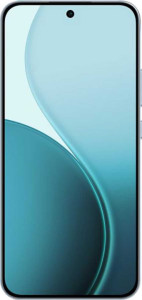
Across most of this category, the two phones are virtually indistinguishable — both offer 5G, dual SIM, NFC, expandable storage, USB-C, GPS with Galileo support, and an identical sensor suite. The one area where a meaningful gap emerges is cellular throughput. The Motorola Edge 60 achieves both download and upload speeds of 3270 Mbps, while the Reno14 F reaches 2900 Mbps down but a much more limited 900 Mbps up. In practical terms, download differences at these tiers are rarely noticeable in everyday use — real-world 5G speeds are constrained by network infrastructure long before hitting these ceilings. The upload gap, however, is more significant: users who frequently send large files, stream live video, back up photos over mobile data, or use cloud-based workflows will find the Edge 60's upload ceiling considerably more capable.
Everything else in this group — NFC for contactless payments, expandable storage for extra flexibility, fingerprint security, and the full navigation and motion sensor package — is shared equally between the two phones. Neither device offers more exotic features like an infrared blaster, crash detection, or satellite SOS, so there are no surprises on either side.
The Motorola Edge 60 takes a narrow but real advantage here, driven entirely by its superior upload speed. For most users the difference will rarely surface, but for anyone who regularly pushes data upstream over 5G, the Edge 60 is the more capable option.