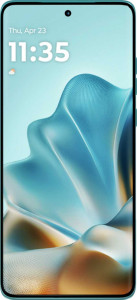
Motorola Edge 60
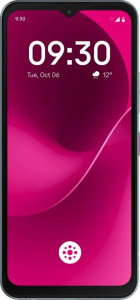
T-Mobile T Phone 3

Motorola Edge 60 T-Mobile T Phone 3

Overview

Welcome to our in-depth spec comparison between the Motorola Edge 60 and the T-Mobile T Phone 3. These two Android 15 smartphones may share a handful of fundamentals, but they diverge sharply when it comes to display technology, performance hardware, and overall build philosophy. Read on as we break down every key specification to help you decide which device truly fits your needs.

Common Features

  • Neither product has a rugged build.
  • Neither product can be folded.
  • Both products have a 120Hz refresh rate.
  • Neither product supports Dolby Vision.
  • Neither product has a secondary screen.
  • Both products have a touch screen.
  • Both products have integrated LTE.
  • Both products use a 4 nm semiconductor size.
  • Both products support 64-bit processing.
  • Both products support DirectX 12.
  • Both products have integrated graphics.
  • Both products use big.LITTLE technology.
  • Both products have 8 CPU threads.
  • Both products use HMP technology.
  • Both products have a multi-lens main camera.
  • Both products have built-in optical image stabilization.
  • Neither product has a dual-tone LED flash.
  • Both products have a single LED flash.
  • Both products have a CMOS sensor.
  • Both products support continuous autofocus when recording movies.
  • Both products have phase-detection autofocus for photos.
  • Both products run Android 15.
  • Both products have clipboard warnings.
  • Both products have location privacy options.
  • Both products have camera and microphone privacy options.
  • Neither product has Mail Privacy Protection.
  • Both products have theme customization.
  • Both products can block app tracking.
  • Neither product blocks cross-site tracking.
  • Neither product supports wireless charging.
  • Both products support fast charging.
  • Neither product has a removable battery.
  • Both products have a battery level indicator.
  • Both products have a rechargeable battery.
  • Both products have stereo speakers.
  • Neither product has a radio.
  • Both products support 5G.
  • Both products have an external memory slot.
  • Both products have USB Type-C.
  • Both products use USB version 2.
  • Both products have NFC.
  • Both products have a fingerprint scanner.
  • Neither product has emergency SOS via satellite.
  • Neither product has crash detection.
  • Both products have a video light.
  • Neither product has a sapphire glass display.
  • Neither product has an e-paper display.

Main Differences

  • Water resistance is Waterproof on Motorola Edge 60 and not available on T-Mobile T Phone 3.
  • Weight is 179 g on Motorola Edge 60 and 401 g on T-Mobile T Phone 3.
  • Thickness is 7.9 mm on Motorola Edge 60 and 9.3 mm on T-Mobile T Phone 3.
  • Width is 73.1 mm on Motorola Edge 60 and 77.1 mm on T-Mobile T Phone 3.
  • Height is 161.2 mm on Motorola Edge 60 and 166.5 mm on T-Mobile T Phone 3.
  • Volume is 93.09 cm³ on Motorola Edge 60 and 119.39 cm³ on T-Mobile T Phone 3.
  • Display type is OLED/AMOLED on Motorola Edge 60 and LCD IPS on T-Mobile T Phone 3.
  • Screen size is 6.7″ on Motorola Edge 60 and 6.58″ on T-Mobile T Phone 3.
  • Pixel density is 446 ppi on Motorola Edge 60 and 401 ppi on T-Mobile T Phone 3.
  • Resolution is 1220 x 2712 px on Motorola Edge 60 and 1080 x 2408 px on T-Mobile T Phone 3.
  • HDR10 support is present on Motorola Edge 60 but not available on T-Mobile T Phone 3.
  • HDR10+ support is present on Motorola Edge 60 but not available on T-Mobile T Phone 3.
  • Internal storage is 512GB on Motorola Edge 60 and 128GB on T-Mobile T Phone 3.
  • RAM is 12GB on Motorola Edge 60 and 6GB on T-Mobile T Phone 3.
  • Chipset is MediaTek Dimensity 7300 on Motorola Edge 60 and Qualcomm Snapdragon 6 Gen 3 on T-Mobile T Phone 3.
  • GPU is Mali G615 MC2 on Motorola Edge 60 and Adreno 710 on T-Mobile T Phone 3.
  • CPU speed is 4 x 2.5 & 4 x 2 GHz on Motorola Edge 60 and 4 x 2.4 & 4 x 1.8 GHz on T-Mobile T Phone 3.
  • GPU clock speed is 1047 MHz on Motorola Edge 60 and 800 MHz on T-Mobile T Phone 3.
  • RAM speed is 6400 MHz on Motorola Edge 60 and 2750 MHz on T-Mobile T Phone 3.
  • Maximum memory amount is 16GB on Motorola Edge 60 and 12GB on T-Mobile T Phone 3.
  • Main camera megapixels are 50 & 50 & 10 MP on Motorola Edge 60 and 50 & 2 MP on T-Mobile T Phone 3.
  • Front camera megapixels are 50 MP on Motorola Edge 60 and 13 MP on T-Mobile T Phone 3.
  • Slow-motion video recording is supported on Motorola Edge 60 but not available on T-Mobile T Phone 3.
  • Optical zoom is 3x on Motorola Edge 60 and not available on T-Mobile T Phone 3.
  • Timelapse function is present on Motorola Edge 60 but not available on T-Mobile T Phone 3.
  • Battery power is 5500 mAh on Motorola Edge 60 and 5000 mAh on T-Mobile T Phone 3.
  • Charging speed is 68W on Motorola Edge 60 and 25W on T-Mobile T Phone 3.
  • A 3.5 mm audio jack is not present on Motorola Edge 60 but is available on T-Mobile T Phone 3.
  • SIM card setup is 2 SIM on Motorola Edge 60 and 1 SIM plus 1 eSIM on T-Mobile T Phone 3.
  • Download speed is 3270 MBits/s on Motorola Edge 60 and 2900 MBits/s on T-Mobile T Phone 3.
  • Upload speed is 3270 MBits/s on Motorola Edge 60 and 1600 MBits/s on T-Mobile T Phone 3.
  • A curved display is present on Motorola Edge 60 but not available on T-Mobile T Phone 3.
Specs Comparison
Motorola Edge 60

Motorola Edge 60

T-Mobile T Phone 3

T-Mobile T Phone 3

Design:
water resistance Waterproof None
weight 179 g 401 g
thickness 7.9 mm 9.3 mm
width 73.1 mm 77.1 mm
height 161.2 mm 166.5 mm
volume 93.091388 cm³ 119.385495 cm³
has a rugged build
can be folded

The most striking difference in this category is weight. The Motorola Edge 60 weighs 179 g, while the T-Mobile T Phone 3 comes in at a substantially heavier 401 g — more than twice as heavy. In practice, this means the T Phone 3 will feel noticeably dense in hand and pocket, potentially causing fatigue during extended one-handed use. The Edge 60's slimmer profile reinforces this advantage: at 7.9 mm thick versus 9.3 mm, it is meaningfully more pocketable, and its smaller overall volume (93.09 cm³ vs 119.39 cm³) makes it the more compact device by every physical dimension.

A second critical differentiator is water resistance. The Edge 60 is rated as waterproof, while the T Phone 3 offers no water resistance whatsoever. This is a meaningful real-world advantage: waterproofing protects against rain, splashes, and accidental drops in water — scenarios that would likely damage the T Phone 3 permanently. For users who use their phone outdoors or in unpredictable environments, this gap is significant.

Both devices share a conventional non-folding form factor and neither carries a rugged certification, so those traits cancel out. Overall, the Motorola Edge 60 holds a clear design advantage: it is dramatically lighter, thinner, more compact, and water-resistant — a combination that translates directly into superior everyday ergonomics and durability.

Display:
Display type OLED/AMOLED LCD, IPS
screen size 6.7" 6.58"
pixel density 446 ppi 401 ppi
resolution 1220 x 2712 px 1080 x 2408 px
refresh rate 120Hz 120Hz
supports HDR10
supports HDR10+
supports Dolby Vision
Has a secondary screen
has a touch screen

Panel technology is where these two devices diverge most sharply. The Motorola Edge 60 uses an OLED/AMOLED display, which delivers true blacks, higher contrast, and more vibrant colors by lighting each pixel individually. The T-Mobile T Phone 3 relies on an LCD IPS panel — a fundamentally older technology that uses a backlight, resulting in less deep blacks and generally lower contrast. For media consumption, gaming, or anything visually demanding, the OLED advantage is immediately perceptible to the naked eye.

Sharpness also favors the Edge 60. At 446 ppi on a 6.7″ screen with a 1220 x 2712 px resolution, text and fine detail render with noticeably more crispness than the T Phone 3's 401 ppi at 1080 x 2408 px. Both differences are meaningful — 45 ppi is a perceptible gap at typical viewing distances. Adding to this, the Edge 60 supports HDR10 and HDR10+, enabling richer highlight and shadow detail on compatible content, a capability the T Phone 3 entirely lacks.

The one area of parity is the 120Hz refresh rate, shared by both — ensuring equally smooth scrolling and animations on each device. That commonality aside, the Motorola Edge 60 holds a decisive display advantage across panel quality, resolution, and HDR support, making it the stronger choice for users who prioritize screen experience.

Performance:
internal storage 512GB 128GB
RAM 12GB 6GB
Chipset (SoC) name MediaTek Dimensity 7300 Qualcomm Snapdragon 6 Gen 3
GPU name Mali G615 MC2 Adreno 710
CPU speed 4 x 2.5 & 4 x 2 GHz 4 x 2.4 & 4 x 1.8 GHz
GPU clock speed 1047 MHz 800 MHz
Has integrated LTE
RAM speed 6400 MHz 2750 MHz
semiconductor size 4 nm 4 nm
Supports 64-bit
DirectX version DirectX 12 DirectX 12
Has integrated graphics
Uses big.LITTLE technology
CPU threads 8 threads 8 threads
Uses HMP
maximum memory amount 16GB 12GB
DDR memory version 5 5
supported displays 1 1

Both phones are built on a 4 nm process node and share the same 8-thread, big.LITTLE CPU architecture — but meaningful differences emerge when you look closer. The Motorola Edge 60 runs a MediaTek Dimensity 7300 with peak cores clocked at 2.5 GHz, versus the T-Mobile T Phone 3's Snapdragon 6 Gen 3 topping out at 2.4 GHz. The gap in raw CPU speed is modest, but the Edge 60 pulls further ahead on the GPU side: its Mali G615 MC2 runs at 1047 MHz compared to the Adreno 710's 800 MHz — a 30% clock speed advantage that translates into noticeably smoother graphics in gaming and GPU-accelerated tasks.

Where the Edge 60 establishes a more decisive lead is in memory. It offers 12 GB of RAM running at a much faster 6400 MHz, against the T Phone 3's 6 GB at 2750 MHz. Double the RAM means the Edge 60 can keep far more apps active in the background without reloading, and the dramatically higher memory bandwidth accelerates data throughput across virtually every task. Storage tells a similar story: 512 GB versus just 128 GB — a fourfold difference that matters enormously for users who store media, games, or large files locally.

Shared foundations like DirectX 12 support, integrated LTE, and DDR5 memory generation keep the two devices in the same tier architecturally, but the cumulative advantage in GPU clock speed, RAM capacity, memory bandwidth, and storage gives the Motorola Edge 60 a clear and well-rounded performance edge for demanding everyday and gaming workloads.

Cameras:
megapixels (main camera) 50 & 50 & 10 MP 50 & 2 MP
Has a dual-lens (or multi-lens) main camera
megapixels (front camera) 50MP 13MP
has built-in optical image stabilization
Has a dual-tone LED flash
number of flash LEDs 1 1
has a BSI sensor
has a CMOS sensor
has continuous autofocus when recording movies
Has phase-detection autofocus for photos
supports slow-motion video recording
has a built-in HDR mode
has manual exposure
has a flash
optical zoom 3x 0x
has manual ISO
has a serial shot mode
has manual focus
has a front camera
Has laser autofocus
Shoots 360° panorama
has manual white balance
has touch autofocus
has manual shutter speed
can create panoramas in-camera
Has timelapse function
Has a front-facing LED flash
has a dual-lens (or multi-lens) front camera
supports HDR10 recording
supports Dolby Vision recording
has a front-facing camera under the display
Has a RGB LED flash
has 3D photo/video recording capabilities

The rear camera systems reveal a significant gap in versatility. The Motorola Edge 60 fields a triple-lens setup at 50 + 50 + 10 MP, while the T-Mobile T Phone 3 pairs its primary 50 MP shooter with a 2 MP auxiliary lens — almost certainly a depth sensor with limited practical imaging value. More consequentially, the Edge 60 offers 3x optical zoom versus the T Phone 3's 0x, meaning true lossless zoom for portraits or distant subjects that the T Phone 3 simply cannot replicate. Optical zoom is a hardware capability that no software post-processing can fully substitute.

The selfie camera gap is equally stark. The Edge 60's 50 MP front sensor versus the T Phone 3's 13 MP is a fourfold resolution difference — a meaningful advantage for video calls, content creation, or anyone who prioritizes front-facing image quality. Beyond resolution, the Edge 60 also supports slow-motion video recording and a timelapse function, two creative shooting modes absent entirely on the T Phone 3, further widening the versatility gap.

Both phones share a solid common foundation — OIS, phase-detection autofocus, continuous autofocus during video, HDR mode, and a robust suite of manual controls — so everyday photography will be competent on either device. However, the Motorola Edge 60 holds a clear and comprehensive camera advantage, driven by its additional telephoto lens, optical zoom capability, superior front camera resolution, and broader video feature set.
Operating system:
Android version Android 15 Android 15
has clipboard warnings
has location privacy options
has camera/microphone privacy options
has Mail Privacy Protection
has theme customization
can block app tracking
blocks cross-site tracking
has on-device machine learning
has notification permissions
has media picker
Can play games while they download
has dark mode
has Wi-Fi password sharing
has battery health check
has an extra dim mode
has focus modes
has dynamic theming
can offload apps
Has customizable notifications
has Live Text
has full-page screenshots
supports split screen
gets direct OS updates
has PiP
Can be used as a PC
Has sharing intents
has a child lock
Supports widgets
Is free and open source
Has offline voice recognition
has voice commands
Tracks the current position of a mobile device
is a multi-user system
has Quick Start

This is a rare case of a perfect tie. Both the Motorola Edge 60 and the T-Mobile T Phone 3 run Android 15 and share an identical feature set across every tracked operating system specification — without a single point of difference between them.

That shared foundation is nonetheless worth noting for what it includes. Both devices offer a comprehensive privacy toolkit — camera and microphone access controls, location privacy options, and app tracking blocking — alongside productivity staples like split-screen multitasking, Picture-in-Picture, widgets, and customizable notifications. On-device machine learning, offline voice recognition, and Live Text round out a modern, capable Android experience on both handsets.

With no differentiating data points anywhere in this category, the operating system group is a dead heat. Buyers should look to other specification groups — display, performance, cameras, or design — to inform their decision, as software experience will be effectively identical on either device.

Battery:
battery power 5500 mAh 5000 mAh
has wireless charging
Supports fast charging
charging speed 68W 25W
has a removable battery
has a battery level indicator
has a rechargeable battery

Capacity and charging speed are the two axes that define battery experience, and the Motorola Edge 60 leads on both. Its 5500 mAh cell versus the T-Mobile T Phone 3's 5000 mAh represents a 10% larger reserve — a meaningful difference that, under similar usage conditions, translates to additional screen-on time before needing to reach for a charger. For heavy users, that margin can be the difference between making it through a full day or not.

The charging speed gap is even more pronounced. The Edge 60 supports 68W fast charging, compared to the T Phone 3's 25W. In practical terms, 68W can deliver a substantial charge in a short plug-in window — useful during a commute or a quick break — whereas 25W will require a noticeably longer session to achieve the same result. For users who rely on top-up charging rather than overnight charging, this difference is felt daily.

Both devices share the same non-removable, rechargeable battery design and neither offers wireless charging, so those factors are a wash. Taken together, the Motorola Edge 60 holds a clear battery advantage — more capacity to last longer and faster charging to recover quicker — making it the stronger performer in this category by a comfortable margin.

Audio:
has a socket for a 3.5 mm audio jack
has stereo speakers
Has a radio

With only a handful of specs in this category, the single differentiating factor is decisive: the T-Mobile T Phone 3 includes a 3.5 mm headphone jack, while the Motorola Edge 60 does not. For users who own wired headphones — whether for audio quality, gaming latency, or simply avoiding the need to charge yet another accessory — this is a tangible, everyday convenience that the Edge 60 cannot offer without an adapter.

Both phones are otherwise evenly matched here, each equipped with stereo speakers for fuller, more directional audio during media playback compared to a mono setup. Neither device includes a built-in radio, so that omission is shared equally.

For most users who have migrated to Bluetooth audio, this category will be a wash. But for anyone who regularly uses wired headphones or earphones, the T Phone 3's headphone jack is a meaningful practical advantage — and in this narrow group, it earns the T-Mobile T Phone 3 the edge.

Connectivity & Features:
release date April 2025 August 2025
has 5G support
SIM cards 2 SIM 1 SIM, 1 eSIM
has an external memory slot
Has USB Type-C
USB version 2 2
has NFC
download speed 3270 MBits/s 2900 MBits/s
upload speed 3270 MBits/s 1600 MBits/s
Has a fingerprint scanner
has emergency SOS via satellite
has crash detection
is DLNA-certified
supports ANT+
Has a heart rate monitor
has GPS
supports Wi-Fi
Has an infrared sensor
has an accelerometer
has a cellular module
Has a barometer
has an HDMI output
Uses 3D facial recognition
Has an iris scanner
Stylus included
supports Galileo
Has motion tracking
Has optical tracking
Has a built-in projector

Across the bulk of this category, the two devices are closely matched — both support 5G, NFC, Wi-Fi, GPS with Galileo, USB Type-C, expandable storage, and a fingerprint scanner. For everyday connectivity needs, either phone covers the essentials without compromise. The meaningful differences lie in a few specific areas.

Data speeds stand out as a notable gap. The Motorola Edge 60 delivers up to 3270 Mbits/s on both download and upload, while the T-Mobile T Phone 3 reaches 2900 Mbits/s down but only 1600 Mbits/s up — barely half the Edge 60's upload ceiling. For most casual users this gap is academic on current networks, but for those who frequently upload large files, stream live video, or work with cloud services on mobile, the Edge 60's symmetrical and higher-throughput modem is a tangible advantage.

The SIM configuration differs in character rather than outright advantage: the Edge 60 supports dual physical SIMs, while the T Phone 3 offers one physical SIM plus an eSIM. The practical preference depends on the user — dual physical SIMs suit those who swap carriers with physical cards, while an eSIM setup is more flexible for digital carrier switching without carrying a second card. On balance, the Motorola Edge 60 holds a modest but real connectivity edge, driven primarily by its superior upload speeds.

Miscellaneous:
has a video light
Has sapphire glass display
Has a curved display
Has an e-paper display

This is a lean category with limited data points, but one difference is worth noting. The Motorola Edge 60 features a curved display, while the T-Mobile T Phone 3 uses a flat panel. A curved screen creates a more premium, immersive aesthetic and can make edge-to-edge swiping gestures feel more natural — though it also means screen protectors are harder to fit and accidental edge touches can occasionally occur. Whether this counts as an advantage is genuinely subjective and depends on personal preference.

Both phones include a video light and neither features sapphire glass or an e-paper display, so those shared traits contribute nothing to differentiation. The absence of sapphire glass on both is worth acknowledging — it means neither device offers that premium level of scratch resistance, though this is common across the broader smartphone market.

Given that the only functional differentiator here is a design preference — curved versus flat — this category does not produce a clear objective winner. Users who prize a sleek, curved aesthetic will favor the Motorola Edge 60, while those who prefer the practicality of a flat screen for cases and protectors may lean toward the T Phone 3. On purely objective grounds, this group is essentially evenly matched.

Comparison Summary & Verdict

After reviewing all the specs, the two devices serve quite different audiences. The Motorola Edge 60 stands out with its OLED display, waterproof build, significantly lighter 179 g frame, triple-camera system with 3x optical zoom, 68W fast charging, and considerably higher RAM and storage — making it the stronger pick for users who want a premium, feature-rich experience. The T-Mobile T Phone 3, on the other hand, offers a 3.5 mm audio jack, a Qualcomm Snapdragon 6 Gen 3 chipset, and a dual-SIM plus eSIM setup, which may appeal to users who value audio flexibility and carrier versatility. Both share 5G connectivity, NFC, a 120Hz refresh rate, and expandable storage, so neither lacks in the essentials. Your choice ultimately comes down to priorities: polished performance and camera depth versus straightforward connectivity and audio convenience.

Motorola Edge 60
Buy Motorola Edge 60 if...

Buy the Motorola Edge 60 if you want a lightweight, waterproof phone with a superior OLED display, more RAM and storage, faster 68W charging, and a versatile triple-camera system with optical zoom.

T-Mobile T Phone 3
Buy T-Mobile T Phone 3 if...

Buy the T-Mobile T Phone 3 if you prioritize having a 3.5 mm headphone jack, a Qualcomm Snapdragon processor, and the flexibility of a dual-SIM plus eSIM configuration.