Motorola Edge 70
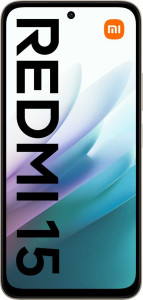
Xiaomi Redmi 15 5G

Motorola Edge 70 Xiaomi Redmi 15 5G

Overview

Welcome to our in-depth comparison of the Motorola Edge 70 and the Xiaomi Redmi 15 5G — two mid-range 5G smartphones that take very different approaches to what a modern handset should be. From their contrasting display technologies and camera setups to their opposing stances on battery capacity versus charging speed, these two devices cater to distinctly different priorities. Whether you care most about slim, lightweight design or maximum endurance, read on as we break down every specification that sets them apart.

Common Features

  • Neither product has a rugged build.
  • Neither product can be folded.
  • Both products have branded damage-resistant glass.
  • Dolby Vision support is not available on either product.
  • Neither product has a secondary screen.
  • Both products have a touch screen.
  • Both products have integrated LTE.
  • Both products support 64-bit processing.
  • Both products use DirectX 12.
  • Both products have integrated graphics.
  • Both products use big.LITTLE technology.
  • Both products have TrustZone.
  • Both products support OpenGL ES version 3.2 and OpenCL version 2.
  • Neither product has a dual-tone LED flash, and both have a single flash LED.
  • Both products have a CMOS sensor.
  • Both products support continuous autofocus when recording movies.
  • Both products have phase-detection autofocus for photos.
  • Both products support slow-motion video recording.
  • Both products have a built-in HDR mode.
  • Both products have clipboard warnings, location privacy options, and camera/microphone privacy options.
  • Mail Privacy Protection is not available on either product.
  • Both products support theme customization and can block app tracking.
  • Cross-site tracking blocking is not available on either product.
  • Both products have on-device machine learning.
  • Both products support fast charging.
  • Neither product supports reverse wireless charging.
  • Neither product has a removable battery.
  • Both products have a battery level indicator and a rechargeable battery.
  • Neither product supports aptX, LDAC, aptX HD, aptX Adaptive, aptX Lossless.
  • Both products support 5G.
  • Neither product has an external memory slot.
  • Both products have USB Type-C with USB version 2.
  • Both products have NFC.
  • Both products have a fingerprint scanner.
  • Emergency SOS via satellite is not available on either product.
  • Crash detection is not available on either product.
  • Both products have a video light.
  • Neither product has a sapphire glass display, a curved display, or an e-paper display.

Main Differences

  • Water resistance is rated as Waterproof on Motorola Edge 70 and Water resistant on Xiaomi Redmi 15 5G.
  • Weight is 159 g on Motorola Edge 70 and 224 g on Xiaomi Redmi 15 5G.
  • Thickness is 6 mm on Motorola Edge 70 and 8.6 mm on Xiaomi Redmi 15 5G.
  • Width is 74 mm on Motorola Edge 70 and 82.1 mm on Xiaomi Redmi 15 5G.
  • Height is 159.9 mm on Motorola Edge 70 and 171.1 mm on Xiaomi Redmi 15 5G.
  • Volume is 70.9956 cm³ on Motorola Edge 70 and 120.806866 cm³ on Xiaomi Redmi 15 5G.
  • IP rating is IP69 on Motorola Edge 70 and IP64 on Xiaomi Redmi 15 5G.
  • Display type is OLED/AMOLED on Motorola Edge 70 and LCD IPS on Xiaomi Redmi 15 5G.
  • Screen size is 6.7″ on Motorola Edge 70 and 6.9″ on Xiaomi Redmi 15 5G.
  • Pixel density is 446 ppi on Motorola Edge 70 and 254 ppi on Xiaomi Redmi 15 5G.
  • Resolution is 1220 x 2712 px on Motorola Edge 70 and 1080 x 2340 px on Xiaomi Redmi 15 5G.
  • Refresh rate is 120Hz on Motorola Edge 70 and 144Hz on Xiaomi Redmi 15 5G.
  • Gorilla Glass version is Gorilla Glass 7i on Motorola Edge 70 and Gorilla Glass 3 on Xiaomi Redmi 15 5G.
  • HDR10 and HDR10+ support is present on Motorola Edge 70 but not available on Xiaomi Redmi 15 5G.
  • Always-On Display is available on Motorola Edge 70 but not on Xiaomi Redmi 15 5G.
  • Internal storage is 512GB on Motorola Edge 70 and 256GB on Xiaomi Redmi 15 5G.
  • RAM is 12GB on Motorola Edge 70 and 8GB on Xiaomi Redmi 15 5G.
  • Chipset is Qualcomm Snapdragon 7 Gen 4 on Motorola Edge 70 and Qualcomm Snapdragon 6s Gen 3 on Xiaomi Redmi 15 5G.
  • Semiconductor size is 4 nm on Motorola Edge 70 and 6 nm on Xiaomi Redmi 15 5G.
  • RAM speed is 4200 MHz on Motorola Edge 70 and 2133 MHz on Xiaomi Redmi 15 5G.
  • Maximum memory bandwidth is 33.6 GB/s on Motorola Edge 70 and 17 GB/s on Xiaomi Redmi 15 5G.
  • Multithreading is supported on Motorola Edge 70 but not on Xiaomi Redmi 15 5G.
  • DDR memory version is DDR5 on Motorola Edge 70 and DDR4 on Xiaomi Redmi 15 5G.
  • Main camera megapixels are 50 & 50 MP (dual-lens) on Motorola Edge 70 and 50 MP (single-lens) on Xiaomi Redmi 15 5G.
  • Dual-lens main camera is present on Motorola Edge 70 but not on Xiaomi Redmi 15 5G.
  • Front camera is 50 MP on Motorola Edge 70 and 8 MP on Xiaomi Redmi 15 5G.
  • Optical image stabilization is available on Motorola Edge 70 but not on Xiaomi Redmi 15 5G.
  • Main camera video recording goes up to 2160 x 60 fps on Motorola Edge 70 and up to 1080 x 30 fps on Xiaomi Redmi 15 5G.
  • Android version is Android 16 on Motorola Edge 70 and Android 15 on Xiaomi Redmi 15 5G.
  • Battery capacity is 4800 mAh on Motorola Edge 70 and 7000 mAh on Xiaomi Redmi 15 5G.
  • Wireless charging is supported on Motorola Edge 70 but not on Xiaomi Redmi 15 5G.
  • Charging speed is 68W on Motorola Edge 70 and 33W on Xiaomi Redmi 15 5G.
  • A 3.5 mm audio jack is absent on Motorola Edge 70 but present on Xiaomi Redmi 15 5G.
  • Stereo speakers are present on Motorola Edge 70 but not on Xiaomi Redmi 15 5G.
  • FM radio is not available on Motorola Edge 70 but is present on Xiaomi Redmi 15 5G.
  • Wi-Fi support includes Wi-Fi 6 and Wi-Fi 6E on Motorola Edge 70, while Xiaomi Redmi 15 5G supports only up to Wi-Fi 5.
  • SIM configuration is 1 SIM + 1 eSIM on Motorola Edge 70 and 2 physical SIMs on Xiaomi Redmi 15 5G.
  • Bluetooth version is 5.4 on Motorola Edge 70 and 5.1 on Xiaomi Redmi 15 5G.
  • A gyroscope is present on Motorola Edge 70 but not on Xiaomi Redmi 15 5G.
Specs Comparison
Motorola Edge 70

Motorola Edge 70

Xiaomi Redmi 15 5G

Xiaomi Redmi 15 5G

Design:
water resistance Waterproof Water resistant
weight 159 g 224 g
thickness 6 mm 8.6 mm
width 74 mm 82.1 mm
height 159.9 mm 171.1 mm
volume 70.9956 cm³ 120.806866 cm³
Ingress Protection (IP) rating IP69 IP64
has a rugged build
can be folded

The most striking contrast between these two phones is their physical footprint. The Motorola Edge 70 is dramatically more compact, weighing just 159 g with a slender 6 mm profile, while the Xiaomi Redmi 15 5G comes in at a considerably heavier 224 g and a noticeably thicker 8.6 mm. That 65 g weight difference is genuinely felt during extended one-handed use — the Edge 70 is closer to a featherweight flagship experience, whereas the Redmi 15 5G sits firmly in ″substantial″ territory. The volume difference reinforces this: the Edge 70 displaces roughly 70.99 cm³ compared to the Redmi 15 5G's 120.81 cm³, meaning the Xiaomi chassis is nearly 70% larger by volume.

Water protection is another area where the two diverge meaningfully. The Edge 70 carries an IP69 rating — the highest tier in the IP scale — which means it can withstand high-pressure, high-temperature water jets. The Redmi 15 5G, rated at IP64, is splash- and dust-resistant but offers no protection against water jets or submersion. In practical terms, the Edge 70 can handle rain, spills, and even accidental drops near water with far greater confidence.

Both phones share a conventional, non-rugged, non-foldable form factor, so neither targets outdoor or industrial use cases specifically. However, based strictly on the design specs provided, the Motorola Edge 70 holds a clear and decisive advantage: it is significantly lighter, thinner, and more pocketable, while also offering superior waterproofing. For users who prioritize everyday comfort, portability, and peace of mind around water, the Edge 70 is the stronger choice in this category.

Display:
Display type OLED/AMOLED LCD, IPS
screen size 6.7" 6.9"
pixel density 446 ppi 254 ppi
resolution 1220 x 2712 px 1080 x 2340 px
refresh rate 120Hz 144Hz
has branded damage-resistant glass
Gorilla Glass version Gorilla Glass 7i Gorilla Glass 3
supports HDR10
supports HDR10+
Always-On Display
supports Dolby Vision
Has a secondary screen
has a touch screen

Panel technology is where these two phones diverge most fundamentally. The Motorola Edge 70 uses an OLED/AMOLED display, which delivers true blacks, vibrant contrast, and per-pixel lighting control — qualities that translate directly into richer video, more immersive gaming, and a noticeably more premium visual experience. The Xiaomi Redmi 15 5G relies on an LCD IPS panel, which is perfectly functional but cannot match OLED's contrast depth or color punch. Compounding this, the Edge 70's pixel density of 446 ppi versus the Redmi 15 5G's 254 ppi means text and fine detail appear significantly sharper on the Motorola — a difference that is clearly visible to the naked eye at normal viewing distances.

The Redmi 15 5G does claim a modest win on paper with a 144Hz refresh rate against the Edge 70's 120Hz, which can produce slightly smoother scrolling in supported apps. However, this advantage is contextual and largely offset by the Edge 70's HDR10 and HDR10+ support, which enables richer highlight and shadow detail in compatible streaming content — a feature the Redmi 15 5G lacks entirely. The Edge 70 also supports an Always-On Display, a convenience feature for glancing at notifications without fully waking the phone, made power-efficient specifically because of its OLED panel. Glass protection also favors the Edge 70, with Gorilla Glass 7i offering meaningfully better scratch and drop resistance than the Redmi 15 5G's older Gorilla Glass 3.

Across nearly every meaningful display metric — panel quality, sharpness, HDR capability, and screen protection — the Motorola Edge 70 holds a clear and well-rounded advantage. The Redmi 15 5G's higher refresh rate is a real but narrow benefit that does not compensate for the broader display shortcomings of its LCD panel.

Performance:
internal storage 512GB 256GB
RAM 12GB 8GB
Chipset (SoC) name Qualcomm Snapdragon 7 Gen 4 Qualcomm Snapdragon 6s Gen 3
CPU speed 1 x 2.8 & 4 x 2.4 & 3 x 1.8 GHz 2 x 2.3 & 6 x 2 GHz
GPU clock speed 1000 MHz 950 MHz
Has integrated LTE
RAM speed 4200 MHz 2133 MHz
semiconductor size 4 nm 6 nm
Supports 64-bit
DirectX version DirectX 12 DirectX 12
Has integrated graphics
OpenGL ES version 3.2 3.2
Uses big.LITTLE technology
Has TrustZone
maximum memory bandwidth 33.6 GB/s 17 GB/s
OpenCL version 2 2
uses multithreading
Thermal Design Power (TDP) 6W 4W
DDR memory version 5 4

At the heart of this comparison is a meaningful chipset gap. The Motorola Edge 70 runs on the Snapdragon 7 Gen 4, built on a 4 nm process, while the Xiaomi Redmi 15 5G uses the Snapdragon 6s Gen 3 on a 6 nm node. The smaller fabrication process in the Edge 70 is not just a technical footnote — it translates directly into better power efficiency and more headroom for sustained performance under load. The Edge 70's TDP of 6W versus the Redmi's 4W also signals that the Motorola chip is designed to push harder, not just idle more efficiently.

Memory tells a similarly one-sided story. The Edge 70 pairs 12 GB of LPDDR5 RAM running at 4200 MHz with 512 GB of internal storage, against the Redmi 15 5G's 8 GB of LPDDR4 at 2133 MHz and 256 GB of storage. The RAM speed difference is substantial — faster memory reduces bottlenecks during multitasking and app switching, and the jump from DDR4 to DDR5 also contributes to the Edge 70's nearly doubled memory bandwidth of 33.6 GB/s versus 17 GB/s. In practice, this means the Edge 70 handles heavier multitasking, larger apps, and memory-intensive tasks more fluidly. The Redmi 15 5G also notably lacks multithreading support, which can limit its efficiency when processing parallelizable workloads.

Across every core performance dimension — silicon generation, RAM capacity and speed, storage, and memory bandwidth — the Motorola Edge 70 holds a clear and comprehensive advantage. The Redmi 15 5G is a capable everyday performer, but users who care about long-term app performance, heavy multitasking, or future-proofing will find the Edge 70 to be the significantly stronger platform.

Cameras:
megapixels (main camera) 50 & 50 MP 50 MP
wide aperture (main camera) 2 & 1.8f 1.8f
Has a dual-lens (or multi-lens) main camera
megapixels (front camera) 50MP 8MP
has built-in optical image stabilization
video recording (main camera) 2160 x 60 fps 1080 x 30 fps
Has a dual-tone LED flash
number of flash LEDs 1 1
has a BSI sensor
has a CMOS sensor
has continuous autofocus when recording movies
Has phase-detection autofocus for photos
supports slow-motion video recording
has a built-in HDR mode
has manual exposure
has a flash
optical zoom 0x 0x
has manual ISO
has a serial shot mode
has manual focus
has a front camera
Has laser autofocus
Shoots 360° panorama
has manual white balance
has touch autofocus
has manual shutter speed
can create panoramas in-camera
wide aperture (front camera) 2f 2f
Has timelapse function
Has a front-facing LED flash
has a dual-lens (or multi-lens) front camera
supports HDR10 recording
supports Dolby Vision recording
has a front-facing camera under the display
Has a RGB LED flash
has 3D photo/video recording capabilities

Two specifications alone are enough to define this camera comparison: video resolution and optical stabilization. The Motorola Edge 70 records at up to 4K at 60fps, while the Xiaomi Redmi 15 5G tops out at 1080p at 30fps — a full two tiers below. For anyone who shoots video with their phone, this is a significant gap; 4K footage retains far more detail for cropping, editing, and future-proofing. Equally important, the Edge 70 includes optical image stabilization (OIS), which physically compensates for hand movement to produce smoother video and sharper low-light photos. The Redmi 15 5G has no OIS, meaning it relies solely on software correction, which is a meaningful disadvantage in motion or dim conditions.

The rear camera count also differs: the Edge 70 fields a dual 50+50 MP system, giving it a second lens for additional shooting versatility, while the Redmi 15 5G has a single 50 MP main sensor. The selfie camera gap is equally pronounced — the Edge 70 carries a 50 MP front camera against the Redmi's 8 MP, a difference that will show clearly in detail, cropping flexibility, and portrait shots. Beyond these differentiators, both phones share a solid and broadly equivalent feature set: phase-detection autofocus, continuous autofocus during video, HDR mode, slow-motion recording, and a full suite of manual controls.

The shared features confirm that both phones are competent cameras at a foundational level, but the Motorola Edge 70 holds a decisive overall advantage — its superior video ceiling, optical stabilization, dual rear lenses, and dramatically higher-resolution front camera make it the stronger imaging device across both photo and video use cases.

Operating system:
Android version Android 16 Android 15
has clipboard warnings
has location privacy options
has camera/microphone privacy options
has Mail Privacy Protection
has theme customization
can block app tracking
blocks cross-site tracking
has on-device machine learning
has notification permissions
has media picker
Can play games while they download
has dark mode
has Wi-Fi password sharing
has battery health check
has an extra dim mode
has focus modes
has dynamic theming
can offload apps
Has customizable notifications
has Live Text
has full-page screenshots
supports split screen
gets direct OS updates
has PiP
Can be used as a PC
Has sharing intents
has a child lock
Supports widgets
Is free and open source
Has offline voice recognition
has voice commands
Tracks the current position of a mobile device
is a multi-user system
has Quick Start

The operating system specs for these two phones are remarkably close — in fact, every single feature flag in the provided data is identical except for one: the Android version. The Motorola Edge 70 ships with Android 16, while the Xiaomi Redmi 15 5G runs Android 15. That one-generation gap means the Edge 70 arrives with the latest platform security patches, API support, and any behavioral or UI refinements introduced in Android 16, giving it a modest but real head start in software currency.

Beyond the version number, both phones share an extensive and well-rounded feature set: privacy controls covering location, camera, and microphone access; on-device machine learning; dynamic theming; split-screen multitasking; picture-in-picture; offline voice recognition; and a full suite of productivity and accessibility tools. Neither phone gets direct OS updates from Google, and neither supports features like Wi-Fi password sharing or focus modes. In practice, the day-to-day software experience will feel broadly comparable between the two.

Given that the spec data reveals only a single point of difference, the Motorola Edge 70 holds a narrow advantage by virtue of its newer Android version. It is not a transformative gap, but for users who value having the latest platform from day one — whether for security, app compatibility, or longevity — the Edge 70 is the marginally stronger choice in this category.

Battery:
battery power 4800 mAh 7000 mAh
has wireless charging
Supports fast charging
charging speed 68W 33W
has reverse wireless charging
has a removable battery
has a battery level indicator
has a rechargeable battery

Battery capacity is where the Xiaomi Redmi 15 5G makes its strongest case in this entire comparison. Its 7000 mAh cell is a genuinely massive reserve — roughly 46% larger than the Edge 70's 4800 mAh battery. For users who are heavy streamers, travelers, or simply hate hunting for a charger mid-day, that extra capacity translates into a meaningfully longer time between charges. It is one of the Redmi's clearest advantages across any spec group evaluated so far.

The charging story, however, cuts the other way. The Motorola Edge 70 supports 68W wired fast charging, compared to the Redmi 15 5G's 33W. A faster charger partially compensates for a smaller battery — topping up quickly during a short break is a real convenience. The Edge 70 also supports wireless charging, a feature the Redmi 15 5G lacks entirely, adding a meaningful layer of flexibility for users with wireless pads at home or work.

This category comes down to a genuine trade-off rather than a clean winner. Users who prioritize raw endurance and rarely have access to a charger will find the Redmi 15 5G more reassuring. Those who prefer faster top-ups and the convenience of wireless charging will lean toward the Motorola Edge 70. On the single most impactful battery metric — how long the phone lasts — the Redmi 15 5G holds the edge, but the Edge 70 recoups ground significantly on charging versatility.

Audio:
has a socket for a 3.5 mm audio jack
has stereo speakers
has aptX
has LDAC
has aptX HD
has aptX Adaptive
has aptX Lossless
Has a radio

Audio is another area where the two phones make opposing bets. The Motorola Edge 70 drops the headphone jack in favor of stereo speakers, while the Xiaomi Redmi 15 5G does the opposite — retaining the 3.5 mm audio jack but offering only a single mono speaker. For speaker-first listening, the Edge 70's stereo setup produces a noticeably wider, more immersive soundstage, whether for media playback, calls, or casual gaming. The Redmi 15 5G's mono speaker will sound comparatively flat and directional in the same scenarios.

Flip the use case to wired headphones, though, and the advantage reverses. The Redmi 15 5G's headphone jack means users can plug in any standard wired earphones or headphones without an adapter — a genuine convenience that audiophiles and commuters who prefer wired audio will appreciate. The Edge 70 requires either Bluetooth headphones or a USB-C dongle for wired listening. The Redmi 15 5G also includes a built-in FM radio, a niche but occasionally useful feature for users in areas with strong terrestrial broadcasts, which the Edge 70 entirely lacks. Neither phone supports advanced Bluetooth audio codecs such as aptX or LDAC, so wireless audio quality is on equal footing.

This category is a genuine draw shaped by user priorities. The Motorola Edge 70 is the stronger choice for speaker-based listening, while the Xiaomi Redmi 15 5G better serves users who rely on wired headphones or want radio functionality. Neither phone holds an outright overall advantage — the right pick depends entirely on how the user prefers to consume audio.

Connectivity & Features:
release date October 2025 August 2025
has 5G support
Wi-Fi version Wi-Fi 4 (802.11n), Wi-Fi 6 (802.11ax), Wi-Fi 5 (802.11ac), Wi-Fi 6E (802.11ax) Wi-Fi 4 (802.11n), Wi-Fi 5 (802.11ac)
SIM cards 1 SIM, 1 eSIM 2 SIM
Bluetooth version 5.4 5.1
has an external memory slot
Has USB Type-C
USB version 2 2
has NFC
Has a fingerprint scanner
has emergency SOS via satellite
has crash detection
is DLNA-certified
has a gyroscope
supports ANT+
Has a heart rate monitor
has GPS
has a compass
supports Wi-Fi
Has an infrared sensor
has an accelerometer
has a cellular module
Has a barometer
has an HDMI output
Uses 3D facial recognition
Has an iris scanner
Stylus included
supports Galileo
Has motion tracking
Has optical tracking
Has a built-in projector

Wireless connectivity is one area where the generational gap between these two phones shows up clearly. The Motorola Edge 70 supports Wi-Fi 6 and Wi-Fi 6E, the latest mainstream Wi-Fi standards offering faster throughput, lower latency, and better performance in congested environments. The Xiaomi Redmi 15 5G tops out at Wi-Fi 5, which is still perfectly functional for everyday use but cannot take advantage of newer routers or dense network environments. Similarly, the Edge 70's Bluetooth 5.4 versus the Redmi's 5.1 brings incremental improvements in connection stability and efficiency, particularly relevant for users with multiple paired devices or modern audio accessories.

SIM flexibility is the one area where the Redmi 15 5G holds a practical advantage — it accommodates two physical SIM cards, which is useful for users who carry separate personal and work numbers or travel internationally with local SIMs. The Edge 70 offers one physical SIM plus one eSIM, which covers the dual-SIM use case for carriers that support eSIM, but is less flexible for users in regions where eSIM adoption is limited. On sensors, the Edge 70 adds a gyroscope that the Redmi 15 5G lacks — a component that matters for augmented reality apps, precise motion gaming, and image stabilization assistance. Both phones share 5G, NFC, GPS, fingerprint scanning, and an accelerometer and compass, providing a solid and comparable baseline for everyday connectivity needs.

Taken together, the Motorola Edge 70 holds a moderate advantage in this category, offering more future-proof wireless standards and a broader sensor suite. The Redmi 15 5G's dual physical SIM support is a meaningful practical counter for the right user profile, but it does not fully offset the Edge 70's lead in Wi-Fi generation, Bluetooth version, and motion sensing capability.

Miscellaneous:
has a video light
Has sapphire glass display
Has a curved display
Has an e-paper display

The Miscellaneous spec group offers no differentiation between these two phones whatsoever. Every data point — the presence of a video light, the absence of sapphire glass, a flat (non-curved) display, and no e-paper panel — is identical across the Motorola Edge 70 and the Xiaomi Redmi 15 5G. There is simply nothing in this group to separate them.

This is a complete tie, and the practical takeaway is straightforward: neither phone offers any distinctive feature or meaningful omission in this category that should influence a purchasing decision. Users evaluating these two devices should weigh the more substantive differences found in other spec groups — design, display, performance, and cameras — where the contrasts are far more consequential.

Comparison Summary & Verdict

After examining every specification, it is clear that the Motorola Edge 70 and the Xiaomi Redmi 15 5G serve very different types of users. The Motorola Edge 70 stands out for those who value a compact, lightweight build paired with a stunning OLED display, superior pixel density, a versatile dual-lens camera system with optical image stabilization, and a more powerful chipset with faster RAM. Its 68W fast charging and wireless charging support also give it an edge in convenience. On the other hand, the Xiaomi Redmi 15 5G is the better choice for users who need exceptional battery endurance thanks to its massive 7000 mAh cell, along with a 3.5 mm headphone jack, FM radio, dual physical SIM support, and a higher 144Hz refresh rate. In short, choose the Motorola Edge 70 for performance and portability, and choose the Xiaomi Redmi 15 5G for all-day battery life and connectivity flexibility.

Motorola Edge 70
Buy Motorola Edge 70 if...

Buy the Motorola Edge 70 if you want a lightweight, slim phone with a sharp OLED display, stronger overall performance, optical image stabilization, and the convenience of wireless charging.

Xiaomi Redmi 15 5G
Buy Xiaomi Redmi 15 5G if...

Buy the Xiaomi Redmi 15 5G if long battery life is your top priority and you also want a headphone jack, FM radio, and dual physical SIM support at a likely lower price point.