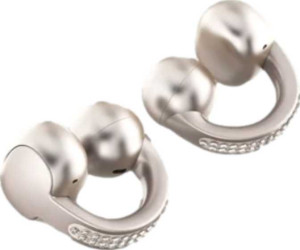
Motorola Moto Buds Loop
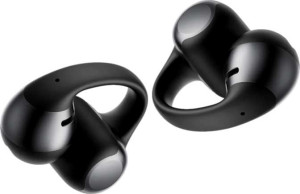
Shokz OpenDots One

Motorola Moto Buds Loop Shokz OpenDots One

Overview

Welcome to our detailed specification comparison between the Motorola Moto Buds Loop and the Shokz OpenDots One. Both of these open-ear, truly wireless earbuds share a surprising amount of common ground, making the decision between them a nuanced one. In this head-to-head, we explore the key battlegrounds that set them apart, including battery endurance, charging capabilities, and overall convenience features to help you find the right fit for your lifestyle.

Common Features

  • Both products feature an open-ear fit design.
  • Neither product has wires or cables.
  • Neither product is a neckband-style earbud.
  • Neither product includes wingtips.
  • Neither product has RGB lighting.
  • Both products have stereo speakers.
  • Neither product has a UV light.
  • Neither product has a display.
  • Neither product has active noise cancellation.
  • Neither product has passive noise reduction.
  • Both products have a lowest frequency of 20 Hz and a highest frequency of 20000 Hz.
  • Neither product supports spatial audio.
  • Neither product has a solar power battery.
  • Both products have a battery level indicator.
  • Both products have a rechargeable battery.
  • Neither product supports fast pairing.
  • Both products have a USB Type-C port.
  • Neither product supports LDAC, LDHC, Bluetooth LE Audio, aptX Adaptive, aptX Low Latency, or aptX HD.
  • Both products support fast charging.
  • Both products have a mute function, can be used as a headset, have a control panel on the device, and provide voice prompts.
  • Both products have 4 microphones with noise-canceling capability.

Main Differences

  • Battery life is 8 hours on Motorola Moto Buds Loop and 10 hours on Shokz OpenDots One.
  • Battery life of the charging case is 29 hours on Motorola Moto Buds Loop and 30 hours on Shokz OpenDots One.
  • Charge time is 1.5 hours on Motorola Moto Buds Loop and 1 hour on Shokz OpenDots One.
  • Wireless charging is available on Shokz OpenDots One but not on Motorola Moto Buds Loop.
Specs Comparison
Motorola Moto Buds Loop

Motorola Moto Buds Loop

Shokz OpenDots One

Shokz OpenDots One

Design:
Fit Open-ear Open-ear
has no wires or cables
are neckband earbuds
wingtips included
has RGB lighting
has stereo speakers
has UV light
Has a display

In terms of design, the Motorola Moto Buds Loop and the Shokz OpenDots One are essentially identical across every measured spec in this category. Both adopt an open-ear fit, are fully wireless, forgo a neckband form factor, and ship without wingtips. Neither features RGB lighting, a UV light, or a display.

The shared open-ear design is the most meaningful detail here. Unlike in-ear buds that create a seal in the ear canal, open-ear earbuds sit outside it — preserving ambient sound awareness, which is valuable for outdoor activities or office environments where situational awareness matters. Both products commit equally to this philosophy.

Given that every design spec is a perfect match, this group is a tie. Neither product holds any design advantage over the other based on the available data. A buyer choosing between these two cannot use design criteria alone to differentiate them.

Sound quality:
has active noise cancellation (ANC)
has passive noise reduction
lowest frequency 20 Hz 20 Hz
highest frequency 20000 Hz 20000 Hz
supports spatial audio
has Dolby Atmos
has Dirac Virtuo
has a neodymium magnet

Both the Motorola Moto Buds Loop and the Shokz OpenDots One cover the full standard audible range of 20 Hz to 20,000 Hz, meaning neither is spec-limited in its ability to reproduce the complete frequency spectrum a human ear can perceive — from deep bass to the highest treble detail.

Neither device offers active noise cancellation or passive noise reduction, which is consistent with their open-ear design philosophy — isolation is not the goal here. More notably, both lack spatial audio support, Dolby Atmos, and Dirac Virtuo, meaning there are no software-driven soundstage enhancements on either side. Additionally, neither features a neodymium magnet, which is commonly used in premium drivers to improve sensitivity and dynamic range.

The sound quality specs are a complete tie. Every measured attribute is identical across both products. Buyers prioritizing sound-shaping technologies or noise management will find neither offers an edge — and should factor this into their decision accordingly.

Power:
Battery life 8 hours 10 hours
Battery life of charging case 29 hours 30 hours
charge time 1.5 hours 1 hours
has wireless charging
Has a solar power battery
has a battery level indicator
has a rechargeable battery

Power is where these two products begin to diverge meaningfully. The Shokz OpenDots One delivers 10 hours of battery life per charge compared to 8 hours for the Motorola Moto Buds Loop — a 25% advantage that translates to noticeably longer listening sessions before needing to reach for the case. For commuters or all-day users, that extra two hours can make the difference between a full workday on a single charge or not.

The Shokz also pulls ahead on charging convenience. It refills in just 1 hour versus 1.5 hours for the Moto Buds Loop, and critically, it supports wireless charging — a feature the Motorola lacks entirely. Wireless charging removes the friction of hunting for a cable, which is a genuine quality-of-life advantage for users already invested in a Qi charging ecosystem. The combined case endurance is nearly identical at 30 vs. 29 hours, so neither holds a meaningful edge there.

The Shokz OpenDots One holds a clear edge in this category. It lasts longer per charge, refills faster, and adds wireless charging — three compounding advantages that make it the stronger performer for power-conscious buyers.

Connectivity:
has fast pairing
Has USB Type-C
has LDAC
has LDHC
has Bluetooth LE Audio
has aptX Adaptive
has aptX Low Latency
has aptX HD
has aptX
has aptX Lossless
has aptX Voice
has Auracast
maximum Bluetooth range 10 m 10 m
supports Bluetooth pairing using NFC
Can be used wirelessly
has AAC

Connectivity is another category where these two products land in exactly the same place. Both the Motorola Moto Buds Loop and the Shokz OpenDots One cap out at a 10 m Bluetooth range and charge via USB Type-C — a sensible modern standard. Neither supports NFC pairing nor fast pairing, so initial setup will follow the conventional manual Bluetooth pairing process on both.

The absence of any advanced audio codecs is worth flagging for audiophiles. Neither device supports LDAC, aptX, AAC, or any of their variants, nor do they offer Bluetooth LE Audio or Auracast. This means both are limited to standard SBC transmission — adequate for everyday listening but leaving potential audio quality on the table compared to competitors that support higher-bandwidth codecs. Neither product is positioned for high-fidelity wireless streaming based on these specs.

This group is a complete tie. Every connectivity attribute is identical between the two. Buyers who prioritize advanced codec support or extended wireless range will find both products equally limited — and should weigh that consistently against other factors in their decision.

Features:
release date April 2025 March 2025
has ambient sound mode
has in/on-ear detection
Supports fast charging
can read notifications
has a mute function
can be used as a headset
control panel placed on a device
Has voice prompts
travel bag is included
Has an in-line control panel
Has a temperature sensor
Has a built-in camera remote control function

Feature parity continues to define this comparison. The Motorola Moto Buds Loop and Shokz OpenDots One share an identical feature set across every spec in this group. Both support fast charging, include on-device controls, offer voice prompts, and ship with a travel bag — a practical inclusion that adds everyday carry convenience without any cost difference between the two.

For call and productivity use, both can function as a headset and include a mute function — useful for video calls or virtual meetings. Neither offers ambient sound mode or in-ear detection, which means there are no automatic pause-on-removal or transparency features to differentiate the experience. Controls are handled directly on the device on both sides, with no in-line panel on the cable — consistent with their fully wireless designs.

With no spec differing between them, this group is a tie. The feature sets are mirror images of each other, and no advantage can be assigned to either product based solely on this data.

Microphone:
number of microphones 4 4
has a noise-canceling microphone

On the microphone front, the Motorola Moto Buds Loop and Shokz OpenDots One are once again evenly matched. Both pack 4 microphones and feature noise-canceling mic technology — a combination that, in practical terms, enables beamforming or multi-mic array processing to isolate the speaker's voice and suppress background noise during calls.

A 4-microphone setup is a meaningful spec for open-ear earbuds in particular. Because open-ear designs don't seal the ear canal, wind noise and ambient sound have a direct path to the listener — and to the mics. Having four microphones gives the firmware more data to work with when filtering unwanted environmental sound, which matters more here than it would on a sealed in-ear design. Both products apply this approach equally.

With identical microphone counts and the same noise-canceling capability on both sides, this group is a tie. Call quality potential is spec-equivalent, and neither product holds a measurable advantage based on the available data.

Comparison Summary & Verdict

After examining the full specification profiles of both earbuds, it is clear that the Motorola Moto Buds Loop and the Shokz OpenDots One are closely matched in most areas, sharing an open-ear design, stereo speakers, USB-C connectivity, fast charging support, and a 4-microphone noise-canceling setup. However, the differences that do exist are meaningful. The Shokz OpenDots One pulls ahead with a longer battery life of 10 hours, a faster charge time of 1 hour, and the added convenience of wireless charging. The Motorola Moto Buds Loop, while slightly behind on those fronts, still delivers a solid 8-hour battery and a 29-hour case. Ultimately, users who value maximum charging flexibility and endurance will gravitate toward the Shokz, while those satisfied with strong core performance at a potentially different price point may find the Motorola a compelling option.

Motorola Moto Buds Loop
Buy Motorola Moto Buds Loop if...

Buy the Motorola Moto Buds Loop if you are comfortable without wireless charging and a slightly longer charge time is not a concern for your daily routine.

Shokz OpenDots One
Buy Shokz OpenDots One if...

Buy the Shokz OpenDots One if you want longer battery life, faster charging, and the added convenience of wireless charging support.