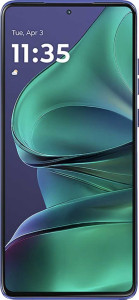
Motorola Moto G Stylus 5G (2025)
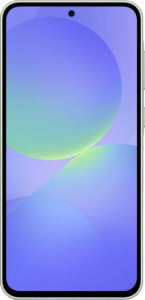
Samsung Galaxy A36 5G

Motorola Moto G Stylus 5G (2025) Samsung Galaxy A36 5G

Overview

Welcome to our in-depth spec comparison between the Motorola Moto G Stylus 5G (2025) and the Samsung Galaxy A36 5G. Both mid-range contenders share a surprising amount of common ground, including a 6.7″ OLED display, a Snapdragon 6 Gen 3 chipset, and a 5000 mAh battery, yet they diverge sharply on several key battlegrounds. From display brightness and resolution to charging flexibility and bundled accessories, each phone takes a distinctly different approach to winning over the budget-conscious buyer.

Common Features

  • Both phones are waterproof and share the same IP water resistance category.
  • Neither phone has a rugged build.
  • Neither phone can be folded.
  • Both phones feature a 6.7″ OLED/AMOLED display.
  • Both phones support a 120Hz refresh rate.
  • Both phones have damage-resistant branded glass on the display.
  • Both phones support HDR10.
  • Neither phone supports Dolby Vision.
  • Neither phone has a secondary screen.
  • Both phones use the Qualcomm Snapdragon 6 Gen 3 chipset with an Adreno 710 GPU.
  • Both phones offer 256GB of internal storage.
  • Both phones have a CPU speed of 4 x 2.4 & 4 x 1.8 GHz.
  • Both phones are built on a 4 nm semiconductor process.
  • Both phones have a multi-lens main camera with optical image stabilization.
  • Both phones support 4K video recording at 30fps on the main camera.
  • Both phones run Android 15.
  • Both phones have a 5000 mAh battery with fast charging support.
  • Both phones have stereo speakers.
  • Both phones have NFC and a USB Type-C port.
  • Both phones include a fingerprint scanner.

Main Differences

  • Weight is 191 g on Motorola Moto G Stylus 5G (2025) and 195 g on Samsung Galaxy A36 5G.
  • Thickness is 8.3 mm on Motorola Moto G Stylus 5G (2025) and 7.4 mm on Samsung Galaxy A36 5G.
  • Width is 74.8 mm on Motorola Moto G Stylus 5G (2025) and 78.2 mm on Samsung Galaxy A36 5G.
  • IP rating is IP68 on Motorola Moto G Stylus 5G (2025) and IP67 on Samsung Galaxy A36 5G.
  • Pixel density is 444 ppi on Motorola Moto G Stylus 5G (2025) and 385 ppi on Samsung Galaxy A36 5G.
  • Screen resolution is 1220 x 2712 px on Motorola Moto G Stylus 5G (2025) and 1080 x 2340 px on Samsung Galaxy A36 5G.
  • Typical brightness is 3000 nits on Motorola Moto G Stylus 5G (2025) and 1200 nits on Samsung Galaxy A36 5G.
  • Gorilla Glass version is Gorilla Glass 3 on Motorola Moto G Stylus 5G (2025) and Gorilla Glass Victus on Samsung Galaxy A36 5G.
  • HDR10+ support is present on Samsung Galaxy A36 5G but not available on Motorola Moto G Stylus 5G (2025).
  • RAM is 8GB on Motorola Moto G Stylus 5G (2025) and 12GB on Samsung Galaxy A36 5G.
  • AnTuTu benchmark score is 568626 on Motorola Moto G Stylus 5G (2025) and 619557 on Samsung Galaxy A36 5G.
  • The main camera setup is 50 & 13 MP on Motorola Moto G Stylus 5G (2025) and 50 & 8 & 5 MP on Samsung Galaxy A36 5G.
  • Front camera resolution is 32MP on Motorola Moto G Stylus 5G (2025) and 12MP on Samsung Galaxy A36 5G.
  • RAW photo shooting is supported on Motorola Moto G Stylus 5G (2025) but not available on Samsung Galaxy A36 5G.
  • PC mode is available on Motorola Moto G Stylus 5G (2025) but not available on Samsung Galaxy A36 5G.
  • Wireless charging is supported on Motorola Moto G Stylus 5G (2025) but not available on Samsung Galaxy A36 5G.
  • Charging speed is 68W on Motorola Moto G Stylus 5G (2025) and 45W on Samsung Galaxy A36 5G.
  • A charger is included in the box with Motorola Moto G Stylus 5G (2025) but not included with Samsung Galaxy A36 5G.
  • A 3.5mm audio jack is present on Motorola Moto G Stylus 5G (2025) but absent on Samsung Galaxy A36 5G.
  • Dedicated 5G support is present on Samsung Galaxy A36 5G but not on Motorola Moto G Stylus 5G (2025).
  • Wi-Fi 6E support is available on Motorola Moto G Stylus 5G (2025) but not on Samsung Galaxy A36 5G.
  • SIM options are 1 SIM and 1 eSIM on Motorola Moto G Stylus 5G (2025), while Samsung Galaxy A36 5G also supports dual physical SIM and dual eSIM configurations.
  • An external memory slot is available on Motorola Moto G Stylus 5G (2025) but not on Samsung Galaxy A36 5G.
  • A stylus is included with Motorola Moto G Stylus 5G (2025) but not with Samsung Galaxy A36 5G.
Specs Comparison
Motorola Moto G Stylus 5G (2025)

Motorola Moto G Stylus 5G (2025)

Samsung Galaxy A36 5G

Samsung Galaxy A36 5G

Design:
water resistance Waterproof Waterproof
weight 191 g 195 g
thickness 8.3 mm 7.4 mm
width 74.8 mm 78.2 mm
height 162.2 mm 162.9 mm
volume 100.700248 cm³ 94.266972 cm³
Ingress Protection (IP) rating IP68 IP67
has a rugged build
can be folded

Both phones share the same tall, non-folding, non-rugged form factor and are rated waterproof by their respective manufacturers, but the details matter. The Moto G Stylus 5G (2025) carries an IP68 rating, which typically means it can withstand submersion in deeper water for longer than an IP67-rated device like the Galaxy A36 5G. For most users this distinction is academic, but for those who want maximum peace of mind around water exposure, the Stylus has a measurable edge here.

In terms of physical feel, the two phones take different approaches. The Galaxy A36 is notably slimmer at 7.4 mm versus 8.3 mm for the Stylus, and its smaller overall volume (94.27 cm³ vs 100.70 cm³) makes it the more pocket-friendly device. However, the A36 is also wider at 78.2 mm, which can make one-handed reach more of a stretch. The Stylus, at 74.8 mm wide, is the easier phone to grip and use with one hand, and it is marginally lighter at 191 g versus 195 g — a difference small enough that most users will not notice it day-to-day.

On balance, neither phone dominates outright in design. The Galaxy A36 wins on thinness and compactness, which translates to a sleeker look and feel in the pocket. The Moto G Stylus counters with superior water resistance and a narrower, more one-hand-friendly profile. Which trade-off matters more depends entirely on the user's priorities.

Display:
Display type OLED/AMOLED OLED/AMOLED
screen size 6.7" 6.7"
pixel density 444 ppi 385 ppi
resolution 1220 x 2712 px 1080 x 2340 px
refresh rate 120Hz 120Hz
brightness (typical) 3000 nits 1200 nits
has branded damage-resistant glass
Gorilla Glass version Gorilla Glass 3 Gorilla Glass Victus
supports HDR10
supports HDR10+
supports Dolby Vision
Has a secondary screen
has a touch screen

At first glance these two screens look identical — same 6.7″ OLED panel, same 120Hz refresh rate, same HDR10 support. But dig into the numbers and meaningful differences emerge. The Moto G Stylus 5G (2025) runs at a significantly higher resolution (1220 x 2712 px, 444 ppi) compared to the Galaxy A36 5G's 1080 x 2340 px at 385 ppi. That 59 ppi gap is perceptible: text appears crisper and fine detail in photos and video is more defined on the Stylus, particularly at close viewing distances.

Where the A36 flips the script is brightness. Its 1200 nits typical brightness is perfectly respectable, but the Stylus's claimed 3000 nits is in a different league entirely — it is the kind of output that keeps content readable in harsh direct sunlight without squinting. For users who spend significant time outdoors, that is a genuinely practical advantage. The A36 does add HDR10+ support that the Stylus lacks, which enables more dynamic tone-mapping in compatible streaming content, though the real-world benefit depends on whether the user regularly watches HDR10+ video.

On screen protection, the A36 uses Gorilla Glass Victus, a newer and more scratch- and drop-resistant formulation than the Gorilla Glass 3 on the Stylus — an edge worth noting for users who tend to skip a screen protector. Overall, the Stylus holds the stronger display advantage thanks to its superior resolution and dramatically higher brightness ceiling, but the A36 answers back meaningfully with better glass protection and HDR10+ support.

Performance:
internal storage 256GB 256GB
RAM 8GB 12GB
AnTuTu benchmark score 568626 619557
Chipset (SoC) name Qualcomm Snapdragon 6 Gen 3 Qualcomm Snapdragon 6 Gen 3
GPU name Adreno 710 Adreno 710
CPU speed 4 x 2.4 & 4 x 1.8 GHz 4 x 2.4 & 4 x 1.8 GHz
GPU clock speed 800 MHz 800 MHz
Has integrated LTE
RAM speed 2750 MHz 2750 MHz
semiconductor size 4 nm 4 nm
Supports 64-bit
DirectX version DirectX 12 DirectX 12
Has integrated graphics
OpenGL version 3.2 3.2
OpenGL ES version 3.2 3.2
Uses big.LITTLE technology
CPU threads 8 threads 8 threads
Has NX bit
Uses HMP
Has TrustZone
maximum memory bandwidth 25.6 GB/s 25.6 GB/s
OpenCL version 2 2
memory channels 2 2
eMMC version 5.1 5.1
maximum memory amount 12GB 12GB
Thermal Design Power (TDP) 7W 7W
DDR memory version 5 5
supported displays 1 1

Under the hood, these two phones are remarkably similar — both run on the Qualcomm Snapdragon 6 Gen 3 chip, built on a 4 nm process, with the same CPU configuration, Adreno 710 GPU, and identical memory architecture. With so much shared silicon, the performance story comes down to a single differentiator: RAM. The Galaxy A36 5G ships with 12 GB of RAM versus 8 GB on the Moto G Stylus 5G (2025), and that gap shows up directly in the AnTuTu benchmark — 619,557 for the A36 against 568,626 for the Stylus, roughly a 9% lead.

In practical terms, more RAM means the A36 can keep more apps active in the background without needing to reload them, and it handles heavier multitasking sessions — switching between a browser with many tabs, a messaging app, and media playback — more fluidly. For everyday tasks the Stylus's 8 GB is far from insufficient, but users who push their phones hard or future-proof their purchase over several years will find the A36's headroom more comfortable. It is also worth noting both phones support a maximum of 12 GB, meaning the Stylus could reach parity via RAM expansion if the software supports it, but out of the box the A36 is already there.

The Galaxy A36 5G holds the clear edge in this category. The CPU, GPU, and storage are effectively tied, so the higher RAM and the benchmark lead it produces give the A36 a meaningful, if not transformative, performance advantage over the Stylus.
Cameras:
megapixels (main camera) 50 & 13 MP 50 & 8 & 5 MP
wide aperture (main camera) 2.2 & 1.8f 1.8 & 2.2 & 2.4f
Has a dual-lens (or multi-lens) main camera
megapixels (front camera) 32MP 12MP
has built-in optical image stabilization
video recording (main camera) 2160 x 30 fps 2160 x 30 fps
Has a dual-tone LED flash
number of flash LEDs 1 1
has a BSI sensor
has a CMOS sensor
has continuous autofocus when recording movies
Has phase-detection autofocus for photos
supports slow-motion video recording
has a built-in HDR mode
has manual exposure
has a flash
optical zoom 0x 0x
has manual ISO
has a serial shot mode
has manual focus
has a front camera
Has laser autofocus
Shoots 360° panorama
has manual white balance
shoots raw
has touch autofocus
has manual shutter speed
can create panoramas in-camera
wide aperture (front camera) 2.2f 2.2f
Has timelapse function
Has a front-facing LED flash
has a dual-lens (or multi-lens) front camera
supports HDR10 recording
supports Dolby Vision recording
has a front-facing camera under the display
Has a RGB LED flash
has 3D photo/video recording capabilities

The rear camera systems take noticeably different approaches. The Galaxy A36 5G deploys a triple-lens setup — a 50 MP main, an 8 MP ultrawide, and a 5 MP macro — giving it more shooting versatility across different scenes and distances. The Moto G Stylus 5G (2025) opts for a dual-lens configuration pairing a 50 MP main with a 13 MP secondary lens, which outresolves the A36's ultrawide by a comfortable margin. Both share the same f/1.8 main aperture and OIS, so low-light capability on the primary sensor should be roughly equivalent. The A36's extra macro lens adds a dedicated close-up option the Stylus lacks, though macro cameras at 5 MP tend to be more of a novelty than a workhorse.

The selfie camera is where the gap is hard to ignore. The Stylus packs a 32 MP front camera against just 12 MP on the A36 — a significant resolution advantage that translates to sharper, more detailed self-portraits and crisper video calls. For users who prioritize front-facing photography, that difference is meaningful. The Stylus also supports RAW capture on the rear camera, which the A36 does not; for users who post-process their photos in apps like Lightroom, this unlocks considerably more editing latitude.

This one is a split verdict. The A36 wins on rear camera versatility thanks to its three-lens system and dedicated macro option. The Stylus counters decisively with a far superior front camera and RAW shooting support, making it the stronger choice for selfie-focused users and enthusiasts who edit their shots.

Operating system:
Android version Android 15 Android 15
has clipboard warnings
has location privacy options
has camera/microphone privacy options
has Mail Privacy Protection
has theme customization
can block app tracking
blocks cross-site tracking
has on-device machine learning
has notification permissions
has media picker
Can play games while they download
has dark mode
has Wi-Fi password sharing
has battery health check
has an extra dim mode
has focus modes
has dynamic theming
can offload apps
Has customizable notifications
has Live Text
has full-page screenshots
supports split screen
gets direct OS updates
has PiP
Can be used as a PC
Has sharing intents
has a child lock
Supports widgets
Is free and open source
Has offline voice recognition
has voice commands
Tracks the current position of a mobile device
is a multi-user system
has Quick Start

Few spec categories show this level of parity. Both phones run Android 15, share the same privacy feature set — location controls, camera/microphone toggles, app tracking blocks — and offer an identical list of usability features including dark mode, dynamic theming, split-screen multitasking, Picture-in-Picture, and offline voice recognition. For the vast majority of software-driven decisions, these two phones are effectively the same.

The sole differentiator in this entire group is that the Moto G Stylus 5G (2025) can be used as a PC, while the Galaxy A36 5G cannot. This capability — connecting the phone to a monitor or display to run a desktop-like interface — is a meaningful productivity feature for users who want to replace or supplement a laptop with their phone. It is not something most users will rely on daily, but for those who do, it represents a genuine functional advantage that the A36 simply cannot match.

The Stylus takes this category by a narrow but clear margin. The operating system experience is otherwise a dead heat, but the ability to use the phone as a PC is the one spec that tips the scales and could matter considerably to the right type of user.

Battery:
battery power 5000 mAh 5000 mAh
has wireless charging
Supports fast charging
charging speed 68W 45W
comes with a charger
has a removable battery
has a battery level indicator
has a rechargeable battery

Starting from the same 5000 mAh battery capacity, these phones diverge quickly when it comes to how fast they refuel and how they can be charged. The Moto G Stylus 5G (2025) supports 68W wired fast charging, comfortably outpacing the Galaxy A36 5G's 45W. That 23W difference is tangible in daily use — the Stylus can recover significantly more battery in a short lunch-break charge, and will reach full from empty in a noticeably shorter window. For users with unpredictable schedules who rely on quick top-ups, that speed advantage matters.

The Stylus also supports wireless charging, a convenience the A36 entirely lacks. Being able to drop the phone on a pad overnight or at a desk without fumbling for a cable is a quality-of-life feature that many users, once accustomed to it, find hard to give up. On top of that, the Stylus comes with a charger in the box, while the A36 does not — meaning A36 buyers who want fast charging will need to source a compatible 45W adapter separately, adding to the real-world cost of ownership.

The Moto G Stylus wins this category decisively. Equal battery capacity aside, it charges faster, supports wireless charging, and includes a charger in the box — three concrete advantages that together make it the more complete and user-friendly battery package.

Audio:
has a socket for a 3.5 mm audio jack
has stereo speakers
has LDAC
has aptX Lossless
Has a radio

Audio specs are lean for both phones, and where they overlap they are equal — both offer stereo speakers and neither supports advanced wireless codecs like LDAC or aptX Lossless, nor an FM radio. The one point of separation is the 3.5 mm headphone jack, which the Moto G Stylus 5G (2025) retains and the Samsung Galaxy A36 5G does not.

That single omission has real consequences for a subset of users. Anyone who owns quality wired headphones, uses in-ear monitors, or plugs into a car or speaker system via aux cable will find the Stylus the more convenient choice — no adapter required, no Bluetooth latency to manage, and no battery to worry about in the headphones. For users who have already gone fully wireless, the absence of a jack on the A36 is a non-issue, but it is a hardware limitation that cannot be added later.

The Moto G Stylus takes this category. With stereo speakers matched on both sides, the headphone jack is the only differentiator — and it is one that meaningfully expands the Stylus's compatibility with wired audio gear in a way the A36 simply cannot offer.

Connectivity & Features:
release date April 2025 March 2025
has 5G support
Wi-Fi version Wi-Fi 4 (802.11n), Wi-Fi 6E (802.11ax), Wi-Fi 6 (802.11ax), Wi-Fi 5 (802.11ac) Wi-Fi 4 (802.11n), Wi-Fi 5 (802.11ac), Wi-Fi 6 (802.11ax)
SIM cards 1 SIM, 1 eSIM 1 SIM, 1 eSIM, 2 SIM, 2 eSIM
has an external memory slot
Has USB Type-C
USB version 2 2
has NFC
download speed 2900 MBits/s 2900 MBits/s
upload speed 1600 MBits/s 1600 MBits/s
Has a fingerprint scanner
has emergency SOS via satellite
has crash detection
is DLNA-certified
has a gyroscope
supports ANT+
Has a heart rate monitor
has GPS
has a compass
supports Wi-Fi
Has an infrared sensor
has an accelerometer
has a cellular module
Has a barometer
has an HDMI output
Uses 3D facial recognition
Has an iris scanner
Stylus included
supports Galileo
Has motion tracking
Has optical tracking
Has a built-in projector

Several meaningful differences emerge here despite a largely shared connectivity foundation. Most strikingly, the data indicates the Galaxy A36 5G has 5G support while the Moto G Stylus 5G (2025) does not — a significant long-term consideration as 5G networks continue to expand and 4G infrastructure is gradually deprioritized. The A36 also offers greater SIM flexibility, supporting configurations up to 2 SIMs or 2 eSIMs, compared to the Stylus's single physical SIM plus one eSIM. For frequent travelers or users who maintain separate personal and work lines, that dual-SIM versatility is a practical advantage. The Stylus partially counters on Wi-Fi, supporting Wi-Fi 6E in addition to Wi-Fi 6 and 5, while the A36 tops out at Wi-Fi 6 — though real-world benefit depends on having a Wi-Fi 6E router.

Storage expandability is another point of divergence. The Stylus includes a microSD card slot, allowing users to cheaply expand storage beyond the built-in 256 GB. The A36 offers no such option, meaning users are locked into what they buy. On the other hand, the Stylus ships with a built-in stylus — a genuinely distinctive hardware feature for note-taking, sketching, and precise on-screen input that the A36 has no equivalent for.

This category is a genuine split. The Galaxy A36 holds the stronger connectivity edge with its 5G support and flexible dual-SIM options. The Stylus answers back with Wi-Fi 6E, expandable storage, and the included stylus — features that serve a different but equally valid set of priorities. Which phone wins here depends entirely on what the user values: network future-proofing and SIM flexibility favor the A36, while storage freedom and the stylus input experience favor the Motorola.

Miscellaneous:
has a video light
Has sapphire glass display
Has a curved display
Has an e-paper display

The miscellaneous specs for these two phones are identical across every data point provided. Both have a video light, neither uses sapphire glass, neither has a curved or e-paper display. There is nothing in this group that separates them.

This is a complete tie. No advantage can be assigned to either phone based solely on the data in this category.

Comparison Summary & Verdict

After examining every specification, it is clear that each phone is designed with a different user in mind. The Motorola Moto G Stylus 5G (2025) stands out for its remarkably brighter 3000-nit display, higher pixel density, built-in stylus, wireless charging, 68W wired charging, a 3.5mm audio jack, RAW photo support, an external memory slot, and an included charger in the box — making it the stronger all-around value for power users and creatives. The Samsung Galaxy A36 5G, on the other hand, counters with a slimmer profile, more RAM at 12GB, a higher AnTuTu score, Gorilla Glass Victus protection, HDR10+ support, and true 5G connectivity, appealing to users who prioritize durability, raw performance, and future-proof networking. Choose the Motorola if you want a feature-packed multimedia device; choose the Samsung if a sleek, fast, and resilient everyday smartphone is your priority.

Motorola Moto G Stylus 5G (2025)
Buy Motorola Moto G Stylus 5G (2025) if...

Buy the Motorola Moto G Stylus 5G (2025) if you want a brighter display, wireless charging, a built-in stylus, a headphone jack, and an included charger — all at a strong mid-range value.

Samsung Galaxy A36 5G
Buy Samsung Galaxy A36 5G if...

Buy the Samsung Galaxy A36 5G if you prioritize more RAM, a slimmer design with Gorilla Glass Victus, true 5G support, and HDR10+ display performance for everyday use.