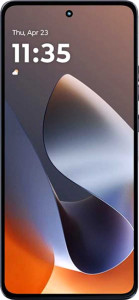
Motorola Moto G100 Pro
Motorola Moto G86

Motorola Moto G100 Pro Motorola Moto G86

Overview

Choosing between the Motorola Moto G100 Pro and the Motorola Moto G86 is no simple task — both mid-range contenders share the same chipset, 120Hz OLED display, and IP68 waterproofing, making them closely matched on paper. Yet key battlegrounds emerge around battery capacity and endurance, display brightness, camera stabilization, and storage flexibility. Read on as we break down every specification to help you decide which phone truly fits your needs.

Common Features

  • Both phones are waterproof with an IP68 Ingress Protection rating.
  • Neither phone has a rugged build.
  • Neither phone can be folded.
  • Both phones share the same height of 161.2 mm.
  • Both phones feature an OLED/AMOLED display.
  • Both phones have a 6.67″ screen size.
  • Both phones offer a pixel density of 446 ppi.
  • Both phones have a resolution of 1220 x 2712 px.
  • Both phones support a 120Hz refresh rate.
  • Both phones feature Gorilla Glass 7i damage-resistant glass.
  • HDR10 support is available on both phones.
  • Both phones are powered by the MediaTek Dimensity 7300 chipset with a Mali G615 MC2 GPU.
  • Both phones share the same CPU speed of 4 x 2.5 & 4 x 2 GHz.
  • Both phones achieve the same Geekbench 6 multi-core score of 2932 and single-core score of 1026.
  • Both phones have integrated LTE and RAM speed of 6400 MHz.
  • Both phones feature a dual-lens main camera with 50 & 8 MP and a 32 MP front camera.
  • Both phones support 4K video recording at 30 fps on the main camera.
  • A dual-tone LED flash is not available on either phone.
  • A BSI sensor is not present on either phone, but both use a CMOS sensor.
  • Both phones run Android 15.
  • Clipboard warnings, location privacy options, and camera/microphone privacy options are available on both phones.
  • Mail Privacy Protection is not available on either phone.
  • Theme customization and app tracking blocking are supported on both phones.
  • Cross-site tracking blocking is not available on either phone.
  • Wireless charging is not available on either phone.
  • Both phones support 30W fast charging.
  • Neither phone has a removable battery.
  • A 3.5 mm audio jack is not present on either phone.
  • Both phones feature stereo speakers.
  • aptX, LDAC, aptX HD, aptX Adaptive, and aptX Lossless are not supported on either phone.
  • Both phones support 5G, NFC, and USB Type-C (USB 2.0).
  • Both phones use 1 SIM and 1 eSIM.
  • Both phones offer download and upload speeds of 3270 MBits/s.
  • A fingerprint scanner is present on both phones.
  • A video light is available on both phones.
  • Neither phone has a sapphire glass, curved, or e-paper display.

Main Differences

  • Weight is 198 g on the Motorola Moto G100 Pro and 185 g on the Motorola Moto G86.
  • Thickness is 8.65 mm on the Motorola Moto G100 Pro and 7.8 mm on the Motorola Moto G86.
  • Width is 74.4 mm on the Motorola Moto G100 Pro and 74.7 mm on the Motorola Moto G86.
  • Volume is 103.74 cm³ on the Motorola Moto G100 Pro and 93.92 cm³ on the Motorola Moto G86.
  • Typical brightness is 1000 nits on the Motorola Moto G100 Pro and 4500 nits on the Motorola Moto G86.
  • Internal storage is 512GB on the Motorola Moto G100 Pro and 256GB on the Motorola Moto G86.
  • RAM is 12GB on the Motorola Moto G100 Pro and 8GB on the Motorola Moto G86.
  • The wide aperture of the main camera is f/2.2 & f/1.88 on the Motorola Moto G100 Pro and f/2.2 & f/1.8 on the Motorola Moto G86.
  • Optical image stabilization is present on the Motorola Moto G86 but not available on the Motorola Moto G100 Pro.
  • Battery capacity is 6720 mAh on the Motorola Moto G100 Pro and 5200 mAh on the Motorola Moto G86.
  • Bluetooth version is 5.2 on the Motorola Moto G100 Pro and 5.3 on the Motorola Moto G86.
  • An external memory slot is available on the Motorola Moto G86 but not on the Motorola Moto G100 Pro.
Specs Comparison
Motorola Moto G100 Pro

Motorola Moto G100 Pro

Motorola Moto G86

Motorola Moto G86

Design:
water resistance Waterproof Waterproof
weight 198 g 185 g
thickness 8.65 mm 7.8 mm
width 74.4 mm 74.7 mm
height 161.2 mm 161.2 mm
volume 103.741872 cm³ 93.924792 cm³
Ingress Protection (IP) rating IP68 IP68
has a rugged build
can be folded

Both the Moto G100 Pro and the Moto G86 share the same IP68 waterproof rating, meaning neither has an edge on water and dust protection — both can handle submersion in fresh water and everyday exposure without concern. They also match almost exactly in footprint, with an identical height of 161.2 mm and nearly the same width, so side by side they occupy virtually the same amount of pocket or palm space.

Where the two diverge meaningfully is in thickness and weight. The G86 is 7.8 mm thick and weighs 185 g, while the G100 Pro is 8.65 mm thick and tips the scale at 198 g. That 0.85 mm difference in thickness is noticeable when sliding the phone in and out of a pocket, and a 13 g weight gap — while modest on paper — translates to a perceptibly lighter feel during extended one-handed use or prolonged calls. The volume figures reinforce this: the G86's 93.9 cm³ body is meaningfully more compact than the G100 Pro's 103.7 cm³.

In this design category, the Moto G86 has a clear advantage. It delivers the same IP68 protection and near-identical external dimensions, yet in a slimmer and lighter chassis — a combination that directly improves everyday ergonomics and portability without any trade-off in durability.

Display:
Display type OLED/AMOLED OLED/AMOLED
screen size 6.67" 6.67"
pixel density 446 ppi 446 ppi
resolution 1220 x 2712 px 1220 x 2712 px
refresh rate 120Hz 120Hz
brightness (typical) 1000 nits 4500 nits
has branded damage-resistant glass
Gorilla Glass version Gorilla Glass 7i Gorilla Glass 7i
supports HDR10
supports HDR10+
Always-On Display
supports Dolby Vision
Has a secondary screen
has a touch screen

At the panel level, these two phones are nearly carbon copies of each other: both sport a 6.67″ OLED/AMOLED display with an identical 1220 x 2712 px resolution, a sharp 446 ppi pixel density, a fluid 120Hz refresh rate, and the same Gorilla Glass 7i protection. HDR10 and HDR10+ support is present on both, rounding out a very competitive baseline display package at this tier.

The single — but significant — differentiator is peak brightness. The G100 Pro tops out at 1000 nits, which is respectable for indoor use and moderately lit environments. The Moto G86, however, reaches a remarkable 4500 nits, a level more commonly associated with flagship-tier displays. In practice, this means the G86 remains comfortably readable in harsh direct sunlight where the G100 Pro may struggle, and HDR content will appear with noticeably more punch and contrast on the G86's screen.

Given that every other display parameter is identical, the Moto G86 wins this category decisively on the strength of its dramatically higher brightness ceiling. For users who frequently use their phone outdoors or consume a lot of HDR video, this is a meaningful real-world advantage that the specs table alone understates.

Performance:
internal storage 512GB 256GB
RAM 12GB 8GB
Chipset (SoC) name MediaTek Dimensity 7300 MediaTek Dimensity 7300
GPU name Mali G615 MC2 Mali G615 MC2
CPU speed 4 x 2.5 & 4 x 2 GHz 4 x 2.5 & 4 x 2 GHz
Geekbench 6 result (multi) 2932 2932
Geekbench 6 result (single) 1026 1026
GPU clock speed 1047 MHz 1047 MHz
Has integrated LTE
RAM speed 6400 MHz 6400 MHz
semiconductor size 4 nm 4 nm
Supports 64-bit
DirectX version DirectX 12 DirectX 12
Has integrated graphics
Uses big.LITTLE technology
CPU threads 8 threads 8 threads
Uses HMP
maximum memory amount 16GB 16GB
number of transistors 6200 million 6200 million
DDR memory version 5 5
supported displays 1 1

Under the hood, the Moto G100 Pro and the Moto G86 are built on identical silicon — both run the MediaTek Dimensity 7300 chipset, manufactured on a 4 nm process with the same eight-core CPU configuration, the same Mali G615 MC2 GPU, and the same DDR5 memory interface. Unsurprisingly, their real-world benchmark results are a perfect match: 2932 (multi-core) and 1026 (single-core) on Geekbench 6. For everyday tasks, gaming, and multitasking, these two phones will perform identically.

The only differentiators in this category are RAM and internal storage. The G100 Pro ships with 12 GB of RAM and 512 GB of storage, while the G86 offers 8 GB of RAM and 256 GB. The extra RAM on the G100 Pro matters in practice: it allows more apps to remain suspended in the background before the system starts terminating them, which benefits heavy multitaskers who jump between many applications. The doubled storage is equally meaningful for users who accumulate large media libraries, shoot lots of video, or simply prefer not to worry about space management.

Since raw processing power is a dead heat, the Moto G100 Pro takes a clear edge in this category purely on the strength of its superior memory and storage configuration — advantages that translate directly into a more comfortable, future-proof ownership experience for power users.

Cameras:
megapixels (main camera) 50 & 8 MP 50 & 8 MP
wide aperture (main camera) 2.2 & 1.88f 2.2 & 1.8f
Has a dual-lens (or multi-lens) main camera
megapixels (front camera) 32MP 32MP
has built-in optical image stabilization
video recording (main camera) 2160 x 30 fps 2160 x 30 fps
Has a dual-tone LED flash
number of flash LEDs 1 1
has a BSI sensor
has a CMOS sensor
has continuous autofocus when recording movies
Has phase-detection autofocus for photos
supports slow-motion video recording
has a built-in HDR mode
has manual exposure
has a flash
optical zoom 0x 0x
has manual ISO
has a serial shot mode
has manual focus
has a front camera
Has laser autofocus
Shoots 360° panorama
has manual white balance
has touch autofocus
has manual shutter speed
can create panoramas in-camera
wide aperture (front camera) 2.2f 2.2f
Has timelapse function
Has a front-facing LED flash
has a dual-lens (or multi-lens) front camera
supports HDR10 recording
supports Dolby Vision recording
has a front-facing camera under the display
Has a RGB LED flash
has 3D photo/video recording capabilities

The camera hardware on these two phones is remarkably similar on paper: both feature a dual-lens rear system led by a 50 MP primary sensor paired with an 8 MP secondary, a 32 MP front camera, and identical 4K at 30fps video recording capability. Phase-detection autofocus, continuous autofocus during video, slow-motion, HDR mode, and a full suite of manual controls are present on both — leaving very little to separate them at a feature checklist level.

Dig into the details, however, and one meaningful difference emerges: the Moto G86 includes optical image stabilization (OIS), while the G100 Pro does not. OIS is a hardware mechanism that physically compensates for hand tremor during shooting, and its impact is most felt in low-light photography — where longer exposures are needed — and during handheld video recording, where it dramatically reduces the jittery, unstabilized look. The absence of OIS on the G100 Pro means it relies solely on software-based stabilization, which is generally less effective, particularly in challenging lighting conditions.

Everything else being equal, the Moto G86 holds a clear advantage in this category thanks to OIS — a hardware feature that consistently elevates photo and video quality in real-world shooting scenarios where steady hands cannot be guaranteed.

Operating system:
Android version Android 15 Android 15
has clipboard warnings
has location privacy options
has camera/microphone privacy options
has Mail Privacy Protection
has theme customization
can block app tracking
blocks cross-site tracking
has on-device machine learning
has notification permissions
has media picker
Can play games while they download
has dark mode
has Wi-Fi password sharing
has battery health check
has an extra dim mode
has focus modes
has dynamic theming
can offload apps
Has customizable notifications
has Live Text
has full-page screenshots
supports split screen
gets direct OS updates
has PiP
Can be used as a PC
Has sharing intents
has a child lock
Supports widgets
Is free and open source
Has offline voice recognition
has voice commands
Tracks the current position of a mobile device
is a multi-user system
has Quick Start

This is one of the rare categories where there is simply nothing to separate the two devices. Both the Moto G100 Pro and the Moto G86 run Android 15 and share an identical feature set across every single data point provided — from privacy controls like location and camera/microphone permissions, to productivity tools like split-screen multitasking, Picture-in-Picture, and dynamic theming.

Notably, both phones share the same limitations too: neither receives direct OS updates from Google, and neither supports Wi-Fi password sharing or focus modes. These are consistent omissions across the pair, so no advantage can be assigned to either on that basis.

This category is a complete tie. A buyer choosing between these two phones will get an identical software experience regardless of which model they pick, and the decision should rest entirely on the hardware differences analyzed in the other spec groups.

Battery:
battery power 6720 mAh 5200 mAh
has wireless charging
Supports fast charging
charging speed 30W 30W
has a removable battery
has a battery level indicator
has a rechargeable battery

Charging infrastructure is identical across both phones: each supports 30W fast charging, neither offers wireless charging, and both have sealed, non-removable batteries. On those fronts, users can expect the same replenishment experience whichever model they choose.

The capacity gap, however, is substantial. The G100 Pro packs a 6720 mAh cell versus the G86's 5200 mAh — a difference of 1520 mAh, or roughly 29% more energy. In practical terms, this is the kind of margin that can translate to an additional four to six hours of screen-on time under typical usage, or the difference between comfortably reaching the end of a heavy day and needing a top-up by evening. It is also worth noting that the G100 Pro's larger battery will take longer to fully charge at the same 30W rate, but the endurance payoff is considerable.

The Moto G100 Pro wins this category decisively. For users who prioritize longevity between charges — travelers, heavy users, or anyone without reliable access to power throughout the day — its significantly larger battery is a tangible and meaningful advantage.

Audio:
has a socket for a 3.5 mm audio jack
has stereo speakers
has aptX
has LDAC
has aptX HD
has aptX Adaptive
has aptX Lossless

Audio is another category where the two phones are mirror images of each other. Both feature stereo speakers and both omit a 3.5 mm headphone jack, meaning wired listening requires an adapter or USB-C headphones on either device.

On the wireless audio front, neither phone supports any high-resolution Bluetooth codec — no aptX, no LDAC, no aptX HD or Adaptive. Users who pair premium wireless headphones capable of high-fidelity audio transmission will be limited to standard Bluetooth codecs on both devices, which caps the audio quality ceiling for that use case equally across the pair.

This category is a complete tie with no differentiator to speak of. Audio quality in practice will come down to speaker tuning and software implementation, neither of which is reflected in the provided specs — so buyers with strong audio priorities should look to other distinguishing factors between these two models.

Connectivity & Features:
release date July 2025 May 2025
has 5G support
Wi-Fi version Wi-Fi 4 (802.11n), Wi-Fi 6 (802.11ax), Wi-Fi 5 (802.11ac) Wi-Fi 4 (802.11n), Wi-Fi 5 (802.11ac), Wi-Fi 6 (802.11ax)
SIM cards 1 SIM, 1 eSIM 1 SIM, 1 eSIM
Bluetooth version 5.2 5.3
has an external memory slot
Has USB Type-C
USB version 2 2
has NFC
download speed 3270 MBits/s 3270 MBits/s
upload speed 3270 MBits/s 3270 MBits/s
Has a fingerprint scanner
has emergency SOS via satellite
has crash detection
is DLNA-certified
has a gyroscope
supports ANT+
Has a heart rate monitor
has GPS
has a compass
supports Wi-Fi
Has an infrared sensor
has an accelerometer
has a cellular module
Has a barometer
has an HDMI output
Uses 3D facial recognition
Has an iris scanner
Stylus included
supports Galileo
Has motion tracking
Has optical tracking
Has a built-in projector

Across most connectivity fundamentals, these two phones are closely matched: both support 5G, Wi-Fi 6, NFC, GPS with Galileo, and the same dual SIM setup of one physical SIM plus one eSIM. Data speeds, USB-C connectivity, and the full sensor suite — gyroscope, accelerometer, compass — are identical across the pair.

Two differences are worth highlighting. The Moto G86 features Bluetooth 5.3 versus the G100 Pro's 5.2 — a modest generational step that brings minor improvements in connection efficiency and coexistence with other wireless signals, though the practical day-to-day impact is limited. More meaningfully, the G86 includes an external memory slot while the G100 Pro does not. For users who want to expand storage affordably, transfer files via card, or maintain a separate media library, this is a genuinely useful hardware feature — and it partially offsets the G100 Pro's advantage of double the built-in storage noted in the performance category.

On balance, the Moto G86 holds a slight edge here. The combination of a newer Bluetooth version and, more importantly, the presence of an expandable storage slot gives it more flexibility than the G100 Pro, whose locked storage configuration offers no workaround for users who eventually run low on space.

Miscellaneous:
has a video light
Has sapphire glass display
Has a curved display
Has an e-paper display

The miscellaneous spec group offers nothing to differentiate the Moto G100 Pro and the Moto G86. Every data point is identical: both have a video light, and neither features a sapphire glass display, a curved screen, or an e-paper panel.

This category is a complete tie. Buyers should weigh the distinctions surfaced in other spec groups — design, display brightness, cameras, battery, and connectivity — to make their decision, as nothing here tips the scales either way.

Comparison Summary & Verdict

After a thorough comparison, both phones prove to be capable mid-rangers built on the same MediaTek Dimensity 7300 foundation, yet they cater to meaningfully different priorities. The Motorola Moto G100 Pro stands out with its massive 6720 mAh battery, generous 12GB of RAM, and 512GB of internal storage — making it the stronger choice for power users who demand longevity and ample space without reaching for a charger. The Motorola Moto G86, on the other hand, wins on display brightness at 4500 nits, brings optical image stabilization to the camera, offers a slimmer and lighter build, adds a microSD card slot for flexible storage expansion, and ships with the newer Bluetooth 5.3. If portability, outdoor visibility, and camera quality matter most, the G86 is the sharper pick.

Motorola Moto G100 Pro
Buy Motorola Moto G100 Pro if...

Buy the Motorola Moto G100 Pro if you prioritize a significantly larger battery and more built-in RAM and storage for a demanding, all-day workload.

Motorola Moto G86
Buy Motorola Moto G86 if...

Buy the Motorola Moto G86 if you want a brighter display for outdoor use, optical image stabilization for steadier shots, a slimmer design, and the flexibility of expandable storage.