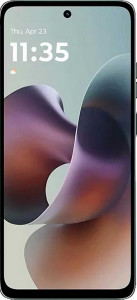
Motorola Moto G56
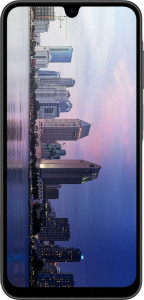
Samsung Galaxy A26 5G

Motorola Moto G56 Samsung Galaxy A26 5G

Overview

When choosing between the Motorola Moto G56 and the Samsung Galaxy A26 5G, the decision is far from straightforward. These two mid-range 5G smartphones share a surprising amount of common ground, yet diverge sharply in areas like display technology, raw processing performance, audio features, and camera capabilities. Whether you care most about battery endurance, everyday speed, or multimedia quality, this detailed spec comparison will help you find the right fit.

Common Features

  • Both phones are waterproof with water resistance protection.
  • Both phones weigh 200 g.
  • Neither phone has a rugged build.
  • Neither phone can be folded.
  • Both phones have a 120Hz refresh rate display.
  • Both phones feature branded damage-resistant glass.
  • HDR10 support is not available on either phone.
  • HDR10+ support is not available on either phone.
  • Dolby Vision support is not available on either phone.
  • Neither phone has a secondary screen.
  • Both phones have a touchscreen.
  • Both phones come with 256GB of internal storage.
  • Both phones have a GPU clock speed of 950 MHz.
  • Both phones have integrated LTE.
  • Both phones support 64-bit processing.
  • Both phones support DirectX 12.
  • Both phones use big.LITTLE technology.
  • Both phones run Android 15.
  • Both phones have clipboard warnings.
  • Both phones have location privacy options.
  • Both phones have camera and microphone privacy options.
  • Mail Privacy Protection is not available on either phone.
  • Both phones support theme customization.
  • Both phones can block app tracking.
  • Cross-site tracking blocking is not available on either phone.
  • Neither phone supports wireless charging.
  • Both phones support fast charging.
  • Neither phone has a removable battery.
  • Both phones have a battery level indicator and a rechargeable battery.
  • Neither phone supports aptX, LDAC, aptX HD, aptX Adaptive, aptX Lossless.
  • Both phones support 5G.
  • Both phones support Wi-Fi 4 (802.11n) and Wi-Fi 5 (802.11ac).
  • Both phones have Bluetooth 5.3.
  • Both phones have an external memory slot.
  • Both phones have USB Type-C with USB version 2.
  • Both phones have NFC.
  • Both phones have a fingerprint scanner.
  • Both phones have a video light.
  • Neither phone has a sapphire glass display.
  • Neither phone has a curved or e-paper display.
  • Both main cameras feature dual or multi-lens setups.
  • Neither phone has a dual-tone LED flash, and both have a single LED flash.
  • Both phones have a CMOS sensor.
  • Both phones support continuous autofocus when recording video.
  • Both phones support phase-detection autofocus for photos.
  • Both phones support slow-motion video recording.
  • Both phones have a multi-lens main camera with a 50 MP primary sensor.

Main Differences

  • Thickness is 8.4 mm on Motorola Moto G56 and 7.7 mm on Samsung Galaxy A26 5G.
  • Width is 76.3 mm on Motorola Moto G56 and 77.5 mm on Samsung Galaxy A26 5G.
  • Height is 165.8 mm on Motorola Moto G56 and 164 mm on Samsung Galaxy A26 5G.
  • Volume is 106.26 cm³ on Motorola Moto G56 and 97.87 cm³ on Samsung Galaxy A26 5G.
  • IP rating is IP68 on Motorola Moto G56 and IP67 on Samsung Galaxy A26 5G.
  • Display type is LCD IPS on Motorola Moto G56 and OLED/AMOLED on Samsung Galaxy A26 5G.
  • Screen size is 6.72″ on Motorola Moto G56 and 6.7″ on Samsung Galaxy A26 5G.
  • Pixel density is 392 ppi on Motorola Moto G56 and 385 ppi on Samsung Galaxy A26 5G.
  • Resolution is 1080 x 2400 px on Motorola Moto G56 and 1080 x 2340 px on Samsung Galaxy A26 5G.
  • Gorilla Glass version is Gorilla Glass 7i on Motorola Moto G56 and Gorilla Glass Victus on Samsung Galaxy A26 5G.
  • Always-On Display is available on Samsung Galaxy A26 5G but not on Motorola Moto G56.
  • RAM is 12GB on Motorola Moto G56 and 8GB on Samsung Galaxy A26 5G.
  • AnTuTu benchmark score is 475000 on Motorola Moto G56 and 594395 on Samsung Galaxy A26 5G.
  • Chipset is MediaTek Dimensity 7050 on Motorola Moto G56 and Samsung Exynos 1380 on Samsung Galaxy A26 5G.
  • GPU is Mali G68 MP4 on Motorola Moto G56 and Mali G68 MP5 on Samsung Galaxy A26 5G.
  • CPU speed is 2 x 2.6 & 6 x 2 GHz on Motorola Moto G56 and 4 x 2.4 & 4 x 2 GHz on Samsung Galaxy A26 5G.
  • Geekbench 6 multi-core score is 2257 on Motorola Moto G56 and 2758 on Samsung Galaxy A26 5G.
  • Geekbench 6 single-core score is 936 on Motorola Moto G56 and 1007 on Samsung Galaxy A26 5G.
  • Semiconductor size is 6 nm on Motorola Moto G56 and 5 nm on Samsung Galaxy A26 5G.
  • Maximum memory amount is 16GB on Motorola Moto G56 and 8GB on Samsung Galaxy A26 5G.
  • L3 cache is 2 MB on Motorola Moto G56 and 4 MB on Samsung Galaxy A26 5G.
  • Main camera configuration is 50 & 8 MP on Motorola Moto G56 and 50, 8 & 2 MP on Samsung Galaxy A26 5G.
  • Main camera apertures are f/2.2 & f/1.8 on Motorola Moto G56 and f/1.8, f/2.2 & f/2.4 on Samsung Galaxy A26 5G.
  • Front camera resolution is 32 MP on Motorola Moto G56 and 13 MP on Samsung Galaxy A26 5G.
  • Optical image stabilization is present on Samsung Galaxy A26 5G but not available on Motorola Moto G56.
  • Battery capacity is 5200 mAh on Motorola Moto G56 and 5000 mAh on Samsung Galaxy A26 5G.
  • Charging speed is 30W on Motorola Moto G56 and 25W on Samsung Galaxy A26 5G.
  • A 3.5 mm audio jack is present on Motorola Moto G56 but not available on Samsung Galaxy A26 5G.
  • Stereo speakers are present on Motorola Moto G56 but not available on Samsung Galaxy A26 5G.
  • SIM configuration is 1 SIM and 1 eSIM on Motorola Moto G56 and 2 physical SIMs on Samsung Galaxy A26 5G.
  • Download speed is 2770 Mbit/s on Motorola Moto G56 and 3790 Mbit/s on Samsung Galaxy A26 5G.
  • Upload speed is 1250 Mbit/s on Motorola Moto G56 and 1280 Mbit/s on Samsung Galaxy A26 5G.
Specs Comparison
Motorola Moto G56

Motorola Moto G56

Samsung Galaxy A26 5G

Samsung Galaxy A26 5G

Design:
water resistance Waterproof Waterproof
weight 200 g 200 g
thickness 8.4 mm 7.7 mm
width 76.3 mm 77.5 mm
height 165.8 mm 164 mm
volume 106.264536 cm³ 97.867 cm³
Ingress Protection (IP) rating IP68 IP67
has a rugged build
can be folded

On the surface, the Motorola Moto G56 and the Samsung Galaxy A26 5G look nearly identical in this category: both weigh exactly 200 g, neither has a rugged build, and both are non-folding slabs. However, a closer look at the numbers reveals meaningful differences in two areas that matter for everyday handling and durability.

The most practically significant distinction is water resistance. The Moto G56 carries an IP68 rating, while the Galaxy A26 5G is rated IP67. Both certifications protect against dust and temporary water immersion, but IP68 goes further — it is tested for submersion at greater depth and/or for longer durations than IP67. For most users this difference is unlikely to be decisive, but in scenarios involving accidental drops in water, the G56 offers a marginally higher safety margin. The second differentiator is form factor: the A26 5G is noticeably slimmer at 7.7 mm versus the G56's 8.4 mm, and its total volume is about 8% smaller (97.87 cm³ vs 106.26 cm³), despite being very slightly wider and a touch shorter. In the hand, that slimmer profile typically translates to a more premium, modern feel and can make the phone easier to slip into tight pockets.

The two phones therefore trade blows in design: the Moto G56 has the edge in water resistance thanks to its IP68 certification, while the Galaxy A26 5G has the edge in sleekness with its thinner, lower-volume chassis. Which advantage matters more depends entirely on the user's priorities — durability-focused buyers will prefer the G56, while those who value a slim, pocket-friendly feel will lean toward the A26 5G.

Display:
Display type LCD, IPS OLED/AMOLED
screen size 6.72" 6.7"
pixel density 392 ppi 385 ppi
resolution 1080 x 2400 px 1080 x 2340 px
refresh rate 120Hz 120Hz
has branded damage-resistant glass
Gorilla Glass version Gorilla Glass 7i Gorilla Glass Victus
supports HDR10
supports HDR10+
Always-On Display
supports Dolby Vision
Has a secondary screen
has a touch screen

The single biggest differentiator here is panel technology. The Moto G56 uses an LCD IPS panel, while the Galaxy A26 5G sports an OLED/AMOLED display — and that gap has cascading real-world consequences. OLED produces true blacks by turning off individual pixels, delivering far superior contrast, more vibrant colors, and better outdoor legibility compared to LCD, which relies on a backlight that cannot fully block light. For media consumption, browsing, or anything visually intensive, the A26 5G's panel will look noticeably richer and punchier.

Everything else is remarkably close. Both screens are effectively the same size (6.72″ vs 6.7″) and share the same 120Hz refresh rate, meaning scrolling and animations will feel equally fluid on either device. Pixel density is nearly identical at 392 ppi vs 385 ppi, so sharpness is a non-issue on both. Where they diverge again is glass protection: the G56 uses Gorilla Glass 7i, a version specifically engineered for mid-range devices with improved drop resistance, while the A26 5G uses Gorilla Glass Victus, a more premium tier historically rated for better scratch resistance and drop survival on hard surfaces. The A26 5G also includes an Always-On Display — a minor but genuinely useful feature that lets users check the time and notifications without waking the screen, something the G56 lacks entirely.

The Galaxy A26 5G holds a clear overall advantage in this category. Its OLED panel is a fundamentally superior display technology at this price tier, and it pairs that with stronger Gorilla Glass Victus protection and the added convenience of Always-On Display. The Moto G56 counters with nothing meaningful in return — its marginally higher pixel density is imperceptible in practice.

Performance:
internal storage 256GB 256GB
RAM 12GB 8GB
AnTuTu benchmark score 475000 594395
Chipset (SoC) name MediaTek Dimensity 7050 Samsung Exynos 1380
GPU name Mali G68 MP4 Mali G68 MP5
CPU speed 2 x 2.6 & 6 x 2 GHz 4 x 2.4 & 4 x 2 GHz
Geekbench 6 result (multi) 2257 2758
Geekbench 6 result (single) 936 1007
GPU clock speed 950 MHz 950 MHz
Has integrated LTE
RAM speed 3200 MHz 3200 MHz
semiconductor size 6 nm 5 nm
Supports 64-bit
DirectX version DirectX 12 DirectX 12
Has integrated graphics
Uses big.LITTLE technology
CPU threads 8 threads 8 threads
Has NX bit
Uses HMP
Has TrustZone
OpenCL version 2 2
memory channels 4 4
maximum memory amount 16GB 8GB
uses multithreading
Thermal Design Power (TDP) 5W 5W
DDR memory version 5 5
L3 cache 2 MB 4 MB

Raw benchmark numbers tell a consistent story here. The Galaxy A26 5G, powered by the Samsung Exynos 1380 on a 5nm process node, outpaces the Moto G56's MediaTek Dimensity 7050 (6nm) across every performance metric provided. Its AnTuTu score of 594,395 is roughly 25% higher than the G56's 475,000, and its Geekbench 6 results — 1007 single-core and 2758 multi-core — beat the G56's 936 and 2257 respectively. The finer 5nm fabrication also generally implies better power efficiency per operation, meaning the A26 5G can sustain heavier workloads without generating as much heat. Its 4MB L3 cache (double the G56's 2MB) further helps by reducing how often the CPU must reach out to slower main memory, which benefits tasks with repetitive data access like gaming and multitasking.

The G56 strikes back in one important area: memory. It ships with 12GB of RAM versus the A26 5G's 8GB, and its maximum supported memory is 16GB compared to the A26 5G's ceiling of 8GB. More RAM directly translates to more apps kept alive in the background simultaneously, smoother true multitasking, and more headroom as software grows more demanding over time. Both phones share the same RAM speed, DDR generation, and TDP, so the G56's advantage here is purely in quantity. On the GPU side, the A26 5G has a slight edge — its Mali G68 MP5 has one more execution core than the G56's Mali G68 MP4 — though both run at the same 950MHz clock speed.

This category ends in a split verdict with no clean winner. The Galaxy A26 5G holds the performance edge in CPU throughput, GPU capability, and process efficiency — advantages that matter most for demanding apps and gaming. The Moto G56 counters with significantly more RAM, which is the more practical advantage for heavy multitaskers and users who want their phone to remain capable further into its lifespan. The right choice depends on whether raw speed or memory headroom is the higher priority.

Cameras:
megapixels (main camera) 50 & 8 MP 50 & 8 & 2 MP
wide aperture (main camera) 2.2 & 1.8f 1.8 & 2.2 & 2.4f
Has a dual-lens (or multi-lens) main camera
megapixels (front camera) 32MP 13MP
has built-in optical image stabilization
Has a dual-tone LED flash
number of flash LEDs 1 1
has a BSI sensor
has a CMOS sensor
has continuous autofocus when recording movies
Has phase-detection autofocus for photos
supports slow-motion video recording
has a built-in HDR mode
has manual exposure
has a flash
optical zoom 0x 0x
has manual ISO
has a serial shot mode
has manual focus
has a front camera
Has laser autofocus
Shoots 360° panorama
has manual white balance
has touch autofocus
has manual shutter speed
can create panoramas in-camera
wide aperture (front camera) 2.2f 2.2f
Has timelapse function
Has a front-facing LED flash
has a dual-lens (or multi-lens) front camera
supports HDR10 recording
supports Dolby Vision recording
has a front-facing camera under the display
Has a RGB LED flash
has 3D photo/video recording capabilities

Three differences stand out from the rest in this camera comparison. First, the Galaxy A26 5G fields a triple rear camera (50 + 8 + 2 MP) against the Moto G56's dual rear camera (50 + 8 MP) — though the added 2MP sensor on the A26 5G is a shallow-depth utility lens that contributes minimally to real-world shooting versatility. More meaningful is the aperture of the primary 50MP lens: the A26 5G's main shooter opens to f/1.8, while the G56's equivalent is f/2.2. A wider aperture admits significantly more light, which directly translates to brighter, less noisy images in dim conditions — an advantage that matters every time you shoot indoors or at night.

The A26 5G's most impactful hardware advantage, however, is its optical image stabilization (OIS) — a feature the G56 entirely lacks. OIS physically compensates for hand movement during capture, reducing blur in handheld low-light photos and, critically, making video footage far smoother and more watchable. This is a meaningful real-world differentiator that no software post-processing can fully replicate. On the flip side, the G56 hits back hard in selfies: its 32MP front camera dwarfs the A26 5G's 13MP, offering substantially more detail and greater cropping flexibility — a genuine advantage for users who prioritize self-portraits or video calls.

Overall, the Galaxy A26 5G holds the stronger rear camera package thanks to its wider primary aperture and OIS, both of which deliver tangible improvements in everyday shooting scenarios. The Moto G56 wins convincingly on the front camera with its 32MP sensor. Users who shoot mostly with the main camera — especially video — will favor the A26 5G, while selfie-focused users have a clear reason to consider the G56.

Operating system:
Android version Android 15 Android 15
has clipboard warnings
has location privacy options
has camera/microphone privacy options
has Mail Privacy Protection
has theme customization
can block app tracking
blocks cross-site tracking
has on-device machine learning
has notification permissions
has media picker
Can play games while they download
has dark mode
has Wi-Fi password sharing
has battery health check
has an extra dim mode
has focus modes
has dynamic theming
can offload apps
Has customizable notifications
has Live Text
has full-page screenshots
supports split screen
gets direct OS updates
has PiP
Can be used as a PC
Has sharing intents
has a child lock
Supports widgets
Is free and open source
Has offline voice recognition
has voice commands
Tracks the current position of a mobile device
is a multi-user system
has Quick Start

This is one of the rare spec groups where the two devices are in complete lockstep. Both the Moto G56 and the Galaxy A26 5G ship with Android 15 and share an identical feature set across every single data point provided — from privacy controls like camera and microphone permissions, location options, and app tracking blockers, to productivity tools like split-screen multitasking, Picture-in-Picture, widgets, and full-page screenshots. Neither receives direct OS updates, and neither supports features like Wi-Fi password sharing, focus modes, or Quick Start.

The breadth of shared features is itself worth noting: both phones offer on-device machine learning, dynamic theming, offline voice recognition, and a battery health check — capabilities that were once flagship-exclusive but are now standard at this tier. Privacy-conscious users will find both equally equipped, and power users will have the same multitasking and customization toolkit on either device.

This category is an exact tie. Based strictly on the provided specifications, there is no feature, version difference, or capability gap that distinguishes one phone from the other in terms of operating system. Buyers can effectively remove software features from their decision-making criteria when choosing between these two devices.

Battery:
battery power 5200 mAh 5000 mAh
has wireless charging
Supports fast charging
charging speed 30W 25W
has a removable battery
has a battery level indicator
has a rechargeable battery

Battery life and charging speed are where the Moto G56 quietly builds a straightforward advantage. Its 5200 mAh cell edges out the Galaxy A26 5G's 5000 mAh — a 4% difference that is unlikely to translate into dramatically longer screen-on time in isolation, but does provide a small additional buffer for heavy usage days or when a charger is not nearby. More consequential is the charging speed gap: the G56 supports 30W fast charging versus the A26 5G's 25W, meaning the G56 will replenish its battery measurably faster from empty. That 5W difference becomes practically noticeable during quick top-ups — the kind of short charging window before heading out that many users rely on daily.

Both phones share the same fundamental limitations: no wireless charging and no removable battery. Neither is a surprise at this price tier, but users who specifically want wireless charging convenience will find no satisfaction on either side of this comparison.

The Moto G56 holds a clear edge in this category — it carries more capacity and charges faster, which means both longer endurance between sessions and less time tethered to a wall when it does need a top-up. The margins are not dramatic, but they are consistent and unambiguous: every metric points the same direction.

Audio:
has a socket for a 3.5 mm audio jack
has stereo speakers
has aptX
has LDAC
has aptX HD
has aptX Adaptive
has aptX Lossless

Audio is a category where the Moto G56 wins without contest. It offers two features the Galaxy A26 5G simply does not have: a 3.5mm headphone jack and stereo speakers. The absence of a headphone jack on the A26 5G means wired headphone users must rely on a USB-C adapter — an extra accessory to carry and lose — or switch to Bluetooth audio entirely. The stereo speaker gap is arguably even more impactful for everyday use: stereo creates a wider, more immersive soundstage for music, videos, and calls, while a mono setup sounds comparatively flat and one-dimensional.

Neither phone supports advanced Bluetooth audio codecs such as aptX, LDAC, or any of their variants, so wireless listening quality is on equal footing for both. That parity, however, does nothing to close the gap in the two areas where the hardware physically differs.

The Moto G56 holds a decisive advantage in audio. Both a headphone jack and stereo speakers are tangible, daily-use features — not paper specs — and the A26 5G lacks both. For anyone who listens to music through wired headphones, watches video content on their phone, or simply values louder and more spatial speaker output, the G56 is the clear choice in this category.

Connectivity & Features:
release date May 2025 March 2025
has 5G support
Wi-Fi version Wi-Fi 4 (802.11n), Wi-Fi 5 (802.11ac) Wi-Fi 4 (802.11n), Wi-Fi 5 (802.11ac)
SIM cards 1 SIM, 1 eSIM 2 SIM
Bluetooth version 5.3 5.3
has an external memory slot
Has USB Type-C
USB version 2 2
has NFC
download speed 2770 MBits/s 3790 MBits/s
upload speed 1250 MBits/s 1280 MBits/s
Has a fingerprint scanner
has emergency SOS via satellite
has crash detection
is DLNA-certified
has a gyroscope
supports ANT+
Has a heart rate monitor
has GPS
has a compass
supports Wi-Fi
Has an infrared sensor
has an accelerometer
has a cellular module
Has a barometer
has an HDMI output
Uses 3D facial recognition
Has an iris scanner
Stylus included
supports Galileo
Has motion tracking
Has optical tracking
Has a built-in projector

Across most of this spec group, the two phones are functionally identical — both support 5G, Wi-Fi 5, Bluetooth 5.3, NFC, USB Type-C, expandable storage, and the same suite of sensors including GPS, gyroscope, accelerometer, and compass. That shared foundation means neither phone has a connectivity disadvantage for everyday tasks like mobile payments, wireless peripherals, or navigation.

Two distinctions are worth unpacking. The Galaxy A26 5G supports a noticeably higher peak download speed of 3790 Mbits/s compared to the Moto G56's 2770 Mbits/s — a roughly 37% theoretical advantage that reflects differences in modem capability. In practice, real-world 5G speeds are governed far more by network conditions than by device ceilings, so most users will rarely feel this gap; it becomes relevant primarily in congested environments where the modem's ability to aggregate more signal matters. On SIM flexibility, the two phones take different approaches: the G56 offers 1 physical SIM plus 1 eSIM, while the A26 5G provides 2 physical SIM slots. The G56's eSIM support is the more forward-looking option, enabling carrier switching without a physical card, but the A26 5G's dual physical SIM setup is more universally compatible, particularly in regions or with carriers where eSIM adoption is still limited.

This category is broadly a near-tie with narrow contextual edges on each side. The A26 5G has the higher download ceiling and broader dual-SIM hardware compatibility, while the G56's eSIM support offers more flexibility for users whose carriers support it. Neither advantage is substantial enough to be a deciding factor for most buyers.
Miscellaneous:
has a video light
Has sapphire glass display
Has a curved display
Has an e-paper display

The Miscellaneous category offers almost nothing to differentiate these two devices. Every data point provided — video light presence, absence of sapphire glass, flat display, and no e-paper panel — is identical across the Moto G56 and the Galaxy A26 5G. Both share the practical benefit of a video light, useful for torch functionality and illuminating subjects during video recording, but neither has any standout feature in this group that the other lacks.

This is a complete tie. Based strictly on the provided specifications, there is no distinction whatsoever between the two phones here. Buyers should weigh the other spec categories — where meaningful differences do exist — when making their final decision.

Comparison Summary & Verdict

After a thorough look at the specs, both phones hold their own in the mid-range 5G segment, but they serve different priorities. The Motorola Moto G56 stands out with its larger 5200 mAh battery, faster 30W charging, more RAM (12GB), a 32MP selfie camera, a 3.5mm audio jack, and stereo speakers — making it a strong pick for multimedia fans and power users who want more autonomy. The Samsung Galaxy A26 5G counters with a superior OLED display with Always-On support, a notably higher AnTuTu and Geekbench score thanks to its 5nm Exynos 1380 chip, optical image stabilization, Gorilla Glass Victus, and faster LTE download speeds. Choose the Moto G56 if audio versatility and battery size top your list; go for the Galaxy A26 5G if display quality and processing performance matter most to you.

Motorola Moto G56
Buy Motorola Moto G56 if...

Buy the Motorola Moto G56 if you want a larger battery with faster 30W charging, more RAM, a higher-resolution selfie camera, stereo speakers, and the convenience of a 3.5mm headphone jack.

Samsung Galaxy A26 5G
Buy Samsung Galaxy A26 5G if...

Buy the Samsung Galaxy A26 5G if you prioritize a vivid OLED display with Always-On support, stronger overall processing performance, optical image stabilization, and more durable Gorilla Glass Victus protection.