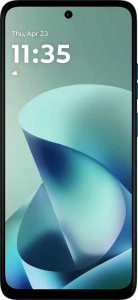
Motorola Moto G57 Power
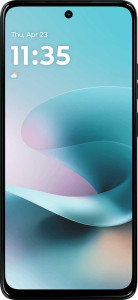
Motorola Moto G67 Power

Motorola Moto G57 Power Motorola Moto G67 Power

Overview

Welcome to our in-depth comparison of the Motorola Moto G57 Power and the Motorola Moto G67 Power — two feature-packed mid-range smartphones that share a surprising amount of DNA. While both offer a massive 7000 mAh battery, IP64 water resistance, and a 120Hz LCD display, the real story lies in their performance chipsets, camera capabilities, and software experience. Read on to discover which of these Power-series contenders is the right fit for you.

Common Features

  • Both phones are water resistant with an IP64 ingress protection rating.
  • Both phones share the same dimensions: 8.6 mm thick, 76.5 mm wide, and 166.2 mm tall.
  • Neither phone has a rugged build or foldable form factor.
  • Both phones feature an LCD IPS display with a 1080 x 2400 px resolution.
  • Both phones have a 120Hz refresh rate on the display.
  • Both phones use Corning Gorilla Glass 7i for damage-resistant screen protection.
  • HDR10+ support is not available on either phone.
  • Always-On Display is not available on either phone.
  • Dolby Vision support is not available on either phone.
  • Both phones come with 256GB of internal storage.
  • Both phones have integrated LTE and 5G support.
  • Both phones use a 4 nm semiconductor process.
  • Both phones have a dual-lens main camera with 50 & 8 MP and apertures of f/2.2 & f/1.8.
  • Neither phone has built-in optical image stabilization.
  • Both phones have a CMOS sensor and support continuous autofocus when recording video.
  • Both phones run on Android and include clipboard warnings, location privacy options, and camera/microphone privacy options.
  • Both phones have a 7000 mAh battery with 30W fast charging.
  • Wireless charging and reverse wireless charging are not available on either phone.
  • Both phones have a 3.5 mm audio jack and stereo speakers.
  • Both phones support NFC, USB Type-C (USB 2.0), Wi-Fi 5, and Bluetooth 5.1.

Main Differences

  • Weight is 210.6 g on Motorola Moto G57 Power and 210 g on Motorola Moto G67 Power.
  • Screen size is 6.72″ on Motorola Moto G57 Power and 6.7″ on Motorola Moto G67 Power.
  • Pixel density is 392 ppi on Motorola Moto G57 Power and 391 ppi on Motorola Moto G67 Power.
  • Touch sampling rate is 120Hz on Motorola Moto G57 Power, while no touch sampling rate is specified for Motorola Moto G67 Power.
  • HDR10 support is not present on Motorola Moto G57 Power but is available on Motorola Moto G67 Power.
  • RAM is 12GB on Motorola Moto G57 Power and 8GB on Motorola Moto G67 Power.
  • The chipset is Qualcomm Snapdragon 6s Gen 4 on Motorola Moto G57 Power and Qualcomm Snapdragon 7s Gen 2 on Motorola Moto G67 Power.
  • CPU speed is 4 x 2.4 & 4 x 1.8 GHz on Motorola Moto G57 Power and 4 x 2.4 & 4 x 1.95 GHz on Motorola Moto G67 Power.
  • Maximum memory bandwidth is 17 GB/s on Motorola Moto G57 Power and 25.6 GB/s on Motorola Moto G67 Power.
  • Maximum supported memory amount is 12GB on Motorola Moto G57 Power and 16GB on Motorola Moto G67 Power.
  • Multithreading support is not present on Motorola Moto G57 Power but is available on Motorola Moto G67 Power.
  • Front camera resolution is 8MP on Motorola Moto G57 Power and 32MP on Motorola Moto G67 Power.
  • Main camera video recording tops out at 1440 x 30 fps on Motorola Moto G57 Power and 2160 x 30 fps on Motorola Moto G67 Power.
  • The number of flash LEDs is 1 on Motorola Moto G57 Power and 2 on Motorola Moto G67 Power.
  • Android version is Android 16 on Motorola Moto G57 Power and Android 15 on Motorola Moto G67 Power.
  • SIM configuration is 1 SIM plus 1 eSIM on Motorola Moto G57 Power and 2 physical SIM cards on Motorola Moto G67 Power.
Specs Comparison
Motorola Moto G57 Power

Motorola Moto G57 Power

Motorola Moto G67 Power

Motorola Moto G67 Power

Design:
water resistance Water resistant Water resistant
weight 210.6 g 210 g
thickness 8.6 mm 8.6 mm
width 76.5 mm 76.5 mm
height 166.2 mm 166.2 mm
volume 109.34298 cm³ 109.34298 cm³
Ingress Protection (IP) rating IP64 IP64
has a rugged build
can be folded

In terms of design, the Motorola Moto G57 Power and the Motorola Moto G67 Power are virtually identical twins. Both share the exact same physical footprint — 166.2 × 76.5 × 8.6 mm — and an identical volume of 109.34 cm³, meaning you would not be able to tell them apart by feel or fit in a pocket or case.

The only measurable difference is weight: the G57 Power tips the scale at 210.6 g versus the G67 Power's 210 g. A gap of 0.6 grams is entirely imperceptible in daily use and offers no practical advantage to either device. On water resistance, both carry an IP64 rating, which means protection against dust ingress and resistance to water splashes from any direction — solid for everyday scenarios like rain or kitchen use, though neither is rated for full submersion.

Given the near-perfect overlap in every design specification, this category is an unambiguous tie. Neither phone holds any meaningful design edge over the other; a buyer's decision should rest entirely on other spec groups such as performance, display, or camera.

Display:
Display type LCD, IPS LCD, IPS
screen size 6.72" 6.7"
pixel density 392 ppi 391 ppi
resolution 1080 x 2400 px 1080 x 2400 px
refresh rate 120Hz 120Hz
touch sampling rate 120Hz 0Hz
has branded damage-resistant glass
Gorilla Glass version Gorilla Glass 7i Gorilla Glass 7i
supports HDR10
supports HDR10+
Always-On Display
supports Dolby Vision
Has a secondary screen
has a touch screen

Both the G57 Power and G67 Power deliver nearly identical display hardware: a 6.7″ IPS LCD panel running at 1080 × 2400 px with a pixel density hovering around 391–392 ppi — sharp enough that individual pixels are indistinguishable at normal viewing distances. The shared 120Hz refresh rate ensures smooth scrolling and responsive animations, and both screens are protected by Gorilla Glass 7i, offering solid resistance against everyday scratches and minor drops.

The standout differentiator in this group is HDR10 support, which the G67 Power has and the G57 Power lacks. In practice, this means the G67 Power can render a wider range of brightness and color when consuming HDR-graded content on compatible streaming platforms — shadows appear deeper and highlights more defined, even on an LCD panel. For users who regularly stream video, this is a tangible, visible advantage. The G57 Power, by contrast, will display that same content tone-mapped to standard dynamic range.

The display edge belongs to the Moto G67 Power, specifically because of its HDR10 capability. All other display attributes between the two devices are functionally equivalent, making HDR10 the sole but meaningful reason to favor the G67 Power for media-centric use cases.

Performance:
internal storage 256GB 256GB
RAM 12GB 8GB
Chipset (SoC) name Qualcomm Snapdragon 6s Gen 4 Qualcomm Snapdragon 7s Gen 2
CPU speed 4 x 2.4 & 4 x 1.8 GHz 4 x 2.4 & 4 x 1.95 GHz
Has integrated LTE
RAM speed 3200 MHz 3200 MHz
semiconductor size 4 nm 4 nm
Supports 64-bit
DirectX version DirectX 12 DirectX 12
Has integrated graphics
OpenGL ES version 3.2 3.2
Uses big.LITTLE technology
CPU threads 8 threads 8 threads
Uses HMP
Has TrustZone
maximum memory bandwidth 17 GB/s 25.6 GB/s
OpenCL version 2 2
memory channels 2 2
maximum memory amount 12GB 16GB
uses multithreading
DDR memory version 5 5

The chipset divide is the most consequential difference in this group. The G57 Power runs on the Snapdragon 6s Gen 4, while the G67 Power steps up to the Snapdragon 7s Gen 2 — a higher-tier platform that brings meaningful architectural improvements. The efficiency cores on the G67 Power clock slightly higher (1.95 GHz vs 1.8 GHz), and crucially, the 7s Gen 2 supports multithreading, which allows CPU cores to handle multiple instruction streams simultaneously. In real-world terms, this translates to snappier performance under sustained workloads like gaming, background app processing, and complex rendering tasks.

Memory bandwidth reinforces this gap further. The G67 Power's 25.6 GB/s bandwidth versus the G57 Power's 17 GB/s is a 50% advantage — a difference that directly impacts how quickly the GPU and CPU can access data, affecting everything from app load times to graphics-intensive tasks. The G57 Power counters with more installed RAM (12 GB vs 8 GB), which helps with keeping more apps resident in memory simultaneously, but this advantage is secondary when the underlying chip and memory pipeline of the G67 Power are faster.

The Moto G67 Power holds a clear performance edge. Its superior chipset, higher memory bandwidth, and multithreading support outweigh the G57 Power's RAM advantage for virtually all performance-sensitive workloads. Users who prioritize sustained speed and responsiveness should favor the G67 Power in this category.

Cameras:
megapixels (main camera) 50 & 8 MP 50 & 8 MP
wide aperture (main camera) 2.2 & 1.8f 2.2 & 1.8f
Has a dual-lens (or multi-lens) main camera
megapixels (front camera) 8MP 32MP
has built-in optical image stabilization
video recording (main camera) 1440 x 30 fps 2160 x 30 fps
Has a dual-tone LED flash
number of flash LEDs 1 2
has a BSI sensor
has a CMOS sensor
has continuous autofocus when recording movies
Has phase-detection autofocus for photos
supports slow-motion video recording
has a built-in HDR mode
has manual exposure
has a flash
optical zoom 0x 0x
has manual ISO
has a serial shot mode
has manual focus
has a front camera
Has laser autofocus
Shoots 360° panorama
has manual white balance
shoots raw
has touch autofocus
has manual shutter speed
can create panoramas in-camera
wide aperture (front camera) 2.2f 2.2f
Has timelapse function
Has a front-facing LED flash
has a dual-lens (or multi-lens) front camera
supports HDR10 recording
supports Dolby Vision recording
has a front-facing camera under the display
Has a RGB LED flash
has 3D photo/video recording capabilities

Both the Motorola Moto G57 Power and the Motorola Moto G67 Power feature a dual-lens main camera setup with 50 MP and 8 MP lenses, and both have a wide aperture of 2.2f for the main lens and 1.8f for the secondary lens. Neither model includes optical image stabilization, and both cameras have phase-detection autofocus for photos, continuous autofocus when recording movies, and support slow-motion video recording. Both phones also have a built-in HDR mode, manual exposure, touch autofocus, and the ability to create panoramas in-camera.

For video recording, the Moto G57 Power records at 1440p at 30 fps, while the Moto G67 Power supports a higher resolution of 2160p at 30 fps. The Moto G57 Power has a single flash LED, whereas the Moto G67 Power has two flash LEDs. Neither model supports HDR10 or Dolby Vision video recording, nor do they have a front-facing camera under the display or any 3D photo/video recording capabilities.

On the front, the Moto G57 Power has an 8 MP camera with a 2.2f wide aperture, while the Moto G67 Power has a significantly higher 32 MP front camera, also with a 2.2f wide aperture. Both phones lack a front-facing LED flash, a dual-lens front camera, and a BSI sensor, and both include a CMOS sensor for image capturing. Additionally, neither model supports raw photo shooting, but both have manual white balance and time-lapse functions available for the front camera.

Operating system:
Android version Android 16 Android 15
has clipboard warnings
has location privacy options
has camera/microphone privacy options
has Mail Privacy Protection
has theme customization
can block app tracking
blocks cross-site tracking
has on-device machine learning
has notification permissions
has media picker
Can play games while they download
has dark mode
has Wi-Fi password sharing
has battery health check
has an extra dim mode
has focus modes
has dynamic theming
can offload apps
Has customizable notifications
has Live Text
has full-page screenshots
supports split screen
gets direct OS updates
has PiP
Can be used as a PC
Has sharing intents
has a child lock
Supports widgets
Is free and open source
Has offline voice recognition
has voice commands
Tracks the current position of a mobile device
is a multi-user system
has Quick Start

The Motorola Moto G57 Power and the Motorola Moto G67 Power run different versions of Android. The Moto G57 Power operates on Android 16, while the Moto G67 Power runs on Android 15. Both devices have a variety of similar features, including clipboard warnings, location and camera/microphone privacy options, theme customization, and the ability to block app tracking. Neither phone supports Mail Privacy Protection, but both models include dynamic theming, dark mode, and customizable notifications.

Both devices also offer on-device machine learning, notification permissions, media picker, and support for playing games while they download. Features like full-page screenshots, Live Text, split screen, and picture-in-picture (PiP) are available on both models as well. They also both have the ability to offload apps, use widgets, and track the current position of the device.

While both phones have battery health check, extra dim mode, offline voice recognition, voice commands, and support for multi-user systems, only the Moto G57 Power has Quick Start. Neither model supports focus modes, and neither is capable of being used as a PC. Both phones are free and open source, but they do not receive direct OS updates. Wi-Fi password sharing, child lock, and sharing intents are also present on both devices.

Battery:
battery power 7000 mAh 7000 mAh
has wireless charging
Supports fast charging
charging speed 30W 30W
has reverse wireless charging
has a removable battery
has a battery level indicator
has a rechargeable battery

The Motorola Moto G57 Power and the Motorola Moto G67 Power both feature a large 7000 mAh battery, offering ample power for extended use. Neither phone supports wireless charging, nor do they offer reverse wireless charging. Both phones support fast charging at a speed of 30W, which enables quicker recharging times compared to standard charging speeds.

Neither model has a removable battery, but both include a battery level indicator, allowing users to easily monitor the battery status. Additionally, both devices are equipped with a rechargeable battery, ensuring they can be charged and reused over time.

In summary, the battery specifications for both the Moto G57 Power and Moto G67 Power are nearly identical, with both models offering the same battery capacity, fast charging support, and rechargeable design.

Audio:
has a socket for a 3.5 mm audio jack
has stereo speakers
has aptX
has LDAC
has aptX HD
has aptX Adaptive
has aptX Lossless
Has a radio
number of microphones 2 2

Both the Motorola Moto G57 Power and the Motorola Moto G67 Power offer a 3.5 mm audio jack, allowing users to connect wired headphones or other audio devices. Additionally, both models come with stereo speakers, providing a more immersive audio experience compared to mono speakers.

Neither the Moto G57 Power nor the Moto G67 Power supports advanced Bluetooth audio codecs such as aptX, LDAC, aptX HD, aptX Adaptive, or aptX Lossless. Both phones also lack a built-in radio feature.

Both devices are equipped with two microphones, which can help with noise cancellation and improve call quality by capturing clearer audio.

Connectivity & Features:
release date November 2025 November 2025
has 5G support
Wi-Fi version Wi-Fi 4 (802.11n), Wi-Fi 5 (802.11ac) Wi-Fi 4 (802.11n), Wi-Fi 5 (802.11ac)
SIM cards 1 SIM, 1 eSIM 2 SIM
Bluetooth version 5.1 5.1
has an external memory slot
Has USB Type-C
USB version 2 2
has NFC
download speed 2900 MBits/s 2900 MBits/s
upload speed 1500 MBits/s 1500 MBits/s
Has a fingerprint scanner
has emergency SOS via satellite
has crash detection
is DLNA-certified
has a gyroscope
supports ANT+
Has a heart rate monitor
has GPS
has a compass
supports Wi-Fi
Has an infrared sensor
has an accelerometer
has a cellular module
Has a barometer
has an HDMI output
Uses 3D facial recognition
Has an iris scanner
Stylus included
supports Galileo
Has motion tracking
Has optical tracking
Has a built-in projector

The Motorola Moto G57 Power and the Motorola Moto G67 Power offer similar connectivity features, with both supporting 5G for faster mobile data speeds. They share the same Wi-Fi capabilities, supporting Wi-Fi 4 (802.11n) and Wi-Fi 5 (802.11ac). Both models include NFC for wireless communication and have USB Type-C with version 2 for charging and data transfer.

In terms of SIM card support, the Moto G57 Power has 1 SIM card slot and 1 eSIM, while the Moto G67 Power supports 2 SIM cards, providing more flexibility for users who need dual SIM functionality. Both phones feature Bluetooth 5.1, with identical download speeds of 2900 MBits/s and upload speeds of 1500 MBits/s.

Both devices come with a fingerprint scanner, gyroscope, accelerometer, GPS, and compass, ensuring reliable navigation and motion detection. Neither model supports an external memory slot, and neither has a barometer, infrared sensor, or HDMI output. Both phones also lack emergency SOS via satellite, crash detection, DLNA certification, or advanced tracking features like motion or optical tracking. Neither device includes a built-in projector or supports 3D facial recognition or an iris scanner. Additionally, both phones support Galileo for precise satellite navigation.

Miscellaneous:
has a video light
Has sapphire glass display
Has a curved display
Has an e-paper display

Both the Motorola Moto G57 Power and the Motorola Moto G67 Power come equipped with a video light, enabling users to capture videos in low-light conditions. Neither device features sapphire glass for the display, which means both models are not equipped with the more durable, scratch-resistant glass commonly found in premium devices.

Both phones also lack a curved display and do not feature an e-paper display, meaning the screens are traditional LCD or OLED types without the flexible edges or low-power capabilities of e-paper technology.

In summary, the Motorola Moto G57 Power and the Motorola Moto G67 Power are quite similar in the miscellaneous features category, with no notable differences between the two models in terms of video lighting, display technology, or shape.

Comparison Summary & Verdict

After a thorough look at both devices, it is clear that each phone targets a slightly different type of user. The Motorola Moto G57 Power stands out with its 12GB of RAM, the newer Android 16 out of the box, and a dual SIM plus eSIM configuration — making it a smart pick for power users who multitask heavily and want flexible connectivity. The Motorola Moto G67 Power, on the other hand, pulls ahead where it truly matters for media and photography enthusiasts: its Snapdragon 7s Gen 2 chipset delivers higher memory bandwidth, a superior 32MP front camera, 4K video recording, and HDR10 display support. Both phones share the same dependable 7000 mAh battery with 30W fast charging, so endurance is a draw. Your choice ultimately comes down to whether you value raw multitasking memory and software freshness, or sharper imaging performance and a more capable processor.

Motorola Moto G57 Power
Buy Motorola Moto G57 Power if...

Buy the Motorola Moto G57 Power if you want more RAM for heavy multitasking, the latest Android 16 software out of the box, and the flexibility of a dual SIM plus eSIM setup.

Motorola Moto G67 Power
Buy Motorola Moto G67 Power if...

Buy the Motorola Moto G67 Power if you prioritize a more powerful chipset with higher memory bandwidth, a sharper 32MP front camera, 4K video recording, and HDR10 display support.