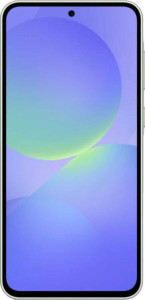
Motorola Moto G57
Samsung Galaxy A36 5G (128GB / 6GB RAM)

Motorola Moto G57 Samsung Galaxy A36 5G (128GB / 6GB RAM)

Overview

Welcome to our in-depth spec comparison between the Motorola Moto G57 and the Samsung Galaxy A36 5G (128GB / 6GB RAM). Both phones target the mid-range market with 5G connectivity, 120Hz displays, and capable dual-lens cameras, but they take notably different paths when it comes to display technology, water resistance, and overall performance balance. Read on to see how every key specification stacks up side by side.

Common Features

  • Neither phone has a rugged build.
  • Neither phone can be folded.
  • Both phones have a 120Hz refresh rate.
  • Both phones feature branded damage-resistant glass.
  • Neither phone supports Dolby Vision.
  • Neither phone has a secondary screen.
  • Both phones have a touch screen.
  • Both phones share a CPU speed of 4 x 2.4 & 4 x 1.8 GHz.
  • Both phones have integrated LTE.
  • Both phones use a 4 nm semiconductor size.
  • Both phones support 64-bit processing.
  • Both phones support DirectX 12.
  • Both phones have integrated graphics.
  • Both phones use big.LITTLE technology.
  • Both phones have an OpenGL ES version of 3.2.
  • Both phones feature a dual-lens or multi-lens main camera.
  • Neither phone has a dual-tone LED flash.
  • Both phones have a single LED flash.
  • Neither phone has a BSI sensor.
  • Both phones have a CMOS sensor.
  • Both phones support continuous autofocus when recording movies.
  • Both phones support phase-detection autofocus for photos.
  • Both phones support slow-motion video recording.
  • Both phones have clipboard warnings.
  • Both phones have location privacy options.
  • Both phones have camera and microphone privacy options.
  • Neither phone has Mail Privacy Protection.
  • Both phones support theme customization.
  • Both phones can block app tracking.
  • Neither phone blocks cross-site tracking.
  • Both phones have on-device machine learning.
  • Neither phone supports wireless charging.
  • Neither phone comes with a charger.
  • Neither phone has a removable battery.
  • Both phones have a battery level indicator.
  • Both phones have a rechargeable battery.
  • Both phones have stereo speakers.
  • Neither phone has LDAC support.
  • Neither phone has aptX Lossless support.
  • Neither phone has a built-in radio.
  • Both phones support 5G.
  • Neither phone has an external memory slot.
  • Both phones have USB Type-C.
  • Both phones use USB version 2.
  • Both phones have NFC.
  • Both phones have a download speed of 2900 MBits/s.
  • Both phones have a fingerprint scanner.
  • Neither phone supports emergency SOS via satellite.
  • Both phones have a video light.
  • Neither phone has a sapphire glass display.
  • Neither phone has a curved display.
  • Neither phone has an e-paper display.

Main Differences

  • Water resistance is rated as water resistant on Motorola Moto G57 and waterproof on Samsung Galaxy A36 5G (128GB / 6GB RAM).
  • Weight is 210.6 g on Motorola Moto G57 and 195 g on Samsung Galaxy A36 5G (128GB / 6GB RAM).
  • Thickness is 8.6 mm on Motorola Moto G57 and 7.4 mm on Samsung Galaxy A36 5G (128GB / 6GB RAM).
  • Width is 76.5 mm on Motorola Moto G57 and 78.2 mm on Samsung Galaxy A36 5G (128GB / 6GB RAM).
  • Height is 166.2 mm on Motorola Moto G57 and 162.9 mm on Samsung Galaxy A36 5G (128GB / 6GB RAM).
  • Volume is 109.34 cm³ on Motorola Moto G57 and 94.27 cm³ on Samsung Galaxy A36 5G (128GB / 6GB RAM).
  • IP rating is IP64 on Motorola Moto G57 and IP67 on Samsung Galaxy A36 5G (128GB / 6GB RAM).
  • Display type is LCD IPS on Motorola Moto G57 and OLED/AMOLED on Samsung Galaxy A36 5G (128GB / 6GB RAM).
  • Screen size is 6.72″ on Motorola Moto G57 and 6.7″ on Samsung Galaxy A36 5G (128GB / 6GB RAM).
  • Pixel density is 392 ppi on Motorola Moto G57 and 385 ppi on Samsung Galaxy A36 5G (128GB / 6GB RAM).
  • Resolution is 1080 x 2400 px on Motorola Moto G57 and 1080 x 2340 px on Samsung Galaxy A36 5G (128GB / 6GB RAM).
  • Gorilla Glass version is Gorilla Glass 7i on Motorola Moto G57 and Gorilla Glass Victus on Samsung Galaxy A36 5G (128GB / 6GB RAM).
  • HDR10 support is present on Samsung Galaxy A36 5G (128GB / 6GB RAM) but not available on Motorola Moto G57.
  • HDR10+ support is present on Samsung Galaxy A36 5G (128GB / 6GB RAM) but not available on Motorola Moto G57.
  • Always-On Display is available on Samsung Galaxy A36 5G (128GB / 6GB RAM) but not on Motorola Moto G57.
  • Internal storage is 256GB on Motorola Moto G57 and 128GB on Samsung Galaxy A36 5G (128GB / 6GB RAM).
  • RAM is 8GB on Motorola Moto G57 and 6GB on Samsung Galaxy A36 5G (128GB / 6GB RAM).
  • Chipset is Qualcomm Snapdragon 6s Gen 4 on Motorola Moto G57 and Qualcomm Snapdragon 6 Gen 3 on Samsung Galaxy A36 5G (128GB / 6GB RAM).
  • RAM speed is 3200 MHz on Motorola Moto G57 and 2750 MHz on Samsung Galaxy A36 5G (128GB / 6GB RAM).
  • Maximum memory bandwidth is 17 GB/s on Motorola Moto G57 and 25.6 GB/s on Samsung Galaxy A36 5G (128GB / 6GB RAM).
  • Main camera megapixels are 50 & 8 MP on Motorola Moto G57 and 50 & 8 & 5 MP on Samsung Galaxy A36 5G (128GB / 6GB RAM).
  • Main camera wide aperture is f/2.2 & f/1.8 on Motorola Moto G57 and f/1.8, f/2.2 & f/2.4 on Samsung Galaxy A36 5G (128GB / 6GB RAM).
  • Front camera resolution is 8MP on Motorola Moto G57 and 12MP on Samsung Galaxy A36 5G (128GB / 6GB RAM).
  • Optical image stabilization is present on Samsung Galaxy A36 5G (128GB / 6GB RAM) but not available on Motorola Moto G57.
  • Main camera video recording is 1440 x 30 fps on Motorola Moto G57 and 2160 x 30 fps on Samsung Galaxy A36 5G (128GB / 6GB RAM).
  • Android version is Android 16 on Motorola Moto G57 and Android 15 on Samsung Galaxy A36 5G (128GB / 6GB RAM).
  • Battery capacity is 5200 mAh on Motorola Moto G57 and 5000 mAh on Samsung Galaxy A36 5G (128GB / 6GB RAM).
  • Fast charging is supported on Samsung Galaxy A36 5G (128GB / 6GB RAM) but not available on Motorola Moto G57.
  • A 3.5 mm audio jack is present on Motorola Moto G57 but not available on Samsung Galaxy A36 5G (128GB / 6GB RAM).
  • Wi-Fi support covers Wi-Fi 4 and Wi-Fi 5 on Motorola Moto G57, while Samsung Galaxy A36 5G (128GB / 6GB RAM) also adds Wi-Fi 6.
  • SIM card options are 1 SIM and 1 eSIM on Motorola Moto G57, while Samsung Galaxy A36 5G (128GB / 6GB RAM) supports 1 SIM, 1 eSIM, 2 SIM, or 2 eSIM configurations.
  • Bluetooth version is 5.1 on Motorola Moto G57 and 5.3 on Samsung Galaxy A36 5G (128GB / 6GB RAM).
  • Upload speed is 1500 MBits/s on Motorola Moto G57 and 1600 MBits/s on Samsung Galaxy A36 5G (128GB / 6GB RAM).
Specs Comparison
Motorola Moto G57

Motorola Moto G57

Samsung Galaxy A36 5G (128GB / 6GB RAM)

Samsung Galaxy A36 5G (128GB / 6GB RAM)

Design:
water resistance Water resistant Waterproof
weight 210.6 g 195 g
thickness 8.6 mm 7.4 mm
width 76.5 mm 78.2 mm
height 166.2 mm 162.9 mm
volume 109.34298 cm³ 94.266972 cm³
Ingress Protection (IP) rating IP64 IP67
has a rugged build
can be folded

The most meaningful difference in this group comes down to water protection. The Moto G57 carries an IP64 rating, meaning it can handle splashes and dust but is not rated for submersion. The Galaxy A36 5G steps up to IP67, which adds full dust protection and the ability to survive being submerged in up to 1 meter of fresh water for 30 minutes. In practical terms, this distinction matters if you use your phone near pools, in the rain, or in environments where accidental drops into water are realistic — the A36 offers meaningfully stronger peace of mind.

The Samsung also has a clear physical advantage in form factor. At 7.4 mm thick and 195 g, it is noticeably slimmer and lighter than the Moto G57, which measures 8.6 mm and 210.6 g. A 15.6 g difference and over a full millimeter in thickness may seem minor on paper, but in everyday one-handed use and in-pocket comfort, the A36 will feel appreciably more refined and easier to handle, especially during extended sessions.

Both phones share a non-rugged, non-foldable design, so neither targets niche durability or productivity form factors. Overall, the Samsung Galaxy A36 5G holds a clear advantage in this group — it is lighter, slimmer, more compact by volume, and offers stronger water protection with its IP67 rating.

Display:
Display type LCD, IPS OLED/AMOLED
screen size 6.72" 6.7"
pixel density 392 ppi 385 ppi
resolution 1080 x 2400 px 1080 x 2340 px
refresh rate 120Hz 120Hz
has branded damage-resistant glass
Gorilla Glass version Gorilla Glass 7i Gorilla Glass Victus
supports HDR10
supports HDR10+
Always-On Display
supports Dolby Vision
Has a secondary screen
has a touch screen

Panel technology is where these two screens fundamentally diverge. The Moto G57 uses an LCD IPS panel, while the Galaxy A36 5G features an OLED/AMOLED display. This is not a minor distinction — OLED renders true blacks by switching off individual pixels, producing far superior contrast ratios, more vibrant colors, and better visibility in direct sunlight compared to LCD. For media consumption, gaming, or simply everyday browsing, the A36's screen will look noticeably richer and more immersive.

Building on that panel advantage, the A36 also supports HDR10 and HDR10+, enabling it to render a wider range of brightness and color when streaming compatible content — something the G57 cannot do at all. The A36 additionally offers an Always-On Display, a practical OLED-exclusive feature that shows time, notifications, and widgets without fully waking the screen. On the protection side, the G57 counters with Gorilla Glass 7i versus the A36's Gorilla Glass Victus — Victus is the higher-tier formulation, offering stronger drop and scratch resistance.

Screen size and pixel density are effectively a wash at roughly 6.7″ and ~385–392 ppi respectively, and both panels run at a smooth 120Hz. But the cumulative weight of OLED technology, HDR support, Always-On capability, and superior glass gives the Samsung Galaxy A36 5G a decisive and well-rounded edge in this category.

Performance:
internal storage 256GB 128GB
RAM 8GB 6GB
Chipset (SoC) name Qualcomm Snapdragon 6s Gen 4 Qualcomm Snapdragon 6 Gen 3
CPU speed 4 x 2.4 & 4 x 1.8 GHz 4 x 2.4 & 4 x 1.8 GHz
Has integrated LTE
RAM speed 3200 MHz 2750 MHz
semiconductor size 4 nm 4 nm
Supports 64-bit
DirectX version DirectX 12 DirectX 12
Has integrated graphics
OpenGL ES version 3.2 3.2
Uses big.LITTLE technology
CPU threads 8 threads 8 threads
Has NX bit
Uses HMP
Has TrustZone
maximum memory bandwidth 17 GB/s 25.6 GB/s
OpenCL version 2 2
memory channels 2 2
eMMC version 5.1 5.1
maximum memory amount 12GB 12GB
DDR memory version 5 5

Both phones are built on a 4nm process with identical CPU clock configurations — 4 x 2.4 GHz + 4 x 1.8 GHz — and share the same thread count, architecture approach, and graphics API support. In day-to-day tasks like browsing, messaging, and streaming, this symmetry means neither phone holds a pronounced lead based on raw CPU specs alone.

Where they split is in a genuine trade-off. The Moto G57 ships with 8GB of RAM and 256GB of storage, giving it a tangible advantage for heavy multitasking and users who store large libraries of photos, videos, or offline content. Its RAM also runs at a faster 3200 MHz versus the A36's 2750 MHz. However, the Galaxy A36 5G counters with a substantially higher memory bandwidth of 25.6 GB/s compared to the G57's 17 GB/s — a metric that reflects how quickly the processor can move data in and out of memory, which matters most in graphics-intensive workloads and sustained performance scenarios.

Declaring a single winner here depends on use case. For storage-conscious users and multitaskers, the Moto G57's extra RAM and double the internal storage make a compelling argument. For users prioritizing graphics throughput and sustained load performance, the A36's memory bandwidth advantage is meaningful. On balance, the G57 offers more practical everyday headroom at this spec tier, but neither phone has a clean sweep across all performance metrics.

Cameras:
megapixels (main camera) 50 & 8 MP 50 & 8 & 5 MP
wide aperture (main camera) 2.2 & 1.8f 1.8 & 2.2 & 2.4f
Has a dual-lens (or multi-lens) main camera
megapixels (front camera) 8MP 12MP
has built-in optical image stabilization
video recording (main camera) 1440 x 30 fps 2160 x 30 fps
Has a dual-tone LED flash
number of flash LEDs 1 1
has a BSI sensor
has a CMOS sensor
has continuous autofocus when recording movies
Has phase-detection autofocus for photos
supports slow-motion video recording
has a built-in HDR mode
has manual exposure
has a flash
optical zoom 0x 0x
has manual ISO
has a serial shot mode
has manual focus
has a front camera
Has laser autofocus
Shoots 360° panorama
has manual white balance
shoots raw
has touch autofocus
has manual shutter speed
can create panoramas in-camera
wide aperture (front camera) 2.2f 2.2f
Has timelapse function
Has a front-facing LED flash
has a dual-lens (or multi-lens) front camera
supports HDR10 recording
supports Dolby Vision recording
has a front-facing camera under the display
Has a RGB LED flash
has 3D photo/video recording capabilities

Three differences stand out immediately in the rear camera system. The Galaxy A36 5G fields a triple-lens setup (50MP + 8MP + 5MP) against the G57's dual-lens array (50MP + 8MP), giving the A36 an additional 5MP sensor that expands shooting versatility. More impactful still, the A36 includes optical image stabilization (OIS) — a hardware feature that physically compensates for hand shake during shots and video recording. The G57 lacks OIS entirely, meaning handheld low-light photos and video footage will be more prone to blur and instability by comparison.

Video capability is another meaningful gap. The A36 tops out at 4K (2160p) at 30fps, while the G57 is capped at 1440p at 30fps — a step below 4K. For users who shoot video for social media, travel, or family documentation, this is a real-world ceiling that limits the G57's output quality regardless of scene conditions. On the front camera, the A36 also pulls ahead with a 12MP selfie shooter versus the G57's 8MP, which translates to more detail and better cropping flexibility in portrait and video call scenarios.

Beyond these differences, the two phones are closely matched — identical primary sensor resolution, shared autofocus technologies, and the same manual control options. But the combination of OIS, a third rear lens, 4K video, and a higher-resolution front camera gives the Samsung Galaxy A36 5G a clear and well-rounded advantage in this category.

Operating system:
Android version Android 16 Android 15
has clipboard warnings
has location privacy options
has camera/microphone privacy options
has Mail Privacy Protection
has theme customization
can block app tracking
blocks cross-site tracking
has on-device machine learning
has notification permissions
has media picker
Can play games while they download
has dark mode
has Wi-Fi password sharing
has battery health check
has an extra dim mode
has focus modes
has dynamic theming
can offload apps
Has customizable notifications
has Live Text
has full-page screenshots
supports split screen
gets direct OS updates
has PiP
Can be used as a PC
Has sharing intents
has a child lock
Supports widgets
Is free and open source
Has offline voice recognition
has voice commands
Tracks the current position of a mobile device
is a multi-user system
has Quick Start

Across the full breadth of software features listed, these two phones are virtually identical — both run stock-adjacent Android with the same privacy controls, productivity tools, and user experience capabilities. The one concrete differentiator is the Android version: the Moto G57 ships with Android 16, while the Galaxy A36 5G launches on Android 15. A newer base version means the G57 starts with the latest security patches, any behavioral and performance refinements Google introduced in Android 16, and a longer runway before that version reaches end-of-support.

It is worth noting that neither phone receives direct OS updates according to the provided data, meaning both rely on manufacturer-mediated update pipelines rather than guaranteed fast-track delivery. This tempers the G57's version lead somewhat — how quickly either phone moves forward beyond its launch version depends on the manufacturer, not Google directly.

Given the near-complete feature parity, the Moto G57 holds a modest edge in this category solely by virtue of launching on a newer Android version. For users who prioritize having the latest OS out of the box, that distinction is real, even if the practical day-to-day software experience between the two phones is essentially equivalent.

Battery:
battery power 5200 mAh 5000 mAh
has wireless charging
Supports fast charging
comes with a charger
has a removable battery
has a battery level indicator
has a rechargeable battery

A classic capacity-versus-convenience trade-off defines this category. The Moto G57 packs a larger 5200 mAh battery compared to the Galaxy A36 5G's 5000 mAh — a 200 mAh gap that, in real-world use, translates to a marginal difference in raw endurance. Neither phone is likely to leave the other dramatically behind on a single charge, especially given that actual battery life depends heavily on the display and software stack rather than capacity alone.

The more consequential difference is that the G57 does not support fast charging at all, while the A36 does. In practice, this means the G57 will require significantly more time plugged in to reach a full charge — a daily friction point that compounds over time. When you factor in that neither phone ships with a charger in the box, G57 owners need to source a compatible charger independently, with no fast-charging benefit to reward them for doing so.

Neither phone offers wireless charging or a removable battery, so those factors are a wash. On balance, the Samsung Galaxy A36 5G holds the practical edge here — its fast charging support is a more meaningful real-world advantage than the G57's marginal capacity lead, making it the more convenient device to live with day to day.

Audio:
has a socket for a 3.5 mm audio jack
has stereo speakers
has LDAC
has aptX Lossless
Has a radio

The audio spec sheet for these two phones is sparse, and most of it is shared — both offer stereo speakers and neither supports advanced wireless audio codecs like LDAC or aptX Lossless, nor does either include a built-in radio. The sole differentiator, but a meaningful one for certain users, is the 3.5mm headphone jack: the Moto G57 has it, the Galaxy A36 5G does not.

For users who rely on wired headphones — whether for audio quality, convenience, or simply to avoid managing another device's battery — the G57's headphone jack removes friction entirely. A36 owners wanting wired audio will need a USB-C adapter or must commit fully to Bluetooth headphones. Neither path is a dealbreaker in 2025, but it is an added cost and inconvenience that the G57 sidesteps by default.

Given how closely matched everything else is, the Moto G57 takes a narrow edge in this category purely on the strength of its headphone jack — a feature whose absence on the A36 will matter a lot to some users and not at all to others.

Connectivity & Features:
release date November 2025 March 2025
has 5G support
Wi-Fi version Wi-Fi 4 (802.11n), Wi-Fi 5 (802.11ac) Wi-Fi 4 (802.11n), Wi-Fi 5 (802.11ac), Wi-Fi 6 (802.11ax)
SIM cards 1 SIM, 1 eSIM 1 SIM, 1 eSIM, 2 SIM, 2 eSIM
Bluetooth version 5.1 5.3
has an external memory slot
Has USB Type-C
USB version 2 2
has NFC
download speed 2900 MBits/s 2900 MBits/s
upload speed 1500 MBits/s 1600 MBits/s
Has a fingerprint scanner
has emergency SOS via satellite
has crash detection
is DLNA-certified
has a gyroscope
supports ANT+
Has a heart rate monitor
has GPS
has a compass
supports Wi-Fi
Has an infrared sensor
has an accelerometer
has a cellular module
Has a barometer
has an HDMI output
Uses 3D facial recognition
Has an iris scanner
Stylus included
supports Galileo
Has motion tracking
Has optical tracking
Has a built-in projector

Connectivity is another area where the Galaxy A36 5G quietly pulls ahead on multiple fronts. Its Wi-Fi stack includes Wi-Fi 6 (802.11ax), while the Moto G57 tops out at Wi-Fi 5 (802.11ac). Wi-Fi 6 delivers better throughput, lower latency, and significantly improved performance in congested environments — like offices, apartments, or public spaces with many competing devices — making it a meaningful upgrade for anyone on a modern router. The A36 also runs Bluetooth 5.3 versus the G57's 5.1, a newer revision that brings improved connection stability and more efficient pairing with peripherals.

SIM flexibility is another gap worth noting. The A36 supports up to 2 physical SIMs plus 2 eSIMs, whereas the G57 is limited to 1 physical SIM and 1 eSIM. For frequent travelers, users managing work and personal lines, or those in regions where dual-SIM usage is standard practice, the A36's flexibility is a genuine practical advantage. Both phones share identical 5G download speeds and near-identical upload speeds, NFC, GPS with Galileo support, fingerprint scanning, and the same USB-C 2.0 standard — so the core connectivity baseline is largely even.

Across this group, the Samsung Galaxy A36 5G holds a clear edge. Wi-Fi 6, a newer Bluetooth version, and broader SIM configuration options are all tangible, everyday improvements over what the G57 offers — particularly for users who prioritize future-proof wireless performance and multi-SIM versatility.

Miscellaneous:
has a video light
Has sapphire glass display
Has a curved display
Has an e-paper display

This category offers no differentiating data between the two phones. Both the Motorola Moto G57 and the Samsung Galaxy A36 5G share identical attributes across every spec listed here — each has a video light, and neither features a sapphire glass display, curved screen, or e-paper display.

This is a clear tie. Based strictly on the provided data, neither product holds any advantage over the other in this group.

Comparison Summary & Verdict

After a thorough look at the specs, both phones offer solid mid-range foundations, but each shines in different areas. The Motorola Moto G57 stands out with more internal storage (256GB), larger RAM (8GB), a bigger 5200 mAh battery, a 3.5mm headphone jack, and Android 16 out of the box, making it a strong pick for users who prioritize raw storage and everyday versatility. The Samsung Galaxy A36 5G, on the other hand, delivers a superior OLED display with HDR10+ and Always-On Display, a higher IP67 waterproof rating, optical image stabilization, 4K video recording, fast charging support, and Wi-Fi 6, making it ideal for users who value media quality, camera performance, and durability in a sleeker, lighter build.

Motorola Moto G57
Buy Motorola Moto G57 if...

Buy the Motorola Moto G57 if you want more storage and RAM for the money, prefer keeping a 3.5mm headphone jack, or want the latest Android 16 out of the box with a larger battery.

Samsung Galaxy A36 5G (128GB / 6GB RAM)
Buy Samsung Galaxy A36 5G (128GB / 6GB RAM) if...

Buy the Samsung Galaxy A36 5G (128GB / 6GB RAM) if you prioritize a vibrant OLED display with HDR10+ support, a higher IP67 waterproof rating, fast charging, optical image stabilization, and Wi-Fi 6 connectivity.