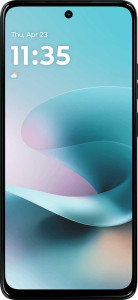
Across the core connectivity checklist — 5G, dual SIM, NFC, USB-C, Wi-Fi 5, GPS, and Galileo — these two phones are identical, and both cover the essentials well for a modern mid-range device. The differences, while fewer, are worth noting. The Oppo F31 5G runs Bluetooth 5.4 versus the Moto G67 Power's 5.1, a newer version that brings improvements in connection stability and energy efficiency — particularly relevant given the F31 5G's high-fidelity wireless audio codec support noted in other groups. The F31 5G also edges ahead on peak cellular download speeds, rated at 3300 Mbps compared to the G67 Power's 2900 Mbps, though in practice both figures far exceed what real-world 5G networks typically deliver.
The G67 Power counters with one meaningful exclusive: it includes a gyroscope, which the F31 5G lacks. A gyroscope enables accurate motion-based gaming, augmented reality applications, and more precise screen rotation — its absence on the F31 5G is a genuine functional gap for users who engage with these use cases. Both phones share the accelerometer and compass, but without a gyroscope, the F31 5G is limited in its ability to detect rotational movement.
The result is a near-balanced group with targeted trade-offs on each side. The F31 5G holds a modest lead in Bluetooth version and download speed ceiling; the G67 Power holds a practical advantage with its gyroscope. On aggregate, this group is essentially tied, with each phone offering one meaningful connectivity feature the other lacks — making the deciding factor dependent on whether motion-sensing capability or a newer Bluetooth standard matters more to the individual user.