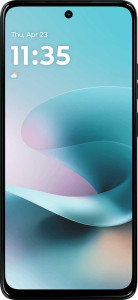
Motorola Moto G67 Power
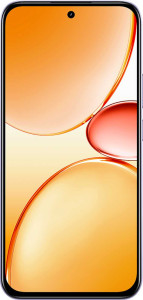
Realme C85 Pro

Motorola Moto G67 Power Realme C85 Pro

Overview

Welcome to our in-depth spec comparison between the Motorola Moto G67 Power and the Realme C85 Pro. Both phones share a massive 7000 mAh battery and 8GB of RAM, but they take very different paths when it comes to performance, display quality, and connectivity. Whether you care most about raw processing power, camera versatility, or durability, this breakdown will help you decide which device truly fits your needs.

Common Features

  • Neither product has a rugged build.
  • Neither product can be folded.
  • Both products use an LCD IPS display type.
  • Both products have a 120Hz refresh rate.
  • HDR10+ support is not available on either product.
  • Always-On Display is not available on either product.
  • Dolby Vision support is not available on either product.
  • Neither product has a secondary screen.
  • Both products have a touch screen.
  • Both products come with 256GB of internal storage and 8GB of RAM.
  • Both products have integrated LTE support.
  • Both products support 64-bit processing.
  • Both products use DirectX 12.
  • Both products have integrated graphics.
  • Both products use big.LITTLE technology.
  • Both products have a CMOS sensor.
  • Both products support continuous autofocus when recording movies.
  • Both products have phase-detection autofocus for photos.
  • Both products support slow-motion video recording.
  • Both products have a built-in HDR mode.
  • Optical image stabilization is not available on either product.
  • Neither product has a dual-tone LED flash.
  • Neither product has a BSI sensor.
  • Both products run Android 15.
  • Both products have clipboard warnings.
  • Both products have location privacy options.
  • Both products have camera and microphone privacy options.
  • Mail Privacy Protection is not available on either product.
  • Both products support theme customization.
  • Both products can block app tracking.
  • Cross-site tracking blocking is not available on either product.
  • Both products have a 7000 mAh battery.
  • Wireless charging is not available on either product.
  • Both products support fast charging.
  • Reverse wireless charging is not available on either product.
  • Neither product has a removable battery.
  • Both products have a battery level indicator.
  • Both products have a rechargeable battery.
  • aptX support is not available on either product.
  • LDAC support is not available on either product.
  • Neither product has a built-in radio.
  • Both products support Wi-Fi 4 (802.11n) and Wi-Fi 5 (802.11ac).
  • Both products support dual SIM cards.
  • Both products have USB Type-C with USB version 2.
  • Both products have NFC.
  • Both products have a fingerprint scanner.
  • Emergency SOS via satellite is not available on either product.
  • Crash detection is not available on either product.
  • Both products have a video light.
  • Neither product has a sapphire glass display.
  • Neither product has a curved display.
  • Neither product has an e-paper display.

Main Differences

  • Water resistance is rated as water resistant on Motorola Moto G67 Power and waterproof on Realme C85 Pro.
  • Weight is 210g on Motorola Moto G67 Power and 205g on Realme C85 Pro.
  • Thickness is 8.6mm on Motorola Moto G67 Power and 8.1mm on Realme C85 Pro.
  • Width is 76.5mm on Motorola Moto G67 Power and 78mm on Realme C85 Pro.
  • Height is 166.2mm on Motorola Moto G67 Power and 164.4mm on Realme C85 Pro.
  • Volume is 109.34 cm³ on Motorola Moto G67 Power and 103.87 cm³ on Realme C85 Pro.
  • IP rating is IP64 on Motorola Moto G67 Power and IP69 on Realme C85 Pro.
  • Screen size is 6.7″ on Motorola Moto G67 Power and 6.8″ on Realme C85 Pro.
  • Pixel density is 391 ppi on Motorola Moto G67 Power and 254 ppi on Realme C85 Pro.
  • Resolution is 1080 x 2400 px on Motorola Moto G67 Power and 1080 x 2344 px on Realme C85 Pro.
  • Damage-resistant glass is present on Motorola Moto G67 Power but not available on Realme C85 Pro.
  • HDR10 support is present on Motorola Moto G67 Power but not available on Realme C85 Pro.
  • The chipset is Qualcomm Snapdragon 7s Gen 2 on Motorola Moto G67 Power and Qualcomm Snapdragon 685 4G on Realme C85 Pro.
  • The GPU is Adreno 710 on Motorola Moto G67 Power and Adreno 610 on Realme C85 Pro.
  • CPU speed is 4 x 2.4 & 4 x 1.95 GHz on Motorola Moto G67 Power and 4 x 2.8 & 4 x 1.9 GHz on Realme C85 Pro.
  • Geekbench 6 multi-core score is 2970 on Motorola Moto G67 Power and 1510 on Realme C85 Pro.
  • Geekbench 6 single-core score is 1015 on Motorola Moto G67 Power and 473 on Realme C85 Pro.
  • GPU clock speed is 940 MHz on Motorola Moto G67 Power and 1260 MHz on Realme C85 Pro.
  • RAM speed is 3200 MHz on Motorola Moto G67 Power and 2133 MHz on Realme C85 Pro.
  • Semiconductor size is 4nm on Motorola Moto G67 Power and 6nm on Realme C85 Pro.
  • Maximum memory bandwidth is 25.6 GB/s on Motorola Moto G67 Power and 17 GB/s on Realme C85 Pro.
  • DDR memory version is DDR5 on Motorola Moto G67 Power and DDR4 on Realme C85 Pro.
  • Main camera megapixels are 50 & 8 MP on Motorola Moto G67 Power and 50 MP on Realme C85 Pro.
  • Main camera wide aperture is f/2.2 & f/1.8 on Motorola Moto G67 Power and f/1.8 on Realme C85 Pro.
  • A dual-lens main camera is present on Motorola Moto G67 Power but not available on Realme C85 Pro.
  • Front camera megapixels are 32 MP on Motorola Moto G67 Power and 8 MP on Realme C85 Pro.
  • Main camera video recording is 2160p at 30 fps on Motorola Moto G67 Power and 1080p at 60 fps on Realme C85 Pro.
  • Number of flash LEDs is 2 on Motorola Moto G67 Power and 1 on Realme C85 Pro.
  • Front camera wide aperture is f/2.2 on Motorola Moto G67 Power and f/2.0 on Realme C85 Pro.
  • Charging speed is 30W on Motorola Moto G67 Power and 45W on Realme C85 Pro.
  • A 3.5mm audio jack is present on Motorola Moto G67 Power but not available on Realme C85 Pro.
  • Stereo speakers are present on Motorola Moto G67 Power but not available on Realme C85 Pro.
  • 5G support is present on Motorola Moto G67 Power but not available on Realme C85 Pro.
  • Bluetooth version is 5.1 on Motorola Moto G67 Power and 5.0 on Realme C85 Pro.
  • External memory slot support is present on Realme C85 Pro but not available on Motorola Moto G67 Power.
  • Download speed is 2900 Mbit/s on Motorola Moto G67 Power and 390 Mbit/s on Realme C85 Pro.
  • Upload speed is 1500 Mbit/s on Motorola Moto G67 Power and 150 Mbit/s on Realme C85 Pro.
  • A gyroscope is present on Motorola Moto G67 Power but not available on Realme C85 Pro.
Specs Comparison
Motorola Moto G67 Power

Motorola Moto G67 Power

Realme C85 Pro

Realme C85 Pro

Design:
water resistance Water resistant Waterproof
weight 210 g 205 g
thickness 8.6 mm 8.1 mm
width 76.5 mm 78 mm
height 166.2 mm 164.4 mm
volume 109.34298 cm³ 103.86792 cm³
Ingress Protection (IP) rating IP64 IP69
has a rugged build
can be folded

The most consequential difference in this group is the water protection rating. The Moto G67 Power carries an IP64 certification, which means it can handle splashes and light rain from any direction — practical for everyday accidents but not submersion or pressure. The Realme C85 Pro steps this up significantly with an IP69 rating, which adds resistance to high-pressure, high-temperature water jets. In real-world terms, IP69 is genuinely a tier above: it covers scenarios like rinsing the phone under a tap or exposure to pressurized water, not just the occasional splash. This alone gives the C85 Pro a meaningful durability edge for users in demanding or outdoor environments.

On physical dimensions, both phones are close but the C85 Pro is marginally more compact overall. It is 5 g lighter (205 g vs 210 g), 0.5 mm thinner (8.1 mm vs 8.6 mm), and has a noticeably smaller displaced volume (103.9 cm³ vs 109.3 cm³). These differences are subtle in isolation, but together they mean the C85 Pro sits slightly more comfortably in hand and pocket, which matters over extended daily use. Neither device has a rugged build or foldable form factor, so both target the standard candybar smartphone segment.

Overall, the Realme C85 Pro holds a clear advantage in this group. Its superior IP69 waterproofing is a practical, real-world differentiator rather than a paper spec, and its slightly slimmer and lighter profile adds to the appeal. The G67 Power's IP64 rating is adequate for most casual use, but if durability and form factor compactness are priorities, the C85 Pro wins this category decisively.

Display:
Display type LCD, IPS LCD, IPS
screen size 6.7" 6.8"
pixel density 391 ppi 254 ppi
resolution 1080 x 2400 px 1080 x 2344 px
refresh rate 120Hz 120Hz
has branded damage-resistant glass
supports HDR10
supports HDR10+
Always-On Display
supports Dolby Vision
Has a secondary screen
has a touch screen

Both phones share the same panel technology — LCD IPS with a 120Hz refresh rate — and their screen sizes are nearly identical at 6.7″ and 6.8″ respectively. In practice, these similarities mean users on either device get smooth scrolling and comparable viewing real estate. The meaningful divergence, however, lies in pixel density. The Moto G67 Power resolves at 391 ppi versus the Realme C85 Pro's 254 ppi — a gap wide enough to be visible to the naked eye. At 391 ppi, text and fine detail appear crisp and sharp; at 254 ppi, slight softness becomes noticeable, particularly when reading small text or viewing detailed images up close.

Beyond sharpness, the G67 Power extends its lead in two more areas. It features branded damage-resistant glass, providing meaningful protection against everyday scratches and minor drops — something the C85 Pro lacks entirely. It also supports HDR10, which means compatible video content renders with a wider range of brightness and color depth. The C85 Pro supports neither, which limits both its durability and its multimedia ceiling.

The Moto G67 Power wins this category convincingly. The pixel density advantage is substantial and immediately perceptible in daily use, and the additions of damage-resistant glass and HDR10 support reinforce its lead. The C85 Pro's marginally larger screen does not offset these gaps — sharpness, protection, and content quality collectively make the G67 Power the stronger display package here.

Performance:
internal storage 256GB 256GB
RAM 8GB 8GB
Chipset (SoC) name Qualcomm Snapdragon 7s Gen 2 Qualcomm Snapdragon 685 4G
GPU name Adreno 710 Adreno 610
CPU speed 4 x 2.4 & 4 x 1.95 GHz 4 x 2.8 & 4 x 1.9 GHz
Geekbench 6 result (multi) 2970 1510
Geekbench 6 result (single) 1015 473
GPU clock speed 940 MHz 1260 MHz
Has integrated LTE
RAM speed 3200 MHz 2133 MHz
semiconductor size 4 nm 6 nm
Supports 64-bit
DirectX version DirectX 12 DirectX 12
Has integrated graphics
OpenGL ES version 3.2 3.2
Uses big.LITTLE technology
CPU threads 8 threads 8 threads
Has TrustZone
maximum memory bandwidth 25.6 GB/s 17 GB/s
OpenCL version 2 2
maximum memory amount 16GB 16GB
DDR memory version 5 4

On paper, both phones match each other in RAM (8GB), storage (256GB), and thread count, but their chipsets tell a very different story. The Moto G67 Power runs on the Snapdragon 7s Gen 2 built on a 4nm process, while the Realme C85 Pro uses the older Snapdragon 685 on a 6nm node. The smaller fabrication process in the G67 Power translates directly into greater power efficiency and thermal headroom — meaning it can sustain demanding workloads longer before throttling.

The benchmark data makes the performance gap concrete and hard to ignore. In Geekbench 6, the G67 Power scores 1015 single-core and 2970 multi-core, compared to the C85 Pro's 473 single-core and 1510 multi-core. That is roughly a 2x advantage across the board — a gap that manifests in everyday tasks like app launches, multitasking, and responsiveness, not just in synthetic stress tests. Memory bandwidth further reinforces this: 25.6 GB/s versus 17 GB/s means the G67 Power moves data between processor and RAM significantly faster, benefiting anything from gaming to photo processing. The newer DDR5 RAM in the G67 Power versus DDR4 in the C85 Pro also contributes to this edge.

The Moto G67 Power dominates this category without much contest. Every measurable performance indicator — process node, benchmark scores, memory bandwidth, and RAM generation — points decisively in its favor. For users who care about snappy day-to-day performance and longevity as apps grow more demanding over time, the G67 Power is the clear choice here.

Cameras:
megapixels (main camera) 50 & 8 MP 50 MP
wide aperture (main camera) 2.2 & 1.8f 1.8f
Has a dual-lens (or multi-lens) main camera
megapixels (front camera) 32MP 8MP
has built-in optical image stabilization
video recording (main camera) 2160 x 30 fps 1080 x 60 fps
Has a dual-tone LED flash
number of flash LEDs 2 1
has a BSI sensor
has a CMOS sensor
has continuous autofocus when recording movies
Has phase-detection autofocus for photos
supports slow-motion video recording
has a built-in HDR mode
has manual exposure
has a flash
optical zoom 0x 0x
has manual ISO
has a serial shot mode
has manual focus
has a front camera
Has laser autofocus
Shoots 360° panorama
has manual white balance
shoots raw
has touch autofocus
has manual shutter speed
can create panoramas in-camera
wide aperture (front camera) 2.2f 2f
Has timelapse function
Has a front-facing LED flash
has a dual-lens (or multi-lens) front camera
supports HDR10 recording
supports Dolby Vision recording
has a front-facing camera under the display
Has a RGB LED flash
has 3D photo/video recording capabilities

Starting with the rear camera, both phones share a 50MP primary sensor with an f/1.8 aperture, and their feature sets — phase-detection autofocus, HDR mode, slow-motion, manual controls — are largely identical. The G67 Power, however, adds an 8MP secondary lens, giving it extra versatility the single-lens C85 Pro cannot match. More consequentially, the G67 Power records video at 4K (2160p) at 30fps, while the C85 Pro tops out at 1080p at 60fps. For users who want to capture high-resolution footage — travel, events, anything they might view on a large screen — that 4K ceiling is a genuine, practical advantage.

The front camera gap is even more pronounced. The G67 Power's 32MP selfie shooter versus the C85 Pro's 8MP is a fourfold difference in resolution, meaning significantly more detail in portraits, group shots, and video calls. The C85 Pro's front aperture is marginally wider at f/2.0 versus f/2.2, which helps slightly in low light, but this minor advantage does not come close to compensating for the resolution deficit in everyday selfie use.

The Moto G67 Power wins this category clearly. Its dual rear camera system, 4K video capability, and especially its 32MP front camera represent meaningful real-world advantages over the C85 Pro across multiple shooting scenarios. Users who prioritize photography and video will find considerably more headroom with the G67 Power.

Operating system:
Android version Android 15 Android 15
has clipboard warnings
has location privacy options
has camera/microphone privacy options
has Mail Privacy Protection
has theme customization
can block app tracking
blocks cross-site tracking
has on-device machine learning
has notification permissions
has media picker
Can play games while they download
has dark mode
has Wi-Fi password sharing
has battery health check
has an extra dim mode
has focus modes
has dynamic theming
can offload apps
Has customizable notifications
has Live Text
has full-page screenshots
supports split screen
gets direct OS updates
has PiP
Can be used as a PC
Has sharing intents
has a child lock
Supports widgets
Is free and open source
Has offline voice recognition
has voice commands
Tracks the current position of a mobile device
is a multi-user system
has Quick Start

This is a rare case of complete parity: every single spec in this group is identical across both devices. Both run Android 15 and share the same full feature set — dark mode, dynamic theming, split-screen, Picture-in-Picture, on-device machine learning, offline voice recognition, customizable notifications, and a comprehensive suite of privacy controls including location, camera, and microphone permissions. For users prioritizing software features, neither phone offers anything the other does not.

The shared privacy toolkit is worth noting as a collective strength of both devices. Clipboard warnings, app tracking controls, and granular notification permissions are all present, giving users solid tools to manage their data exposure. Neither phone gets direct OS updates, which means both rely on manufacturer update pipelines — a relevant consideration for long-term software support, and a shared limitation rather than a differentiator.

This group is an unambiguous tie. The software experience, feature breadth, and privacy capabilities are mirror images of each other. Any decision between the Motorola Moto G67 Power and the Realme C85 Pro should rest entirely on the differences found in other specification groups.

Battery:
battery power 7000 mAh 7000 mAh
has wireless charging
Supports fast charging
charging speed 30W 45W
has reverse wireless charging
has a removable battery
has a battery level indicator
has a rechargeable battery

Both phones pack an identical 7000 mAh battery — a generously large capacity that positions both firmly in the endurance-focused segment of the market. At this size, multi-day battery life under moderate use is a realistic expectation for either device. Since capacity is equal, longevity between charges is essentially the same, and neither holds an edge there.

Where they diverge is charging speed. The Realme C85 Pro supports 45W fast charging versus the G67 Power's 30W. Refilling a 7000 mAh cell is a lengthier process than smaller batteries regardless of wattage, so the 15W difference is meaningful in practice — the C85 Pro will reach a usable charge level noticeably faster, which matters during short windows like a lunch break or a quick stop before heading out. Neither device offers wireless or reverse wireless charging, so plugged-in speed is the only variable in play.

This group edges toward the Realme C85 Pro, but narrowly. The equal battery capacity means both deliver the same longevity, but the C85 Pro's faster 45W charging gives it a practical convenience advantage for users who frequently need to top up quickly rather than charge overnight.

Audio:
has a socket for a 3.5 mm audio jack
has stereo speakers
has aptX
has LDAC
has aptX HD
has aptX Adaptive
has aptX Lossless
Has a radio

Audio is one of the starkest divides in this entire comparison. The Moto G67 Power includes both a 3.5mm headphone jack and stereo speakers, while the Realme C85 Pro offers neither. These are not minor omissions — they represent two of the most practically impactful audio features a phone can have at this price tier.

Stereo speakers produce sound from two directions simultaneously, delivering noticeably wider, more immersive audio for media consumption, gaming, and speakerphone calls. A mono speaker, by contrast, sounds comparatively flat and directional. Meanwhile, the absence of a headphone jack on the C85 Pro means wired headphone users must rely on an adapter or switch to Bluetooth entirely — an added inconvenience and an extra point of failure. Neither phone supports high-resolution Bluetooth codecs like aptX HD or LDAC, so wireless audio quality is on equal footing, but the G67 Power still holds the advantage of giving users the choice.

The Motorola Moto G67 Power wins this category decisively. The combination of stereo speakers and a headphone jack covers both speaker and headphone use cases more completely, while the C85 Pro's single speaker and lack of a jack leave users with fewer options and a less capable out-of-the-box listening experience.

Connectivity & Features:
release date November 2025 November 2025
has 5G support
Wi-Fi version Wi-Fi 4 (802.11n), Wi-Fi 5 (802.11ac) Wi-Fi 4 (802.11n), Wi-Fi 5 (802.11ac)
SIM cards 2 SIM 2 SIM
Bluetooth version 5.1 5
has an external memory slot
Has USB Type-C
USB version 2 2
has NFC
download speed 2900 MBits/s 390 MBits/s
upload speed 1500 MBits/s 150 MBits/s
Has a fingerprint scanner
has emergency SOS via satellite
has crash detection
is DLNA-certified
has a gyroscope
supports ANT+
Has a heart rate monitor
has GPS
has a compass
supports Wi-Fi
Has an infrared sensor
has an accelerometer
has a cellular module
Has a barometer
has an HDMI output
Uses 3D facial recognition
Has an iris scanner
Stylus included
supports Galileo
Has motion tracking
Has optical tracking
Has a built-in projector

The single biggest differentiator here is cellular connectivity. The Moto G67 Power supports 5G, with theoretical download speeds of up to 2900 Mbits/s, while the Realme C85 Pro is capped at 4G LTE with a ceiling of 390 Mbits/s down. In practical terms, 5G future-proofs the G67 Power for networks that are rapidly expanding — faster page loads, smoother streaming, and lower latency on supported networks are all on the table. For users in 5G-covered areas, this gap is consequential and will only grow more relevant over the device's lifespan.

The trade-offs are real but more modest. The C85 Pro counters with a microSD card slot, allowing users to expand storage beyond the fixed 256GB — a meaningful perk for heavy media consumers who would otherwise be locked in. The G67 Power also includes a gyroscope, which the C85 Pro lacks; this sensor enables more accurate motion detection for gaming, AR applications, and image stabilization algorithms. Both phones share the same Wi-Fi standards, USB Type-C with USB 2.0, NFC, fingerprint scanner, GPS, and Bluetooth — the C85 Pro on version 5.0 versus the G67 Power's 5.1, a negligible real-world difference.

The Motorola Moto G67 Power holds a clear advantage in this group. Its 5G capability is a forward-looking feature that the C85 Pro simply cannot match, and the added gyroscope broadens its sensor suite. The C85 Pro's expandable storage is a useful practical offset, but it does not redress the fundamentally wider connectivity gap between the two devices.

Miscellaneous:
has a video light
Has sapphire glass display
Has a curved display
Has an e-paper display

The Miscellaneous group offers no grounds for differentiation whatsoever. Both the Motorola Moto G67 Power and the Realme C85 Pro share identical attributes across every spec listed: both have a video light, and neither features sapphire glass, a curved display, or an e-paper display. This is a complete tie with no distinguishing data points to analyze.

This group is best treated as a draw and should carry no weight in a purchase decision. Any meaningful comparison between these two devices must rely on the differences surfaced in other specification groups.

Comparison Summary & Verdict

After examining every specification, a clear picture emerges for each device. The Motorola Moto G67 Power stands out for users who demand stronger performance, thanks to its Snapdragon 7s Gen 2 chipset, significantly higher Geekbench scores, 5G connectivity, and a sharper 391 ppi display. It also wins on camera versatility with its dual-lens rear setup, 32 MP front camera, 4K video recording, stereo speakers, and a 3.5mm audio jack. The Realme C85 Pro, on the other hand, appeals to users who prioritize superior water protection with its IP69 rating, faster 45W charging, a slimmer and lighter body, and the flexibility of expandable storage. If staying connected at top speeds and capturing high-quality media matters most, the Motorola is the stronger pick. But if durability, faster top-up charging, and storage flexibility are your priorities, the Realme C85 Pro is a compelling choice.

Motorola Moto G67 Power
Buy Motorola Moto G67 Power if...

Buy the Motorola Moto G67 Power if you want faster 5G connectivity, superior processing performance, a sharper display, and a more versatile camera system with 4K video and a high-resolution selfie camera.

Realme C85 Pro
Buy Realme C85 Pro if...

Buy the Realme C85 Pro if you prioritize a higher IP69 waterproof rating, faster 45W charging, a slimmer design with expandable storage, and you do not rely on 5G or a 3.5mm audio jack.