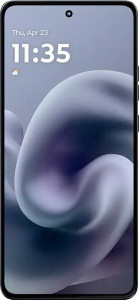
Motorola Moto G86 Power
Motorola Moto G96 5G

Motorola Moto G86 Power Motorola Moto G96 5G

Overview

Welcome to our in-depth spec comparison between the Motorola Moto G86 Power and the Motorola Moto G96 5G. Both phones share a solid IP68-rated waterproof build and an OLED display, but they diverge notably when it comes to battery capacity, display features, and connectivity options. Whether you care most about endurance, storage, or a sleeker form factor, this comparison will help you decide which Motorola fits your lifestyle best.

Common Features

  • Both phones are waterproof with an IP68 ingress protection rating.
  • Neither phone has a rugged build.
  • Neither phone can be folded.
  • Both phones feature an OLED/AMOLED display with a 6.67″ screen size.
  • Both phones include branded damage-resistant glass.
  • Neither phone supports Dolby Vision.
  • Neither phone has a secondary screen.
  • Both phones have a touchscreen.
  • Both phones come with 8GB of RAM.
  • Both phones have integrated LTE.
  • Both chips are built on a 4 nm semiconductor process.
  • Both phones support 64-bit processing.
  • Both phones use DirectX 12.
  • Both phones have integrated graphics.
  • Both phones use big.LITTLE technology.
  • Both CPUs have 8 threads.
  • Both phones have a 50 & 8 MP dual-lens main camera.
  • Both phones have a 32 MP front camera.
  • Both phones include built-in optical image stabilization.
  • Both phones support 4K video recording at 30 fps on the main camera.
  • Neither phone has a dual-tone LED flash, and each has a single flash LED.
  • Neither phone has a BSI sensor.
  • Both phones run Android 15.
  • Both phones offer clipboard warnings, location privacy options, and camera/microphone privacy options.
  • Neither phone has Mail Privacy Protection.
  • Both phones support theme customization and can block app tracking.
  • Neither phone supports cross-site tracking blocking.
  • Neither phone supports wireless charging, but both support 30W fast charging.
  • Neither phone has a removable battery.
  • Both phones have a battery level indicator and a rechargeable battery.
  • Neither phone has a 3.5 mm audio jack.
  • Both phones have stereo speakers.
  • Neither phone supports aptX, LDAC, aptX HD, aptX Adaptive, aptX Lossless.
  • Both phones support 5G and have a USB Type-C port at USB version 2.
  • Both phones have a fingerprint scanner.
  • Neither phone has emergency SOS via satellite or crash detection.
  • Neither phone is DLNA-certified.
  • Both phones have a gyroscope.
  • Both phones have a video light.
  • Neither phone has a sapphire glass display or an e-paper display.

Main Differences

  • Weight is 198 g on Motorola Moto G86 Power and 178 g on Motorola Moto G96 5G.
  • Thickness is 8.7 mm on Motorola Moto G86 Power and 7.9 mm on Motorola Moto G96 5G.
  • Width is 74.7 mm on Motorola Moto G86 Power and 73.3 mm on Motorola Moto G96 5G.
  • Height is 161.2 mm on Motorola Moto G86 Power and 161.9 mm on Motorola Moto G96 5G.
  • Volume is 104.76 cm³ on Motorola Moto G86 Power and 93.75 cm³ on Motorola Moto G96 5G.
  • Pixel density is 446 ppi on Motorola Moto G86 Power and 395 ppi on Motorola Moto G96 5G.
  • Resolution is 1220 x 2712 px on Motorola Moto G86 Power and 1080 x 2400 px on Motorola Moto G96 5G.
  • Refresh rate is 120Hz on Motorola Moto G86 Power and 144Hz on Motorola Moto G96 5G.
  • Gorilla Glass version is Gorilla Glass 7i on Motorola Moto G86 Power and Gorilla Glass 5 on Motorola Moto G96 5G.
  • HDR10 support is present on Motorola Moto G86 Power but not available on Motorola Moto G96 5G.
  • HDR10+ support is present on Motorola Moto G86 Power but not available on Motorola Moto G96 5G.
  • Always-On Display is available on Motorola Moto G96 5G but not on Motorola Moto G86 Power.
  • Internal storage is 512GB on Motorola Moto G86 Power and 256GB on Motorola Moto G96 5G.
  • The chipset is MediaTek Dimensity 7300 on Motorola Moto G86 Power and Qualcomm Snapdragon 7s Gen 2 on Motorola Moto G96 5G.
  • The GPU is Mali G615 MC2 on Motorola Moto G86 Power and Adreno 710 on Motorola Moto G96 5G.
  • CPU speed is 4 x 2.5 & 4 x 2 GHz on Motorola Moto G86 Power and 4 x 2.4 & 4 x 1.95 GHz on Motorola Moto G96 5G.
  • Geekbench 6 multi-core score is 2932 on Motorola Moto G86 Power and 2970 on Motorola Moto G96 5G.
  • Geekbench 6 single-core score is 1026 on Motorola Moto G86 Power and 1015 on Motorola Moto G96 5G.
  • GPU clock speed is 1047 MHz on Motorola Moto G86 Power and 940 MHz on Motorola Moto G96 5G.
  • RAM speed is 6400 MHz on Motorola Moto G86 Power and 3200 MHz on Motorola Moto G96 5G.
  • The front camera wide aperture is f/2.2 on Motorola Moto G86 Power and f/2.2 & f/1.9 on Motorola Moto G96 5G.
  • Battery capacity is 6720 mAh on Motorola Moto G86 Power and 5500 mAh on Motorola Moto G96 5G.
  • Wi-Fi support includes Wi-Fi 6 (802.11ax) on Motorola Moto G86 Power, while Motorola Moto G96 5G tops out at Wi-Fi 5 (802.11ac).
  • SIM configuration is 1 SIM + 1 eSIM on Motorola Moto G86 Power and 2 physical SIM cards on Motorola Moto G96 5G.
  • Bluetooth version is 5.3 on Motorola Moto G86 Power and 5.2 on Motorola Moto G96 5G.
  • External memory slot is available on Motorola Moto G86 Power but not on Motorola Moto G96 5G.
  • NFC is present on Motorola Moto G86 Power but not available on Motorola Moto G96 5G.
  • Download speed is 3270 Mbits/s on Motorola Moto G86 Power and 2900 Mbits/s on Motorola Moto G96 5G.
  • Upload speed is 3270 Mbits/s on Motorola Moto G86 Power and 1500 Mbits/s on Motorola Moto G96 5G.
  • A curved display is featured on Motorola Moto G96 5G but not on Motorola Moto G86 Power.
Specs Comparison
Motorola Moto G86 Power

Motorola Moto G86 Power

Motorola Moto G96 5G

Motorola Moto G96 5G

Design:
water resistance Waterproof Waterproof
weight 198 g 178 g
thickness 8.7 mm 7.9 mm
width 74.7 mm 73.3 mm
height 161.2 mm 161.9 mm
volume 104.762268 cm³ 93.751433 cm³
Ingress Protection (IP) rating IP68 IP68
has a rugged build
can be folded

Both the Moto G86 Power and the Moto G96 5G share the same foundational protection credentials — an IP68 rating — meaning both are fully waterproof and can withstand submersion under the same conditions. Neither offers a rugged build or a foldable form factor, so on those fronts they are evenly matched.

Where the two phones diverge meaningfully is in their physical footprint. The G96 5G is noticeably slimmer at 7.9 mm versus 8.7 mm, narrower at 73.3 mm versus 74.7 mm, and — most significantly — lighter at 178 g compared to 198 g. That 20 g difference is not trivial: it translates directly to a less fatiguing one-handed grip during extended use, and the reduced width makes it marginally easier to reach across the screen. The volume figures reinforce this — the G96 5G displaces about 93.75 cm³ versus the G86 Power's 104.76 cm³, roughly a 10% smaller overall package despite a virtually identical height.

On design alone, the Moto G96 5G holds a clear edge. It achieves the same IP68 protection standard in a more compact, lighter, and thinner chassis — attributes that matter for everyday comfort and pocketability. The G86 Power's extra bulk likely reflects internal hardware trade-offs (such as a larger battery), but purely from a design and ergonomics standpoint, the G96 5G is the more refined form factor.

Display:
Display type OLED/AMOLED OLED/AMOLED
screen size 6.67" 6.67"
pixel density 446 ppi 395 ppi
resolution 1220 x 2712 px 1080 x 2400 px
refresh rate 120Hz 144Hz
has branded damage-resistant glass
Gorilla Glass version Gorilla Glass 7i Gorilla Glass 5
supports HDR10
supports HDR10+
Always-On Display
supports Dolby Vision
Has a secondary screen
has a touch screen

Starting with what both phones share: identical 6.67″ OLED/AMOLED panels with a 120Hz-or-higher refresh rate and Gorilla Glass protection. That shared foundation means both deliver the punchy contrast and deep blacks characteristic of OLED technology — a genuine advantage over LCD alternatives at this price tier.

The sharpest split between these two lies in the resolution-versus-refresh-rate trade-off. The G86 Power runs at 1220 x 2712 px with a pixel density of 446 ppi — a noticeably crisper image where fine text and detailed photos look tighter — and adds support for HDR10+, meaning compatible streaming content renders with wider dynamic range and more nuanced highlights. The G96 5G counters with a 144Hz refresh rate (versus 120Hz), which produces marginally smoother scrolling and animations, but does so at a lower 1080 x 2400 px resolution and 395 ppi, and without any HDR support. It does, however, offer an Always-On Display — a practical convenience for checking the time or notifications without waking the screen. On glass protection, the G86 Power's Gorilla Glass 7i is a newer generation than the G96 5G's Gorilla Glass 5, offering improved drop and scratch resistance.

For users who prioritize visual fidelity — sharper text, richer media playback, and stronger screen durability — the Moto G86 Power holds a clear display advantage. The G96 5G's 144Hz refresh and Always-On Display are worthwhile perks, but they don't outweigh the G86 Power's meaningful lead in pixel density, HDR capability, and glass protection.

Performance:
internal storage 512GB 256GB
RAM 8GB 8GB
Chipset (SoC) name MediaTek Dimensity 7300 Qualcomm Snapdragon 7s Gen 2
GPU name Mali G615 MC2 Adreno 710
CPU speed 4 x 2.5 & 4 x 2 GHz 4 x 2.4 & 4 x 1.95 GHz
Geekbench 6 result (multi) 2932 2970
Geekbench 6 result (single) 1026 1015
GPU clock speed 1047 MHz 940 MHz
Has integrated LTE
RAM speed 6400 MHz 3200 MHz
semiconductor size 4 nm 4 nm
Supports 64-bit
DirectX version DirectX 12 DirectX 12
Has integrated graphics
Uses big.LITTLE technology
CPU threads 8 threads 8 threads
Uses HMP
maximum memory amount 16GB 16GB
DDR memory version 5 5

Benchmarks tell an almost perfectly even story here. The G86 Power scores 2932 multi-core and 1026 single-core on Geekbench 6, while the G96 5G lands at 2970 and 1015 respectively — differences so marginal they are indistinguishable in daily use. Both chips are fabbed on a 4 nm process, carry the same 8-thread big.LITTLE architecture, and top out at the same maximum RAM configuration. For everyday tasks like browsing, social media, and streaming, either phone will feel equally fluid.

Dig deeper, though, and two gaps emerge in the G86 Power's favor. Its RAM operates at 6400 MHz versus the G96 5G's 3200 MHz — double the memory bandwidth — which can meaningfully benefit multitasking, fast app switching, and GPU-bound workloads where data needs to move quickly between memory and processor. The G86 Power's GPU clock also runs higher at 1047 MHz compared to 940 MHz on the G96 5G's Adreno 710. On storage, the gap is simply decisive: the G86 Power ships with 512 GB versus 256 GB — twice the capacity — a practical advantage that compounds over time as apps, photos, and offline media accumulate.

Raw compute performance is essentially a draw, but the Moto G86 Power edges ahead on this group overall. Its superior RAM speed and doubled internal storage give it a tangible real-world advantage that the G96 5G's benchmark parity cannot offset.

Cameras:
megapixels (main camera) 50 & 8 MP 50 & 8 MP
Has a dual-lens (or multi-lens) main camera
megapixels (front camera) 32MP 32MP
has built-in optical image stabilization
video recording (main camera) 2160 x 30 fps 2160 x 30 fps
Has a dual-tone LED flash
number of flash LEDs 1 1
has a BSI sensor
has a CMOS sensor
has continuous autofocus when recording movies
Has phase-detection autofocus for photos
supports slow-motion video recording
has a built-in HDR mode
has manual exposure
has a flash
optical zoom 0x 0x
has manual ISO
has a serial shot mode
has manual focus
has a front camera
Has laser autofocus
Shoots 360° panorama
has manual white balance
has touch autofocus
has manual shutter speed
can create panoramas in-camera
wide aperture (front camera) 2.2f 2.2 & 1.9f
Has timelapse function
Has a front-facing LED flash
has a dual-lens (or multi-lens) front camera
supports HDR10 recording
supports Dolby Vision recording
has a front-facing camera under the display
Has a RGB LED flash
has 3D photo/video recording capabilities

The camera systems on these two phones are remarkably alike. Both feature a 50 & 8 MP dual rear camera setup with optical image stabilization, phase-detection autofocus, and 4K 30fps video recording, paired with a 32 MP front shooter. The full manual control suite — ISO, exposure, focus, white balance — is present on both, as is slow-motion video, HDR mode, and timelapse. For the vast majority of shooting scenarios, these two phones are functionally interchangeable.

The sole differentiator the data surfaces is on the front camera aperture. The G86 Power lists a single f/2.2 value, while the G96 5G lists f/2.2 & f/1.9. A wider maximum aperture of f/1.9 allows more light to reach the sensor, which can translate to brighter, less noisy selfies in dim conditions. It is worth noting, however, that both phones are listed as having a single-lens front camera — so this likely reflects a variable or dual-aperture capability on the G96 5G's selfie lens rather than a second physical lens.

This category is effectively a near-tie, but the Moto G96 5G claims a narrow edge solely on the basis of its wider front aperture option. Users who frequently shoot selfies in low-light environments may appreciate that advantage, but for rear camera performance — where most photography happens — there is no meaningful distinction between the two.

Operating system:
Android version Android 15 Android 15
has clipboard warnings
has location privacy options
has camera/microphone privacy options
has Mail Privacy Protection
has theme customization
can block app tracking
blocks cross-site tracking
has on-device machine learning
has notification permissions
has media picker
Can play games while they download
has dark mode
has Wi-Fi password sharing
has battery health check
has an extra dim mode
has focus modes
has dynamic theming
can offload apps
Has customizable notifications
has Live Text
has full-page screenshots
supports split screen
gets direct OS updates
has PiP
Can be used as a PC
Has sharing intents
has a child lock
Supports widgets
Is free and open source
Has offline voice recognition
has voice commands
Tracks the current position of a mobile device
is a multi-user system
has Quick Start

Rarely does a comparison category resolve this cleanly: every single operating system specification is identical between the two phones. Both run Android 15 and share the same complete feature set — from privacy controls like location and camera/microphone permissions, to productivity staples like split-screen multitasking, Picture-in-Picture, dynamic theming, and offline voice recognition.

A few of the shared features are worth calling out for their practical value. Both phones support on-device machine learning and Live Text, enabling smart, privacy-conscious features without sending data to the cloud. The presence of battery health check, extra dim mode, and customizable notifications rounds out a capable and modern software experience. Notably, neither device receives direct OS updates from Google — both rely on Motorola's own update pipeline — but this applies equally and does not differentiate one from the other.

This category is an absolute tie. A buyer choosing between the G86 Power and the G96 5G will have an entirely identical software experience on both devices, and the operating system should play no role whatsoever in the decision.

Battery:
battery power 6720 mAh 5500 mAh
has wireless charging
Supports fast charging
charging speed 30W 30W
has a removable battery
has a battery level indicator
has a rechargeable battery

Charging infrastructure is identical: both phones support 30W fast charging and omit wireless charging, so neither has an advantage in how quickly they replenish or how conveniently they do so. The real story here is capacity.

The G86 Power packs a 6720 mAh battery against the G96 5G's 5500 mAh — a difference of 1220 mAh, or roughly 22% more energy storage. In practical terms, that gap is significant: it directly translates to more screen-on time between charges, greater resilience through heavy-use days, and a buffer that becomes especially noticeable during travel or in situations where access to a charger is limited. It also contextualizes the G86 Power's heavier, bulkier chassis noted in the design comparison — that extra physical volume is largely accounted for by this substantially larger cell.

The Moto G86 Power wins this category decisively. With a commanding capacity advantage and equal charging speeds, it is the clear choice for users who prioritize battery endurance above other considerations. The G96 5G's 5500 mAh is still a respectable figure for a phone of its size, but it simply cannot match the G86 Power's longevity credentials on paper.

Audio:
has a socket for a 3.5 mm audio jack
has stereo speakers
has aptX
has LDAC
has aptX HD
has aptX Adaptive
has aptX Lossless

Audio is another category where no distinction exists between these two phones. Both feature stereo speakers and drop the 3.5 mm headphone jack — a trade-off that has become commonplace at this tier, pushing users toward Bluetooth or USB-C audio solutions.

On the wireless audio quality front, neither phone supports any high-resolution Bluetooth codec — no aptX, no LDAC, no aptX HD or Adaptive. This means that when streaming audio over Bluetooth, both devices are limited to standard codecs like SBC or AAC. For casual listening this is rarely noticeable, but users who invest in high-end wireless headphones and care about lossless or high-fidelity Bluetooth transmission will find neither phone accommodates that use case.

This category is a complete tie. The audio experience — both its capabilities and its limitations — is identical on the G86 Power and the G96 5G, and should not factor into a purchasing decision between them.

Connectivity & Features:
release date May 2025 July 2025
has 5G support
Wi-Fi version Wi-Fi 4 (802.11n), Wi-Fi 5 (802.11ac), Wi-Fi 6 (802.11ax) Wi-Fi 4 (802.11n), Wi-Fi 5 (802.11ac)
SIM cards 1 SIM, 1 eSIM 2 SIM
Bluetooth version 5.3 5.2
has an external memory slot
Has USB Type-C
USB version 2 2
has NFC
download speed 3270 MBits/s 2900 MBits/s
upload speed 3270 MBits/s 1500 MBits/s
Has a fingerprint scanner
has emergency SOS via satellite
has crash detection
is DLNA-certified
has a gyroscope
supports ANT+
Has a heart rate monitor
has GPS
has a compass
supports Wi-Fi
Has an infrared sensor
has an accelerometer
has a cellular module
Has a barometer
has an HDMI output
Uses 3D facial recognition
Has an iris scanner
Stylus included
supports Galileo
Has motion tracking
Has optical tracking
Has a built-in projector

Connectivity is where the gap between these two phones becomes most pronounced, and it runs consistently in one direction. The G86 Power supports Wi-Fi 6 (802.11ax) while the G96 5G tops out at Wi-Fi 5 — a meaningful difference in environments with a Wi-Fi 6 router, translating to faster throughput, lower latency, and better performance in congested multi-device households. The cellular speed figures reinforce this: the G86 Power's upload rate of 3270 Mbits/s dwarfs the G96 5G's 1500 Mbits/s, a gap that matters for video calls, cloud backups, and uploading large files on the go.

Two further advantages stack up on the G86 Power's side. It includes NFC — essential for contactless payments via Google Pay and other tap-to-pay services — which the G96 5G omits entirely. It also supports an external memory card slot, offering expandable storage on top of its already larger 512 GB base capacity, whereas the G96 5G offers neither. The G86 Power also edges ahead on Bluetooth 5.3 versus 5.2, though the practical difference between these versions is minor. The G96 5G's sole connectivity advantage is its dual physical SIM configuration, versus the G86 Power's single SIM plus eSIM — relevant for users who need two active physical SIMs simultaneously and whose carrier does not support eSIM.

The Moto G86 Power wins this category convincingly. The combination of Wi-Fi 6, NFC, expandable storage, and superior upload speeds represents a broader and more impactful set of connectivity advantages than the G96 5G's dual physical SIM can offset.

Miscellaneous:
has a video light
Has sapphire glass display
Has a curved display
Has an e-paper display

This group contains very little to separate the two phones. Both feature a video light and neither employs sapphire glass or an e-paper display — leaving just one distinguishing data point: the G96 5G has a curved display, while the G86 Power uses a flat panel.

A curved screen is largely an aesthetic and ergonomic choice. It can lend a phone a more premium, sleek appearance and may feel slightly more natural at the edges during one-handed use. The trade-off, however, is that curved displays are generally more susceptible to edge-related screen damage and can make fitting a screen protector more difficult — though neither of these consequences is reflected in the provided specs, so they remain outside the scope of this comparison.

Based strictly on the data available, this category yields no winner in any functional sense. The Moto G96 5G is the only phone with a differentiating feature — its curved display — but whether that constitutes an advantage is entirely a matter of personal aesthetic preference rather than a measurable performance or usability gain.

Comparison Summary & Verdict

After examining every specification, both phones emerge as strong mid-range contenders with clear strengths in different areas. The Motorola Moto G86 Power stands out with its massive 6720 mAh battery, higher-resolution display with HDR10 and HDR10+ support, 512 GB internal storage, Wi-Fi 6, NFC, an expandable memory slot, and faster RAM and upload speeds — making it a powerhouse for users who demand endurance and connectivity. The Motorola Moto G96 5G, on the other hand, wins on form factor with a lighter, slimmer, curved-display design, a 144Hz refresh rate, an Always-On Display, and a dual-SIM physical slot, appealing to users who prioritize a premium look and fluid screen experience. Neither phone is objectively better; the right choice depends entirely on what matters most to you.

Motorola Moto G86 Power
Buy Motorola Moto G86 Power if...

Buy the Motorola Moto G86 Power if you want a longer-lasting battery, more internal storage, NFC, Wi-Fi 6, and expandable memory for maximum versatility.

Motorola Moto G96 5G
Buy Motorola Moto G96 5G if...

Buy the Motorola Moto G96 5G if you prefer a lighter, slimmer phone with a 144Hz curved display, Always-On Display, and a dual physical SIM setup.