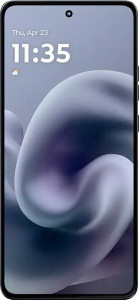
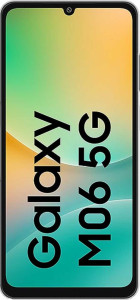
Two meaningful differentiators emerge from an otherwise closely matched connectivity profile. First, the Moto G86 Power supports Wi-Fi 6 (802.11ax), while the Galaxy M06 5G tops out at Wi-Fi 5 (802.11ac). Wi-Fi 6 delivers faster throughput and significantly better performance in congested environments — such as apartments with many competing networks or busy public spaces — making it a tangible advantage for users who rely heavily on wireless data at home or work. Second, the G86 Power includes NFC, which the M06 5G lacks entirely. NFC enables contactless payments, quick Bluetooth pairing, and transit card functionality — conveniences that are increasingly part of daily life and difficult to replicate once absent.
The SIM situation offers an interesting trade-off. The G86 Power provides one physical SIM slot plus an eSIM, while the M06 5G offers two physical SIM slots. Users who need to run two numbers simultaneously will find the M06 5G more straightforward if their carrier does not support eSIM — but for those whose carriers do, the G86 Power's eSIM is equally capable and saves a physical slot. Download speeds are virtually identical at 3270 vs 3300 Mbits/s, making that a non-factor.
Both phones share 5G support, Bluetooth 5.3, USB Type-C, expandable storage, a fingerprint scanner, and a full navigation sensor suite including GPS, Galileo, gyroscope, compass, and accelerometer — a solid common foundation. On balance, the Moto G86 Power holds the connectivity edge, with Wi-Fi 6 and NFC representing real-world advantages that the M06 5G's dual physical SIM support does not fully offset for most users.