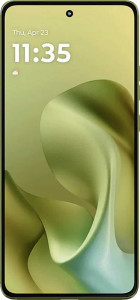
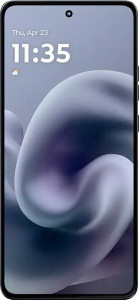
Motorola Moto G86
Motorola Moto G86 Power

Motorola Moto G86 Motorola Moto G86 Power

Overview

Welcome to our in-depth spec comparison between the Motorola Moto G86 and the Motorola Moto G86 Power. These two siblings share the same display, chipset, and camera system, yet diverge in meaningful ways when it comes to battery capacity, storage, and physical dimensions. Read on to discover which model best suits your priorities.

Common Features

  • Both phones are waterproof with an IP68 ingress protection rating.
  • Both phones share the same width of 74.7 mm and height of 161.2 mm.
  • Neither phone has a rugged build, and neither can be folded.
  • Both phones feature a 6.67″ OLED/AMOLED display with a 120Hz refresh rate.
  • Both phones have a pixel density of 446 ppi and a resolution of 1220 x 2712 px.
  • Both phones are protected by Gorilla Glass 7i and support HDR10.
  • Both phones are powered by the MediaTek Dimensity 7300 chipset with a Mali G615 MC2 GPU.
  • Both phones come with 8GB of RAM and a CPU speed of 4 x 2.5 & 4 x 2 GHz.
  • Both phones score 2932 (multi) and 1026 (single) on Geekbench 6.
  • Both phones have a dual-lens main camera with 50 & 8 MP and a 32MP front camera.
  • Both phones support optical image stabilization and record video at 2160 x 30 fps.
  • Both phones run Android 15 and offer theme customization and app tracking blocking.
  • Both phones include clipboard warnings, location privacy options, and camera/microphone privacy options.
  • Both phones support fast charging at 30W but do not support wireless charging.
  • Neither phone has a removable battery.
  • Both phones have stereo speakers but lack a 3.5 mm audio jack.
  • Neither phone supports aptX, LDAC, aptX HD, aptX Adaptive, aptX Lossless.
  • Both phones support 5G, Wi-Fi 6, Bluetooth 5.3, NFC, and USB Type-C.
  • Both phones support 1 SIM plus 1 eSIM and have an external memory slot.
  • Both phones have a USB version of 2 and include integrated LTE.

Main Differences

  • Weight is 185 g on the Motorola Moto G86 and 198 g on the Motorola Moto G86 Power.
  • Thickness is 7.8 mm on the Motorola Moto G86 and 8.7 mm on the Motorola Moto G86 Power.
  • Volume is 93.924792 cm³ on the Motorola Moto G86 and 104.762268 cm³ on the Motorola Moto G86 Power.
  • Internal storage is 256GB on the Motorola Moto G86 and 512GB on the Motorola Moto G86 Power.
  • AnTuTu benchmark score is 675000 on the Motorola Moto G86 and 777200 on the Motorola Moto G86 Power.
  • Battery capacity is 5200 mAh on the Motorola Moto G86 and 6720 mAh on the Motorola Moto G86 Power.
Specs Comparison
Motorola Moto G86

Motorola Moto G86

Motorola Moto G86 Power

Motorola Moto G86 Power

Design:
water resistance Waterproof Waterproof
weight 185 g 198 g
thickness 7.8 mm 8.7 mm
width 74.7 mm 74.7 mm
height 161.2 mm 161.2 mm
volume 93.924792 cm³ 104.762268 cm³
Ingress Protection (IP) rating IP68 IP68
has a rugged build
can be folded

Both phones share an identical footprint — the same 74.7 × 161.2 mm width and height — so they fit identically in the hand and in pockets from a 2D perspective. Both also carry a full IP68 waterproof rating, meaning neither compromises on water resistance. Where they diverge is in the third dimension: the Moto G86 Power is noticeably thicker at 8.7 mm versus 7.8 mm for the standard G86, a difference of nearly a full millimeter that is perceptible when gripping the device or sliding it into a tight pocket.

That extra thickness compounds with a meaningful weight gap. The G86 Power tips the scales at 198 g compared to 185 g for the G86 — a 13 g difference that, while not dramatic on paper, translates to a noticeably heavier feel during prolonged one-handed use or extended browsing sessions. The resulting volume difference — roughly 104.8 cm³ versus 93.9 cm³ — confirms the Power is a bulkier device overall, almost certainly to accommodate a larger battery inside.

For design, the standard Moto G86 has a clear edge: it is slimmer, lighter, and more pocketable, while still matching the G86 Power on every protection credential (IP68, waterproof, non-rugged). Users who prioritize a sleeker, more comfortable everyday carry should favor the G86; those willing to accept the added bulk are presumably trading it for the battery capacity implied by the Power variant's larger chassis.

Display:
Display type OLED/AMOLED OLED/AMOLED
screen size 6.67" 6.67"
pixel density 446 ppi 446 ppi
resolution 1220 x 2712 px 1220 x 2712 px
refresh rate 120Hz 120Hz
has branded damage-resistant glass
Gorilla Glass version Gorilla Glass 7i Gorilla Glass 7i
supports HDR10
supports HDR10+
Always-On Display
supports Dolby Vision
Has a secondary screen
has a touch screen

The display story here is straightforward: these two phones are equipped with an absolutely identical screen. Both feature a 6.67″ OLED/AMOLED panel at 1220 × 2712 px, landing at 446 ppi — a density sharp enough that individual pixels are indistinguishable at normal viewing distances. The 120Hz refresh rate ensures smooth scrolling and responsive touch input, a meaningful advantage over the 60Hz panels still found on budget devices.

Protection and HDR support are equally matched. Both phones use Gorilla Glass 7i, Corning's latest scratch- and crack-resistant solution in the mid-range tier, and both support HDR10+ — the dynamic metadata standard that adapts tone-mapping scene by scene for more accurate highlight and shadow rendering on compatible streaming content. Neither device offers Always-On Display or Dolby Vision, but those omissions are consistent across both models.

This category is a dead tie. There is no basis in the provided specs to favor one phone over the other on display quality, size, sharpness, smoothness, or durability. A buyer choosing between the G86 and the G86 Power can treat the screen as a non-factor and focus entirely on other differentiating specs.

Performance:
internal storage 256GB 512GB
RAM 8GB 8GB
AnTuTu benchmark score 675000 777200
Chipset (SoC) name MediaTek Dimensity 7300 MediaTek Dimensity 7300
GPU name Mali G615 MC2 Mali G615 MC2
CPU speed 4 x 2.5 & 4 x 2 GHz 4 x 2.5 & 4 x 2 GHz
Geekbench 6 result (multi) 2932 2932
Geekbench 6 result (single) 1026 1026
GPU clock speed 1047 MHz 1047 MHz
Has integrated LTE
RAM speed 6400 MHz 6400 MHz
semiconductor size 4 nm 4 nm
Supports 64-bit
DirectX version DirectX 12 DirectX 12
Has integrated graphics
Uses big.LITTLE technology
CPU threads 8 threads 8 threads
Uses HMP
maximum memory amount 16GB 16GB
number of transistors 6200 million 6200 million
DDR memory version 5 5
supported displays 1 1

At the silicon level, these two phones are identical. Both run on the MediaTek Dimensity 7300 — a modern 4nm chip with an 8-core big.LITTLE CPU configuration and a Mali G615 MC2 GPU — and both are paired with 8GB of DDR5 RAM. Unsurprisingly, their Geekbench 6 scores are a perfect match: 1026 single-core and 2932 multi-core. For everyday tasks, gaming, and multitasking, expect identical real-world responsiveness from both devices.

The one numerical divergence worth examining is the AnTuTu score: the G86 Power posts 777,200 against the G86's 675,000 — a gap of roughly 15%. Since every other compute-related spec is shared, the most plausible explanation within the provided data is the storage tier: the G86 Power ships with 512GB versus 256GB on the standard G86. AnTuTu's benchmark suite includes storage read/write tests, so a faster or higher-capacity NAND configuration can meaningfully inflate the composite score without any difference in CPU or GPU throughput. The Geekbench results — which isolate processor performance — confirming parity supports this interpretation.

On raw processing power, this is a tie. The G86 Power's higher AnTuTu figure reflects its storage advantage rather than any CPU or GPU superiority. However, that storage difference is itself significant: 512GB versus 256GB is a practical win for users who store large media libraries or avoid cloud reliance, giving the G86 Power a meaningful edge in this category for storage-conscious buyers.

Cameras:
megapixels (main camera) 50 & 8 MP 50 & 8 MP
wide aperture (main camera) 2.2 & 1.8f 2.2 & 1.8f
Has a dual-lens (or multi-lens) main camera
megapixels (front camera) 32MP 32MP
has built-in optical image stabilization
video recording (main camera) 2160 x 30 fps 2160 x 30 fps
Has a dual-tone LED flash
number of flash LEDs 1 1
has a BSI sensor
has a CMOS sensor
has continuous autofocus when recording movies
Has phase-detection autofocus for photos
supports slow-motion video recording
has a built-in HDR mode
has manual exposure
has a flash
optical zoom 0x 0x
has manual ISO
has a serial shot mode
has manual focus
has a front camera
Has laser autofocus
Shoots 360° panorama
has manual white balance
has touch autofocus
has manual shutter speed
can create panoramas in-camera
wide aperture (front camera) 2.2f 2.2f
Has timelapse function
Has a front-facing LED flash
has a dual-lens (or multi-lens) front camera
supports HDR10 recording
supports Dolby Vision recording
has a front-facing camera under the display
Has a RGB LED flash
has 3D photo/video recording capabilities

Across every single camera specification provided, the Motorola Moto G86 and G86 Power are exact mirrors of each other. Both feature a dual-lens rear system headlined by a 50MP main sensor paired with an 8MP secondary, a 32MP front camera, and built-in optical image stabilization — a genuinely useful inclusion at this price tier that reduces blur in low-light and shaky shooting conditions. Video tops out at 4K 30fps on both, with continuous autofocus during recording and slow-motion support rounding out the video feature set.

Manual controls — ISO, exposure, focus, and white balance — are present on both, giving photography enthusiasts a degree of creative control beyond fully automatic shooting. Phase-detection autofocus ensures snappy, accurate subject locking for stills, and the HDR mode helps recover detail in high-contrast scenes. Neither phone offers optical zoom, laser autofocus, or a dual-tone flash, but those absences apply equally across both models.

This is an unambiguous tie. There is not a single camera-related differentiator between these two devices in the provided data. A buyer for whom the camera system is the deciding factor will find no reason to prefer one over the other — the choice must rest entirely on the distinctions found in other specification groups.

Operating system:
Android version Android 15 Android 15
has clipboard warnings
has location privacy options
has camera/microphone privacy options
has Mail Privacy Protection
has theme customization
can block app tracking
blocks cross-site tracking
has on-device machine learning
has notification permissions
has media picker
Can play games while they download
has dark mode
has Wi-Fi password sharing
has battery health check
has an extra dim mode
has focus modes
has dynamic theming
can offload apps
Has customizable notifications
has Live Text
has full-page screenshots
supports split screen
gets direct OS updates
has PiP
Can be used as a PC
Has sharing intents
has a child lock
Supports widgets
Is free and open source
Has offline voice recognition
has voice commands
Tracks the current position of a mobile device
is a multi-user system
has Quick Start

Running Android 15 on both devices, the software experience is completely shared — there is not a single feature flag that differs between them. Practically speaking, users get a well-rounded privacy toolkit: granular controls over location, camera, and microphone access, plus app tracking blockers and clipboard warnings. These are meaningful protections for daily use, covering the most common vectors through which apps can quietly harvest user data.

On the productivity and usability side, both phones support split-screen multitasking, Picture-in-Picture, widgets, full-page screenshots, and offline voice recognition — a solid feature set for a mid-range Android device. Dynamic theming, dark mode, and an extra dim mode round out the personalization and accessibility options. Notably, neither model receives direct OS updates from Google, meaning update delivery depends on Motorola's own rollout schedule — a shared limitation that buyers should factor in when considering long-term software support.

Verdict: a complete tie. The OS category offers zero differentiation between the Moto G86 and G86 Power. Every feature, every permission system, every privacy control is identical. Software preference simply cannot be a tiebreaker here.

Battery:
battery power 5200 mAh 6720 mAh
has wireless charging
Supports fast charging
charging speed 30W 30W
has a removable battery
has a battery level indicator
has a rechargeable battery

Battery capacity is where the G86 Power earns its name — and justifies the extra bulk noted in the design comparison. Its 6720 mAh cell is a substantial step up from the standard G86's 5200 mAh, a difference of 1520 mAh or roughly 29% more capacity. In practical terms, that gap is significant: where the G86 is already well-equipped for a full day of use, the G86 Power is firmly in multi-day territory for moderate users, and a much safer bet for heavy users or those who regularly go long stretches without access to a charger.

Where the two phones converge is on charging: both top out at 30W wired fast charging, and neither supports wireless charging. The shared charging speed means the G86 Power will actually take longer to charge from empty to full, since it has considerably more capacity to fill at the same wattage. That is a minor trade-off for the endurance gained, but worth noting for users who rely on quick top-ups.

The G86 Power has a clear and meaningful advantage in this category. The near-30% larger battery directly translates to longer real-world endurance, and the trade-off — slightly more weight and thickness as established earlier — is the only cost. For battery life-conscious buyers, this is one of the most decisive differentiators between the two models.

Audio:
has a socket for a 3.5 mm audio jack
has stereo speakers
has aptX
has LDAC
has aptX HD
has aptX Adaptive
has aptX Lossless

The audio specs for these two phones are identical in every respect. Both feature stereo speakers — a genuinely worthwhile inclusion for media consumption, gaming, and hands-free calls, producing a wider soundstage than the mono setups still common at this price point. Neither device offers a 3.5mm headphone jack, so wired audio requires a USB-C adapter or a Bluetooth solution.

On the wireless audio quality front, neither phone supports any high-resolution Bluetooth codec — no aptX, no LDAC, no aptX HD or Adaptive. Users relying on Bluetooth headphones will be limited to standard SBC or AAC transmission, which is adequate for casual listening but falls short of what audiophiles or quality-conscious listeners might want from a wireless setup.

This is a complete tie — the audio profile is shared down to every last spec. The absence of a headphone jack and high-res Bluetooth codecs are shared limitations, and the stereo speaker inclusion is a shared strength. Audio cannot serve as a differentiator between these two models.

Connectivity & Features:
release date May 2025 May 2025
has 5G support
Wi-Fi version Wi-Fi 4 (802.11n), Wi-Fi 5 (802.11ac), Wi-Fi 6 (802.11ax) Wi-Fi 4 (802.11n), Wi-Fi 5 (802.11ac), Wi-Fi 6 (802.11ax)
SIM cards 1 SIM, 1 eSIM 1 SIM, 1 eSIM
Bluetooth version 5.3 5.3
has an external memory slot
Has USB Type-C
USB version 2 2
has NFC
download speed 3270 MBits/s 3270 MBits/s
upload speed 3270 MBits/s 3270 MBits/s
Has a fingerprint scanner
has emergency SOS via satellite
has crash detection
is DLNA-certified
has a gyroscope
supports ANT+
Has a heart rate monitor
has GPS
has a compass
supports Wi-Fi
Has an infrared sensor
has an accelerometer
has a cellular module
Has a barometer
has an HDMI output
Uses 3D facial recognition
Has an iris scanner
Stylus included
supports Galileo
Has motion tracking
Has optical tracking
Has a built-in projector

Connectivity is another category where the two phones are perfectly matched. Both support 5G, Wi-Fi 6 (802.11ax), and Bluetooth 5.3 — a strong trio that positions them well for current network infrastructure. Wi-Fi 6 delivers improved throughput and reduced congestion in crowded environments, while Bluetooth 5.3 offers reliable, low-energy connections to peripherals and wearables. The SIM configuration — one physical SIM plus one eSIM — adds useful flexibility for travelers or users managing personal and work lines without needing a second physical card slot.

Beyond wireless, both phones share NFC for contactless payments, a fingerprint scanner for biometric security, a full sensor suite (gyroscope, accelerometer, compass, GPS with Galileo support), and a microSD slot for expandable storage. The USB-C port is capped at USB 2.0 speeds on both devices, which means data transfers to a computer will be slower than on phones with USB 3.x — a shared limitation worth knowing for users who frequently sideload large files.

Yet again, this is a complete tie. Every connectivity standard, sensor, and feature is mirrored exactly across both models. Neither phone holds any advantage here, and buyers should continue looking to the design and battery categories — the only areas where these two devices meaningfully diverge.

Miscellaneous:
has a video light
Has sapphire glass display
Has a curved display
Has an e-paper display

The miscellaneous specs for these two phones offer very little to analyze, and nothing to differentiate. Both feature a video light — essentially a sustained torch mode useful for filming in low-light conditions — and neither carries a curved display, sapphire glass, or an e-paper screen. Those absences are entirely expected at this segment; sapphire glass remains the domain of premium and rugged devices, and e-paper displays serve a niche use case far outside the scope of mainstream mid-range smartphones.

This is a tie in every respect. The provided specs in this category are too limited and too uniform to draw any meaningful distinction between the Moto G86 and the G86 Power. As has been the pattern across most specification groups in this comparison, the only areas where these two devices genuinely diverge remain design dimensions and battery capacity — everything else, including these miscellaneous traits, is shared common ground.

Comparison Summary & Verdict

After reviewing every specification, the choice between the Motorola Moto G86 and the Motorola Moto G86 Power comes down to a classic trade-off between portability and endurance. The Moto G86 is the lighter, slimmer option at 185 g and 7.8 mm, making it the more comfortable daily companion for those who value a pocketable form factor. The Moto G86 Power, on the other hand, steps up with a 6720 mAh battery versus 5200 mAh, a higher AnTuTu score of 777200, and double the internal storage at 512 GB, making it the stronger pick for power users and heavy smartphone consumers who need to go longer between charges.

Motorola Moto G86
Buy Motorola Moto G86 if...

Buy the Motorola Moto G86 if you prefer a lighter, slimmer phone and 5200 mAh battery capacity is sufficient for your daily usage.

Motorola Moto G86 Power
Buy Motorola Moto G86 Power if...

Buy the Motorola Moto G86 Power if you need a larger 6720 mAh battery, more internal storage at 512 GB, and a higher benchmark performance score.