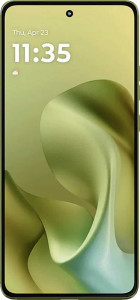
Motorola Moto G86
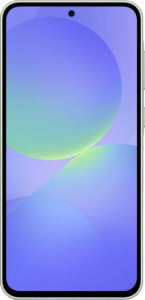
Samsung Galaxy A36 5G

Motorola Moto G86 Samsung Galaxy A36 5G

Overview

Welcome to our in-depth spec comparison between the Motorola Moto G86 and the Samsung Galaxy A36 5G — two compelling mid-range smartphones that share a surprising amount of common ground. Both run Android 15, feature OLED displays with 120Hz refresh rates, and pack 256GB of storage, yet they diverge in meaningful ways across display brightness, performance configuration, camera setup, and battery charging. Read on to see which device better matches your priorities.

Common Features

  • Both phones are waterproof and share the same IP-rated water resistance category.
  • Neither phone has a rugged build.
  • Neither phone can be folded.
  • Both phones feature an OLED/AMOLED display.
  • Both phones support a 120Hz refresh rate.
  • Both phones use branded damage-resistant glass.
  • Both phones support HDR10.
  • Both phones support HDR10+.
  • Dolby Vision support is not available on either phone.
  • Neither phone has a secondary screen.
  • Both phones have a touchscreen.
  • Both phones ship with 256GB of internal storage.
  • Both phones have integrated LTE.
  • Both phones use a 4 nm semiconductor.
  • Both phones support 64-bit processing.
  • Both phones support DirectX 12.
  • Both phones have integrated graphics.
  • Both phones use big.LITTLE CPU technology.
  • Both phones have 8 CPU threads.
  • Both phones run Android 15.
  • Both phones have clipboard warnings.
  • Both phones have location privacy options.
  • Both phones have camera and microphone privacy options.
  • Mail Privacy Protection is not available on either phone.
  • Both phones support theme customization.
  • Both phones can block app tracking.
  • Cross-site tracking blocking is not available on either phone.
  • Neither phone supports wireless charging.
  • Both phones support fast charging.
  • Neither phone has a removable battery.
  • Both phones have a battery level indicator.
  • Both phones have a rechargeable battery.
  • Neither phone has a 3.5mm audio jack.
  • Both phones have stereo speakers.
  • LDAC support is not available on either phone.
  • aptX Lossless support is not available on either phone.
  • Both phones support 5G.
  • Both phones support Wi-Fi 4, Wi-Fi 5, and Wi-Fi 6.
  • Both phones have Bluetooth version 5.3.
  • Both phones have a USB Type-C port.
  • Both phones use USB version 2.
  • Both phones have NFC.
  • Both phones have a fingerprint scanner.
  • Emergency SOS via satellite is not available on either phone.
  • Both phones have a dual-lens or multi-lens main camera.
  • Both phones have built-in optical image stabilization.
  • Both phones support 4K video recording at 30fps on the main camera.
  • Neither phone has a dual-tone LED flash.
  • Both phones have a single LED flash.
  • Neither phone has a BSI sensor.
  • Both phones have a CMOS sensor.
  • Both phones support continuous autofocus when recording movies.
  • Both phones have a video light.
  • Neither phone has a sapphire glass display.
  • Neither phone has a curved display.
  • Neither phone has an e-paper display.

Main Differences

  • Weight is 185 g on Motorola Moto G86 and 195 g on Samsung Galaxy A36 5G.
  • Thickness is 7.8 mm on Motorola Moto G86 and 7.4 mm on Samsung Galaxy A36 5G.
  • Width is 74.7 mm on Motorola Moto G86 and 78.2 mm on Samsung Galaxy A36 5G.
  • Height is 161.2 mm on Motorola Moto G86 and 162.9 mm on Samsung Galaxy A36 5G.
  • Volume is 93.92 cm³ on Motorola Moto G86 and 94.27 cm³ on Samsung Galaxy A36 5G.
  • IP rating is IP68 on Motorola Moto G86 and IP67 on Samsung Galaxy A36 5G.
  • Screen size is 6.67″ on Motorola Moto G86 and 6.7″ on Samsung Galaxy A36 5G.
  • Pixel density is 446 ppi on Motorola Moto G86 and 385 ppi on Samsung Galaxy A36 5G.
  • Resolution is 1220 x 2712 px on Motorola Moto G86 and 1080 x 2340 px on Samsung Galaxy A36 5G.
  • Typical brightness is 4500 nits on Motorola Moto G86 and 1200 nits on Samsung Galaxy A36 5G.
  • Gorilla Glass version is Gorilla Glass 7i on Motorola Moto G86 and Gorilla Glass Victus on Samsung Galaxy A36 5G.
  • Always-On Display is available on Samsung Galaxy A36 5G but not on Motorola Moto G86.
  • RAM is 8GB on Motorola Moto G86 and 12GB on Samsung Galaxy A36 5G.
  • AnTuTu benchmark score is 675000 on Motorola Moto G86 and 619557 on Samsung Galaxy A36 5G.
  • Chipset is MediaTek Dimensity 7300 on Motorola Moto G86 and Qualcomm Snapdragon 6 Gen 3 on Samsung Galaxy A36 5G.
  • GPU is Mali G615 MC2 on Motorola Moto G86 and Adreno 710 on Samsung Galaxy A36 5G.
  • CPU speed is 4 x 2.5 & 4 x 2 GHz on Motorola Moto G86 and 4 x 2.4 & 4 x 1.8 GHz on Samsung Galaxy A36 5G.
  • Geekbench 6 multi-core score is 2932 on Motorola Moto G86 and 2917 on Samsung Galaxy A36 5G.
  • Geekbench 6 single-core score is 1026 on Motorola Moto G86 and 1007 on Samsung Galaxy A36 5G.
  • GPU clock speed is 1047 MHz on Motorola Moto G86 and 800 MHz on Samsung Galaxy A36 5G.
  • RAM speed is 6400 MHz on Motorola Moto G86 and 2750 MHz on Samsung Galaxy A36 5G.
  • Maximum supported memory is 16GB on Motorola Moto G86 and 12GB on Samsung Galaxy A36 5G.
  • Main camera megapixels are 50 & 8 MP on Motorola Moto G86 and 50 & 8 & 5 MP on Samsung Galaxy A36 5G.
  • Main camera wide aperture is f/2.2 & f/1.8 on Motorola Moto G86 and f/1.8, f/2.2 & f/2.4 on Samsung Galaxy A36 5G.
  • Front camera resolution is 32MP on Motorola Moto G86 and 12MP on Samsung Galaxy A36 5G.
  • Battery capacity is 5200 mAh on Motorola Moto G86 and 5000 mAh on Samsung Galaxy A36 5G.
  • Charging speed is 30W on Motorola Moto G86 and 45W on Samsung Galaxy A36 5G.
  • SIM card options are 1 SIM and 1 eSIM on Motorola Moto G86, while Samsung Galaxy A36 5G supports 1 SIM, 1 eSIM, 2 SIM, or 2 eSIM configurations.
  • External memory slot is available on Motorola Moto G86 but not on Samsung Galaxy A36 5G.
  • Download speed is 3270 Mbits/s on Motorola Moto G86 and 2900 Mbits/s on Samsung Galaxy A36 5G.
  • Upload speed is 3270 Mbits/s on Motorola Moto G86 and 1600 Mbits/s on Samsung Galaxy A36 5G.
Specs Comparison
Motorola Moto G86

Motorola Moto G86

Samsung Galaxy A36 5G

Samsung Galaxy A36 5G

Design:
water resistance Waterproof Waterproof
weight 185 g 195 g
thickness 7.8 mm 7.4 mm
width 74.7 mm 78.2 mm
height 161.2 mm 162.9 mm
volume 93.924792 cm³ 94.266972 cm³
Ingress Protection (IP) rating IP68 IP67
has a rugged build
can be folded

Both the Motorola Moto G86 and the Samsung Galaxy A36 5G are waterproof and non-folding slabs with no rugged build, so at a glance they seem evenly matched on design. The critical distinction in water resistance, however, lies in the rating: the G86 carries an IP68 certification, meaning it can withstand submersion beyond the standard test depth, while the A36 5G is rated IP67, which covers accidental drops in shallow water up to 1 meter for 30 minutes. For most users this difference is minor, but for anyone near pools, beaches, or who tends to drop their phone in sinks, the G86 offers a measurable extra margin of protection.

In terms of physical feel, the G86 is notably more pocket-friendly. It is 10 g lighter (185 g vs. 195 g) and 3.5 mm narrower (74.7 mm vs. 78.2 mm), which translates directly to easier one-handed use and less fatigue during extended sessions. The A36 5G counters with a slightly slimmer profile at 7.4 mm thick versus the G86's 7.8 mm, giving it a marginally sleeker feel when held flat, though the difference is barely perceptible in daily handling.

Overall, the Moto G86 holds the design edge in this group. Its superior IP68 rating and more compact, lighter form factor are practical advantages that most users will notice day-to-day, while the A36 5G's marginal thickness advantage does not offset those differences.

Display:
Display type OLED/AMOLED OLED/AMOLED
screen size 6.67" 6.7"
pixel density 446 ppi 385 ppi
resolution 1220 x 2712 px 1080 x 2340 px
refresh rate 120Hz 120Hz
brightness (typical) 4500 nits 1200 nits
has branded damage-resistant glass
Gorilla Glass version Gorilla Glass 7i Gorilla Glass Victus
supports HDR10
supports HDR10+
Always-On Display
supports Dolby Vision
Has a secondary screen
has a touch screen

On the surface, these two displays look similar — both are OLED/AMOLED panels at roughly 6.7 inches with a 120Hz refresh rate and HDR10+ support. Dig into the numbers, though, and the Moto G86 pulls ahead decisively in raw visual quality. Its 446 ppi pixel density against the A36 5G's 385 ppi means noticeably crisper text and finer detail, particularly when reading small print or viewing high-resolution photos. More striking still is the brightness gap: the G86's 4500 nits typical brightness dwarfs the A36 5G's 1200 nits, which in practice means the G86 remains comfortably legible in direct sunlight where the A36 5G would struggle.

The A36 5G reclaims some ground in two specific areas. It features an Always-On Display, a convenience the G86 lacks entirely — useful for glancing at time, notifications, or widgets without waking the phone. It also ships with Gorilla Glass Victus, which offers stronger scratch and drop resistance than the G86's Gorilla Glass 7i, a meaningful long-term durability advantage for users who skip cases.

Taking the group as a whole, the Moto G86 holds the clear display edge. The resolution and especially the brightness advantages are substantial and affect everyday usability directly. The A36 5G's Always-On Display and superior glass are genuine perks, but they do not close the gap on the core screen performance metrics that matter most for media consumption and outdoor use.

Performance:
internal storage 256GB 256GB
RAM 8GB 12GB
AnTuTu benchmark score 675000 619557
Chipset (SoC) name MediaTek Dimensity 7300 Qualcomm Snapdragon 6 Gen 3
GPU name Mali G615 MC2 Adreno 710
CPU speed 4 x 2.5 & 4 x 2 GHz 4 x 2.4 & 4 x 1.8 GHz
Geekbench 6 result (multi) 2932 2917
Geekbench 6 result (single) 1026 1007
GPU clock speed 1047 MHz 800 MHz
Has integrated LTE
RAM speed 6400 MHz 2750 MHz
semiconductor size 4 nm 4 nm
Supports 64-bit
DirectX version DirectX 12 DirectX 12
Has integrated graphics
Uses big.LITTLE technology
CPU threads 8 threads 8 threads
Uses HMP
maximum memory amount 16GB 12GB
DDR memory version 5 5
supported displays 1 1

Benchmark numbers tell a clear story here. The Moto G86's MediaTek Dimensity 7300 outscores the A36 5G's Snapdragon 6 Gen 3 across the board — AnTuTu lands at 675,000 vs. 619,557, and Geekbench 6 single-core results follow the same pattern at 1026 vs. 1007. These margins are not enormous, but they are consistent, suggesting the G86 will feel slightly snappier in CPU-bound tasks like app launches and web browsing. The GPU advantage is more pronounced: the G86's Mali G615 MC2 runs at 1047 MHz versus the Adreno 710's 800 MHz, which translates to a tangible edge in graphically demanding games and GPU-accelerated workloads.

The A36 5G fights back with a larger base RAM allocation — 12GB compared to the G86's 8GB. More RAM means the system can keep a greater number of apps suspended in the background without reloading them, which benefits heavy multitaskers. However, the G86 supports a maximum of 16GB of RAM (likely via virtual RAM expansion), exceeding the A36 5G's hard cap of 12GB, so the G86 retains the ceiling advantage. The G86 also runs its memory at a significantly faster 6400 MHz versus the A36 5G's 2750 MHz, which contributes to its stronger benchmark throughput.

Factoring everything in, the Moto G86 takes the performance edge. Its lead in CPU benchmarks, superior GPU clock speed, faster RAM, and higher memory ceiling outweigh the A36 5G's advantage in out-of-the-box RAM quantity. For users who prioritize gaming or sustained performance, the G86 is the stronger choice in this group.

Cameras:
megapixels (main camera) 50 & 8 MP 50 & 8 & 5 MP
wide aperture (main camera) 2.2 & 1.8f 1.8 & 2.2 & 2.4f
Has a dual-lens (or multi-lens) main camera
megapixels (front camera) 32MP 12MP
has built-in optical image stabilization
video recording (main camera) 2160 x 30 fps 2160 x 30 fps
Has a dual-tone LED flash
number of flash LEDs 1 1
has a BSI sensor
has a CMOS sensor
has continuous autofocus when recording movies
Has phase-detection autofocus for photos
supports slow-motion video recording
has a built-in HDR mode
has manual exposure
has a flash
optical zoom 0x 0x
has manual ISO
has a serial shot mode
has manual focus
has a front camera
Has laser autofocus
Shoots 360° panorama
has manual white balance
has touch autofocus
has manual shutter speed
can create panoramas in-camera
wide aperture (front camera) 2.2f 2.2f
Has timelapse function
Has a front-facing LED flash
has a dual-lens (or multi-lens) front camera
supports HDR10 recording
supports Dolby Vision recording
has a front-facing camera under the display
Has a RGB LED flash
has 3D photo/video recording capabilities

The rear camera setup is where these two phones diverge most meaningfully. The Samsung Galaxy A36 5G fields a triple-lens system (50, 8, and 5 MP) against the G86's dual-lens setup (50 and 8 MP), giving the A36 5G an additional perspective — likely a macro or depth lens — that simply isn't available on the G86. More impactful still is the aperture on the A36 5G's primary lens: at f/1.8 versus the G86's f/2.2, it admits meaningfully more light, which in practice yields better results in dim environments like indoor events or twilight shots. Both phones share the same 4K 30fps video ceiling, OIS, and phase-detection autofocus, so the shooting experience is otherwise closely matched.

The selfie equation flips the script. The G86 packs a 32MP front camera versus the A36 5G's 12MP, a substantial resolution advantage that benefits users who prioritize sharp, detail-rich selfies or frequently crop and zoom into self-portraits. Both front cameras share the same f/2.2 aperture, so in low light they perform on equal footing — the G86 simply captures more detail in good lighting.

This group is genuinely split depending on use case. The A36 5G holds the rear camera edge thanks to its wider primary aperture and extra lens, making it the stronger choice for general photography. The G86 is the clear winner for selfie-focused users. Neither phone dominates outright, but users who shoot more with the rear camera will find the A36 5G's main lens more capable in challenging light.

Operating system:
Android version Android 15 Android 15
has clipboard warnings
has location privacy options
has camera/microphone privacy options
has Mail Privacy Protection
has theme customization
can block app tracking
blocks cross-site tracking
has on-device machine learning
has notification permissions
has media picker
Can play games while they download
has dark mode
has Wi-Fi password sharing
has battery health check
has an extra dim mode
has focus modes
has dynamic theming
can offload apps
Has customizable notifications
has Live Text
has full-page screenshots
supports split screen
gets direct OS updates
has PiP
Can be used as a PC
Has sharing intents
has a child lock
Supports widgets
Is free and open source
Has offline voice recognition
has voice commands
Tracks the current position of a mobile device
is a multi-user system
has Quick Start

Rarely does a spec group produce a result this clean: the Motorola Moto G86 and the Samsung Galaxy A36 5G are running Android 15 with an identical feature set across every data point provided. Privacy controls, productivity tools, accessibility options, and system-level features — including dark mode, dynamic theming, split-screen, Picture-in-Picture, on-device machine learning, and offline voice recognition — are matched one-for-one. Neither phone receives direct OS updates according to the provided data, which places both on equal footing for long-term software support expectations as well.

This is a complete tie for this group. There is no differentiator in the provided specs that gives either phone an advantage in operating system features. Users choosing between these two devices should weight their decision entirely on the other spec groups — display, performance, cameras, and design — as the software experience documented here is indistinguishable between them.

Battery:
battery power 5200 mAh 5000 mAh
has wireless charging
Supports fast charging
charging speed 30W 45W
has a removable battery
has a battery level indicator
has a rechargeable battery

Two different philosophies emerge from the battery specs here. The Moto G86 prioritizes capacity with a 5200 mAh cell versus the A36 5G's 5000 mAh, a 200 mAh difference that is modest but marginally favors the G86 for raw endurance — translating to a small but real buffer during long days away from a charger. The A36 5G counters with significantly faster wired charging at 45W compared to the G86's 30W, which in practical terms means meaningfully less time tethered to a wall. A 45W charger can typically recover a large battery from near-empty to a usable level in well under an hour, while 30W takes noticeably longer.

Neither phone supports wireless charging, and both use sealed, non-removable batteries — so those factors cancel out entirely. The real-world question for users comes down to habit: if you charge overnight and rarely need a top-up mid-day, the G86's slightly larger capacity is the more relevant advantage. If you charge in short bursts throughout the day or frequently find yourself needing a quick refill before heading out, the A36 5G's faster charging is the more practical asset.

This group is a contextual split with no universal winner. Heavy users who value charging speed will prefer the A36 5G, while those who prioritize maximum battery reserves between charges will lean toward the Moto G86. The margins are close enough that neither advantage is decisive on its own.

Audio:
has a socket for a 3.5 mm audio jack
has stereo speakers
has LDAC
has aptX Lossless

The audio specs for these two phones are identical across every provided data point. Both feature stereo speakers and omit a 3.5mm headphone jack, meaning wired headphone users will need a USB-C adapter or a pair of wireless earbuds on either device. Neither supports LDAC or aptX Lossless, so audiophiles seeking high-resolution wireless audio transmission will find no advantage on either side.

This is a complete tie. The provided specs give no basis to differentiate the two phones on audio, and users should look to other spec groups to inform their decision.

Connectivity & Features:
release date May 2025 March 2025
has 5G support
Wi-Fi version Wi-Fi 4 (802.11n), Wi-Fi 5 (802.11ac), Wi-Fi 6 (802.11ax) Wi-Fi 4 (802.11n), Wi-Fi 5 (802.11ac), Wi-Fi 6 (802.11ax)
SIM cards 1 SIM, 1 eSIM 1 SIM, 1 eSIM, 2 SIM, 2 eSIM
Bluetooth version 5.3 5.3
has an external memory slot
Has USB Type-C
USB version 2 2
has NFC
download speed 3270 MBits/s 2900 MBits/s
upload speed 3270 MBits/s 1600 MBits/s
Has a fingerprint scanner
has emergency SOS via satellite
has crash detection
is DLNA-certified
has a gyroscope
supports ANT+
Has a heart rate monitor
has GPS
has a compass
supports Wi-Fi
Has an infrared sensor
has an accelerometer
has a cellular module
Has a barometer
has an HDMI output
Uses 3D facial recognition
Has an iris scanner
Stylus included
supports Galileo
Has motion tracking
Has optical tracking
Has a built-in projector

Much of this spec group is identical — both phones offer 5G, Wi-Fi 6, Bluetooth 5.3, NFC, USB-C, and the same sensor suite including GPS, gyroscope, and compass. The meaningful gaps come down to three areas. First, modem throughput: the G86 pulls ahead with 3270 Mbits/s download and upload speeds versus the A36 5G's 2900 Mbits/s down and a notably lower 1600 Mbits/s upload. For most users this is invisible in daily use, but content creators or anyone frequently uploading large files over cellular will feel the A36 5G's upload ceiling more acutely.

Storage flexibility is another G86 advantage: it includes a microSD card slot, while the A36 5G does not. For users who shoot a lot of video or want to expand storage cheaply without paying a premium for a higher-capacity model, this is a genuinely practical differentiator. On the flip side, the A36 5G offers greater SIM flexibility — supporting configurations up to 2 physical SIMs or 2 eSIMs simultaneously, compared to the G86's single SIM plus single eSIM. For frequent travelers or users juggling personal and work lines, that dual-SIM versatility is a real convenience.

Overall, the Moto G86 holds a slight edge in this group thanks to its faster upload speeds and expandable storage. However, users who rely on dual-SIM functionality will find the A36 5G uniquely accommodating in a way the G86 simply cannot match.

Miscellaneous:
has a video light
Has sapphire glass display
Has a curved display
Has an e-paper display

The miscellaneous specs for these two phones are a perfect match across every provided data point. Both include a video light, and neither features a sapphire glass display, curved display, or e-paper display — four-for-four identical results. This is a complete tie, and the provided data offers no basis for differentiation. Users should rely on the other spec groups to make their final decision between the Motorola Moto G86 and the Samsung Galaxy A36 5G.

Comparison Summary & Verdict

After a thorough comparison, both phones prove to be well-rounded mid-range contenders, but each excels in different areas. The Motorola Moto G86 stands out with its exceptional 4500-nit display brightness, higher pixel density of 446 ppi, superior IP68 water resistance, faster RAM at 6400 MHz, and a higher-resolution 32MP front camera — making it the stronger pick for media enthusiasts and selfie-focused users. It also offers an external memory slot and faster upload speeds. The Samsung Galaxy A36 5G, on the other hand, counters with 12GB of RAM, a 45W fast-charging speed, Gorilla Glass Victus protection, an Always-On Display, a triple rear camera system, and more flexible SIM options. Choose the Moto G86 if raw display performance and expandable storage matter most; opt for the Galaxy A36 5G if you value faster charging, more RAM, and premium glass protection.

Motorola Moto G86
Buy Motorola Moto G86 if...

Buy the Motorola Moto G86 if you want a significantly brighter display, sharper screen resolution, better water resistance (IP68), a higher-resolution front camera, and the flexibility of expandable storage.

Samsung Galaxy A36 5G
Buy Samsung Galaxy A36 5G if...

Buy the Samsung Galaxy A36 5G if you prioritize faster 45W charging, more RAM (12GB), Gorilla Glass Victus protection, an Always-On Display, and a versatile triple rear camera setup.