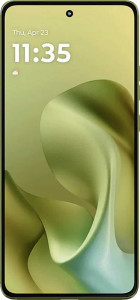
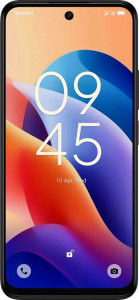
The display gap between these two devices is one of the widest possible in the smartphone market. The Motorola Moto G86 uses an OLED/AMOLED panel, which produces true blacks, vibrant colors, and high contrast by lighting pixels individually. The TCL 60 SE relies on an LCD IPS panel — a fundamentally different technology that uses a backlight, resulting in less vivid colors, inferior contrast, and reduced visibility in direct sunlight. For everyday tasks like scrolling social media or watching video, the difference is immediately visible to the naked eye.
Resolution tells an equally stark story. The G86 resolves at 1220 x 2712 px — a high-resolution display that translates to a crisp 446 ppi pixel density, where individual pixels are essentially invisible. The TCL 60 SE's 720 x 1600 px resolution yields just 262 ppi, which is considered HD-ready but noticeably softer, especially when reading small text or viewing detailed images up close. The G86 also supports HDR10+, unlocking richer tone mapping in compatible content — a feature entirely absent on the TCL. Adding to this, the G86 ships with branded damage-resistant glass, offering scratch protection the TCL lacks.
The TCL 60 SE does offer a 90Hz refresh rate, which provides smoother scrolling than a standard 60Hz panel — but the G86 counters with 120Hz, delivering even more fluid motion. Across every meaningful display metric — panel technology, sharpness, color depth, refresh rate, and durability — the Motorola Moto G86 holds an unambiguous and commanding advantage.