Motorola Moto G96 5G
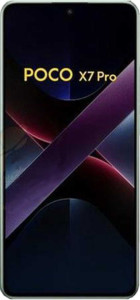
Xiaomi Poco X7 Pro

Motorola Moto G96 5G Xiaomi Poco X7 Pro

Overview

Welcome to our in-depth spec comparison between the Motorola Moto G96 5G and the Xiaomi Poco X7 Pro. Both phones share a solid foundation — IP68 waterproofing, OLED displays, and Android 15 — but they diverge sharply when it comes to raw performance, charging speeds, and connectivity features. Read on to see how these two mid-range contenders stack up across every key battleground.

Common Features

  • Both phones are waterproof with an IP68 ingress protection rating.
  • Neither phone has a rugged build.
  • Neither phone can be folded.
  • Both phones feature an OLED/AMOLED display with a 6.67″ screen size.
  • Both phones have damage-resistant branded glass on the display.
  • Both phones support Always-On Display.
  • Neither phone has a secondary screen.
  • Both phones have a touchscreen.
  • Both chipsets are built on a 4 nm semiconductor process.
  • Both phones support 64-bit processing.
  • Both phones use DirectX 12.
  • Both phones have integrated graphics.
  • Both phones use big.LITTLE technology with 8 CPU threads and HMP support.
  • Both phones have a 50 & 8 MP dual-lens main camera with optical image stabilization.
  • Both phones have a CMOS sensor and support phase-detection autofocus.
  • Both phones have continuous autofocus when recording video.
  • Neither phone has a BSI sensor.
  • Both phones run Android 15.
  • Both phones have clipboard warnings, location privacy options, and camera/microphone privacy options.
  • Neither phone supports Mail Privacy Protection.
  • Both phones support theme customization and can block app tracking.
  • Neither phone blocks cross-site tracking.
  • Neither phone supports wireless charging, but both support fast charging.
  • Neither phone has a removable battery.
  • Neither phone has a 3.5 mm audio jack.
  • Both phones have stereo speakers.
  • Neither phone supports aptX Adaptive or aptX Lossless.
  • Neither phone has a radio.
  • Both phones support 5G, dual SIM, USB Type-C (USB 2.0), and have a fingerprint scanner.
  • Neither phone has an external memory slot.
  • Neither phone supports emergency SOS via satellite or crash detection.
  • Both phones have a video light.
  • Neither phone has a sapphire glass display or an e-paper display.

Main Differences

  • Weight is 178 g on Motorola Moto G96 5G and 198 g on Xiaomi Poco X7 Pro.
  • Thickness is 7.9 mm on Motorola Moto G96 5G and 8.3 mm on Xiaomi Poco X7 Pro.
  • Width is 73.3 mm on Motorola Moto G96 5G and 75.2 mm on Xiaomi Poco X7 Pro.
  • Height is 161.9 mm on Motorola Moto G96 5G and 160.8 mm on Xiaomi Poco X7 Pro.
  • Volume is 93.75 cm³ on Motorola Moto G96 5G and 100.36 cm³ on Xiaomi Poco X7 Pro.
  • Pixel density is 395 ppi on Motorola Moto G96 5G and 446 ppi on Xiaomi Poco X7 Pro.
  • Resolution is 1080 x 2400 px on Motorola Moto G96 5G and 1220 x 2712 px on Xiaomi Poco X7 Pro.
  • Refresh rate is 144Hz on Motorola Moto G96 5G and 120Hz on Xiaomi Poco X7 Pro.
  • The display is protected by Gorilla Glass 5 on Motorola Moto G96 5G and Gorilla Glass 7i on Xiaomi Poco X7 Pro.
  • HDR10 support is present on Xiaomi Poco X7 Pro but not available on Motorola Moto G96 5G.
  • HDR10+ support is present on Xiaomi Poco X7 Pro but not available on Motorola Moto G96 5G.
  • Dolby Vision support is present on Xiaomi Poco X7 Pro but not available on Motorola Moto G96 5G.
  • Internal storage is 256 GB on Motorola Moto G96 5G and 512 GB on Xiaomi Poco X7 Pro.
  • RAM is 8 GB on Motorola Moto G96 5G and 12 GB on Xiaomi Poco X7 Pro.
  • The chipset is Qualcomm Snapdragon 7s Gen 2 on Motorola Moto G96 5G and MediaTek Dimensity 8400 on Xiaomi Poco X7 Pro.
  • The GPU is Adreno 710 on Motorola Moto G96 5G and Mali G720 MC7 on Xiaomi Poco X7 Pro.
  • CPU speed is 4 x 2.4 & 4 x 1.95 GHz on Motorola Moto G96 5G and 1 x 3.25 & 3 x 3 & 4 x 2.15 GHz on Xiaomi Poco X7 Pro.
  • Geekbench 6 multi-core score is 2970 on Motorola Moto G96 5G and 6137 on Xiaomi Poco X7 Pro.
  • Geekbench 6 single-core score is 1015 on Motorola Moto G96 5G and 1583 on Xiaomi Poco X7 Pro.
  • GPU clock speed is 940 MHz on Motorola Moto G96 5G and 1300 MHz on Xiaomi Poco X7 Pro.
  • RAM speed is 3200 MHz on Motorola Moto G96 5G and 4267 MHz on Xiaomi Poco X7 Pro.
  • Maximum memory bandwidth is 25.6 GB/s on Motorola Moto G96 5G and 68.2 GB/s on Xiaomi Poco X7 Pro.
  • Memory channels number 2 on Motorola Moto G96 5G and 4 on Xiaomi Poco X7 Pro.
  • Maximum memory amount is 16 GB on Motorola Moto G96 5G and 24 GB on Xiaomi Poco X7 Pro.
  • Front camera resolution is 32 MP on Motorola Moto G96 5G and 20 MP on Xiaomi Poco X7 Pro.
  • Main camera video recording goes up to 2160p at 30 fps on Motorola Moto G96 5G and 2160p at 60 fps on Xiaomi Poco X7 Pro.
  • The flash uses 1 LED on Motorola Moto G96 5G and 2 LEDs on Xiaomi Poco X7 Pro.
  • Laser autofocus is available on Xiaomi Poco X7 Pro but not on Motorola Moto G96 5G.
  • HDR10 video recording is supported on Xiaomi Poco X7 Pro but not on Motorola Moto G96 5G.
  • Battery capacity is 5500 mAh on Motorola Moto G96 5G and 6000 mAh on Xiaomi Poco X7 Pro.
  • Charging speed is 30W on Motorola Moto G96 5G and 90W on Xiaomi Poco X7 Pro.
  • aptX support is available on Xiaomi Poco X7 Pro but not on Motorola Moto G96 5G.
  • LDAC support is available on Xiaomi Poco X7 Pro but not on Motorola Moto G96 5G.
  • aptX HD support is available on Xiaomi Poco X7 Pro but not on Motorola Moto G96 5G.
  • Wi-Fi support goes up to Wi-Fi 5 on Motorola Moto G96 5G and up to Wi-Fi 6 on Xiaomi Poco X7 Pro.
  • Bluetooth version is 5.2 on Motorola Moto G96 5G and 6.0 on Xiaomi Poco X7 Pro.
  • NFC is available on Xiaomi Poco X7 Pro but not on Motorola Moto G96 5G.
  • Maximum download speed is 2900 Mbit/s on Motorola Moto G96 5G and 5700 Mbit/s on Xiaomi Poco X7 Pro.
  • An infrared sensor is present on Xiaomi Poco X7 Pro but not on Motorola Moto G96 5G.
  • A curved display is featured on Motorola Moto G96 5G but not on Xiaomi Poco X7 Pro.
Specs Comparison
Motorola Moto G96 5G

Motorola Moto G96 5G

Xiaomi Poco X7 Pro

Xiaomi Poco X7 Pro

Design:
water resistance Waterproof Waterproof
weight 178 g 198 g
thickness 7.9 mm 8.3 mm
width 73.3 mm 75.2 mm
height 161.9 mm 160.8 mm
volume 93.751433 cm³ 100.364928 cm³
Ingress Protection (IP) rating IP68 IP68
has a rugged build
can be folded

Both the Motorola Moto G96 5G and the Xiaomi Poco X7 Pro share an IP68 waterproof rating, meaning either device can withstand submersion in fresh water up to the standard depth and duration. Neither adopts a rugged or foldable form factor, so they occupy the same conventional slab category from a protection and build standpoint.

Where the two diverge is in physical footprint. The Moto G96 5G is noticeably more compact in hand: it is 20 g lighter (178 g vs. 198 g), 0.4 mm thinner (7.9 mm vs. 8.3 mm), and 1.9 mm narrower (73.3 mm vs. 75.2 mm). Its total volume of 93.75 cm³ versus the Poco X7 Pro's 100.36 cm³ means it displaces roughly 7% less space. In day-to-day use, 20 g is a perceptible difference during extended one-handed sessions, and the slimmer, narrower profile of the G96 5G makes it easier to reach across the screen and more comfortable to pocket.

On design, the Moto G96 5G holds a clear edge: it is lighter, slimmer, and more compact while offering identical IP68 protection. Users who prioritize a less bulky, easier-to-handle device will favour it; those who are unbothered by a slightly larger chassis — perhaps because the Poco X7 Pro pairs that size with other hardware advantages covered in separate groups — will find the trade-off acceptable.

Display:
Display type OLED/AMOLED OLED/AMOLED
screen size 6.67" 6.67"
pixel density 395 ppi 446 ppi
resolution 1080 x 2400 px 1220 x 2712 px
refresh rate 144Hz 120Hz
has branded damage-resistant glass
Gorilla Glass version Gorilla Glass 5 Gorilla Glass 7i
supports HDR10
supports HDR10+
Always-On Display
supports Dolby Vision
Has a secondary screen
has a touch screen

At first glance the two screens look identical: both are 6.67″ OLED/AMOLED panels with a 144Hz / 120Hz refresh rate and Always-On Display support. The real story, however, is in resolution. The Poco X7 Pro renders at 1220 x 2712 px — a 446 ppi pixel density — versus the Moto G96 5G's 1080 x 2400 px at 395 ppi. That 51 ppi gap is visible: text edges appear crisper and fine image detail is more defined on the Poco, especially at typical reading distances.

HDR support tells an equally one-sided story. The Poco X7 Pro covers HDR10, HDR10+, and Dolby Vision, meaning streaming content from Netflix, Prime Video, and Apple TV+ can render with the full dynamic range and colour grading the director intended. The G96 5G supports none of these standards, so the same content will display in SDR regardless of how vivid the underlying OLED panel is. For anyone who watches a lot of video, this is a meaningful day-to-day limitation. On the durability front, the Poco also steps up to Gorilla Glass 7i compared to the G96 5G's Gorilla Glass 5, offering measurably better resistance to drops and scratches.

The Moto G96 5G's small advantage here — a marginally higher 144Hz refresh rate versus 120Hz — is largely imperceptible in normal scrolling and gaming scenarios. The Poco X7 Pro wins this category decisively, combining a sharper panel, comprehensive HDR coverage, and tougher glass protection.

Performance:
internal storage 256GB 512GB
RAM 8GB 12GB
Chipset (SoC) name Qualcomm Snapdragon 7s Gen 2 MediaTek Dimensity 8400
GPU name Adreno 710 Mali G720 MC7
CPU speed 4 x 2.4 & 4 x 1.95 GHz 1 x 3.25 & 3 x 3 & 4 x 2.15 GHz
Geekbench 6 result (multi) 2970 6137
Geekbench 6 result (single) 1015 1583
GPU clock speed 940 MHz 1300 MHz
RAM speed 3200 MHz 4267 MHz
semiconductor size 4 nm 4 nm
Supports 64-bit
DirectX version DirectX 12 DirectX 12
Has integrated graphics
OpenGL ES version 3.2 3.2
Uses big.LITTLE technology
CPU threads 8 threads 8 threads
Uses HMP
Has TrustZone
maximum memory bandwidth 25.6 GB/s 68.2 GB/s
OpenCL version 2 2
memory channels 2 4
maximum memory amount 16GB 24GB
DDR memory version 5 5

The silicon gap between these two devices is substantial. The Moto G96 5G runs on a Qualcomm Snapdragon 7s Gen 2, while the Poco X7 Pro uses a MediaTek Dimensity 8400 — and the benchmark numbers make the difference concrete. In Geekbench 6, the Poco X7 Pro scores 1583 single-core and 6137 multi-core, compared to the G96 5G's 1015 and 2970 respectively. That is a 56% uplift in single-core responsiveness and more than double the multi-threaded throughput, which translates directly into snappier app launches, faster rendering, and smoother multitasking under load.

The memory architecture compounds this gap further. The Poco X7 Pro pairs 12 GB of RAM running at 4267 MHz across 4 memory channels with a peak bandwidth of 68.2 GB/s — more than 2.6× the G96 5G's 25.6 GB/s across just 2 channels. Higher bandwidth means the CPU and GPU are fed data faster, reducing stutter in demanding games and heavy workloads. The Poco also ships with 512 GB of base storage versus 256 GB on the G96 5G, and its GPU clock of 1300 MHz versus 940 MHz gives it a meaningful edge in graphics-intensive tasks.

The Poco X7 Pro wins this category unambiguously. Across every measurable performance dimension — CPU throughput, memory bandwidth, GPU speed, RAM capacity, and storage — it outclasses the Moto G96 5G by a wide margin. Users who game, run demanding apps, or simply want a device that stays fluid years into ownership will find the Poco X7 Pro in a different league here.

Cameras:
megapixels (main camera) 50 & 8 MP 50 & 8 MP
Has a dual-lens (or multi-lens) main camera
megapixels (front camera) 32MP 20MP
has built-in optical image stabilization
video recording (main camera) 2160 x 30 fps 2160 x 60 fps
Has a dual-tone LED flash
number of flash LEDs 1 2
has a BSI sensor
has a CMOS sensor
has continuous autofocus when recording movies
Has phase-detection autofocus for photos
supports slow-motion video recording
has a built-in HDR mode
has manual exposure
has a flash
optical zoom 0x 0x
has manual ISO
has a serial shot mode
has manual focus
has a front camera
Has laser autofocus
Shoots 360° panorama
has manual white balance
has touch autofocus
has manual shutter speed
can create panoramas in-camera
wide aperture (front camera) 2.2 & 1.9f 2.5f
Has timelapse function
Has a front-facing LED flash
has a dual-lens (or multi-lens) front camera
supports HDR10 recording
supports Dolby Vision recording
has a front-facing camera under the display
Has a RGB LED flash
has 3D photo/video recording capabilities

The rear camera systems share the same headline figures — a 50 & 8 MP dual-lens setup with OIS, phase-detection autofocus, and identical manual controls on both devices. The meaningful divergence shows up in video. The Poco X7 Pro records 4K at 60 fps versus the G96 5G's 30 fps ceiling, which means smoother motion capture for fast-moving subjects and more flexibility in post-production. The Poco also adds laser autofocus — a secondary focusing system that improves lock speed in low-contrast or poorly lit scenes — and supports HDR10 video recording, bringing dynamic range consistency to clips in the same way HDR10 benefits its display.

The selfie camera tilts the other way. The Moto G96 5G offers a 32 MP front sensor, a significant resolution advantage over the Poco X7 Pro's 20 MP. Higher resolution alone does not guarantee better photos, but it does afford more detail and greater flexibility when cropping. The G96 5G also lists a dual-aperture front camera (f/2.2 & f/1.9), suggesting a variable or multi-element lens design, whereas the Poco's single f/2.5 aperture is notably narrower, admitting less light in dim selfie conditions.

This group is genuinely split. The Poco X7 Pro leads on rear video capability — 4K/60fps, laser AF, and HDR10 recording are concrete advantages for videographers. The Moto G96 5G holds the selfie edge with a higher-resolution, wider-aperture front camera. Which advantage matters more depends squarely on how the user shoots: rear video work favours the Poco; front-camera-centric users will prefer the G96 5G.

Operating system:
Android version Android 15 Android 15
has clipboard warnings
has location privacy options
has camera/microphone privacy options
has Mail Privacy Protection
has theme customization
can block app tracking
blocks cross-site tracking
has on-device machine learning
has notification permissions
has media picker
Can play games while they download
has dark mode
has Wi-Fi password sharing
has battery health check
has an extra dim mode
has focus modes
has dynamic theming
can offload apps
Has customizable notifications
has Live Text
has full-page screenshots
supports split screen
gets direct OS updates
has PiP
Can be used as a PC
Has sharing intents
has a child lock
Supports widgets
Is free and open source
Has offline voice recognition
has voice commands
Tracks the current position of a mobile device
is a multi-user system
has Quick Start

Both the Motorola Moto G96 5G and Xiaomi Poco X7 Pro run on Android 15, offering a similar set of features. Both devices include clipboard warnings, location privacy options, camera/microphone privacy options, theme customization, and the ability to block app tracking. They also support dynamic theming, dark mode, Wi-Fi password sharing (although neither has this feature), and battery health checks, as well as features like Live Text, full-page screenshots, and PiP (Picture-in-Picture) mode.

When it comes to privacy, both phones provide on-device machine learning, customizable notifications, and media pickers. Both support split screen, offline voice recognition, voice commands, and have the ability to track the current position of a mobile device. They also allow for multi-user systems and have a child lock feature, with no noticeable differences in these areas.

While the Moto G96 5G and Poco X7 Pro share many similarities, neither device gets direct OS updates, and neither has the Quick Start feature. Both are free and open-source. However, the Poco X7 Pro offers all the same features without any additional distinctions, making the experience largely identical between the two products in this specification group.

Battery:
battery power 5500 mAh 6000 mAh
has wireless charging
Supports fast charging
charging speed 30W 90W
has a removable battery
has a battery level indicator
has a rechargeable battery

The Motorola Moto G96 5G is equipped with a 5500 mAh battery, while the Xiaomi Poco X7 Pro has a larger 6000 mAh battery. Neither device supports wireless charging, and both feature rechargeable, non-removable batteries. They both also include a battery level indicator, providing users with visibility of their remaining charge.

When it comes to fast charging, the Moto G96 5G supports a charging speed of 30W, while the Poco X7 Pro offers a significantly faster 90W charging speed. Despite the difference in charging speed, both phones support fast charging technology, ensuring quick power-ups for both devices.

Overall, the Poco X7 Pro has a larger battery and faster charging capability, though both phones share similar features such as non-removable batteries and battery level indicators.

Audio:
has a socket for a 3.5 mm audio jack
has stereo speakers
has aptX
has LDAC
has aptX HD
has aptX Adaptive
has aptX Lossless
Has a radio

Both the Motorola Moto G96 5G and Xiaomi Poco X7 Pro feature stereo speakers, providing enhanced audio quality for media playback. However, neither device includes a 3.5 mm audio jack, so users will need to rely on wireless headphones or USB-C audio solutions.

In terms of wireless audio support, the Moto G96 5G lacks aptX, LDAC, and other high-definition Bluetooth audio codecs. On the other hand, the Poco X7 Pro supports aptX, LDAC, and aptX HD, offering better wireless audio performance for users with compatible Bluetooth headphones or speakers. Neither phone supports aptX Adaptive, aptX Lossless, or has a built-in radio.

Overall, both devices provide stereo speakers, but the Poco X7 Pro offers more advanced Bluetooth audio codec support compared to the Moto G96 5G.

Connectivity & Features:
release date July 2025 January 2025
has 5G support
Wi-Fi version Wi-Fi 4 (802.11n), Wi-Fi 5 (802.11ac) Wi-Fi 4 (802.11n), Wi-Fi 5 (802.11ac), Wi-Fi 6 (802.11ax)
SIM cards 2 SIM 2 SIM
Bluetooth version 5.2 6
has an external memory slot
Has USB Type-C
USB version 2 2
has NFC
download speed 2900 MBits/s 5700 MBits/s
Has a fingerprint scanner
has emergency SOS via satellite
has crash detection
is DLNA-certified
has a gyroscope
supports ANT+
Has a heart rate monitor
has GPS
has a compass
supports Wi-Fi
Has an infrared sensor
has an accelerometer
has a cellular module
Has a barometer
has an HDMI output
Uses 3D facial recognition
Has an iris scanner
Stylus included
supports Galileo
Has motion tracking
Has optical tracking
Has a built-in projector

Both the Motorola Moto G96 5G and Xiaomi Poco X7 Pro support 5G connectivity, ensuring fast mobile data speeds. The Moto G96 5G offers Wi-Fi 4 (802.11n) and Wi-Fi 5 (802.11ac), while the Poco X7 Pro also supports these Wi-Fi standards and adds Wi-Fi 6 (802.11ax) for better overall network efficiency. Both devices feature Bluetooth connectivity, with the Moto G96 5G using Bluetooth 5.2 and the Poco X7 Pro upgrading to Bluetooth 6 for improved wireless audio and device connection capabilities.

In terms of SIM card support, both phones use dual SIM cards. The Moto G96 5G has a maximum download speed of 2900 MBit/s, while the Poco X7 Pro offers a much faster download speed of 5700 MBit/s. Both devices include USB Type-C with USB 2.0, a fingerprint scanner for security, and essential sensors such as a gyroscope, accelerometer, GPS, and compass.

Additional features differ slightly between the two devices: the Poco X7 Pro has NFC support, an infrared sensor, and a higher Wi-Fi standard, while the Moto G96 5G lacks NFC but has similar core connectivity features. Neither device supports external memory slots, barometers, HDMI output, or includes a stylus. Both are equipped with Galileo support for navigation and have no built-in projector or motion/optical tracking features.

Miscellaneous:
has a video light
Has sapphire glass display
Has a curved display
Has an e-paper display

Both the Motorola Moto G96 5G and Xiaomi Poco X7 Pro come equipped with a video light, which can be useful for enhancing video recording in low-light conditions. Neither device features sapphire glass display protection or an e-paper display, so their screens are not built with those specialized materials or technologies.

In terms of display design, the Moto G96 5G has a curved display, providing a more immersive and stylish look, while the Poco X7 Pro has a flat display, without the curved edges.

Overall, the differences in this group are limited to the display design: the Moto G96 5G offers a curved display, while the Poco X7 Pro has a traditional flat screen. Both devices share the presence of a video light and lack the other advanced display features like sapphire glass and e-paper displays.

Comparison Summary & Verdict

After examining every specification, a clear picture emerges for each device. The Motorola Moto G96 5G appeals to users who value a lighter, slimmer form factor, a higher 144Hz refresh rate, and a sharper 32 MP selfie camera, making it a solid daily driver for social media enthusiasts and those who prefer a more pocketable phone. The Xiaomi Poco X7 Pro, however, dominates in almost every performance metric: its Dimensity 8400 chipset delivers roughly double the multi-core benchmark score, it charges at a blazing 90W, carries a larger 6000 mAh battery, and adds Wi-Fi 6, Bluetooth 6, NFC, HDR10+ display support, and superior audio codecs like LDAC and aptX HD. For power users and multimedia fans, the Poco X7 Pro is the stronger all-round package.

Motorola Moto G96 5G
Buy Motorola Moto G96 5G if...

Buy the Motorola Moto G96 5G if you prefer a lighter, slimmer phone with a higher 144Hz refresh rate and a higher-resolution 32 MP front camera for selfies.

Xiaomi Poco X7 Pro
Buy Xiaomi Poco X7 Pro if...

Buy the Xiaomi Poco X7 Pro if you want significantly faster performance, a 90W fast-charging larger battery, NFC, Wi-Fi 6, and premium audio codec support like LDAC and aptX HD.