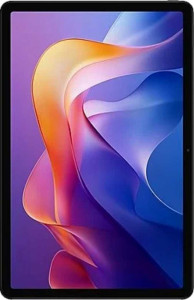
Connectivity is where these tablets diverge in some genuinely interesting ways. The Xiaomi Redmi Pad 2 includes a cellular module, meaning it can connect to mobile networks independently of Wi-Fi — a fundamental convenience for users who need connectivity on the go. The Moto Pad 60 Neo, by contrast, has no cellular module, making it Wi-Fi dependent. Curiously, the Motorola lists 5G support while the Redmi Pad 2 does not, despite the latter being the one with an active cellular radio. On shared wireless ground, both tablets top out at Wi-Fi 5 (802.11ac), so neither has a Wi-Fi generational edge. The Motorola does, however, list a significantly higher theoretical download speed of 3300 Mbits/s versus the Redmi's 650 Mbits/s, a gap worth noting for throughput-sensitive use cases.
The sensor loadout favors the Redmi Pad 2, which adds a gyroscope and compass — both absent on the Motorola. The gyroscope matters for motion-sensitive apps, augmented reality experiences, and precise screen rotation, while the compass enables accurate map orientation. The Redmi also steps ahead slightly with Bluetooth 5.3 versus the Motorola's 5.2, a minor but real improvement in connection stability and efficiency. On software features — split screen, Picture-in-Picture, dark mode, dynamic theming, privacy controls — the two are completely identical.
This group produces a nuanced split. Users who prioritize on-the-go cellular connectivity and richer sensors will find the Redmi Pad 2 better suited to their needs. Those who value raw wireless download throughput may lean toward the Motorola. Overall, the Redmi Pad 2 holds a slight practical edge for mobile users, given that cellular access and a gyroscope are broadly useful features in everyday tablet scenarios.