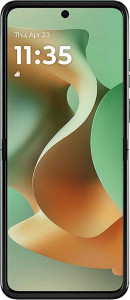
Motorola Razr 60
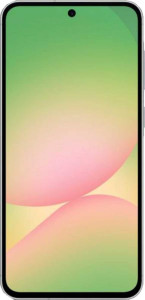
Samsung Galaxy A56 5G

Motorola Razr 60 Samsung Galaxy A56 5G

Overview

Welcome to our in-depth spec comparison between the Motorola Razr 60 and the Samsung Galaxy A56 5G — two compelling Android 15 smartphones that take very different approaches to design, display, and everyday performance. From the Razr 60's distinctive foldable form factor and secondary screen to the Galaxy A56 5G's larger battery and triple-lens camera system, there is plenty to weigh up before making a decision. Read on as we break down every key specification across design, performance, cameras, battery, and connectivity.

Common Features

  • Both phones are waterproof but neither has a rugged build.
  • Both phones feature an OLED/AMOLED display with a 120Hz refresh rate.
  • Both displays include branded damage-resistant glass.
  • HDR10 support is available on both phones.
  • HDR10+ support is available on both phones.
  • Both phones have a touchscreen display.
  • Both phones are equipped with 12GB of RAM.
  • Both phones have integrated LTE and 5G support.
  • Both chips are built on a 4nm semiconductor process.
  • Both phones support 64-bit processing and use big.LITTLE technology with 8 CPU threads.
  • DirectX 12 is supported on both phones.
  • Both phones feature a dual-lens or multi-lens main camera with built-in optical image stabilization.
  • Both main cameras support 4K video recording at 30fps.
  • Both phones have a CMOS sensor and continuous autofocus during video recording.
  • Both phones run Android 15 and share the same privacy features including clipboard warnings, location privacy options, and camera/microphone privacy options.
  • Both phones support fast charging but neither comes with a charger in the box.
  • Neither phone has a removable battery, and both have a battery level indicator.
  • Neither phone has a 3.5mm audio jack, but both feature stereo speakers.
  • Neither phone supports LDAC or has a radio.
  • Both phones have NFC, a USB Type-C port (USB 2.0), a fingerprint scanner, and no external memory slot.
  • Neither phone supports emergency SOS via satellite or crash detection.
  • Both phones have a video light but lack a sapphire glass display, curved display, or e-paper display.

Main Differences

  • Weight is 188g on Motorola Razr 60 and 198g on Samsung Galaxy A56 5G.
  • Thickness is 7.3mm on Motorola Razr 60 and 7.4mm on Samsung Galaxy A56 5G.
  • Width is 74mm on Motorola Razr 60 and 77.5mm on Samsung Galaxy A56 5G.
  • Height is 171.3mm on Motorola Razr 60 and 162.2mm on Samsung Galaxy A56 5G.
  • The IP rating is IPX8 on Motorola Razr 60 and IP67 on Samsung Galaxy A56 5G.
  • Motorola Razr 60 can be folded, while Samsung Galaxy A56 5G cannot.
  • Screen size is 6.9″ on Motorola Razr 60 and 6.7″ on Samsung Galaxy A56 5G.
  • Pixel density is 413 ppi on Motorola Razr 60 and 385 ppi on Samsung Galaxy A56 5G.
  • Resolution is 1080x2640px on Motorola Razr 60 and 1080x2340px on Samsung Galaxy A56 5G.
  • Dolby Vision display support is present on Motorola Razr 60 but not available on Samsung Galaxy A56 5G.
  • A secondary screen is present on Motorola Razr 60 but not available on Samsung Galaxy A56 5G.
  • Internal storage is 512GB on Motorola Razr 60 and 256GB on Samsung Galaxy A56 5G.
  • The chipset is MediaTek Dimensity 7400X on Motorola Razr 60 and Samsung Exynos 1580 on Samsung Galaxy A56 5G.
  • The GPU is Mali G615 MC2 on Motorola Razr 60 and Xclipse 530 on Samsung Galaxy A56 5G.
  • RAM speed is 6400MHz on Motorola Razr 60 and 3200MHz on Samsung Galaxy A56 5G.
  • Maximum memory bandwidth is 25.6 GB/s on Motorola Razr 60 and 51.2 GB/s on Samsung Galaxy A56 5G.
  • Maximum supported memory amount is 16GB on Motorola Razr 60 and 12GB on Samsung Galaxy A56 5G.
  • Main camera megapixels are 13 and 50MP on Motorola Razr 60, while Samsung Galaxy A56 5G has 50, 12, and 5MP across three lenses.
  • Front camera resolution is 32MP on Motorola Razr 60 and 12MP on Samsung Galaxy A56 5G.
  • HDR10 video recording is supported on Motorola Razr 60 but not on Samsung Galaxy A56 5G.
  • Dolby Vision video recording is supported on Motorola Razr 60 but not on Samsung Galaxy A56 5G.
  • Battery capacity is 4500mAh on Motorola Razr 60 and 5000mAh on Samsung Galaxy A56 5G.
  • Wireless charging is available on Motorola Razr 60 but not on Samsung Galaxy A56 5G.
  • Wired charging speed is 30W on Motorola Razr 60 and 45W on Samsung Galaxy A56 5G.
  • aptX Lossless audio is supported on Motorola Razr 60 but not on Samsung Galaxy A56 5G.
  • Motorola Razr 60 has 3 microphones while Samsung Galaxy A56 5G has 2.
  • Motorola Razr 60 supports Wi-Fi 6E in addition to Wi-Fi 4, 5, and 6, while Samsung Galaxy A56 5G supports only Wi-Fi 4, 5, and 6.
  • SIM configuration is 1 SIM and 1 eSIM on Motorola Razr 60 and 2 SIMs and 2 eSIMs on Samsung Galaxy A56 5G.
  • Bluetooth version is 5.4 on Motorola Razr 60 and 5.3 on Samsung Galaxy A56 5G.
Specs Comparison
Motorola Razr 60

Motorola Razr 60

Samsung Galaxy A56 5G

Samsung Galaxy A56 5G

Design:
water resistance Waterproof Waterproof
weight 188 g 198 g
thickness 7.3 mm 7.4 mm
width 74 mm 77.5 mm
height 171.3 mm 162.2 mm
volume 92.53626 cm³ 93.0217 cm³
Ingress Protection (IP) rating IPX8 IP67
has a rugged build
can be folded

The most defining design difference between these two phones is their form factor. The Motorola Razr 60 is a foldable device, meaning it folds in half clamshell-style, while the Samsung Galaxy A56 5G is a conventional candy-bar slab. In practical terms, the Razr 60's folding hinge allows it to collapse to a much more pocket-friendly footprint when not in use — a genuine lifestyle advantage for those who prioritize portability. The A56's fixed slab design, however, is simpler, more durable mechanically, and eliminates any concerns about hinge wear over time.

On water resistance, both phones are rated waterproof, but the Razr 60 carries an IPX8 rating while the A56 holds an IP67 rating. IPX8 technically allows for deeper or longer submersion than IP67's certified limit of 1 meter for up to 30 minutes, giving the Razr 60 a marginal edge in liquid protection. Worth noting: the ″X″ in IPX8 means Motorola has not formally certified dust resistance, whereas the ″6″ in the A56's IP67 confirms full dust-tight protection — a subtle but real trade-off depending on your environment.

In terms of handling, the Razr 60 is noticeably lighter at 188 g versus the A56's 198 g, and marginally thinner at 7.3 mm compared to 7.4 mm — though these differences are minor day-to-day. Overall, the Razr 60 holds the design edge for users who want a compact, modern form factor and slightly stronger water resistance; the A56 counters with proven dust certification and the reliability of a traditional build.

Display:
Display type OLED/AMOLED OLED/AMOLED
screen size 6.9" 6.7"
pixel density 413 ppi 385 ppi
resolution 1080 x 2640 px 1080 x 2340 px
refresh rate 120Hz 120Hz
has branded damage-resistant glass
supports HDR10
supports HDR10+
supports Dolby Vision
Has a secondary screen
has a touch screen

Both phones share a strong display foundation — OLED/AMOLED panels with a 120Hz refresh rate and damage-resistant glass — so neither user is making a compromise on core visual quality or smoothness. Where they diverge is in size and sharpness. The Razr 60's main screen measures 6.9″ at 413 ppi, while the A56 offers a 6.7″ panel at 385 ppi. The pixel density gap is meaningful: at 413 ppi, the Razr 60's display is visibly crisper when reading fine text or viewing detailed images up close, whereas 385 ppi on the A56, while still sharp, falls slightly behind by comparison.

A notable differentiator is HDR support. Both handle HDR10 and HDR10+, which covers the majority of streaming content on platforms like Netflix and YouTube. However, the Razr 60 also supports Dolby Vision — a dynamic, scene-by-scene HDR format used by Apple TV+, Disney+, and others. For heavy streaming users, this translates to richer contrast and color accuracy on a wider range of content that the A56 simply cannot render at the same level.

Finally, the Razr 60's secondary screen — a feature absent on the A56 — adds a functional outer display for quick glances at notifications, widgets, or media controls without ever unfolding the phone. Taken together, the Razr 60 holds a clear display edge in every meaningful dimension: larger canvas, higher pixel density, broader HDR compatibility, and an additional screen entirely.

Performance:
internal storage 512GB 256GB
RAM 12GB 12GB
Chipset (SoC) name MediaTek Dimensity 7400X Samsung Exynos 1580
GPU name Mali G615 MC2 Xclipse 530
CPU speed 4 x 2.6 & 4 x 2 GHz 1 x 2.9 & 3 x 2.6 & 4 x 1.95 GHz
GPU clock speed 1047 MHz 1300 MHz
Has integrated LTE
RAM speed 6400 MHz 3200 MHz
semiconductor size 4 nm 4 nm
Supports 64-bit
DirectX version DirectX 12 DirectX 12
Has integrated graphics
Uses big.LITTLE technology
CPU threads 8 threads 8 threads
Uses HMP
maximum memory bandwidth 25.6 GB/s 51.2 GB/s
maximum memory amount 16GB 12GB
DDR memory version 5 5

Chipset architecture tells an interesting story here. The Razr 60 runs on a MediaTek Dimensity 7400X with a dual-cluster CPU (4 cores at 2.6 GHz, 4 at 2.0 GHz), while the A56 uses a Samsung Exynos 1580 with a tri-cluster layout peaking at 2.9 GHz on its prime core. That higher peak clock on the A56 gives it an edge in single-core burst tasks — things like app launches and UI responsiveness — where that fastest core does most of the heavy lifting. Both chips are built on a 4 nm process and share the same 8-thread, big.LITTLE with HMP configuration, so neither has a structural efficiency disadvantage.

On memory and graphics, the split continues. The A56's 51.2 GB/s memory bandwidth is double the Razr 60's 25.6 GB/s, and its GPU clocks higher at 1300 MHz versus 1047 MHz — both of which translate to a meaningful advantage in GPU-intensive workloads like gaming and video processing. The Razr 60 counters with faster RAM at 6400 MHz versus the A56's 3200 MHz, and supports up to 16 GB of RAM compared to the A56's 12 GB ceiling, giving it more theoretical headroom for future configurations.

Storage is the Razr 60's clearest win: 512 GB internal storage versus the A56's 256 GB is a tangible, everyday advantage for users who store large media libraries or avoid cloud dependency. Overall, performance here is genuinely split — the A56 holds the edge in raw GPU throughput and memory bandwidth, making it the stronger pick for graphics-heavy use, while the Razr 60 leads on storage capacity and RAM scalability.

Cameras:
megapixels (main camera) 13 & 50 MP 50 & 12 & 5 MP
wide aperture (main camera) 2.2 & 1.7f 1.8 & 2.2 & 2.4f
Has a dual-lens (or multi-lens) main camera
megapixels (front camera) 32MP 12MP
has built-in optical image stabilization
video recording (main camera) 2160 x 30 fps 2160 x 30 fps
Has a dual-tone LED flash
number of flash LEDs 1 1
has a BSI sensor
has a CMOS sensor
has continuous autofocus when recording movies
Has phase-detection autofocus for photos
supports slow-motion video recording
has a built-in HDR mode
has manual exposure
has a flash
optical zoom 0x 0x
has manual ISO
has a serial shot mode
has manual focus
has a front camera
Has laser autofocus
Shoots 360° panorama
has manual white balance
shoots raw
has touch autofocus
has manual shutter speed
can create panoramas in-camera
wide aperture (front camera) 2.4f 2.2f
Has timelapse function
Has a front-facing LED flash
has a dual-lens (or multi-lens) front camera
supports HDR10 recording
supports Dolby Vision recording
has a front-facing camera under the display
Has a RGB LED flash
has 3D photo/video recording capabilities

Lens count is the first structural divide: the Razr 60 has a dual rear camera (50 MP + 13 MP), while the A56 deploys a triple rear system (50 MP + 12 MP + 5 MP). That third lens on the A56 adds a dedicated depth or macro role, giving it more compositional flexibility across different shooting scenarios. On the main lens, the Razr 60's slightly wider aperture of f/1.7 versus the A56's f/1.8 offers a marginal low-light advantage — a real but subtle difference in dimly lit environments. Both share OIS, phase-detection autofocus, and identical 4K 30fps video ceilings, so neither pulls ahead on fundamental photo or video capability.

Selfie cameras tell the opposite story. The Razr 60 packs a 32 MP front shooter, nearly three times the resolution of the A56's 12 MP sensor. For users who prioritize portrait detail or frequently crop selfies, that resolution gap is significant. The A56 answers with a slightly wider front aperture of f/2.2 versus f/2.4, which theoretically admits a bit more light, but this is unlikely to offset the substantial resolution difference in most conditions.

The most decisive gap, however, is in video HDR support. The Razr 60 records in both HDR10 and Dolby Vision, formats that preserve far greater dynamic range and color depth in footage — the A56 supports neither. For anyone who shoots video with the intent of watching it on a capable display or editing it professionally, this is a meaningful content quality difference. Overall, the Razr 60 holds the camera edge on selfie resolution and video HDR versatility, while the A56 counters with a more versatile triple-lens rear arrangement.

Operating system:
Android version Android 15 Android 15
has clipboard warnings
has location privacy options
has camera/microphone privacy options
has Mail Privacy Protection
has theme customization
can block app tracking
blocks cross-site tracking
has on-device machine learning
has notification permissions
has media picker
Can play games while they download
has dark mode
has Wi-Fi password sharing
has battery health check
has an extra dim mode
has focus modes
has dynamic theming
can offload apps
Has customizable notifications
has Live Text
has full-page screenshots
supports split screen
gets direct OS updates
has PiP
Can be used as a PC
Has sharing intents
has a child lock
Supports widgets
Is free and open source
Has offline voice recognition
has voice commands
Tracks the current position of a mobile device
is a multi-user system
has Quick Start

Rarely does a spec group produce a result this clear-cut: across every single data point provided, the Motorola Razr 60 and the Samsung Galaxy A56 5G are identical. Both ship with Android 15, share the same privacy toolkit — including location controls, camera/microphone permissions, and app tracking blockers — and offer the same productivity and customization features such as dynamic theming, split-screen multitasking, widgets, and Picture-in-Picture mode.

The shared feature set is genuinely strong. On-device machine learning, offline voice recognition, battery health monitoring, and a media picker are all present on both devices, reflecting a modern Android 15 baseline that covers the needs of most users without requiring third-party workarounds. Neither phone gets direct OS updates — meaning both rely on their respective manufacturers to push Android updates rather than receiving them straight from Google — which is a shared limitation worth keeping in mind for long-term software support.

With no divergence anywhere in the provided data, this group is an absolute tie. A user's software experience will be shaped far more by each manufacturer's custom Android skin and update cadence — neither of which is reflected in these specs — than by any intrinsic OS-level difference between the two phones.

Battery:
battery power 4500 mAh 5000 mAh
has wireless charging
Supports fast charging
charging speed 30W 45W
comes with a charger
has a removable battery
has a battery level indicator
has a rechargeable battery

Battery capacity and charging speed cut in opposite directions here, creating a genuine trade-off. The Samsung Galaxy A56 5G packs a 5000 mAh battery versus the Razr 60's 4500 mAh — a 500 mAh gap that, in practice, translates to a meaningful difference in endurance over a full day of use. For users who frequently find themselves away from a charger, that larger reservoir on the A56 is a tangible advantage.

When it does come time to recharge, the picture flips. The A56 supports 45W wired fast charging compared to the Razr 60's 30W, meaning the A56 can replenish its larger battery considerably faster — partially offsetting the raw capacity advantage of needing to charge less often in the first place. Where the Razr 60 reclaims ground is with wireless charging, a feature the A56 lacks entirely. For users embedded in a wireless charging ecosystem — desk pads, car mounts, nightstands — the Razr 60's support for this convenience is a qualitative lifestyle difference that no wired speed figure can replace.

Neither phone includes a charger in the box, so that is a shared inconvenience. On balance, this group has no outright winner — it depends entirely on use pattern. The A56 suits endurance-focused users who want more capacity and faster top-ups via cable, while the Razr 60 better serves those who prioritize wireless charging convenience and can tolerate a slightly smaller battery.

Audio:
has a socket for a 3.5 mm audio jack
has stereo speakers
has LDAC
has aptX Lossless
Has a radio
number of microphones 3 2

The audio baseline is shared: neither phone offers a 3.5mm headphone jack, both deliver stereo speakers, and neither supports LDAC — so wired headphone users will need an adapter on both devices, and the speaker experience starts from the same foundation. Where the Razr 60 pulls ahead is in wireless audio codec support. It includes aptX Lossless, a codec capable of transmitting CD-quality audio over Bluetooth without compression artifacts, provided the receiving headphones or earbuds also support it. The A56 lacks this entirely, meaning Bluetooth audio on the A56 is limited to lossy compression regardless of how capable the paired headphones are.

Microphone count is the other differentiator. The Razr 60 has 3 microphones versus the A56's 2. An additional microphone enables more sophisticated noise cancellation and spatial audio capture — practical benefits during calls in noisy environments, voice recordings, and video shoots where background noise suppression matters.

Taken together, the Razr 60 holds a clear audio edge. It outperforms the A56 on both ends of the audio chain — higher-fidelity wireless playback via aptX Lossless and superior audio capture through its third microphone — making it the stronger choice for users who treat audio quality as a priority.

Connectivity & Features:
release date April 2025 March 2025
has 5G support
Wi-Fi version Wi-Fi 4 (802.11n), Wi-Fi 6E (802.11ax), Wi-Fi 6 (802.11ax), Wi-Fi 5 (802.11ac) Wi-Fi 4 (802.11n), Wi-Fi 5 (802.11ac), Wi-Fi 6 (802.11ax)
SIM cards 1 SIM, 1 eSIM 2 SIM, 2 eSIM
Bluetooth version 5.4 5.3
has an external memory slot
Has USB Type-C
USB version 2 2
has NFC
Has a fingerprint scanner
has emergency SOS via satellite
has crash detection
is DLNA-certified
has a gyroscope
supports ANT+
Has a heart rate monitor
has GPS
has a compass
supports Wi-Fi
Has an infrared sensor
has an accelerometer
has a cellular module
Has a barometer
has an HDMI output
Uses 3D facial recognition
Has an iris scanner
Stylus included
supports Galileo
Has motion tracking
Has optical tracking
Has a built-in projector

The two phones share a near-identical connectivity foundation — 5G, NFC, USB Type-C, GPS with Galileo support, and the same core sensor suite — so the real story here lies in the finer details. The Razr 60 supports Wi-Fi 6E, which the A56 does not. Wi-Fi 6E extends into the 6 GHz band, offering significantly less congestion and higher potential throughput in environments with many competing devices, such as offices or apartments with dense Wi-Fi traffic. For the A56, Wi-Fi 6 is the ceiling, which is capable but increasingly common and therefore more prone to interference in busy environments.

Bluetooth tells a smaller but still relevant story. The Razr 60 runs Bluetooth 5.4 versus the A56's 5.3, a generational step that brings incremental improvements in connection reliability and efficiency — a modest but real advantage for users who keep multiple Bluetooth devices paired simultaneously. On SIM flexibility, however, the A56 pulls ahead with support for 2 physical SIMs and 2 eSIMs, compared to the Razr 60's 1 physical SIM and 1 eSIM. For frequent travelers or users managing personal and work lines simultaneously, that dual-SIM dual-eSIM configuration on the A56 is a practical and meaningful edge.

Overall, connectivity here is genuinely split by use case. The Razr 60 is stronger for wireless performance thanks to Wi-Fi 6E and a newer Bluetooth version, while the A56 wins on SIM versatility for multi-line users. Neither phone holds a dominant overall advantage in this group.

Miscellaneous:
has a video light
Has sapphire glass display
Has a curved display
Has an e-paper display

The miscellaneous spec group offers no differentiation between these two phones whatsoever. Both have a video light, neither features sapphire glass, a curved display, or an e-paper display — every data point is an exact match. This is a complete tie, and no purchase decision should hinge on anything in this category.

Comparison Summary & Verdict

After a thorough comparison, it is clear that both phones target distinct types of users. The Motorola Razr 60 stands out for those who want a premium, compact foldable experience: it brings a secondary screen, Dolby Vision and HDR10 recording, wireless charging, Wi-Fi 6E, a higher-resolution 32MP front camera, and aptX Lossless audio — all in a lighter, slimmer body with a massive 512GB of internal storage. The Samsung Galaxy A56 5G, on the other hand, appeals to users who prioritize endurance and raw connectivity: its 5000 mAh battery, 45W fast charging, dual physical SIM with dual eSIM, higher memory bandwidth of 51.2 GB/s, and a versatile triple-lens rear camera make it a dependable daily driver. Choose the Razr 60 for innovation and multimedia flair; choose the Galaxy A56 5G for battery longevity and practical versatility.

Motorola Razr 60
Buy Motorola Razr 60 if...

Buy the Motorola Razr 60 if you want a foldable design with a secondary screen, wireless charging, Dolby Vision support, Wi-Fi 6E, and a generous 512GB of storage in a lighter and slimmer package.

Samsung Galaxy A56 5G
Buy Samsung Galaxy A56 5G if...

Buy the Samsung Galaxy A56 5G if you prioritize a larger 5000 mAh battery, faster 45W wired charging, dual SIM and dual eSIM flexibility, and a higher maximum memory bandwidth for demanding multitasking.