Mova P50 Pro Ultra
Narwal Freo Z10

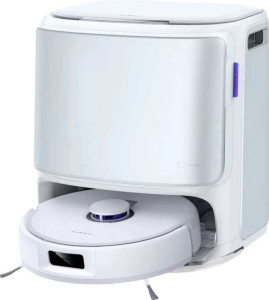
Mova P50 Pro Ultra Narwal Freo Z10

Overview

When choosing between the Mova P50 Pro Ultra and the Narwal Freo Z10, robot vacuum shoppers face a genuinely competitive matchup. Both models share a strong foundation — HEPA filtration, self-emptying capability, smart mapping, and compatibility with Google Assistant and Alexa — but they diverge in meaningful ways across suction power, battery and runtime, dustbin design, and overall noise levels. Read on to see how every specification stacks up before making your decision.

Common Features

  • Both products include a HEPA filter.
  • Both products include an allergy filter.
  • Both products are compatible with Google Assistant.
  • Both products work with Alexa.
  • Both products weigh 4600 g.
  • Both products have a thickness of 350 mm.
  • Both products support mapping.
  • Both products support no-go zones.
  • Both products support remote smartphone control.
  • Both products include an obstacle sensor.
  • Both products support problem area cleaning.
  • Both products are self-emptying.
  • Both products include carpet detection.
  • Neither product gets stuck.
  • Neither product has a display.
  • Both products include washable filters.
  • Both products automatically adjust their height.
  • Both products clean all floor types.
  • Both products are capable of mopping.
  • Both products include a dirt sensor.
  • Neither product has UV light.
  • Both products have a charge time of 3.5 hours.
  • Both products feature auto-off functionality.

Main Differences

  • Audible noise is 74 dB on Mova P50 Pro Ultra and 58 dB on Narwal Freo Z10.
  • Width is 350 mm on Mova P50 Pro Ultra and 355 mm on Narwal Freo Z10.
  • Height is 103.8 mm on Mova P50 Pro Ultra and 107.7 mm on Narwal Freo Z10.
  • Volume is 12715.5 cm³ on Mova P50 Pro Ultra and 13381.725 cm³ on Narwal Freo Z10.
  • Warranty period is 3 years on Mova P50 Pro Ultra and 1 year on Narwal Freo Z10.
  • Estimated empty time is 100 days on Mova P50 Pro Ultra and 120 days on Narwal Freo Z10.
  • Docking station size is 90409.2 cm³ on Mova P50 Pro Ultra and 84893.2942 cm³ on Narwal Freo Z10.
  • Dustbin capacity is 0.32 l on Mova P50 Pro Ultra and 0.8 l on Narwal Freo Z10.
  • Twin side brushes are present on Narwal Freo Z10 but not available on Mova P50 Pro Ultra.
  • A full-bin indicator is present on Narwal Freo Z10 but not available on Mova P50 Pro Ultra.
  • Mova P50 Pro Ultra uses bags for dust collection, while Narwal Freo Z10 does not.
  • Suction power is 19000 Pa on Mova P50 Pro Ultra and 15000 Pa on Narwal Freo Z10.
  • Number of cleaning modes is 4 on Mova P50 Pro Ultra and 5 on Narwal Freo Z10.
  • Battery power is 6400 mAh on Mova P50 Pro Ultra and 5000 mAh on Narwal Freo Z10.
  • Runtime is 170 min on Mova P50 Pro Ultra and 210 min on Narwal Freo Z10.
  • A removable battery is available on Narwal Freo Z10 but not on Mova P50 Pro Ultra.
Specs Comparison
Mova P50 Pro Ultra

Mova P50 Pro Ultra

Narwal Freo Z10

Narwal Freo Z10

General info:
has HEPA filter
audible noise 74 dB 58 dB
has an allergy filter
compatible with Google Assistant
works with Alexa
release date March 2025 April 2025
weight 4600 g 4600 g
width 350 mm 355 mm
height 103.8 mm 107.7 mm
thickness 350 mm 350 mm
volume 12715.5 cm³ 13381.725 cm³
warranty period 3 years 1 years
estimated empty time 100 days 120 days
docking station size 90409.2 cm³ 84893.2942 cm³

Both robots share a strong baseline of smart home integration — supporting Google Assistant and Alexa — and both include HEPA and allergy filtration, making them equally capable for allergy-sensitive households. Their physical footprints are nearly identical, and both tip the scales at exactly 4600 g, so neither has a handling or fit-under-furniture advantage worth noting.

Where these two diverge meaningfully is in noise, autonomy, and ownership value. The Narwal Freo Z10 operates at 58 dB versus the Mova's 74 dB — a 16 dB gap that is not subtle. Because decibels are logarithmic, this translates to the Freo Z10 sounding roughly four times quieter in practice, a real quality-of-life difference if the robot runs during calls, sleep, or TV time. The Freo Z10 also edges ahead on self-sufficiency with an estimated 120-day bin-empty cycle compared to 100 days for the Mova, meaning fewer manual interventions over the course of a year. Its docking station is also marginally more compact (~84,893 cm³ vs ~90,409 cm³), a modest but real benefit in tighter spaces.

The Mova P50 Pro Ultra counters with a significantly longer 3-year warranty versus just 1 year on the Freo Z10 — a concrete long-term cost protection advantage. Overall, the Narwal Freo Z10 holds the edge in day-to-day liveability thanks to its dramatically lower noise output and longer autonomous operation, but buyers who prioritize peace of mind and post-purchase coverage will find the Mova's warranty a compelling differentiator.

Features:
has mapping
supports no-go zones
supports a remote smartphone
has an obstacle sensor
has problem area cleaning
is self-emptying
has carpet detection
doesn't get stuck
supports virtual barriers
has route mapping
Has voice prompts
auto docking
has anti-fall sensor
can be scheduled
has a remote control
has water level adjustment
supports Wi-Fi
has mop cleaning
has mop raising
has mop drying

Across the full features checklist, the Mova P50 Pro Ultra and Narwal Freo Z10 are in complete lockstep — every single capability listed is shared by both. This is not a superficial tie: the shared feature set is genuinely comprehensive, covering the essentials of modern autonomous cleaning. Both handle mapping, no-go zones, virtual barriers, and route mapping, giving users precise control over where and how the robot operates. Anti-fall sensors and obstacle detection round out a solid safety and navigation package on each.

On the mopping side, both robots go beyond basic wet-pad dragging. Mop raising, mop cleaning, and mop drying are all present on both units — the trifecta that separates serious hybrid robots from entry-level ones. Mop raising prevents carpet contamination, auto-cleaning keeps the pad from redistributing grime, and drying reduces mildew risk in the dock. The inclusion of water level adjustment on both adds further refinement for mixed-floor households.

With no differentiating features between them in this category, the verdict is a complete tie. Neither product holds an advantage here, and a buyer prioritizing feature breadth alone cannot use this group to make a decision. The meaningful distinctions between these two robots lie elsewhere.

Design:
dustbin capacity 0.32 l 0.8 l
Has a display
has twin side brushes
has included washable filters
automatically adjusts its height
Indicates when full
uses bags

The most consequential design difference here is how each robot handles collected debris. The Mova P50 Pro Ultra uses bags for disposal — a system that contains dust and allergens well during emptying but introduces an ongoing consumable cost. The Narwal Freo Z10 goes bagless, which eliminates that recurring expense but can release fine particles back into the air when the bin is emptied. Neither approach is universally superior; it comes down to whether a user values hands-free hygiene or lower running costs.

The dustbin capacity gap is hard to ignore: the Freo Z10 holds 0.8 l on-board versus just 0.32 l for the Mova — more than twice the volume. In practical terms, this matters most if the robot gets temporarily separated from its dock or runs in areas far from the station. The Freo Z10 also adds a full-bin indicator, a convenience the Mova lacks, and features twin side brushes for more aggressive edge and corner debris funneling — a tangible pickup advantage in cluttered or pet-hair-heavy homes.

Shared traits like washable filters and automatic height adjustment keep both on equal footing for floor adaptability and filter maintenance costs. Still, the Narwal Freo Z10 holds a clear design edge in this category, combining a larger on-board bin, smarter bin awareness, and superior edge-cleaning geometry. The Mova's bagged system is a legitimate plus for allergy sufferers, but it is the lone design area where it pulls ahead.

Cleaning power:
suction power 19000 Pa 15000 Pa
cleans all floor types
cleaning modes 4 5
mops
has a dirt sensor
has UV light

Suction power is where the Mova P50 Pro Ultra makes its clearest statement: at 19,000 Pa, it outpulls the Narwal Freo Z10's 15,000 Pa by a notable 27%. In real-world terms, higher Pascal ratings translate to more forceful debris extraction from carpet fibers and crevices — a meaningful edge for homes with thick-pile rugs, pets, or heavy foot traffic where embedded dirt is a recurring challenge.

The Freo Z10 responds with one additional cleaning mode — 5 modes versus 4 on the Mova — suggesting slightly more flexibility in how it approaches different cleaning scenarios. That said, both robots cover all floor types, include mopping, and feature dirt sensors that let them concentrate effort on heavily soiled areas rather than applying uniform passes. These shared capabilities ensure a competent baseline on either machine.

Neither robot includes UV sanitization, so that is a non-factor here. On balance, the Mova P50 Pro Ultra holds the cleaning power edge in this group — raw suction performance is the single most impactful variable for vacuuming efficacy, and its lead is substantial enough to matter in demanding environments. The Freo Z10's extra cleaning mode adds versatility but does not offset the suction gap for users who prioritize deep-clean capability above all else.

Power:
battery power 6400 mAh 5000 mAh
runtime 170 min 210 min
charge time 3.5 hours 3.5 hours
has a removable battery
has auto-off

An interesting inversion defines this category: despite carrying a larger 6,400 mAh battery, the Mova P50 Pro Ultra delivers only 170 minutes of runtime, while the Narwal Freo Z10 extracts 210 minutes from a smaller 5,000 mAh cell. That 40-minute advantage — roughly 24% more cleaning time per charge — suggests the Freo Z10 operates with meaningfully greater power efficiency. For larger homes or multi-room layouts where a single uninterrupted run matters, this runtime gap is practically significant.

Charge time is identical at 3.5 hours on both, so neither has a turnaround advantage when docked. Both also include auto-off, a sensible energy-saving feature that cuts power when the robot is idle. Where they diverge again is battery serviceability: the Freo Z10 offers a removable battery, which the Mova does not. This is a longevity consideration — after 18 to 24 months of regular use, battery capacity on any lithium cell degrades, and the ability to swap in a fresh pack can meaningfully extend a robot's useful life without a costly repair or replacement.

The Narwal Freo Z10 takes a clear edge in this group. Longer runtime and a replaceable battery are both durable advantages — one benefits users daily, the other pays off over years of ownership. The Mova's larger raw capacity ultimately counts for less when the real-world output and repairability both trail behind.

Comparison Summary & Verdict

After a thorough side-by-side review, both robots prove capable, but they serve different priorities. The Mova P50 Pro Ultra stands out with its superior 19,000 Pa suction power, larger 6,400 mAh battery, and an impressive 3-year warranty — making it the stronger pick for users who prioritize deep-cleaning performance and long-term peace of mind. The Narwal Freo Z10, on the other hand, wins on quieter operation at 58 dB, a longer 210-minute runtime, a larger 0.8 l dustbin with a full-bin indicator, twin side brushes, and a removable battery — advantages that make it ideal for larger homes and users who value low-maintenance, whisper-quiet cleaning sessions. Choose the Mova P50 Pro Ultra for raw suction and warranty coverage; choose the Narwal Freo Z10 for endurance, convenience, and quieter day-to-day use.

Mova P50 Pro Ultra
Buy Mova P50 Pro Ultra if...

Buy the Mova P50 Pro Ultra if you want maximum suction power at 19,000 Pa, a longer warranty of 3 years, and a more compact docking station.

Narwal Freo Z10
Buy Narwal Freo Z10 if...

Buy the Narwal Freo Z10 if you prioritize quieter operation, a longer runtime of 210 minutes, a larger dustbin, and the flexibility of a removable battery.