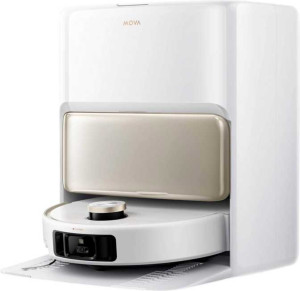
Mova V50 Ultra
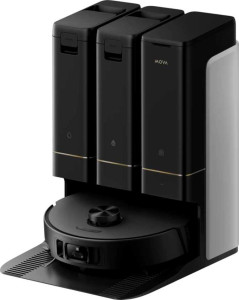
Mova Z50 Ultra

Mova V50 Ultra Mova Z50 Ultra

Overview

Welcome to our in-depth specification comparison between the Mova V50 Ultra and the Mova Z50 Ultra. Both robot vacuums share a strong foundation of smart home features and cleaning capabilities, yet they diverge in meaningful ways across suction power, dustbin capacity, and overall dimensions. Whether you prioritize raw cleaning performance or extended autonomy between empties, this side-by-side breakdown will help you identify which model fits your home and lifestyle best.

Common Features

  • Both products include a HEPA filter.
  • Both products include an allergy filter.
  • Both products are compatible with Google Assistant.
  • Both products work with Alexa.
  • Both products weigh 4600 g.
  • Both products have a width of 350 mm.
  • Both products have a thickness of 350 mm.
  • Both products come with a 1-year warranty.
  • Both products support mapping.
  • Both products support no-go zones.
  • Both products support remote smartphone control.
  • Both products have an obstacle sensor.
  • Both products support problem area cleaning.
  • Both products are self-emptying.
  • Both products have carpet detection.
  • Both products are designed not to get stuck.
  • Neither product has a display.
  • Neither product has twin side brushes.
  • Both products include washable filters.
  • Both products automatically adjust their height.
  • Neither product indicates when the dustbin is full.
  • Both products use bags.
  • Both products clean all floor types.
  • Both products offer 4 cleaning modes.
  • Both products support mopping.
  • Both products have an electrostatic filtration system.
  • Neither product has UV light.
  • Both products have a battery capacity of 6400 mAh.
  • Both products have a runtime of 220 minutes.
  • Both products have a charge time of 4 hours.
  • Neither product has an overheating indicator.
  • Neither product has a removable battery.
  • Both products feature auto-off functionality.

Main Differences

  • Audible noise is 70 dB on Mova V50 Ultra and 74 dB on Mova Z50 Ultra.
  • Height is 89.5 mm on Mova V50 Ultra and 111 mm on Mova Z50 Ultra.
  • Volume is 10963.75 cm³ on Mova V50 Ultra and 13597.5 cm³ on Mova Z50 Ultra.
  • Estimated empty time is 75 days on Mova V50 Ultra and 120 days on Mova Z50 Ultra.
  • Docking station size is 90409.2 cm³ on Mova V50 Ultra and 98410.65 cm³ on Mova Z50 Ultra.
  • Dustbin capacity is 0.3 l on Mova V50 Ultra and 0.4 l on Mova Z50 Ultra.
  • Suction power is 24000 Pa on Mova V50 Ultra and 19000 Pa on Mova Z50 Ultra.
  • A dirt sensor is present on Mova Z50 Ultra but not available on Mova V50 Ultra.
Specs Comparison
Mova V50 Ultra

Mova V50 Ultra

Mova Z50 Ultra

Mova Z50 Ultra

General info:
has HEPA filter
audible noise 70 dB 74 dB
has an allergy filter
compatible with Google Assistant
works with Alexa
release date June 2025 March 2025
weight 4600 g 4600 g
width 350 mm 350 mm
height 89.5 mm 111 mm
thickness 350 mm 350 mm
volume 10963.75 cm³ 13597.5 cm³
warranty period 1 years 1 years
estimated empty time 75 days 120 days
docking station size 90409.2 cm³ 98410.65 cm³

At a high level, the Mova V50 Ultra and Mova Z50 Ultra share a strong common foundation: both weigh exactly 4600 g, share the same 350 mm footprint, come with a HEPA and allergy filter, offer voice control via both Google Assistant and Alexa, and carry a 1-year warranty. For a buyer focused on air quality and smart-home integration, either unit delivers equally on those fronts.

The most meaningful differentiators lie in noise, size, and dustbin autonomy. The V50 Ultra operates at 70 dB versus the Z50 Ultra's 74 dB — a 4 dB gap that is perceptible to the human ear and translates to noticeably quieter cleaning sessions, particularly relevant in open-plan spaces or homes with young children. The Z50 Ultra is taller (111 mm vs 89.5 mm), giving it a larger overall unit volume (13597.5 cm³ vs 10963.75 cm³), which directly funds its key advantage: an estimated empty time of 120 days compared to just 75 days on the V50 Ultra. That means roughly six weeks of extra hands-free operation before the dustbin needs attention — a significant convenience edge for busy households.

In summary, the choice comes down to a clear trade-off: the V50 Ultra holds the edge on noise for users who prioritize a quieter environment, while the Z50 Ultra wins on low-maintenance autonomy thanks to its larger capacity and nearly double the bin-emptying interval. Neither product is strictly superior overall in this group — it depends on whether silence or convenience matters more to the buyer.

Features:
has mapping
supports no-go zones
supports a remote smartphone
has an obstacle sensor
has problem area cleaning
is self-emptying
has carpet detection
doesn't get stuck
supports virtual barriers
has route mapping
Has voice prompts
auto docking
has anti-fall sensor
can be scheduled
has a remote control
has water level adjustment
supports Wi-Fi
has mop cleaning
has mop raising
has mop drying

Across every single feature in this group, the Mova V50 Ultra and Mova Z50 Ultra are an exact match — a full twenty-for-twenty tie. Both units cover the complete modern robotic vacuum feature set: mapping with no-go zones and virtual barriers, obstacle and anti-fall sensors, carpet detection, problem-area cleaning, and full route mapping. These are not entry-level capabilities; taken together, they represent a premium navigation and safety package that allows the robot to operate intelligently across complex floor plans without constant user intervention.

On the automation and maintenance side, both robots are equally capable: self-emptying, auto-docking, and schedulable, eliminating most day-to-day hands-on management. The shared mop cleaning suite — including water level adjustment, mop raising over carpets, and mop drying — is particularly noteworthy, as mop drying is a feature often reserved for top-tier models and significantly reduces the risk of mildew on the mop pad between cleaning cycles.

With no differentiating feature between them in this category, the verdict is a complete tie. A buyer prioritizing feature breadth will find no reason to choose one over the other here — the decision must rest entirely on the distinctions surfaced in other specification groups.

Design:
dustbin capacity 0.3 l 0.4 l
Has a display
has twin side brushes
has included washable filters
automatically adjusts its height
Indicates when full
uses bags

The design specs for these two robots are nearly identical, with one meaningful exception: the Mova Z50 Ultra carries a 0.4 L dustbin versus the 0.3 L on the V50 Ultra — a 33% larger on-board capacity. While both are self-emptying units (meaning the robot's bin is regularly offloaded to the dock), a larger dustbin matters in practice between docking cycles, particularly in homes with pets or high-debris floors where the bin can fill faster than expected mid-run.

Everything else in this group is shared: both robots use bags rather than bagless collection — a design choice that keeps dust and allergens sealed during disposal — and both include washable filters and automatically adjust their height to adapt to different floor surfaces. Neither unit features a display or a full-indicator light, so users rely on the companion app for status updates.

The Z50 Ultra holds a narrow edge here purely on dustbin capacity. It is not a dramatic advantage given the self-emptying design, but in demanding cleaning environments it provides a more reliable buffer before interruption is needed.

Cleaning power:
suction power 24000 Pa 19000 Pa
cleans all floor types
cleaning modes 4 4
mops
has a dirt sensor
Has an electrostatic filtration system
has UV light

Suction power is where these two robots diverge most sharply. The Mova V50 Ultra delivers 24,000 Pa of suction versus 19,000 Pa on the Z50 Ultra — a 26% advantage that translates directly to real-world performance on challenging surfaces like thick-pile carpets, pet hair embedded in rugs, and fine debris in grout lines. Both units clean all floor types and offer the same 4 cleaning modes, so the structural flexibility is equal; it is the raw pulling force where the V50 Ultra pulls ahead.

The Z50 Ultra counters with one exclusive capability: a dirt sensor, which allows the robot to detect high-concentration debris zones and automatically increase cleaning intensity or make additional passes. This is a meaningful intelligent feature — rather than applying uniform effort across the entire floor, the robot allocates extra attention where it is actually needed, potentially compensating for the lower peak suction in heavily soiled areas. The V50 Ultra lacks this sensor entirely, relying instead on its brute-force suction advantage to handle whatever it encounters.

Both models share an electrostatic filtration system and mopping capability, so fine-particle capture and wet cleaning are equally covered. Overall, the V50 Ultra has the edge for homes with carpets or persistent embedded debris where raw suction matters most, while the Z50 Ultra's dirt sensor gives it an efficiency advantage on predominantly hard floors with variable soiling levels. The right choice depends squarely on the dominant floor type in the home.

Power:
battery power 6400 mAh 6400 mAh
runtime 220 min 220 min
charge time 4 hours 4 hours
Has an overheating indicator
has a removable battery
has auto-off

Power is the simplest category to assess in this comparison: the Mova V50 Ultra and Mova Z50 Ultra are identical across every single spec. Both pack a 6400 mAh battery, deliver a 220-minute runtime, and fully recharge in 4 hours. At 220 minutes, that runtime is generous by robotic vacuum standards — sufficient to cover large multi-room homes in a single uninterrupted session without needing to dock and resume mid-clean.

Neither unit offers a removable battery or an overheating indicator, and both include auto-off functionality to protect the battery when not in use. The absence of a removable battery is common at this product tier and is unlikely to be a practical concern for most users given the strong runtime on offer.

This group is a complete tie — there is zero differentiation to act on here. Any buying decision between these two models must be made entirely on the basis of other specification groups.

Comparison Summary & Verdict

After reviewing the full specification set, both the Mova V50 Ultra and the Mova Z50 Ultra deliver a virtually identical feature package — including mapping, no-go zones, self-emptying, mopping, and smart home integration — making either a strong choice for most households. However, the key differences come down to your priorities. The Mova V50 Ultra leads with a significantly higher suction power of 24000 Pa and operates more quietly at 70 dB, making it the better pick for deep-cleaning performance in quieter environments. The Mova Z50 Ultra, on the other hand, offers a larger dustbin capacity of 0.4 l, a longer estimated empty time of 120 days, and a built-in dirt sensor for smarter adaptive cleaning, making it the superior option for larger homes or users who want maximum independence between maintenance cycles.

Mova V50 Ultra
Buy Mova V50 Ultra if...

Buy the Mova V50 Ultra if you want maximum suction power and a quieter cleaning experience. Its 24000 Pa suction and lower noise level make it ideal for deep cleaning in noise-sensitive households.

Mova Z50 Ultra
Buy Mova Z50 Ultra if...

Buy the Mova Z50 Ultra if low-maintenance autonomy is your top priority. Its larger dustbin, 120-day estimated empty time, and built-in dirt sensor make it perfect for larger homes that need smarter, more independent cleaning.