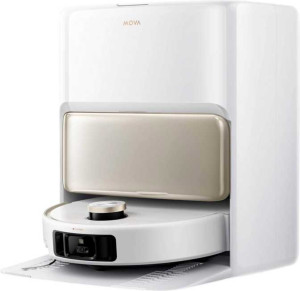
Mova V50 Ultra
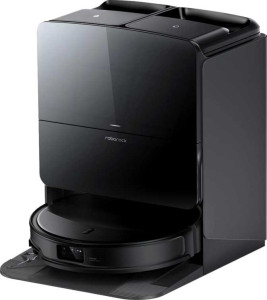
Roborock Saros 10R

Mova V50 Ultra Roborock Saros 10R

Overview

Welcome to our in-depth specification comparison between the Mova V50 Ultra and the Roborock Saros 10R, two capable robot vacuum-mop combos that share a surprising number of features yet diverge in meaningful ways. Both are self-emptying, bag-based units with HEPA filtration, full smart-home compatibility, and impressive 220-minute runtimes — but key battlegrounds like suction power, charging speed, smart features, and physical design set them apart in ways that could matter a great deal depending on your household needs.

Common Features

  • Both products include a HEPA filter.
  • Both products include an allergy filter.
  • Both products are compatible with Google Assistant.
  • Both products work with Alexa.
  • Both products have a thickness of 350 mm.
  • Both products come with a 1-year warranty.
  • Both products support mapping.
  • Both products support no-go zones.
  • Both products support remote smartphone control.
  • Both products have an obstacle sensor.
  • Both products feature problem area cleaning.
  • Both products are self-emptying.
  • Both products have carpet detection.
  • Neither product has twin side brushes.
  • Both products include washable filters.
  • Both products automatically adjust their height.
  • Both products use bags.
  • Both products clean all floor types.
  • Both products can mop.
  • Neither product has UV light.
  • Both products have a battery capacity of 6400 mAh.
  • Both products offer a runtime of 220 minutes.
  • Neither product has a removable battery.

Main Differences

  • Audible noise is 70 dB on the Mova V50 Ultra and 68 dB on the Roborock Saros 10R.
  • Weight is 4600 g on the Mova V50 Ultra and 5000 g on the Roborock Saros 10R.
  • Width is 350 mm on the Mova V50 Ultra and 353 mm on the Roborock Saros 10R.
  • Height is 89.5 mm on the Mova V50 Ultra and 79.8 mm on the Roborock Saros 10R.
  • Volume is 10963.75 cm³ on the Mova V50 Ultra and 9859.29 cm³ on the Roborock Saros 10R.
  • Estimated empty time is 75 days on the Mova V50 Ultra and 49 days on the Roborock Saros 10R.
  • Docking station size is 90409.2 cm³ on the Mova V50 Ultra and 88315.8 cm³ on the Roborock Saros 10R.
  • Dustbin capacity is 0.3 l on the Mova V50 Ultra and 0.27 l on the Roborock Saros 10R.
  • A display is present on the Roborock Saros 10R but not available on the Mova V50 Ultra.
  • A full indicator is present on the Roborock Saros 10R but not available on the Mova V50 Ultra.
  • Suction power is 24000 Pa on the Mova V50 Ultra and 19000 Pa on the Roborock Saros 10R.
  • A dirt sensor is present on the Roborock Saros 10R but not available on the Mova V50 Ultra.
  • Charge time is 4 hours on the Mova V50 Ultra and 2.5 hours on the Roborock Saros 10R.
  • Operating power consumption is 38W on the Mova V50 Ultra and 60W on the Roborock Saros 10R.
Specs Comparison
Mova V50 Ultra

Mova V50 Ultra

Roborock Saros 10R

Roborock Saros 10R

General info:
has HEPA filter
audible noise 70 dB 68 dB
has an allergy filter
compatible with Google Assistant
works with Alexa
release date June 2025 February 2025
weight 4600 g 5000 g
width 350 mm 353 mm
height 89.5 mm 79.8 mm
thickness 350 mm 350 mm
volume 10963.75 cm³ 9859.29 cm³
warranty period 1 years 1 years
estimated empty time 75 days 49 days
docking station size 90409.2 cm³ 88315.8 cm³

Both the Mova V50 Ultra and the Roborock Saros 10R share a strong general feature baseline: HEPA and allergy filtration, full compatibility with both Google Assistant and Alexa, and identical one-year warranties. For most users, these shared traits mean neither robot holds a meaningful edge in ecosystem integration or air-quality performance. Where the two begin to diverge is in their physical design and day-to-day maintenance demands.

The Roborock Saros 10R has a notably slimmer profile at 79.8 mm tall versus the Mova's 89.5 mm, which in practice can be the difference between a robot that clears low-clearance sofas and beds versus one that gets stuck. The Mova, however, is lighter at 4,600 g compared to the Roborock's 5,000 g, making it slightly easier to lift and reposition manually. The Roborock also edges out on noise, operating at 68 dB versus the Mova's 70 dB — a difference that is technically measurable but unlikely to be noticeable in real-world use.

The most practically significant differentiator in this group is the estimated dustbin empty interval: the Mova V50 Ultra can go 75 days between auto-empty cycles, versus just 49 days for the Roborock Saros 10R. That is a substantial gap in hands-off convenience, meaning the Mova requires emptying roughly once per season compared to once every seven weeks for the Roborock. For users who prioritize low-maintenance operation above all else, the Mova holds a clear edge here. Conversely, if navigating tight under-furniture spaces is a priority, the Roborock's slimmer chassis gives it the advantage.

Features:
has mapping
supports no-go zones
supports a remote smartphone
has an obstacle sensor
has problem area cleaning
is self-emptying
has carpet detection
doesn't get stuck
supports virtual barriers
has route mapping
Has voice prompts
auto docking
has anti-fall sensor
can be scheduled
has a remote control
has water level adjustment
supports Wi-Fi
has mop cleaning
has mop raising
has mop drying

Across every single feature tracked in this group, the Mova V50 Ultra and the Roborock Saros 10R are in complete lockstep. Both robots offer the full suite of modern autonomous cleaning capabilities: mapping with no-go zones and virtual barriers, obstacle sensing, anti-fall protection, carpet detection, and scheduled cleaning — covering everything a user would expect from a premium robot vacuum in this class.

On the mopping side, both units go well beyond basic wet-cloth attachments. Each supports water level adjustment, mop raising, and mop drying — a combination that matters significantly in real-world use. Mop raising prevents dragging a wet pad across carpets when transitioning surfaces, while auto-drying reduces the risk of mold and odor buildup in the dock. The inclusion of all three on both devices signals that neither cuts corners on the wet-cleaning workflow.

With no feature present on one device that is absent from the other, this group results in a dead tie. Users cannot differentiate these two robots based on feature availability alone — the decision will need to rest on other factors such as cleaning performance, physical design, or value.

Design:
dustbin capacity 0.3 l 0.27 l
Has a display
has twin side brushes
has included washable filters
automatically adjusts its height
Indicates when full
uses bags

The dustbin capacities of both robots are nearly identical — 0.3 l for the Mova V50 Ultra and 0.27 l for the Roborock Saros 10R — a difference so marginal that it has no practical impact during a typical cleaning cycle. Since both are self-emptying and use bags in their docking stations, on-board bin size matters far less than it would in a non-auto-empty design; the robot simply returns to dock and offloads frequently.

Where the two diverge is in user-facing feedback. The Roborock Saros 10R features a built-in display and can indicate when its dustbin is full, giving users at-a-glance status without needing to open an app. The Mova V50 Ultra has neither — no display and no full-bin alert — meaning users must rely on the app or a set schedule to stay informed about the robot's state. For users who prefer quick physical feedback over app dependency, this is a tangible usability difference.

Both share automatic height adjustment and washable included filters, keeping maintenance accessible on either device. Overall, though, the Roborock Saros 10R holds a clear edge in this group purely on the strength of its display and full-bin indicator, which add a layer of convenience and transparency that the Mova simply does not offer.

Cleaning power:
suction power 24000 Pa 19000 Pa
cleans all floor types
mops
has a dirt sensor
has UV light

Suction power is where these two robots split most decisively. The Mova V50 Ultra delivers 24,000 Pa of suction versus the Roborock Saros 10R's 19,000 Pa — a 26% gap that is meaningful in real-world terms. Higher Pascal ratings translate directly to better pickup of embedded debris, pet hair in carpet fibers, and fine dust particles that lower-powered units tend to leave behind. For households with pets, thick rugs, or high-traffic areas, this difference is not merely a spec-sheet advantage.

The Roborock counters with a dirt sensor, which the Mova lacks. In practice, a dirt sensor allows the robot to detect concentrations of debris and automatically slow down or make additional passes over soiled areas — a smart-cleaning behavior that can partially compensate for lower raw suction. The Mova, without this sensor, applies a more uniform cleaning approach regardless of floor conditions.

Neither robot includes UV light, and both handle all floor types with mopping support, so those factors are a wash. Ultimately, the edge in this group depends on use case: users who need brute-force deep cleaning will favor the Mova V50 Ultra's significantly higher suction, while those who prefer adaptive, sensor-driven cleaning logic may find the Roborock's dirt detection a compelling trade-off. On raw cleaning power alone, the Mova holds the clear advantage.

Power:
battery power 6400 mAh 6400 mAh
runtime 220 min 220 min
charge time 4 hours 2.5 hours
operating power consumption 38W 60W
has a removable battery

On battery capacity and runtime, these two robots are perfectly matched: both carry a 6,400 mAh battery and deliver 220 minutes of runtime — enough to cover large homes in a single charge cycle without interruption. Neither has a removable battery, which is standard for sealed robotic vacuum designs and not a practical concern for most users.

The meaningful split comes in charging behavior and power consumption. The Roborock Saros 10R recharges in 2.5 hours versus the Mova V50 Ultra's 4 hours — a 60% faster turnaround. For robots that clean on a schedule and need to be ready for the next run, faster charging reduces the window of unavailability. The Roborock, however, draws 60W during operation compared to the Mova's 38W, which explains part of why it can recharge faster but also means it consumes more electricity per session. Over months of daily use, that gap in operating wattage adds up in energy costs.

The right read here depends on priorities. Users who run cleaning cycles frequently and value quick turnaround will appreciate the Roborock's faster charge time, while those who prioritize lower energy consumption will find the Mova's 38W draw more efficient. Since runtime is identical, the Roborock holds a practical edge for high-frequency use, but the Mova is the more energy-conscious choice.

Comparison Summary & Verdict

After examining the full specification set, both robots prove to be well-equipped for modern homes, but they cater to subtly different priorities. The Mova V50 Ultra stands out with its commanding 24000 Pa suction power, lighter 4600 g body, and a notably longer 75-day estimated empty cycle, making it an excellent low-maintenance choice for users who want raw cleaning strength without frequent docking-station attention. The Roborock Saros 10R, on the other hand, earns its place with a built-in display and full indicator, a dirt sensor for adaptive cleaning, a much faster 2.5-hour charge time, and a slimmer 79.8 mm profile that slides under more furniture. If hands-off power is your goal, lean toward the Mova; if smarter feedback and quicker turnaround matter more, the Roborock is the stronger fit.

Mova V50 Ultra
Buy Mova V50 Ultra if...

Buy the Mova V50 Ultra if you want maximum suction power and a longer time between bin-emptying cycles, keeping day-to-day maintenance to an absolute minimum.

Roborock Saros 10R
Buy Roborock Saros 10R if...

Buy the Roborock Saros 10R if you value a slimmer profile, faster recharging, and smarter on-board feedback like a built-in display, full indicator, and dirt sensor.