Mova Z60 Ultra Roller Complete
Roborock Saros Z70

Mova Z60 Ultra Roller Complete Roborock Saros Z70

Overview

Welcome to our in-depth specification comparison between the Mova Z60 Ultra Roller Complete and the Roborock Saros Z70 — two premium robot vacuums that share a strong foundation but diverge in some meaningful ways. Both offer self-emptying systems, mapping, mopping, and allergy-grade filtration, yet they take different approaches to suction power, battery runtime, and overall design. Read on to discover which one fits your home and cleaning routine best.

Common Features

  • Both products include a HEPA filter.
  • An allergy filter is present on both products.
  • Google Assistant compatibility is available on both products.
  • Amazon Alexa compatibility is available on both products.
  • The thickness is 350 mm on both products.
  • The warranty period is 1 year on both products.
  • Mapping functionality is available on both products.
  • No-go zone support is available on both products.
  • Remote smartphone control is supported on both products.
  • An obstacle sensor is included on both products.
  • Problem area cleaning is supported on both products.
  • Both products are self-emptying.
  • Carpet detection is available on both products.
  • Neither product has twin side brushes.
  • Washable filters are included with both products.
  • Both products automatically adjust their height.
  • Both products use bags.
  • Both products clean all floor types.
  • Both products are capable of mopping.
  • A dirt sensor is present on both products.
  • UV light is not available on either product.
  • The battery power is 6400 mAh on both products.
  • Neither product has a removable battery.

Main Differences

  • Audible noise is 74 dB on Mova Z60 Ultra Roller Complete and 68 dB on Roborock Saros Z70.
  • Weight is 4600 g on Mova Z60 Ultra Roller Complete and 5000 g on Roborock Saros Z70.
  • Width is 350 mm on Mova Z60 Ultra Roller Complete and 353 mm on Roborock Saros Z70.
  • Height is 96 mm on Mova Z60 Ultra Roller Complete and 79.8 mm on Roborock Saros Z70.
  • Volume is 11760 cm³ on Mova Z60 Ultra Roller Complete and 9859.29 cm³ on Roborock Saros Z70.
  • Estimated empty time is 100 days on Mova Z60 Ultra Roller Complete and 49 days on Roborock Saros Z70.
  • Docking station size is 98410.65 cm³ on Mova Z60 Ultra Roller Complete and 88315.8 cm³ on Roborock Saros Z70.
  • Dustbin capacity is 0.32 l on Mova Z60 Ultra Roller Complete and 0.4 l on Roborock Saros Z70.
  • A display is present on Roborock Saros Z70 but not available on Mova Z60 Ultra Roller Complete.
  • A full indicator is present on Roborock Saros Z70 but not available on Mova Z60 Ultra Roller Complete.
  • Suction power is 28000 Pa on Mova Z60 Ultra Roller Complete and 22000 Pa on Roborock Saros Z70.
  • The number of cleaning modes is 4 on Mova Z60 Ultra Roller Complete and 10 on Roborock Saros Z70.
  • Runtime is 220 min on Mova Z60 Ultra Roller Complete and 290 min on Roborock Saros Z70.
  • Charge time is 4 hours on Mova Z60 Ultra Roller Complete and 2.5 hours on Roborock Saros Z70.
Specs Comparison
Mova Z60 Ultra Roller Complete

Mova Z60 Ultra Roller Complete

Roborock Saros Z70

Roborock Saros Z70

General info:
has HEPA filter
audible noise 74 dB 68 dB
has an allergy filter
compatible with Google Assistant
works with Alexa
release date September 2025 January 2025
weight 4600 g 5000 g
width 350 mm 353 mm
height 96 mm 79.8 mm
thickness 350 mm 350 mm
volume 11760 cm³ 9859.29 cm³
warranty period 1 years 1 years
estimated empty time 100 days 49 days
docking station size 98410.65 cm³ 88315.8 cm³

Both the Mova Z60 Ultra Roller Complete and the Roborock Saros Z70 share a strong foundation in filtration and smart home integration: each carries a HEPA and allergy filter, and both work seamlessly with Google Assistant and Alexa. Their footprints are nearly identical — 350 mm deep and within 3 mm of each other in width — so neither has a meaningful edge on floor clearance horizontally. The warranty period is also the same at 1 year for both.

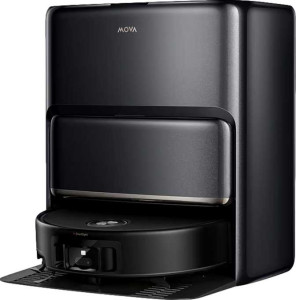
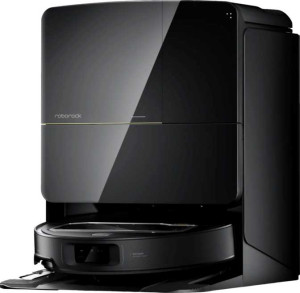
Where the two diverge meaningfully is in profile, noise, and dust bin autonomy. The Saros Z70 is notably slimmer at 79.8 mm tall versus the Z60 Ultra's 96 mm, giving it a real-world advantage when navigating under low furniture like sofas or bed frames — a frequently cited pain point for robot vacuums. The Saros Z70 also runs quieter at 68 dB compared to 74 dB for the Z60 Ultra; that 6 dB gap is perceptible to the human ear and translates to noticeably less disruption in a home environment. On the other hand, the Z60 Ultra is lighter at 4600 g versus the Saros Z70's 5000 g, which matters when manually lifting and repositioning the unit.

One of the most practically significant differences is the estimated empty time: the Z60 Ultra can go 100 days between dustbin empties, double the Saros Z70's 49 days. For users who prioritize a truly hands-off experience, this is a substantial advantage. The Z60 Ultra's docking station is also larger (98,410 cm³ vs. 88,315 cm³), which likely accounts for its greater bin capacity. Overall, the Z60 Ultra edges ahead on maintenance convenience, while the Saros Z70 wins on acoustic comfort and under-furniture reach — the right choice depends on whether quiet operation or infrequent emptying matters more to the buyer.

Features:
has mapping
supports no-go zones
supports a remote smartphone
has an obstacle sensor
has problem area cleaning
is self-emptying
has carpet detection
doesn't get stuck
supports virtual barriers
has route mapping
Has voice prompts
auto docking
has anti-fall sensor
can be scheduled
has a remote control
has water level adjustment
supports Wi-Fi
has mop cleaning
has mop raising
has mop drying

Across the full features specification group, the Mova Z60 Ultra Roller Complete and the Roborock Saros Z70 are in complete lockstep — every single capability listed is present on both machines. This is actually a meaningful finding in itself: both robots deliver a genuinely comprehensive, premium feature set that includes mapping, no-go zones, virtual barriers, and route mapping, forming the backbone of intelligent, customizable navigation that lets users define exactly where and how the robot cleans.

The mopping suite is equally matched, with both units offering mop cleaning, mop raising, and mop drying — a combination that addresses the three most common mopping shortcomings in cheaper robots. Mop raising ensures carpets aren't dampened during a combined run, while mop drying reduces the risk of mildew buildup on the pad between cycles. Add in self-emptying, auto docking, carpet detection, and scheduling, and both robots are firmly positioned as hands-off, whole-home solutions requiring minimal user intervention.

The verdict here is a clear tie. There is no differentiator to be found in this group — neither product holds any functional advantage over the other based solely on these specs. A buyer choosing between the two should therefore weigh the distinctions uncovered in other spec groups, such as noise levels, dust bin autonomy, or cleaning performance metrics, rather than features, where both machines are identically equipped.
Design:
dustbin capacity 0.32 l 0.4 l
Has a display
has twin side brushes
has included washable filters
automatically adjusts its height
Indicates when full
uses bags

Several design choices separate these two robots once you look past their shared fundamentals. Both use bagged collection, include washable filters, and feature automatic height adjustment — a useful trait that lets the robot adapt its undercarriage to different floor surfaces without user input. Neither relies on twin side brushes, so edge-cleaning approach is the same across both units.

The real gaps emerge in dustbin capacity and user feedback. The Roborock Saros Z70 carries a 0.4 l onboard dustbin versus 0.32 l on the Mova Z60 Ultra — a 25% larger chamber that can meaningfully reduce how often the robot needs to return to its dock mid-clean in larger or heavily soiled spaces. More practically, the Saros Z70 also features a full-bin indicator and an onboard display, both absent on the Z60 Ultra. The indicator removes any guesswork about when a bag change is due, while the display allows for at-a-glance status checks and potentially on-unit controls without reaching for a smartphone.

On design, the Saros Z70 holds a clear edge. Its larger dustbin, bin-full notification, and built-in display collectively make for a more self-sufficient and user-friendly physical experience. The Z60 Ultra's design is competent but comparatively passive, offering no visual feedback and less onboard capacity — factors that matter most to users who prefer minimal app dependency and longer unattended operation.

Cleaning power:
suction power 28000 Pa 22000 Pa
cleans all floor types
cleaning modes 4 10
mops
has a dirt sensor
has UV light

Suction power is where the Mova Z60 Ultra Roller Complete makes its strongest statement in this group: at 28,000 Pa, it delivers substantially more raw pulling force than the Roborock Saros Z70's 22,000 Pa — a 27% advantage. In practical terms, higher Pascal ratings translate to better pickup of embedded debris, pet hair lodged in carpet fibers, and fine particulates that lower-powered motors leave behind. For households with thick-pile rugs, heavy shedding pets, or high foot traffic, this gap is genuinely meaningful rather than a paper spec.

The Saros Z70 counters with significantly more cleaning mode flexibility: 10 cleaning modes versus just 4 on the Z60 Ultra. More modes typically means finer control over how the robot behaves in different scenarios — for instance, dedicated modes for spot cleaning, quiet operation, deep scrubbing, or edge-focused passes. Users who want granular control over their cleaning routines will find the Saros Z70 more adaptable. Both robots share mopping capability, a dirt sensor, universal floor type compatibility, and neither includes UV light — so these points are evenly matched and don't factor into the decision.

This group ends in a meaningful trade-off rather than a clean winner. The Z60 Ultra leads on raw suction, making it the stronger pick for deep-cleaning performance and demanding floor conditions. The Saros Z70 leads on versatility, offering more than double the cleaning modes for users who prioritize customization. Which advantage matters more depends entirely on the buyer's home and habits.

Power:
battery power 6400 mAh 6400 mAh
runtime 220 min 290 min
charge time 4 hours 2.5 hours
has a removable battery

Both the Mova Z60 Ultra Roller Complete and the Roborock Saros Z70 pack an identical 6400 mAh battery and neither offers a removable pack — so on paper, the energy reservoir is exactly the same. What diverges sharply is how efficiently each robot uses that shared capacity, and how quickly it recovers after a cleaning session.

The Saros Z70 wrings considerably more runtime out of the same battery: 290 minutes versus 220 minutes for the Z60 Ultra — a 32% advantage. That extra 70 minutes is not trivial; in large homes or multi-room layouts, it can mean the difference between completing a full floor plan in one pass versus requiring an interruption to recharge and resume. Where the gap narrows on one side, it widens further on the other: the Saros Z70 also charges significantly faster at 2.5 hours compared to the Z60 Ultra's 4 hours. A shorter charge cycle means the robot is back on the floor sooner after a recharge stop, compounding the effective cleaning time available throughout the day.

The Roborock Saros Z70 wins this group decisively. Longer runtime and faster recharging together create a meaningfully more efficient power profile — despite drawing from the same battery capacity. For users with larger homes or those who run daily cleaning schedules, these differences will be felt consistently. The Z60 Ultra's power management, by comparison, is less optimized, resulting in more downtime per cleaning cycle.

Comparison Summary & Verdict

After examining all the specifications, both robots stand out as capable, feature-rich cleaners — but they clearly target different priorities. The Mova Z60 Ultra Roller Complete leads with a formidable 28000 Pa suction power and a longer estimated empty cycle of 100 days, making it the stronger pick for those who want raw cleaning performance and less frequent bin maintenance. On the other hand, the Roborock Saros Z70 counters with a superior 290-minute runtime, faster 2.5-hour charging, 10 cleaning modes, a built-in display, and a full-bin indicator — advantages that appeal to users who value versatility and smarter daily management. Choose the Mova if maximum suction and extended self-emptying intervals are your top priorities; choose the Roborock if you need longer cleaning sessions and a more feature-complete control experience.

Mova Z60 Ultra Roller Complete
Buy Mova Z60 Ultra Roller Complete if...

Buy the Mova Z60 Ultra Roller Complete if you prioritize maximum suction power and want to go longer between emptying the docking station.

Roborock Saros Z70
Buy Roborock Saros Z70 if...

Buy the Roborock Saros Z70 if you need a longer runtime, faster charging, more cleaning modes, and the convenience of a display with a full-bin indicator.