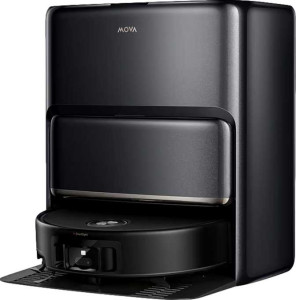
Mova Z60 Ultra Roller Complete
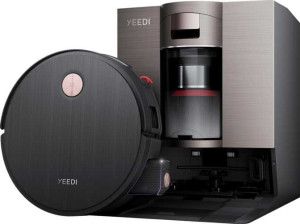
Yeedi S20 Infinity

Mova Z60 Ultra Roller Complete Yeedi S20 Infinity

Overview

Welcome to our in-depth specification comparison between the Mova Z60 Ultra Roller Complete and the Yeedi S20 Infinity — two powerful robot vacuum cleaners with a great deal in common, yet with meaningful differences that could make one a far better fit for your home. From suction power and runtime to docking station design and smart features, this page breaks down every key specification to help you make a confident, informed decision.

Common Features

  • Both products include a HEPA filter.
  • Both products include an allergy filter.
  • Both products are compatible with Google Assistant.
  • Both products work with Alexa.
  • Both products come with a 1-year warranty.
  • Both products support mapping.
  • Both products support no-go zones.
  • Both products support remote smartphone control.
  • Both products have an obstacle sensor.
  • Both products have problem area cleaning.
  • Both products are self-emptying.
  • Both products have carpet detection.
  • Neither product gets stuck.
  • Neither product has a display.
  • Neither product has twin side brushes.
  • Both products include washable filters.
  • Both products clean all floor types.
  • Both products offer 4 cleaning modes.
  • Both products can mop.
  • Both products have a dirt sensor.
  • Both products have a 6400 mAh battery.
  • Both products have an auto-off feature.

Main Differences

  • Audible noise is 74 dB on Mova Z60 Ultra Roller Complete and 65 dB on Yeedi S20 Infinity.
  • Weight is 4600 g on Mova Z60 Ultra Roller Complete and 4100 g on Yeedi S20 Infinity.
  • Width is 350 mm on Mova Z60 Ultra Roller Complete and 351 mm on Yeedi S20 Infinity.
  • Height is 96 mm on Mova Z60 Ultra Roller Complete and 99 mm on Yeedi S20 Infinity.
  • Thickness is 350 mm on Mova Z60 Ultra Roller Complete and 353 mm on Yeedi S20 Infinity.
  • Volume is 11760 cm³ on Mova Z60 Ultra Roller Complete and 12266.397 cm³ on Yeedi S20 Infinity.
  • Estimated empty time is 100 days on Mova Z60 Ultra Roller Complete and 90 days on Yeedi S20 Infinity.
  • Docking station size is 98410.65 cm³ on Mova Z60 Ultra Roller Complete and 59399.8812 cm³ on Yeedi S20 Infinity.
  • Virtual barriers are supported on Mova Z60 Ultra Roller Complete but not available on Yeedi S20 Infinity.
  • Dustbin capacity is 0.32 l on Mova Z60 Ultra Roller Complete and 0.3 l on Yeedi S20 Infinity.
  • Automatic height adjustment is available on Mova Z60 Ultra Roller Complete but not on Yeedi S20 Infinity.
  • A full indicator is present on Yeedi S20 Infinity but not available on Mova Z60 Ultra Roller Complete.
  • Mova Z60 Ultra Roller Complete uses bags, while Yeedi S20 Infinity does not.
  • Suction power is 28000 Pa on Mova Z60 Ultra Roller Complete and 19500 Pa on Yeedi S20 Infinity.
  • UV light is available on Yeedi S20 Infinity but not on Mova Z60 Ultra Roller Complete.
  • Runtime is 220 minutes on Mova Z60 Ultra Roller Complete and 254 minutes on Yeedi S20 Infinity.
  • Charge time is 4 hours on Mova Z60 Ultra Roller Complete and 3 hours on Yeedi S20 Infinity.
  • A removable battery is available on Yeedi S20 Infinity but not on Mova Z60 Ultra Roller Complete.
Specs Comparison
Mova Z60 Ultra Roller Complete

Mova Z60 Ultra Roller Complete

Yeedi S20 Infinity

Yeedi S20 Infinity

General info:
has HEPA filter
audible noise 74 dB 65 dB
has an allergy filter
compatible with Google Assistant
works with Alexa
release date September 2025 August 2025
weight 4600 g 4100 g
width 350 mm 351 mm
height 96 mm 99 mm
thickness 350 mm 353 mm
volume 11760 cm³ 12266.397 cm³
warranty period 1 years 1 years
estimated empty time 100 days 90 days
docking station size 98410.65 cm³ 59399.8812 cm³

Both the Mova Z60 Ultra Roller Complete and the Yeedi S20 Infinity share a strong feature baseline: HEPA and allergy filtration, full smart home compatibility with both Google Assistant and Alexa, and identical one-year warranties. Their robot unit footprints are also nearly identical, making placement under furniture a non-issue for either model. Where things diverge is in the details that matter most for daily living.

The most impactful difference in this group is acoustic output. The Yeedi operates at 65 dB versus the Mova's 74 dB — a 9 dB gap that is not subtle. Because decibels scale logarithmically, the Mova is perceived as roughly 2.5× louder in practice, which is a meaningful quality-of-life distinction if you run the robot while working from home or during light sleep hours. The Yeedi also weighs 4100 g compared to the Mova's 4600 g, a 500 g difference that matters when manually moving or repositioning the unit. On the flip side, the Mova edges out the Yeedi on dust bin autonomy, offering an estimated 100-day bin-empty cycle versus 90 days — a minor but real convenience advantage for hands-off users.

Perhaps the starkest gap in this group is docking station footprint: the Mova's dock occupies roughly 98,411 cm³ while the Yeedi's is approximately 59,400 cm³ — the Mova's base station is nearly 65% larger by volume, which can be a genuine constraint in tighter spaces. Overall, the Yeedi S20 Infinity holds the edge in this category: it is meaningfully quieter, lighter, and has a significantly more compact dock, while conceding only a marginal 10-day difference in bin capacity.

Features:
has mapping
supports no-go zones
supports a remote smartphone
has an obstacle sensor
has problem area cleaning
is self-emptying
has carpet detection
doesn't get stuck
supports virtual barriers
has route mapping
Has voice prompts
auto docking
has anti-fall sensor
can be scheduled
has a remote control
has water level adjustment
supports Wi-Fi
has mop cleaning
has mop raising
has mop drying

At the feature level, these two robots are remarkably well-matched. Both cover the full spectrum of modern autonomous cleaning: mapping, no-go zones, obstacle sensing, problem-area targeting, carpet detection, anti-fall protection, scheduling, and smartphone control. Critically, both include a complete wet-cleaning suite — mop cleaning, mop raising, and mop drying — meaning neither product cuts corners when it comes to hard floor care. For the vast majority of users, both units will feel equally capable on paper and in practice.

Dig into the details, however, and one meaningful gap surfaces: the Mova Z60 Ultra Roller Complete supports virtual barriers, while the Yeedi S20 Infinity does not. Virtual barriers allow users to draw invisible boundary lines within a room — not just block off entire zones, but precisely restrict the robot from crossing a specific threshold, such as a pet's feeding area or an open doorway to an uncleaned room. No-go zones, which both robots share, block rectangular areas on the map, but virtual barriers offer finer, line-based control. For users with complex or open-plan layouts, this distinction is genuinely useful rather than cosmetic.

The verdict in this category goes narrowly to the Mova Z60 Ultra Roller Complete. The feature sets are otherwise identical across 19 shared capabilities, but virtual barrier support gives the Mova a tangible navigational flexibility advantage that the Yeedi cannot match — a factor worth weighing for anyone managing a multi-zone home environment.
Design:
dustbin capacity 0.32 l 0.3 l
Has a display
has twin side brushes
has included washable filters
automatically adjusts its height
Indicates when full
uses bags

Three design choices define this category, and each tells a different story. The most consequential is the dust collection philosophy: the Mova Z60 Ultra Roller Complete uses bags, while the Yeedi S20 Infinity is bagless. Bagged systems excel at hygiene — debris stays sealed during disposal, which is a genuine benefit for allergy sufferers — but they introduce an ongoing consumable cost. Bagless systems eliminate that expense and are more convenient day-to-day, though emptying the bin exposes users to more dust. Given that both robots already have HEPA filtration at the dock level, the bag advantage is real but somewhat mitigated in practice.

Two other specs pull in opposite directions. The Mova includes automatic height adjustment, allowing it to dynamically adapt its clearance as it transitions between hard floors and carpets — a hardware-level capability the Yeedi lacks, and one that can meaningfully improve cleaning consistency across mixed-surface homes. The Yeedi, in turn, compensates with a full-bin indicator, notifying users when the dustbin needs attention — something the Mova omits entirely. The dustbin capacity figures (0.32 l vs 0.3 l) are effectively identical and not a real differentiator.

This group does not produce a clean winner — it comes down to user priorities. The Mova's automatic height adjustment and bagged hygiene give it an edge in mixed-floor households and for allergy-conscious users willing to manage consumables. The Yeedi's bagless design and full-bin alert favor those who want lower maintenance costs and proactive notifications. Neither design is objectively superior; the right choice depends on how you weight ongoing cost versus floor adaptability.

Cleaning power:
suction power 28000 Pa 19500 Pa
cleans all floor types
cleaning modes 4 4
mops
has a dirt sensor
has UV light

Suction power is where this category is decided, and the gap is substantial. The Mova Z60 Ultra Roller Complete delivers 28,000 Pa of suction versus the Yeedi S20 Infinity's 19,500 Pa — a difference of over 43%. In practical terms, higher Pascal ratings translate directly to better debris extraction from carpet pile, more reliable pickup of heavier particles like cat litter or rice grains, and stronger performance on thick rugs where weaker motors lose effectiveness. For pet owners or households with deep-pile carpets, this gap is not merely a spec sheet number; it has a tangible impact on cleaning results.

Everything else in this group is evenly matched. Both robots handle all floor types, offer the same number of 4 cleaning modes, include mopping, and feature dirt sensors that allow the robot to concentrate effort in areas with higher debris density — a meaningful capability that both share equally. The one counterpoint the Yeedi offers is UV light sanitization, which the Mova lacks. UV light can help reduce bacteria and pathogens on hard surfaces, though its real-world effectiveness in a fast-moving robot context is debated — coverage time and distance from the surface are critical variables that specs alone cannot confirm.

On balance, the Mova Z60 Ultra Roller Complete holds a clear edge in cleaning power. Its suction advantage is large enough to matter in demanding cleaning scenarios, and the Yeedi's UV light addition, while interesting, does not offset a deficit of nearly 8,500 Pa for users who prioritize raw pickup performance.

Power:
battery power 6400 mAh 6400 mAh
runtime 220 min 254 min
charge time 4 hours 3 hours
has a removable battery
has auto-off

Starting from an identical 6400 mAh battery capacity, it is telling that the two robots arrive at meaningfully different outcomes. The Yeedi S20 Infinity achieves a runtime of 254 minutes compared to the Mova Z60 Ultra Roller Complete's 220 minutes — a 34-minute advantage that likely reflects the Yeedi's lower operating wattage, itself consistent with its quieter, lower-suction profile noted elsewhere. For large homes or multi-room cleaning sessions, that extra half-hour of runtime can be the difference between completing a full clean on a single charge or requiring a mid-session dock-and-resume cycle.

The charging picture also favors the Yeedi: it replenishes fully in 3 hours versus the Mova's 4 hours. A one-hour faster recharge is a real convenience advantage for users who run daily cleaning cycles and want the robot ready to go again quickly. Adding to this, the Yeedi carries a removable battery — a feature the Mova lacks — which extends the robot's long-term serviceability. As lithium-ion cells degrade over years of charge cycles, being able to swap in a fresh battery without returning the unit for service is a practical longevity benefit.

The Yeedi S20 Infinity wins this category decisively. Despite drawing from the same battery capacity, it runs longer, recharges faster, and offers a replaceable battery — three compounding advantages that make it the stronger performer on power efficiency and long-term ownership value.

Comparison Summary & Verdict

Both the Mova Z60 Ultra Roller Complete and the Yeedi S20 Infinity are capable, feature-rich robot vacuums that share strong fundamentals — HEPA filtration, self-emptying docks, mapping, mopping, and smart home compatibility. However, their differences reveal two distinct personalities. The Mova Z60 Ultra Roller Complete leads on raw suction power at 28000 Pa, supports virtual barriers, automatically adjusts its height, and offers a longer 100-day estimated empty cycle, making it ideal for users who want maximum cleaning intensity and hands-off convenience. The Yeedi S20 Infinity, on the other hand, is quieter at 65 dB, lighter, faster to charge at 3 hours, runs longer per charge at 254 minutes, features a removable battery and UV light, and comes with a notably more compact docking station — a strong choice for those who value quieter operation, flexibility, and a tidier setup.

Mova Z60 Ultra Roller Complete
Buy Mova Z60 Ultra Roller Complete if...

Buy the Mova Z60 Ultra Roller Complete if you need maximum suction power, want virtual barrier support and automatic height adjustment, and prefer a longer time between emptying the dock.

Yeedi S20 Infinity
Buy Yeedi S20 Infinity if...

Buy the Yeedi S20 Infinity if you prioritize quieter operation, a longer battery runtime, faster charging, a removable battery, and a more compact docking station footprint.