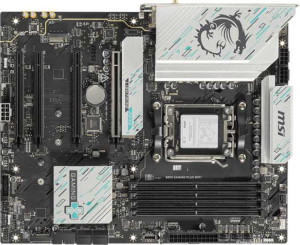
MSI B850 Gaming Plus WiFi
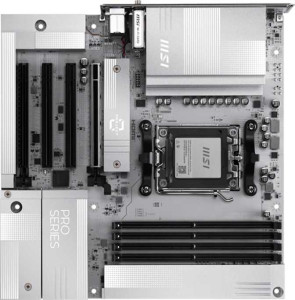
MSI Pro B850M-A Wi-Fi PZ

MSI B850 Gaming Plus WiFi MSI Pro B850M-A Wi-Fi PZ

Overview

Welcome to this detailed specification comparison between the MSI B850 Gaming Plus WiFi and the MSI Pro B850M-A Wi-Fi PZ. Both boards share the same AM5 socket and B850 chipset, making this a compelling head-to-head for AMD platform builders. The key battlegrounds include form factor and physical size, rear USB connectivity, expansion slot configurations, and storage options — differences that could meaningfully shape your build decisions.

Common Features

  • Both boards use the AM5 CPU socket.
  • Both boards feature the B850 chipset.
  • Wi-Fi is supported on both boards, covering Wi-Fi 4, Wi-Fi 5, Wi-Fi 6, Wi-Fi 6E, and Wi-Fi 7.
  • Bluetooth 5.4 is available on both boards.
  • Overclocking is supported on both boards.
  • RGB lighting is present on both boards.
  • Both boards support a maximum of 256GB of RAM.
  • Both boards support a maximum native RAM speed of 5600 MHz.
  • Both boards support overclocked RAM speeds up to 8200 MHz.
  • Both boards have 4 memory slots across 2 memory channels.
  • Both boards use DDR5 memory.
  • ECC memory is not supported on either board.
  • Both boards have 2 USB 3.2 Gen 2 ports (USB-C) on the rear.
  • Neither board has any USB 3.2 Gen 1 USB-C, USB 3.2 Gen 2x2, USB 4, or Thunderbolt ports.
  • Both boards have 1 DisplayPort output.
  • Both boards have 4 USB 2.0 ports available through expansion headers.
  • Both boards include 4 SATA 3 connectors.
  • A TPM connector is present on both boards.
  • Neither board has mSATA or SATA 2 connectors, nor any U.2 sockets.
  • Both boards include 1 PCIe 5.0 x16 slot and 2 PCIe x1 slots, with no PCIe 3.0 x16, PCIe 2.0 x16, PCIe x8, or PCI slots.
  • Both boards support 7.1 audio channels.
  • Both boards support RAID 0 and RAID 1, but neither supports RAID 5 or RAID 0+1.

Main Differences

  • The MSI B850 Gaming Plus WiFi has an ATX form factor, while the MSI Pro B850M-A Wi-Fi PZ uses a Micro-ATX form factor.
  • The MSI B850 Gaming Plus WiFi is 304.8 mm wide, while the MSI Pro B850M-A Wi-Fi PZ is 243.8 mm wide.
  • Dual BIOS is available on the MSI B850 Gaming Plus WiFi but not on the MSI Pro B850M-A Wi-Fi PZ.
  • The MSI B850 Gaming Plus WiFi has 1 USB 3.2 Gen 2 port (USB-A), while the MSI Pro B850M-A Wi-Fi PZ has 3.
  • The MSI B850 Gaming Plus WiFi has 1 USB 3.2 Gen 1 port (USB-A), while the MSI Pro B850M-A Wi-Fi PZ has 3.
  • The MSI B850 Gaming Plus WiFi has 4 USB 2.0 ports on the rear, while the MSI Pro B850M-A Wi-Fi PZ has none.
  • An HDMI output is present on the MSI Pro B850M-A Wi-Fi PZ but not on the MSI B850 Gaming Plus WiFi.
  • The MSI B850 Gaming Plus WiFi has 4 USB 3.2 Gen 1 ports through expansion headers, while the MSI Pro B850M-A Wi-Fi PZ has 2.
  • The MSI B850 Gaming Plus WiFi has 4 USB 3.0 ports through expansion headers, while the MSI Pro B850M-A Wi-Fi PZ has 2.
  • The MSI B850 Gaming Plus WiFi has 6 fan headers, while the MSI Pro B850M-A Wi-Fi PZ has 5.
  • The MSI B850 Gaming Plus WiFi has 3 M.2 sockets, while the MSI Pro B850M-A Wi-Fi PZ has 2.
  • The MSI B850 Gaming Plus WiFi includes 1 PCIe 4.0 x16 slot, while the MSI Pro B850M-A Wi-Fi PZ has none.
  • The MSI Pro B850M-A Wi-Fi PZ has 1 PCIe x4 slot, while the MSI B850 Gaming Plus WiFi has none.
  • An S/PDIF Out port is present on the MSI B850 Gaming Plus WiFi but not on the MSI Pro B850M-A Wi-Fi PZ.
  • The MSI B850 Gaming Plus WiFi has 2 audio connectors, while the MSI Pro B850M-A Wi-Fi PZ has 3.
  • RAID 10 (1+0) support is available on the MSI Pro B850M-A Wi-Fi PZ but not on the MSI B850 Gaming Plus WiFi.
Specs Comparison
MSI B850 Gaming Plus WiFi

MSI B850 Gaming Plus WiFi

MSI Pro B850M-A Wi-Fi PZ

MSI Pro B850M-A Wi-Fi PZ

General info:
CPU socket AM5 AM5
chipset B850 B850
form factor ATX Micro-ATX
release date January 2025 September 2025
supports Wi-Fi
Wi-Fi version Wi-Fi 4 (802.11n), Wi-Fi 5 (802.11ac), Wi-Fi 6 (802.11ax), Wi-Fi 6E (802.11ax), Wi-Fi 7 (802.11be) Wi-Fi 4 (802.11n), Wi-Fi 5 (802.11ac), Wi-Fi 6 (802.11ax), Wi-Fi 6E (802.11ax), Wi-Fi 7 (802.11be)
Has Bluetooth
Bluetooth version 5.4 5.4
Easy to overclock
has RGB lighting
Easy to reset BIOS
Has dual BIOS
has aptX
CPU sockets 1 1
Has integrated graphics
warranty period 3 years 3 years
height 243.8 mm 243.8 mm
width 304.8 mm 243.8 mm
Has integrated CPU

Both boards share the same core platform: an AM5 socket with a B850 chipset, making them equally capable in terms of CPU compatibility and overclocking headroom. They also match on wireless connectivity, both supporting Wi-Fi 7 and Bluetooth 5.4 — the latest standards for low-latency, high-throughput wireless performance. RGB lighting, easy BIOS reset, and a 3-year warranty are also common to both, so neither has an edge on those fronts.

The most consequential difference is form factor: the Gaming Plus WiFi is a full ATX board (304.8 × 243.8 mm), while the Pro B850M-A is Micro-ATX (243.8 × 243.8 mm). In practice, this means the ATX board fits only in mid-tower or full-tower cases and typically offers more expansion slots, while the Micro-ATX is compatible with a wider range of smaller cases for compact or space-constrained builds. The second meaningful difference is dual BIOS: the Gaming Plus WiFi includes it, the Pro B850M-A does not. Dual BIOS acts as a hardware-level safety net — if a BIOS update goes wrong or corruption occurs, the board can automatically recover from a backup chip, which is a real reliability advantage for users who update firmware frequently.

For users prioritizing build flexibility and resilience, the MSI B850 Gaming Plus WiFi holds a clear edge thanks to its ATX footprint (more room for expansion cards) and dual BIOS protection. The MSI Pro B850M-A Wi-Fi PZ, however, is the stronger choice if compact size is the goal, delivering nearly identical features in a smaller, more case-friendly package with no meaningful sacrifice on connectivity or platform capability.

Memory:
maximum memory amount 256GB 256GB
RAM speed (max) 5600 MHz 5600 MHz
overclocked RAM speed 8200 MHz 8200 MHz
memory slots 4 4
DDR memory version 5 5
memory channels 2 2
Supports ECC memory

On memory, these two boards are a perfect mirror image of each other. Both support DDR5 in a dual-channel configuration across 4 slots, with a maximum capacity of 256GB — more than sufficient for even the most memory-intensive workloads, from 3D rendering to large virtual machines. The native 5600 MHz ceiling aligns with the AM5 platform's JEDEC standard, meaning out-of-the-box performance will be consistent and stable on either board.

Where it gets interesting is overclocking: both boards push RAM headroom all the way up to 8200 MHz via EXPO/XMP profiles. Hitting those speeds in practice depends heavily on the quality of the memory kit and cooling, but the headroom itself is substantial — the gap between 5600 and 8200 MHz can translate to measurable gains in memory-bandwidth-sensitive tasks like game asset streaming or data compression. Neither board supports ECC memory, which is expected at this chipset tier and only relevant for workstation or server use cases.

This group is a clear tie. Every single memory specification — capacity ceiling, slot count, channel configuration, DDR generation, native and overclocked speeds — is identical. A buyer's memory experience will be indistinguishable between the two boards, so this category should not factor into the purchase decision at all.

Ports:
USB 3.2 Gen 2 ports (USB-A) 1 3
USB 3.2 Gen 1 ports (USB-A) 1 3
USB 3.2 Gen 2 ports (USB-C) 2 2
USB 3.2 Gen 1 ports (USB-C) 0 0
USB 2.0 ports 4 0
USB 3.2 Gen 2x2 ports 0 0
USB 4 40Gbps ports 0 0
USB 4 20Gbps ports 0 0
Thunderbolt 4 ports 0 0
Thunderbolt 3 ports 0 0
has an HDMI output
DisplayPort outputs 1 1
RJ45 ports 1 1
Has USB Type-C
eSATA ports 0 0
DVI outputs 0 0
has a VGA connector
PS/2 ports 0 0

Rear I/O is where these two boards diverge most visibly for everyday use. The Pro B850M-A offers a notably more generous USB-A lineup — 3x USB 3.2 Gen 2 and 3x USB 3.2 Gen 1 ports, totaling six high-speed USB-A connections. The Gaming Plus WiFi, by contrast, provides just one port at each of those speeds, compensating instead with 4x USB 2.0 ports. In practice, USB 2.0 is adequate for keyboards, mice, and dongles, but for external drives, audio interfaces, or fast peripherals, the Pro B850M-A's higher-bandwidth port count is a meaningful advantage in a multi-device desk setup.

The display output story also favors the Pro B850M-A. Both boards include a DisplayPort 1.x output, but the Pro B850M-A adds an HDMI port as well — useful for users running integrated graphics temporarily, connecting a secondary display, or using a KVM switch. The Gaming Plus WiFi offers no HDMI at all, which is a minor but real limitation in flexibility. Where the two boards converge: both provide 2x USB 3.2 Gen 2 Type-C ports on the rear, a single RJ45 ethernet jack, and no legacy connectors like VGA or PS/2.

The Pro B850M-A holds a clear edge in this category. Its superior USB-A port count across faster standards, combined with dual video output options, makes it the more practical choice for users with multiple peripherals or display needs — all the more notable given its smaller Micro-ATX footprint.

Connectors:
USB 3.2 Gen 1 ports (through expansion) 4 2
USB 2.0 ports (through expansion) 4 4
SATA 3 connectors 4 4
fan headers 6 5
USB 3.0 ports (through expansion) 4 2
M.2 sockets 3 2
Has TPM connector
U.2 sockets 0 0
Has mSATA connector
SATA 2 connectors 0 0

Internal connectivity is where the Gaming Plus WiFi pulls ahead. Its most significant advantage is the 3 M.2 sockets versus the Pro B850M-A's 2 — a difference that matters considerably for storage-heavy builds. Each additional M.2 slot means one more NVMe SSD can be installed without touching the SATA ports, keeping the build clean and maximizing sequential throughput. For users planning a fast boot drive plus dedicated game storage plus a work or backup volume, that third slot removes a real constraint.

Fan and pump header count also tilts toward the Gaming Plus WiFi, with 6 headers compared to the Pro B850M-A's 5. In a system with a CPU cooler, multiple case fans, and an AIO pump, headers fill up faster than expected — an extra one provides genuine headroom without needing a splitter or hub. Similarly, the Gaming Plus WiFi doubles the front-panel USB 3.2 Gen 1 expansion ports (4 vs 2), which translates to more front-panel USB-A connections available through the case. Both boards share identical 4x SATA 3 connectors and 4x USB 2.0 expansion headers, so legacy storage and basic front-panel connectivity are equally covered.

The Gaming Plus WiFi has a clear edge in this group. The extra M.2 slot alone is a tangible build advantage, and the additional fan header and USB expansion capacity reinforce that lead — making it the stronger platform for users who plan to grow their storage array or run a more complex cooling setup over time.

Expansion slots:
PCIe 4.0 x16 slots 1 0
PCIe 5.0 x16 slots 1 1
PCIe 3.0 x16 slots 0 0
PCIe x1 slots 2 2
PCI slots 0 0
PCIe 2.0 x16 slots 0 0
PCIe x4 slots 0 1
PCIe x8 slots 0 0

The primary GPU slot is identical on both boards: a single PCIe 5.0 x16 connection that delivers the maximum available bandwidth for today's and next-generation graphics cards. For single-GPU gaming or workstation builds, neither board compromises here. The two also share 2x PCIe x1 slots, suitable for add-in cards like capture cards, sound cards, or network adapters.

The meaningful split comes in the secondary full-size slot. The Gaming Plus WiFi adds a PCIe 4.0 x16 slot — physically a full x16 connector, which accommodates a wide range of add-in cards including older GPUs, high-bandwidth compute cards, or RAID controllers with room to breathe. The Pro B850M-A substitutes this with a PCIe x4 slot, which is narrower in both physical size and bandwidth. The x4 slot is still useful for NVMe expansion cards or 10GbE NICs, but it cannot seat a full x16 card and offers considerably less throughput headroom than the Gaming Plus WiFi's secondary slot.

The Gaming Plus WiFi has the edge here. The extra PCIe 4.0 x16 slot provides significantly more versatility for a secondary expansion card compared to the Pro B850M-A's x4 slot — a relevant advantage for users running multi-card setups, professional capture hardware, or high-bandwidth peripherals alongside their primary GPU.

Audio:
audio channels 7.1 7.1
Has S/PDIF Out port
audio connectors 2 3

Audio is a study in trade-offs between these two boards. Both deliver 7.1-channel surround sound support, meaning neither cuts corners on the core specification that matters most for immersive gaming or home theater setups. The divergence lies in how that audio reaches your equipment.

The Gaming Plus WiFi includes an S/PDIF optical output — a digital audio connection that bypasses the analog circuitry entirely and sends a clean signal to an external DAC, AV receiver, or soundbar. This is a meaningful feature for users with dedicated audio hardware, as it sidesteps any electrical interference the motherboard's internal components might introduce. The trade-off is that it offers only 2 analog audio jacks on the rear panel. The Pro B850M-A flips this: no S/PDIF, but 3 analog connectors, which gives more flexibility for simultaneously connecting multiple analog devices — a headset, speakers, and a microphone input, for example — without an adapter or splitter.

Which board wins here depends entirely on the user's setup. For those routing audio through an external digital receiver or DAC, the Gaming Plus WiFi's S/PDIF output is the more capable option. For users relying purely on analog connections and wanting maximum jack flexibility out of the box, the Pro B850M-A's extra connector is the practical advantage. Neither holds a universal edge — this is a genuine split based on use case.

Storage:
Supports RAID 1
Supports RAID 10 (1+0)
Supports RAID 5
Supports RAID 0
Supports RAID 0+1

RAID support is largely consistent between these two boards, with one notable exception. Both handle RAID 0 (striping for maximum speed) and RAID 1 (mirroring for redundancy) — the two most commonly used configurations in consumer builds. For most users, this shared baseline is all that's needed.

The differentiator is RAID 10, which only the Pro B850M-A supports. RAID 10 combines striping and mirroring simultaneously across four drives, delivering both the performance benefits of RAID 0 and the fault tolerance of RAID 1. It's the configuration of choice when data loss is unacceptable but throughput still matters — think small business file servers, media production workstations, or any setup where a single drive failure cannot mean downtime. The Gaming Plus WiFi lacks this option, leaving users who outgrow simple mirroring with no native stepping-stone before reaching enterprise-tier configurations like RAID 5, which neither board supports.

For mainstream gaming or general desktop use, this distinction is irrelevant — RAID 0 and RAID 1 cover nearly every consumer scenario. But for users with more demanding data integrity requirements, the Pro B850M-A holds a clear advantage thanks to its RAID 10 support, offering a more complete storage redundancy toolkit.

Comparison Summary & Verdict

After a thorough review of the specifications, both boards prove to be capable AM5 platforms with shared strengths in Wi-Fi 7, Bluetooth 5.4, DDR5 memory support up to 256GB, and PCIe 5.0. However, their differences reveal clearly distinct audiences. The MSI B850 Gaming Plus WiFi stands out with its full ATX form factor, an extra M.2 socket, a PCIe 4.0 x16 slot, dual BIOS protection, more expansion USB headers, and an S/PDIF output — making it the stronger pick for enthusiasts building a full-sized, feature-rich gaming rig. The MSI Pro B850M-A Wi-Fi PZ, on the other hand, offers a compact Micro-ATX footprint, more rear USB-A ports, an HDMI output, RAID 10 support, and an extra audio connector, positioning it as the smarter choice for space-conscious builders and productivity-focused systems.

MSI B850 Gaming Plus WiFi
Buy MSI B850 Gaming Plus WiFi if...

Buy the MSI B850 Gaming Plus WiFi if you want a full ATX board with dual BIOS, three M.2 slots, a PCIe 4.0 x16 slot, more internal USB expansion headers, and S/PDIF audio output for a feature-packed gaming build.

MSI Pro B850M-A Wi-Fi PZ
Buy MSI Pro B850M-A Wi-Fi PZ if...

Buy the MSI Pro B850M-A Wi-Fi PZ if you need a compact Micro-ATX board with more rear USB-A ports, a built-in HDMI output, RAID 10 storage support, and an extra audio connector for a smaller or productivity-oriented system.