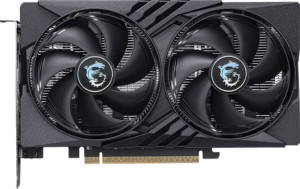
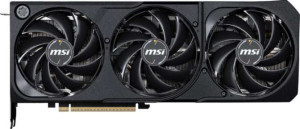
Both cards are built on the same Blackwell architecture using a 5 nm process node, and both connect via PCIe 5.0 — so at the platform level, they share the same generational foundation. The meaningful divergence lies in silicon scale: the RTX 5070 Shadow 3X OC packs 31,100 million transistors against the RTX 5050 Gaming's 16,900 million, which is nearly double. This transistor count directly underpins the performance and memory advantages seen in other groups — more transistors means more compute units, more cache, and more on-die logic.
That larger die comes with a real cost in power draw. The RTX 5070 carries a 250W TDP versus just 130W for the RTX 5050 — almost twice the thermal envelope. For system builders, this has tangible consequences: the 5070 demands a more robust PSU and better case airflow, while the 5050's lower TDP makes it a more accessible fit for compact or power-constrained builds. Neither card uses liquid cooling, so both rely entirely on their respective air-cooling solutions to manage thermals.
Physically, the size difference is also notable. The RTX 5070 stretches to 303 mm in length compared to the 5050's 202 mm, while both sit at nearly identical heights. That extra 100 mm of card length means case compatibility must be verified for the 5070, whereas the 5050's more compact footprint fits comfortably in a wider range of enclosures. For users prioritizing a small form factor or low power consumption, the RTX 5050 Gaming holds a practical edge here; for those with no such constraints, the 5070's larger, more power-hungry design is simply the price of its substantially greater silicon.