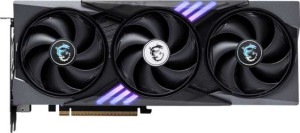
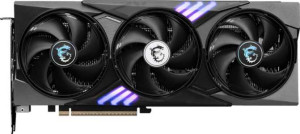
The most telling performance differentiator between the RTX 5060 Gaming Trio OC and the RTX 5060 Ti Gaming Trio 16GB lies in their shader hardware. The Ti packs 4,608 shading units and 144 TMUs versus 3,840 and 120 on the standard 5060 — a roughly 20% advantage in raw compute and texturing muscle. This directly explains why the Ti's floating-point throughput reaches 23.7 TFLOPS compared to 20.16 TFLOPS on the base model, a ~17.6% gap that translates into meaningfully higher headroom for demanding rasterization workloads, shader-heavy scenes, and AI-accelerated features.
Clock speeds tell a more nuanced story. The base RTX 5060 actually boosts higher at 2,625 MHz turbo versus the Ti's 2,572 MHz, but the Ti compensates with a higher base clock of 2,407 MHz versus 2,280 MHz. This means the Ti sustains stronger performance under sustained load, while the 5060 can momentarily spike higher in lightly threaded bursts. Notably, both cards share the same 48 ROPs and identical 1,750 MHz memory speed, so pixel fillrate and memory bandwidth are comparable — the 5060 even edges out fractionally on pixel rate (126 vs. 123.5 GPixel/s) purely due to its higher turbo clock.
Overall, the RTX 5060 Ti Gaming Trio 16GB holds a clear performance edge for GPU-compute-heavy tasks, sustained gaming workloads, and texture-intensive rendering, thanks to its larger shader array and substantially higher TFLOPS. The standard RTX 5060 Gaming Trio OC closes the gap somewhat with its higher peak boost clock, but cannot overcome the Ti's hardware-width advantage. Buyers prioritizing raw throughput and sustained performance should favor the Ti; the base 5060 is the better fit only where peak burst clocks matter more than sustained compute.