MSI GeForce RTX 5060 Gaming
MSI GeForce RTX 5060 Inspire 2X OC

MSI GeForce RTX 5060 Gaming MSI GeForce RTX 5060 Inspire 2X OC

Overview

Choosing between two variants of the same GPU can be tricky, and the MSI GeForce RTX 5060 Gaming versus the MSI GeForce RTX 5060 Inspire 2X OC is a perfect case in point. Both cards share the same Blackwell architecture, 8GB of GDDR7 memory, and a 145W TDP, but they diverge in areas like boost clock speed, raw performance throughput, and physical dimensions. Read on to see how these two RTX 5060 variants stack up across every key specification.

Common Features

  • Both cards share a base GPU clock speed of 2280 MHz.
  • Both cards have a GPU memory speed of 1750 MHz.
  • Both cards have 3840 shading units.
  • Both cards have 120 texture mapping units (TMUs).
  • Both cards have 48 render output units (ROPs).
  • Double Precision Floating Point (DPFP) is supported on both cards.
  • Both cards have an effective memory speed of 28000 MHz.
  • Both cards offer a maximum memory bandwidth of 448 GB/s.
  • Both cards are equipped with 8GB of VRAM.
  • Both cards use GDDR7 memory.
  • Both cards feature a 128-bit memory bus width.
  • ECC memory is supported on both cards.
  • Both cards support DirectX 12 Ultimate.
  • Both cards support OpenGL version 4.6.
  • Both cards support OpenCL version 3.
  • Multi-display technology is supported on both cards.
  • Ray tracing is supported on both cards.
  • DLSS is supported on both cards.
  • XeSS (XMX) is not available on either card.
  • Both cards have one HDMI 2.1b output and three DisplayPort outputs, with no USB-C or DVI outputs.
  • Both cards are based on the Blackwell GPU architecture.
  • Both cards have a Thermal Design Power (TDP) of 145W.
  • Both cards use PCIe version 5.
  • Both cards are manufactured on a 5 nm semiconductor process.
  • Both cards feature 21900 million transistors.
  • Air-water cooling is not available on either card.

Main Differences

  • GPU turbo clock speed is 2497 MHz on MSI GeForce RTX 5060 Gaming and 2535 MHz on MSI GeForce RTX 5060 Inspire 2X OC.
  • Pixel rate is 119.9 GPixel/s on MSI GeForce RTX 5060 Gaming and 121.7 GPixel/s on MSI GeForce RTX 5060 Inspire 2X OC.
  • Floating-point performance is 19.18 TFLOPS on MSI GeForce RTX 5060 Gaming and 19.47 TFLOPS on MSI GeForce RTX 5060 Inspire 2X OC.
  • Texture rate is 299.6 GTexels/s on MSI GeForce RTX 5060 Gaming and 304.2 GTexels/s on MSI GeForce RTX 5060 Inspire 2X OC.
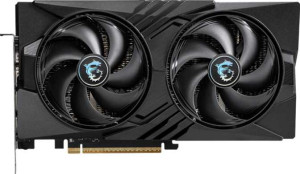
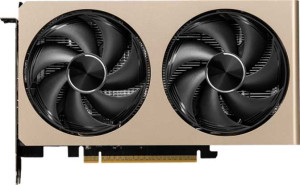
  • Card width is 248 mm on MSI GeForce RTX 5060 Gaming and 204 mm on MSI GeForce RTX 5060 Inspire 2X OC.
  • Card height is 135 mm on MSI GeForce RTX 5060 Gaming and 117 mm on MSI GeForce RTX 5060 Inspire 2X OC.
Specs Comparison
MSI GeForce RTX 5060 Gaming

MSI GeForce RTX 5060 Gaming

MSI GeForce RTX 5060 Inspire 2X OC

MSI GeForce RTX 5060 Inspire 2X OC

Performance:
GPU clock speed 2280 MHz 2280 MHz
GPU turbo 2497 MHz 2535 MHz
pixel rate 119.9 GPixel/s 121.7 GPixel/s
floating-point performance 19.18 TFLOPS 19.47 TFLOPS
texture rate 299.6 GTexels/s 304.2 GTexels/s
GPU memory speed 1750 MHz 1750 MHz
shading units 3840 3840
texture mapping units (TMUs) 120 120
render output units (ROPs) 48 48
Has Double Precision Floating Point (DPFP)

At their core, both the MSI RTX 5060 Gaming and the MSI RTX 5060 Inspire 2X OC share identical silicon foundations: the same 3840 shading units, 120 TMUs, 48 ROPs, and a base GPU clock of 2280 MHz. This means any difference in real-world performance between the two cards stems entirely from how aggressively each is factory-overclocked, not from any architectural distinction.

That overclocking delta is modest but measurable. The Inspire 2X OC boosts to 2535 MHz versus the Gaming's 2497 MHz — a roughly 38 MHz (∼1.5%) advantage. This small frequency lift propagates consistently across all derived metrics: floating-point throughput of 19.47 TFLOPS versus 19.18 TFLOPS, a texture fill rate of 304.2 GTexels/s against 299.6 GTexels/s, and a pixel rate of 121.7 GPixel/s compared to 119.9 GPixel/s. In practice, a sub-2% compute gap of this nature will not be perceptible in most gaming workloads, but it can translate to a consistent, if marginal, frame-time advantage in GPU-bound scenarios.

The Inspire 2X OC holds a narrow but clear performance edge in this category purely by virtue of its higher factory turbo clock. Both cards are otherwise perfectly matched — same memory speed, same shader and raster hardware, and both support Double Precision Floating Point. For buyers focused purely on out-of-the-box throughput, the Inspire 2X OC is the technically superior option here, though the gap is slim enough that thermal behavior and sustained clock maintenance under load may matter more in real-world use.
Memory:
effective memory speed 28000 MHz 28000 MHz
maximum memory bandwidth 448 GB/s 448 GB/s
VRAM 8GB 8GB
GDDR version GDDR7 GDDR7
memory bus width 128-bit 128-bit
Supports ECC memory

When it comes to memory, these two cards are completely indistinguishable. Both carry 8GB of GDDR7 VRAM on a 128-bit bus, running at an effective speed of 28000 MHz and delivering a maximum bandwidth of 448 GB/s. That bandwidth figure is the headline: GDDR7 extracts significantly more throughput from a 128-bit interface than its predecessors could, making the narrow bus width far less of a bottleneck than it would have been on GDDR6X hardware.

In practical terms, 448 GB/s is ample for 1080p and solid for 1440p gaming. The 8GB VRAM ceiling is worth noting for users targeting high-resolution texture packs or running multiple applications simultaneously — it can become a constraint in the most demanding modern titles at ultra settings, but remains appropriate for the performance tier these cards occupy. ECC memory support on both cards is largely relevant for compute and professional workloads rather than gaming, but it signals a robust memory subsystem.

This category is a dead tie. Every memory specification is identical across the Gaming and the Inspire 2X OC — neither card holds any advantage here, and memory configuration should play no role in choosing between them.

Features:
DirectX version DirectX 12 Ultimate DirectX 12 Ultimate
OpenGL version 4.6 4.6
OpenCL version 3 3
Supports multi-display technology
supports ray tracing
Supports 3D
supports DLSS
has XeSS (XMX)
AMD SAM / Intel Resizable BAR Intel Resizable BAR Intel Resizable BAR
has LHR
has RGB lighting
supported displays 4 4

Feature parity is total between these two cards. Both support DirectX 12 Ultimate and ray tracing, meaning users get access to the full suite of modern rendering techniques — hardware-accelerated reflections, shadows, and global illumination — without compromise on either model. Equally important for competitive and quality-focused gamers alike is shared support for DLSS, NVIDIA's AI-driven upscaling technology, which can deliver substantial frame rate gains with minimal visual fidelity loss, particularly valuable at higher resolutions.

Neither card supports XeSS, which is Intel's competing upscaling solution — but given that DLSS is broadly regarded as the more mature and widely implemented alternative on NVIDIA hardware, this omission carries no meaningful penalty. Intel Resizable BAR support on both cards allows the CPU to access the full VRAM pool simultaneously rather than in smaller chunks, a low-level optimization that can yield modest performance improvements in certain titles without any user configuration required.

With up to 4 simultaneous displays, RGB lighting, and an identical software and API feature set across the board, this group is another complete tie. No feature present in the data gives either the Gaming or the Inspire 2X OC any distinguishable advantage — a buyer's decision here should rest entirely on performance, thermals, or pricing rather than feature differentiation.

Ports:
has an HDMI output
HDMI ports 1 1
HDMI version HDMI 2.1b HDMI 2.1b
DisplayPort outputs 3 3
USB-C ports 0 0
DVI outputs 0 0
mini DisplayPort outputs 0 0

Both cards offer the same output configuration: three DisplayPort outputs and one HDMI 2.1b port, totaling four display connections — which aligns with the four-display multi-monitor support noted in their feature specs. The absence of USB-C, DVI, or mini DisplayPort outputs is consistent with modern GPU design, where those legacy or alternative connectors have largely been phased out at this tier.

The HDMI 2.1b standard is worth highlighting for living-room or TV-connected setups, as it supports high refresh rates at 4K and beyond, along with Variable Refresh Rate (VRR) passthrough to compatible displays. The three DisplayPort outputs, meanwhile, make either card well-suited for multi-monitor desktop configurations without requiring adapters.

Ports is yet another complete tie. The connector layout is identical on both the Gaming and the Inspire 2X OC, so display compatibility, multi-monitor capability, and cable choices are entirely unaffected by whichever card a buyer selects.

General info:
GPU architecture Blackwell Blackwell
release date May 2025 May 2025
Thermal Design Power (TDP) 145W 145W
PCI Express (PCIe) version 5 5
semiconductor size 5 nm 5 nm
number of transistors 21900 million 21900 million
Has air-water cooling
width 248 mm 204 mm
height 135 mm 117 mm

Underneath their different cooler designs, these two cards are built on identical silicon: the same Blackwell architecture, 5nm process node, and 21.9 billion transistors, drawing a identical 145W TDP. PCIe 5.0 support on both ensures neither will face any bandwidth bottleneck on current or near-future motherboards. In short, the underlying chip and power envelope are indistinguishable.

Where this group surfaces a genuine difference is physical size. The Gaming measures 248 × 135 mm, while the Inspire 2X OC is notably more compact at 204 × 117 mm — roughly 18% shorter in length and 13% shorter in height. That is a meaningful gap for builders working with smaller mid-tower or mini-ITX cases, where GPU clearance is often the primary constraint. The Inspire 2X OC's smaller footprint also suggests a more compact dual-fan cooler, which is a reasonable trade-off at 145W but may influence thermal headroom compared to the Gaming's larger cooling solution.

The Inspire 2X OC holds a clear advantage for space-constrained builds, while the Gaming's larger dimensions could favor users who prioritize cooler surface area and potentially quieter thermals under sustained load. Neither card is objectively superior here — the right choice depends entirely on case compatibility and thermal priorities.

Comparison Summary & Verdict

After examining every specification, both the MSI GeForce RTX 5060 Gaming and the MSI GeForce RTX 5060 Inspire 2X OC share an identical memory subsystem, feature set, and power envelope, making the differences between them subtle but meaningful. The Inspire 2X OC pulls ahead with a higher GPU boost clock of 2535 MHz, delivering marginally better pixel rate, texture rate, and floating-point performance at 19.47 TFLOPS. On top of that, it achieves this edge in a noticeably more compact footprint of 204 x 117 mm, compared to the Gaming’s larger 248 x 135 mm body. The MSI GeForce RTX 5060 Gaming is a natural fit for builders using standard cases where card size poses no constraint. The Inspire 2X OC, however, suits those seeking a slight performance advantage combined with a smaller, more versatile form factor that adapts to tighter builds.

MSI GeForce RTX 5060 Gaming
Buy MSI GeForce RTX 5060 Gaming if...

Buy the MSI GeForce RTX 5060 Gaming if your case offers ample space and a larger card footprint is not a concern for your build.

MSI GeForce RTX 5060 Inspire 2X OC
Buy MSI GeForce RTX 5060 Inspire 2X OC if...

Buy the MSI GeForce RTX 5060 Inspire 2X OC if you want a higher boost clock and better performance metrics in a more compact card that fits tighter or smaller cases.