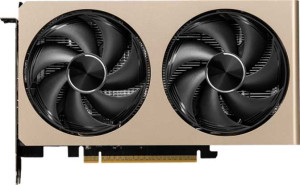
MSI GeForce RTX 5060 Inspire 2X OC
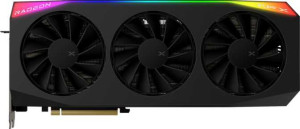
XFX Mercury Radeon RX 9070 XT OC Gaming Edition

MSI GeForce RTX 5060 Inspire 2X OC XFX Mercury Radeon RX 9070 XT OC Gaming Edition

Overview

When it comes to picking a modern discrete graphics card, the battle between NVIDIA and AMD is always compelling. This head-to-head comparison between the MSI GeForce RTX 5060 Inspire 2X OC and the XFX Mercury Radeon RX 9070 XT OC Gaming Edition explores two very different philosophies across critical battlegrounds including raw compute performance, memory capacity and bandwidth, power efficiency, and physical size. Dive in to see exactly how these two GPUs compare across every major specification.

Common Features

  • Both cards support Double Precision Floating Point (DPFP).
  • Both cards support ECC memory.
  • Both cards run DirectX 12 Ultimate.
  • Both cards support OpenGL version 4.6.
  • Both cards support multi-display technology.
  • Both cards support ray tracing.
  • Both cards support 3D output.
  • Neither card features XeSS (XMX) support.
  • Neither card has LHR (Lite Hash Rate) restrictions.
  • Both cards feature RGB lighting.
  • Both cards have one HDMI output running HDMI 2.1b.
  • Both cards have three DisplayPort outputs.
  • Neither card has a USB-C port.
  • Neither card has a DVI output.
  • Neither card has a mini DisplayPort output.
  • Both cards use PCIe version 5.
  • Neither card uses air-water cooling.

Main Differences

  • Base GPU clock speed is 2280 MHz on MSI GeForce RTX 5060 Inspire 2X OC and 1870 MHz on XFX Mercury Radeon RX 9070 XT OC Gaming Edition.
  • GPU turbo clock speed is 2535 MHz on MSI GeForce RTX 5060 Inspire 2X OC and 3100 MHz on XFX Mercury Radeon RX 9070 XT OC Gaming Edition.
  • Pixel rate is 121.7 GPixel/s on MSI GeForce RTX 5060 Inspire 2X OC and 396.8 GPixel/s on XFX Mercury Radeon RX 9070 XT OC Gaming Edition.
  • Floating-point performance is 19.47 TFLOPS on MSI GeForce RTX 5060 Inspire 2X OC and 50.79 TFLOPS on XFX Mercury Radeon RX 9070 XT OC Gaming Edition.
  • Texture rate is 304.2 GTexels/s on MSI GeForce RTX 5060 Inspire 2X OC and 793.6 GTexels/s on XFX Mercury Radeon RX 9070 XT OC Gaming Edition.
  • GPU memory speed is 1750 MHz on MSI GeForce RTX 5060 Inspire 2X OC and 2518 MHz on XFX Mercury Radeon RX 9070 XT OC Gaming Edition.
  • Shading units number 3840 on MSI GeForce RTX 5060 Inspire 2X OC and 4096 on XFX Mercury Radeon RX 9070 XT OC Gaming Edition.
  • Texture mapping units (TMUs) total 120 on MSI GeForce RTX 5060 Inspire 2X OC and 256 on XFX Mercury Radeon RX 9070 XT OC Gaming Edition.
  • Render output units (ROPs) total 48 on MSI GeForce RTX 5060 Inspire 2X OC and 128 on XFX Mercury Radeon RX 9070 XT OC Gaming Edition.
  • Effective memory speed is 28000 MHz on MSI GeForce RTX 5060 Inspire 2X OC and 20000 MHz on XFX Mercury Radeon RX 9070 XT OC Gaming Edition.
  • Maximum memory bandwidth is 448 GB/s on MSI GeForce RTX 5060 Inspire 2X OC and 640 GB/s on XFX Mercury Radeon RX 9070 XT OC Gaming Edition.
  • VRAM is 8GB on MSI GeForce RTX 5060 Inspire 2X OC and 16GB on XFX Mercury Radeon RX 9070 XT OC Gaming Edition.
  • MSI GeForce RTX 5060 Inspire 2X OC uses GDDR7 memory, while XFX Mercury Radeon RX 9070 XT OC Gaming Edition uses GDDR6.
  • Memory bus width is 128-bit on MSI GeForce RTX 5060 Inspire 2X OC and 256-bit on XFX Mercury Radeon RX 9070 XT OC Gaming Edition.
  • OpenCL version is 3 on MSI GeForce RTX 5060 Inspire 2X OC and 2.2 on XFX Mercury Radeon RX 9070 XT OC Gaming Edition.
  • DLSS support is present on MSI GeForce RTX 5060 Inspire 2X OC but not available on XFX Mercury Radeon RX 9070 XT OC Gaming Edition.
  • MSI GeForce RTX 5060 Inspire 2X OC uses Intel Resizable BAR, while XFX Mercury Radeon RX 9070 XT OC Gaming Edition uses AMD SAM.
  • GPU architecture is Blackwell on MSI GeForce RTX 5060 Inspire 2X OC and RDNA 4.0 on XFX Mercury Radeon RX 9070 XT OC Gaming Edition.
  • Thermal Design Power (TDP) is 145W on MSI GeForce RTX 5060 Inspire 2X OC and 304W on XFX Mercury Radeon RX 9070 XT OC Gaming Edition.
  • Semiconductor size is 5 nm on MSI GeForce RTX 5060 Inspire 2X OC and 4 nm on XFX Mercury Radeon RX 9070 XT OC Gaming Edition.
  • Transistor count is 21,900 million on MSI GeForce RTX 5060 Inspire 2X OC and 53,900 million on XFX Mercury Radeon RX 9070 XT OC Gaming Edition.
  • Card width is 204 mm on MSI GeForce RTX 5060 Inspire 2X OC and 360 mm on XFX Mercury Radeon RX 9070 XT OC Gaming Edition.
  • Card height is 117 mm on MSI GeForce RTX 5060 Inspire 2X OC and 155 mm on XFX Mercury Radeon RX 9070 XT OC Gaming Edition.
Specs Comparison
MSI GeForce RTX 5060 Inspire 2X OC

MSI GeForce RTX 5060 Inspire 2X OC

XFX Mercury Radeon RX 9070 XT OC Gaming Edition

XFX Mercury Radeon RX 9070 XT OC Gaming Edition

Performance:
GPU clock speed 2280 MHz 1870 MHz
GPU turbo 2535 MHz 3100 MHz
pixel rate 121.7 GPixel/s 396.8 GPixel/s
floating-point performance 19.47 TFLOPS 50.79 TFLOPS
texture rate 304.2 GTexels/s 793.6 GTexels/s
GPU memory speed 1750 MHz 2518 MHz
shading units 3840 4096
texture mapping units (TMUs) 120 256
render output units (ROPs) 48 128
Has Double Precision Floating Point (DPFP)

At first glance, the MSI GeForce RTX 5060 Inspire 2X OC appears competitive with a higher base clock of 2280 MHz versus the XFX Mercury Radeon RX 9070 XT OC's 1870 MHz. However, this baseline advantage is quickly reversed under load: the RX 9070 XT boosts all the way to 3100 MHz compared to the RTX 5060's 2535 MHz, and it is sustained throughput — not idle clocks — that determines real-world rendering performance.

The throughput gap is stark across every key metric. The RX 9070 XT delivers 50.79 TFLOPS of floating-point performance against the RTX 5060's 19.47 TFLOPS — roughly 2.6× more raw compute. This is reinforced by the texture and pixel pipelines: the XFX card's 793.6 GTexels/s texture rate and 396.8 GPixel/s pixel rate dwarf the MSI's 304.2 GTexels/s and 121.7 GPixel/s respectively. In practice, this translates to meaningfully higher frame rates at demanding resolutions, faster throughput in compute-heavy workloads, and greater headroom for high-resolution textures. The RX 9070 XT also benefits from a significantly faster memory bus at 2518 MHz versus 1750 MHz, and more than doubles the ROPs (128 vs 48) and TMUs (256 vs 120), which directly impacts fill rate and texture-bound scenarios.

Both cards support Double Precision Floating Point, so neither holds an exclusive advantage there. Overall, the XFX RX 9070 XT holds a decisive and consistent performance edge in this group — the RTX 5060's higher base clock is a minor footnote against a card that outperforms it by a factor of roughly 2.5–3× across every meaningful throughput metric.

Memory:
effective memory speed 28000 MHz 20000 MHz
maximum memory bandwidth 448 GB/s 640 GB/s
VRAM 8GB 16GB
GDDR version GDDR7 GDDR6
memory bus width 128-bit 256-bit
Supports ECC memory

The memory configurations here tell an interesting story of two different engineering philosophies. The MSI RTX 5060 pairs a narrow 128-bit bus with the newer GDDR7 standard, achieving an effective speed of 28000 MHz — the highest raw clock rate between the two. The XFX RX 9070 XT takes the opposite approach: a wide 256-bit bus with GDDR6 at 20000 MHz effective speed. The wider bus wins out in actual throughput, giving the RX 9070 XT a substantial 640 GB/s of memory bandwidth versus the RTX 5060's 448 GB/s.

Bandwidth matters most in memory-bound scenarios — high-resolution gaming, large texture assets, and GPU compute tasks where data must be fed to the shaders rapidly. The RX 9070 XT's 43% bandwidth advantage means less throttling in these situations. Compounding this is the VRAM capacity gap: 16GB on the RX 9070 XT versus 8GB on the RTX 5060. At higher resolutions or with modern titles that aggressively consume VRAM, 8GB can become a hard ceiling, leading to stutters or forced quality reductions — a risk largely absent on the 16GB card.

Both cards support ECC memory, which is a shared baseline for reliability-sensitive workloads. Despite the RTX 5060's technically faster GDDR7 modules, the RX 9070 XT holds a clear memory advantage overall — its superior bandwidth and double the VRAM capacity are the metrics that actually govern real-world performance headroom, and the XFX card wins decisively on both counts.

Features:
DirectX version DirectX 12 Ultimate DirectX 12 Ultimate
OpenGL version 4.6 4.6
OpenCL version 3 2.2
Supports multi-display technology
supports ray tracing
Supports 3D
supports DLSS
has XeSS (XMX)
AMD SAM / Intel Resizable BAR Intel Resizable BAR AMD SAM
has LHR
has RGB lighting
supported displays 4 4

Much of the feature set here is shared ground: both cards support DirectX 12 Ultimate, OpenGL 4.6, ray tracing, multi-display up to 4 screens, and RGB lighting. Neither carries an LHR limiter, which is a non-issue for most users but worth noting for compute-oriented buyers. The most meaningful divergence comes down to upscaling technology and resizable memory access.

The MSI RTX 5060 supports DLSS, NVIDIA's AI-driven upscaling solution, while the XFX RX 9070 XT does not support DLSS — and neither card supports XeSS. For gaming, DLSS has a well-established library of supported titles and can deliver significant frame rate uplift with minimal perceived quality loss, so its absence on the RX 9070 XT is a tangible gap for users who rely on it. The RTX 5060 also reports a newer OpenCL 3 versus the RX 9070 XT's OpenCL 2.2, which could matter for cross-platform compute workloads that target the latest OpenCL feature sets. On the memory access side, each card naturally aligns with its platform ecosystem — Intel Resizable BAR on the RTX 5060 and AMD SAM on the RX 9070 XT — both delivering the same functional benefit of full CPU access to GPU memory for potential performance uplift.

In this group, the RTX 5060 holds a meaningful edge due to DLSS support and the newer OpenCL version. For gamers in particular, access to DLSS across a broad game library is a practical, session-to-session advantage that the RX 9070 XT cannot match based solely on the specs provided here.
Ports:
has an HDMI output
HDMI ports 1 1
HDMI version HDMI 2.1b HDMI 2.1b
DisplayPort outputs 3 3
USB-C ports 0 0
DVI outputs 0 0
mini DisplayPort outputs 0 0

The port configurations on these two cards are identical in every respect: both offer 1 HDMI 2.1b output and 3 DisplayPort outputs, for a total of four display connections — consistent with the maximum supported display count noted in their feature specs. Neither card includes USB-C, DVI, or mini DisplayPort outputs.

The practical takeaway is that both cards are equally capable for multi-monitor setups, and the HDMI 2.1b standard on both supports high refresh rates at 4K and beyond, making either card a solid fit for modern displays. The triple DisplayPort layout is well-suited for users running three monitors off a single card without an adapter.

This group is a complete tie — there is no meaningful distinction between the MSI RTX 5060 and the XFX RX 9070 XT in terms of connectivity. Display setup decisions between these two cards should be driven entirely by the performance and feature differences covered in the other spec groups.

General info:
GPU architecture Blackwell RDNA 4.0
release date May 2025 March 2025
Thermal Design Power (TDP) 145W 304W
PCI Express (PCIe) version 5 5
semiconductor size 5 nm 4 nm
number of transistors 21900 million 53900 million
Has air-water cooling
width 204 mm 360 mm
height 117 mm 155 mm

These two cards are built on different architectural generations and the physical specs reflect that clearly. The MSI RTX 5060 is based on NVIDIA's Blackwell architecture on a 5 nm process with 21.9 billion transistors, while the XFX RX 9070 XT uses AMD's RDNA 4.0 on a denser 4 nm node packing 53.9 billion transistors — more than twice as many. That transistor count directly underpins the RX 9070 XT's substantially larger compute throughput seen in the performance group, and the finer process node suggests AMD is extracting efficiency at the silicon level despite the higher transistor count.

Power draw is where the trade-off becomes most concrete for builders. The RTX 5060's 145W TDP is remarkably lean, making it compatible with a wide range of PSU configurations and mid-range system builds with minimal thermal overhead. The RX 9070 XT's 304W TDP is more than double — a figure that demands a robust power supply, good case airflow, and deliberate thermal planning. Physical footprint follows a similar pattern: the RX 9070 XT measures 360 × 155 mm versus the RTX 5060's compact 204 × 117 mm, meaning case compatibility is a genuine consideration for smaller or mid-tower enclosures. Both share PCIe 5.0 and air cooling only.

There is no single winner here — the advantage depends entirely on the buyer's priorities. The RTX 5060 is the clear choice for power-constrained or compact builds, offering a notably lower TDP and a much smaller physical footprint. The RX 9070 XT accepts those costs in exchange for far greater silicon complexity, which directly drives its performance lead — but it requires a system built to accommodate it.

Comparison Summary & Verdict

Having examined all available specifications, these two graphics cards clearly target different buyers. The MSI GeForce RTX 5060 Inspire 2X OC excels as an energy-efficient option with a lean 145W TDP, a compact footprint, GDDR7 memory, and full DLSS support, making it well suited for users who want a modern NVIDIA Blackwell GPU in a smaller, power-conscious build. The XFX Mercury Radeon RX 9070 XT OC Gaming Edition, however, delivers dramatically higher floating-point performance at 50.79 TFLOPS, double the VRAM at 16GB, a wider 256-bit memory bus, and 640 GB/s of memory bandwidth, making it the stronger pick for users who demand maximum horsepower for high-resolution gaming or compute-heavy workloads and are willing to accommodate its larger size and 304W power draw.

MSI GeForce RTX 5060 Inspire 2X OC
Buy MSI GeForce RTX 5060 Inspire 2X OC if...

Buy the MSI GeForce RTX 5060 Inspire 2X OC if you prioritize low power consumption, a compact form factor, DLSS support, and a modern GDDR7 memory stack in an energy-efficient NVIDIA Blackwell build.

XFX Mercury Radeon RX 9070 XT OC Gaming Edition
Buy XFX Mercury Radeon RX 9070 XT OC Gaming Edition if...

Buy the XFX Mercury Radeon RX 9070 XT OC Gaming Edition if you need substantially higher raw compute performance, a 16GB VRAM buffer, and greater memory bandwidth for demanding gaming or intensive workloads.