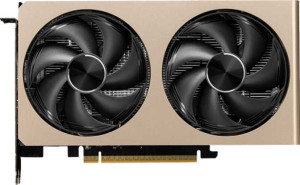
MSI GeForce RTX 5060 Inspire 2X
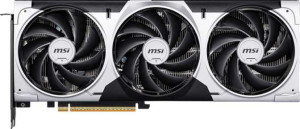
MSI GeForce RTX 5060 Ventus 3X OC

MSI GeForce RTX 5060 Inspire 2X MSI GeForce RTX 5060 Ventus 3X OC

Overview

Welcome to our head-to-head look at the MSI GeForce RTX 5060 Inspire 2X and the MSI GeForce RTX 5060 Ventus 3X OC. Both cards are built on the same Blackwell architecture with identical memory configurations and feature sets, which makes the choice between them surprisingly nuanced. The real debate centers on peak GPU turbo clock performance and physical card dimensions — factors that could prove decisive depending on your rig and priorities.

Common Features

  • Both cards share a base GPU clock speed of 2280 MHz.
  • Both cards have a GPU memory speed of 1750 MHz.
  • Both cards feature 3840 shading units.
  • Both cards have 120 texture mapping units (TMUs).
  • Both cards have 48 render output units (ROPs).
  • Double Precision Floating Point (DPFP) is supported on both cards.
  • Both cards have an effective memory speed of 28000 MHz.
  • Both cards offer a maximum memory bandwidth of 448 GB/s.
  • Both cards come with 8GB of VRAM.
  • Both cards use GDDR7 memory.
  • Both cards have a 128-bit memory bus width.
  • ECC memory is supported on both cards.
  • Both cards support DirectX 12 Ultimate.
  • Both cards support OpenGL version 4.6.
  • Both cards support OpenCL version 3.
  • Multi-display technology is supported on both cards.
  • Ray tracing is supported on both cards.
  • 3D support is available on both cards.
  • DLSS is supported on both cards.
  • XeSS (XMX) support is not available on either card.
  • Both cards include one HDMI 2.1b output.
  • Both cards feature three DisplayPort outputs.
  • Neither card includes USB-C or DVI outputs.
  • Both cards are based on the Blackwell GPU architecture.
  • Both cards have a Thermal Design Power (TDP) of 145W.
  • Both cards use PCIe version 5.
  • Both cards are manufactured on a 5 nm semiconductor process.
  • Both cards feature 21900 million transistors.
  • Air-water cooling is not available on either card.

Main Differences

  • GPU turbo clock speed is 2497 MHz on MSI GeForce RTX 5060 Inspire 2X and 2535 MHz on MSI GeForce RTX 5060 Ventus 3X OC.
  • Pixel rate is 119.9 GPixel/s on MSI GeForce RTX 5060 Inspire 2X and 121.7 GPixel/s on MSI GeForce RTX 5060 Ventus 3X OC.
  • Floating-point performance is 19.18 TFLOPS on MSI GeForce RTX 5060 Inspire 2X and 19.47 TFLOPS on MSI GeForce RTX 5060 Ventus 3X OC.
  • Texture rate is 299.6 GTexels/s on MSI GeForce RTX 5060 Inspire 2X and 304.2 GTexels/s on MSI GeForce RTX 5060 Ventus 3X OC.
  • Card width is 204 mm on MSI GeForce RTX 5060 Inspire 2X and 303 mm on MSI GeForce RTX 5060 Ventus 3X OC.
  • Card height is 117 mm on MSI GeForce RTX 5060 Inspire 2X and 121 mm on MSI GeForce RTX 5060 Ventus 3X OC.
Specs Comparison
MSI GeForce RTX 5060 Inspire 2X

MSI GeForce RTX 5060 Inspire 2X

MSI GeForce RTX 5060 Ventus 3X OC

MSI GeForce RTX 5060 Ventus 3X OC

Performance:
GPU clock speed 2280 MHz 2280 MHz
GPU turbo 2497 MHz 2535 MHz
pixel rate 119.9 GPixel/s 121.7 GPixel/s
floating-point performance 19.18 TFLOPS 19.47 TFLOPS
texture rate 299.6 GTexels/s 304.2 GTexels/s
GPU memory speed 1750 MHz 1750 MHz
shading units 3840 3840
texture mapping units (TMUs) 120 120
render output units (ROPs) 48 48
Has Double Precision Floating Point (DPFP)

At their core, both cards are built on identical silicon: the same 2280 MHz base clock, 3840 shading units, 120 TMUs, and 48 ROPs. This means their fundamental throughput architecture is the same, and both support Double Precision Floating Point — a useful capability for compute workloads beyond gaming.

The only meaningful differentiator within this group is the boost clock. The Ventus 3X OC sustains a higher GPU turbo of 2535 MHz compared to the Inspire 2X's 2497 MHz — a gap of 38 MHz, or roughly 1.5%. This flows directly into every derived throughput metric: the Ventus 3X OC edges ahead with 19.47 TFLOPS of floating-point performance versus 19.18 TFLOPS, and leads in both pixel rate (121.7 vs 119.9 GPixel/s) and texture rate (304.2 vs 299.6 GTexels/s). In practice, a ~1.5% clock advantage translates to a similarly marginal real-world performance delta — likely imperceptible in most gaming scenarios, but technically present under sustained peak loads.

The Ventus 3X OC holds a narrow but consistent performance edge across every throughput metric in this group, entirely attributable to its higher factory boost clock. For users prioritizing raw GPU performance between these two models, the Ventus 3X OC is the stronger option — though the gap is slim enough that thermal behavior and sustained clock maintenance under real-world loads will matter more than the spec sheet alone suggests.

Memory:
effective memory speed 28000 MHz 28000 MHz
maximum memory bandwidth 448 GB/s 448 GB/s
VRAM 8GB 8GB
GDDR version GDDR7 GDDR7
memory bus width 128-bit 128-bit
Supports ECC memory

Memory is where any differentiation between these two cards completely disappears. Every single specification — 8GB GDDR7, a 128-bit bus, 28000 MHz effective speed, and 448 GB/s bandwidth — is identical across both models. This is expected, as both are variants of the same GPU SKU, but it is worth understanding what this shared memory configuration actually delivers.

GDDR7 at 28000 MHz effective speed is a significant generational leap over GDDR6X, and the resulting 448 GB/s of bandwidth is notably high for a 128-bit bus — a width that traditionally bottlenecked mid-range cards. This means texture streaming, frame buffer access, and shader data throughput are all well-served at 1080p and 1440p. Both cards also support ECC memory, which is primarily relevant for compute and professional workloads where data integrity matters more than raw throughput.

This group is an unambiguous tie. Neither the Inspire 2X nor the Ventus 3X OC holds any memory-related advantage whatsoever, and a buyer's decision between the two should rest entirely on other factors such as cooling, clock speeds, or price.

Features:
DirectX version DirectX 12 Ultimate DirectX 12 Ultimate
OpenGL version 4.6 4.6
OpenCL version 3 3
Supports multi-display technology
supports ray tracing
Supports 3D
supports DLSS
has XeSS (XMX)
AMD SAM / Intel Resizable BAR Intel Resizable BAR Intel Resizable BAR
has LHR
has RGB lighting
supported displays 4 4

Feature parity is total here. Both the Inspire 2X and the Ventus 3X OC share an identical feature set, with DirectX 12 Ultimate and ray tracing support confirming full compatibility with modern rendering pipelines — including hardware-accelerated effects like reflections, shadows, and global illumination. DLSS support is equally important: NVIDIA's AI-driven upscaling allows both cards to render at lower resolutions and reconstruct higher-quality frames, which is especially valuable for maintaining smooth frame rates when ray tracing is enabled.

Both cards also support Intel Resizable BAR, which allows the CPU to access the full GPU frame buffer at once rather than in smaller chunks — a capability that can yield modest performance gains in certain titles. Multi-display support up to 4 screens rounds out the feature set for productivity-oriented users running complex desktop layouts.

There is no differentiator to call out in this group — the feature sets are a mirror image of each other. Anyone choosing between these two cards based on software capabilities, API support, or display flexibility will find zero distinction. The decision remains entirely a matter of cooling design, clock speeds, and pricing.

Ports:
has an HDMI output
HDMI ports 1 1
HDMI version HDMI 2.1b HDMI 2.1b
DisplayPort outputs 3 3
USB-C ports 0 0
DVI outputs 0 0
mini DisplayPort outputs 0 0

Connectivity is another area where these two cards are completely indistinguishable. Both offer the same output configuration: one HDMI 2.1b port and three DisplayPort outputs, totaling four display connections — consistent with the maximum supported display count noted in their feature specs. Neither card includes USB-C or any legacy outputs such as DVI or mini DisplayPort.

HDMI 2.1b is the most current HDMI specification, supporting up to 4K at high refresh rates and 8K output, making both cards well-suited for modern high-resolution monitors and televisions alike. The three DisplayPort outputs add flexibility for users running multi-monitor workstations, as DisplayPort supports daisy-chaining on compatible displays and handles high-refresh-rate panels with ease.

No advantage exists for either card in this group — the port layout is identical down to every detail. Buyers who need a specific connectivity configuration, such as USB-C output, will find neither card suitable, but for the vast majority of single or multi-monitor setups, both the Inspire 2X and the Ventus 3X OC are equally well-equipped.

General info:
GPU architecture Blackwell Blackwell
release date May 2025 May 2025
Thermal Design Power (TDP) 145W 145W
PCI Express (PCIe) version 5 5
semiconductor size 5 nm 5 nm
number of transistors 21900 million 21900 million
Has air-water cooling
width 204 mm 303 mm
height 117 mm 121 mm

Both cards are built on NVIDIA's Blackwell architecture, manufactured on a 5nm process with 21.9 billion transistors, and share an identical 145W TDP. This means power delivery requirements, case PSU planning, and thermal output are the same regardless of which model you choose. PCIe 5.0 support is present on both, though backward compatibility ensures neither card is limited by older motherboards.

The one concrete difference in this group is physical footprint. The Inspire 2X measures just 204mm in length, while the Ventus 3X OC stretches to 303mm — a gap of nearly 100mm. This is a substantial real-world distinction: the Inspire 2X's compact form factor makes it meaningfully more compatible with smaller mid-tower and mini-ITX cases where clearance is limited, whereas the Ventus 3X OC's longer PCB accommodates its triple-fan cooler but demands a more spacious enclosure. Height differences between the two are marginal and unlikely to affect fitment in practice.

For most full-size ATX builds, case clearance will not be a concern for either card. However, users working with compact or space-constrained systems will find the Inspire 2X the more accommodating choice by a significant margin. In this group, the Inspire 2X holds a clear advantage in installation flexibility, while all other foundational specs remain equal.

Comparison Summary & Verdict

After examining every spec, it is clear that the MSI GeForce RTX 5060 Inspire 2X and the MSI GeForce RTX 5060 Ventus 3X OC share the same Blackwell architecture, 8GB GDDR7 memory, 145W TDP, and identical feature support including ray tracing and DLSS. The differentiators are modest but real: the Ventus 3X OC pulls ahead with a higher GPU turbo of 2535 MHz, 19.47 TFLOPS of floating-point performance, and superior pixel and texture rates, making it the better choice for users who want every performance advantage available. The Inspire 2X, however, stands out with a significantly more compact 204 mm width compared to the Ventus 3X OC’s 303 mm, making it the clear winner for small form factor or space-constrained builds. Your ideal choice comes down to whether you prioritize raw performance or physical fit.

MSI GeForce RTX 5060 Inspire 2X
Buy MSI GeForce RTX 5060 Inspire 2X if...

Buy the MSI GeForce RTX 5060 Inspire 2X if you are building a compact or small form factor PC, as its 204 mm width makes it significantly easier to fit in tighter cases.

MSI GeForce RTX 5060 Ventus 3X OC
Buy MSI GeForce RTX 5060 Ventus 3X OC if...

Buy the MSI GeForce RTX 5060 Ventus 3X OC if you want maximum out-of-the-box performance, as it delivers a higher GPU turbo of 2535 MHz and greater floating-point throughput of 19.47 TFLOPS.