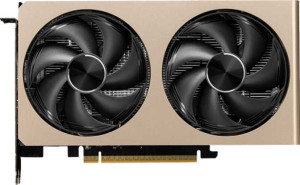
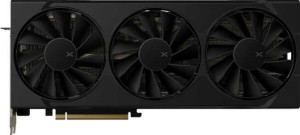
For the most part, these two cards share a remarkably similar feature foundation. Both support DirectX 12 Ultimate, OpenGL 4.6, ray tracing, 3D output, and up to 4 simultaneous displays — so buyers on either side get a modern, fully capable feature set for gaming and productivity. The one API divergence worth noting is OpenCL: the RTX 5060 supports OpenCL 3 while the RX 9070 tops out at OpenCL 2.2, which could marginally favor the MSI card in compute workloads that explicitly target the newer standard.
The most consequential differentiator in this group is upscaling support. The RTX 5060 supports DLSS, NVIDIA's AI-driven upscaling technology, while the RX 9070 does not list support for it — as expected, given it is an AMD card. Neither card supports XeSS. For gaming, DLSS can provide meaningful performance boosts with minimal visual quality loss in supported titles, which is a practical day-to-day advantage for the RTX 5060 in games that implement it. The RX 9070, by contrast, would rely on AMD's own upscaling solution, but since that is not listed in the provided specs, it cannot be factored into this analysis.
On the aesthetic side, the RX 9070 includes RGB lighting while the RTX 5060 does not — a minor point for most users, but relevant for those building visually themed systems. The SAM/Resizable BAR implementations differ by platform (AMD SAM vs. Intel Resizable BAR) but are functionally equivalent in purpose. Overall, this group is largely a tie on foundational features, with the MSI RTX 5060 holding a meaningful edge specifically for DLSS-supported games, and the RX 9070 offering a slight aesthetic bonus via RGB.