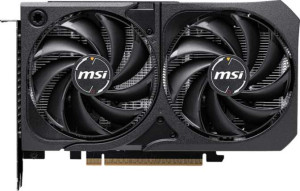
MSI GeForce RTX 5060 Shadow 2X OC
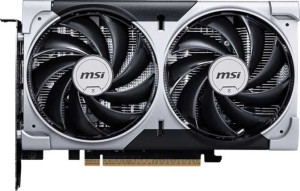
MSI GeForce RTX 5060 Ventus 2X OC

MSI GeForce RTX 5060 Shadow 2X OC MSI GeForce RTX 5060 Ventus 2X OC

Overview

Welcome to our detailed specification comparison between the MSI GeForce RTX 5060 Shadow 2X OC and the MSI GeForce RTX 5060 Ventus 2X OC. Both cards are built on the same Blackwell architecture and sit within MSI’s RTX 5060 lineup, making this a fascinating head-to-head. In this comparison, we examine their performance figures, memory configuration, feature sets, and connectivity to help you decide which card belongs in your next build.

Common Features

  • Both cards have a GPU clock speed of 2280 MHz.
  • Both cards have a GPU turbo speed of 2527 MHz.
  • Both cards deliver a pixel rate of 121.3 GPixel/s.
  • Both cards offer 19.41 TFLOPS of floating-point performance.
  • Both cards provide a texture rate of 303.2 GTexels/s.
  • Both cards have a GPU memory speed of 1750 MHz.
  • Both cards feature 3840 shading units.
  • Both cards include 120 texture mapping units (TMUs).
  • Both cards have an effective memory speed of 28000 MHz.
  • Both cards offer a maximum memory bandwidth of 448 GB/s.
  • Both cards come with 8GB of VRAM.
  • Both cards use GDDR7 memory.
  • Both cards have a 128-bit memory bus width.
  • ECC memory support is available on both cards.
  • Both cards support DirectX 12 Ultimate.
  • Both cards support OpenGL version 4.6.
  • Both cards support OpenCL version 3.
  • Multi-display technology is supported on both cards.
  • Ray tracing is supported on both cards.
  • 3D support is available on both cards.
  • DLSS support is available on both cards.
  • XeSS (XMX) support is not available on either card.
  • Both cards include one HDMI 2.1b output.
  • Both cards feature three DisplayPort outputs.
  • Neither card includes a USB-C port.
  • Neither card includes a DVI output.
  • Neither card includes a mini DisplayPort output.
  • Both cards are built on the Blackwell GPU architecture.
  • Both cards have a Thermal Design Power (TDP) of 145W.
  • Both cards use PCIe version 5.
  • Both cards are manufactured on a 5 nm semiconductor process.
  • Both cards feature 21900 million transistors.
  • Neither card has air-water cooling.
  • Both cards have a width of 197 mm.
  • Both cards have a height of 120 mm.
Specs Comparison
MSI GeForce RTX 5060 Shadow 2X OC

MSI GeForce RTX 5060 Shadow 2X OC

MSI GeForce RTX 5060 Ventus 2X OC

MSI GeForce RTX 5060 Ventus 2X OC

Performance:
GPU clock speed 2280 MHz 2280 MHz
GPU turbo 2527 MHz 2527 MHz
pixel rate 121.3 GPixel/s 121.3 GPixel/s
floating-point performance 19.41 TFLOPS 19.41 TFLOPS
texture rate 303.2 GTexels/s 303.2 GTexels/s
GPU memory speed 1750 MHz 1750 MHz
shading units 3840 3840
texture mapping units (TMUs) 120 120
render output units (ROPs) 48 48
Has Double Precision Floating Point (DPFP)

When comparing the Performance specs of the MSI GeForce RTX 5060 Shadow 2X OC and the MSI GeForce RTX 5060 Ventus 2X OC, the data tells a remarkably straightforward story: these two cards are perfectly identical across every measurable performance metric. Both share a base GPU clock of 2280 MHz and a turbo boost of 2527 MHz, meaning neither card will outpace the other in clock-dependent workloads like gaming frame rates or compute tasks.

Digging deeper into the pipeline, both GPUs field the same 3840 shading units, 120 TMUs, and 48 ROPs, which translates to identical throughput across rendering, texturing, and pixel output. The resulting figures — 19.41 TFLOPS of floating-point performance, a texture rate of 303.2 GTexels/s, and a pixel rate of 121.3 GPixel/s — confirm there is zero theoretical performance gap between them. Memory bandwidth potential is also matched, with both running at 1750 MHz GPU memory speed. Both cards also support Double Precision Floating Point, which is relevant for professional or scientific compute workloads, though its practical weight depends on the use case.

The verdict for this group is an absolute tie. From a raw performance standpoint, a buyer cannot gain any computational advantage by choosing one over the other. Any differentiation between these two models must therefore come from outside this spec group — such as cooling design, acoustics, or price — making those factors the decisive criteria in any purchase decision.
Memory:
effective memory speed 28000 MHz 28000 MHz
maximum memory bandwidth 448 GB/s 448 GB/s
VRAM 8GB 8GB
GDDR version GDDR7 GDDR7
memory bus width 128-bit 128-bit
Supports ECC memory

The memory configuration shared by both the Shadow 2X OC and the Ventus 2X OC is one of the more compelling aspects of this GPU generation. Both cards carry 8GB of GDDR7 VRAM operating over a 128-bit bus, delivering an effective memory speed of 28000 MHz and a peak bandwidth of 448 GB/s. To put that bandwidth figure in context, GDDR7 extracts significantly more throughput from a 128-bit bus than previous generations could — making this a meaningful generational leap rather than a simple spec bump.

In practical terms, 448 GB/s of memory bandwidth helps sustain high frame rates at 1080p and 1440p, particularly in texture-heavy or shader-intensive scenes where memory bottlenecks would otherwise surface. The 8GB VRAM capacity is adequate for most current titles at these resolutions, though it bears watching as modern games continue to push VRAM demands upward. Both cards also support ECC memory, a feature more commonly associated with workstation-class hardware — useful for users running compute or AI inference workloads where data integrity matters.

As with the Performance group, this is a complete tie. Every memory specification — capacity, speed, bandwidth, bus width, and ECC support — is identical between the two models. Memory configuration offers no basis for choosing one card over the other, and buyers should look to other differentiating factors such as cooling or pricing to guide their decision.

Features:
DirectX version DirectX 12 Ultimate DirectX 12 Ultimate
OpenGL version 4.6 4.6
OpenCL version 3 3
Supports multi-display technology
supports ray tracing
Supports 3D
supports DLSS
has XeSS (XMX)
AMD SAM / Intel Resizable BAR Intel Resizable BAR Intel Resizable BAR
has LHR
has RGB lighting
supported displays 4 4

Both the Shadow 2X OC and the Ventus 2X OC sit on identical software and API foundations. DirectX 12 Ultimate support is the headline here — it unlocks hardware-accelerated ray tracing, variable rate shading, and mesh shaders, ensuring both cards are compatible with the full suite of modern rendering techniques that current and upcoming titles leverage. Paired with DLSS support, users gain access to NVIDIA's AI-driven upscaling, which can substantially recover frame rates lost to ray tracing overhead — a practically important feature for a mid-range card operating at these performance levels.

Both cards support up to 4 simultaneous displays and include Intel Resizable BAR, which allows the CPU to access the full GPU frame buffer at once rather than in smaller chunks — a feature that can yield modest but real performance gains in supported games. Neither card carries LHR (Lite Hash Rate) restrictions, though this is largely academic given the current compute landscape. The absence of RGB lighting on both models signals a design philosophy oriented toward clean aesthetics over visual flair, which may appeal to users building understated systems.

This group produces yet another definitive tie. Every feature — from API support to display count to DLSS capability — is mirrored exactly across both cards. Neither the Shadow nor the Ventus gains any functional or compatibility advantage here, reinforcing that the differentiation between these two models lies entirely outside the software and feature domain.

Ports:
has an HDMI output
HDMI ports 1 1
HDMI version HDMI 2.1b HDMI 2.1b
DisplayPort outputs 3 3
USB-C ports 0 0
DVI outputs 0 0
mini DisplayPort outputs 0 0

The port layout on both the Shadow 2X OC and the Ventus 2X OC follows the same modern configuration: three DisplayPort outputs and one HDMI 2.1b port, totaling four display connections — which aligns with the four-display limit noted in the Features group. HDMI 2.1b is the more consequential spec to highlight here, as it supports up to 10K resolution, high frame rate 4K output, and Variable Refresh Rate (VRR), making it well-suited for pairing with high-end gaming monitors or modern televisions without any adapter overhead.

The three DisplayPort outputs give multi-monitor users flexibility for productivity or immersive gaming setups, and the absence of legacy connectors like DVI reflects a clean, forward-looking I/O design. The lack of a USB-C port is worth noting for users who own USB-C or Thunderbolt-based displays, as they would require an active adapter — though this is increasingly common across mid-range GPUs and is not a disadvantage unique to either card.

Predictably at this point in the comparison, the Ports group is a complete tie. The connector selection, port counts, and HDMI version are identical across both models. Connectivity offers no reason to favor one card over the other, and users with specific display ecosystems should simply verify adapter compatibility independently of which model they choose.

General info:
GPU architecture Blackwell Blackwell
release date May 2025 May 2025
Thermal Design Power (TDP) 145W 145W
PCI Express (PCIe) version 5 5
semiconductor size 5 nm 5 nm
number of transistors 21900 million 21900 million
Has air-water cooling
width 197 mm 197 mm
height 120 mm 120 mm

At the foundational level, both the Shadow 2X OC and the Ventus 2X OC are built on the same silicon: NVIDIA's Blackwell architecture manufactured on a 5 nm process with 21.9 billion transistors. The 5 nm node is significant — it enables higher transistor density compared to prior generations, which directly contributes to improved performance-per-watt efficiency. This is the same die underneath both coolers, meaning neither card benefits from a binned chip or any silicon-level advantage over the other.

A 145W TDP is a reasonable thermal envelope for a card at this performance tier, and both models draw the same power, so PSU requirements and system heat output are identical regardless of which one you pick. Both use PCIe 5.0, ensuring maximum interface bandwidth headroom — though at this performance level, PCIe bandwidth is unlikely to be a practical bottleneck even on PCIe 4.0 systems. Physical dimensions are also mirrored at 197 mm × 120 mm, so case compatibility considerations apply equally to both cards.

This group, like every preceding one, results in a complete tie. The shared Blackwell foundation, identical power draw, and matching physical footprint mean there is no engineering or practical distinction to be drawn between the two models on general hardware characteristics. With five spec groups now analyzed and every single one landing as a tie, the Shadow and Ventus differ in name and aesthetics — not in any measurable specification provided.

Comparison Summary & Verdict

After a thorough review of all available specifications, the MSI GeForce RTX 5060 Shadow 2X OC and the MSI GeForce RTX 5060 Ventus 2X OC emerge as virtually identical products on paper. Both deliver the same 2527 MHz boost clock, 8GB of GDDR7 memory on a 128-bit bus with 448 GB/s of bandwidth, and a 145W TDP under the same Blackwell architecture built on a 5 nm process. Feature parity is complete, with both cards supporting DirectX 12 Ultimate, ray tracing, and DLSS, alongside identical port configurations. Given that no measurable specification separates these two cards, your decision is best guided by factors such as pricing, physical availability, and aesthetic preference between the Shadow and Ventus cooling shroud designs.

MSI GeForce RTX 5060 Shadow 2X OC
Buy MSI GeForce RTX 5060 Shadow 2X OC if...

Consider the MSI GeForce RTX 5060 Shadow 2X OC if it is available at a lower price or if its specific cooler design better suits your case aesthetic, as its specifications are identical to the Ventus 2X OC.

MSI GeForce RTX 5060 Ventus 2X OC
Buy MSI GeForce RTX 5060 Ventus 2X OC if...

Consider the MSI GeForce RTX 5060 Ventus 2X OC if it is easier to find in stock or offered at a better price, since it shares every measurable specification with the Shadow 2X OC.