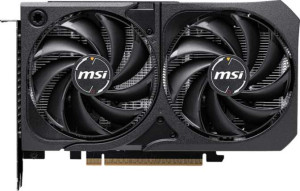
Feature parity is total between the MSI RTX 5060 Shadow 2X OC and the Palit RTX 5060 Infinity 3. Both carry DirectX 12 Ultimate support — the current gold standard for gaming APIs, enabling hardware-accelerated ray tracing, mesh shaders, and variable rate shading in compatible titles. Alongside this, DLSS support is a practically significant inclusion: NVIDIA's AI-driven upscaling allows both cards to render at lower internal resolutions and reconstruct higher-quality output frames, which meaningfully extends performance headroom in demanding games without sacrificing perceived image quality.
Ray tracing support on both cards fits the broader RTX 5060 positioning, though buyers should calibrate expectations — ray tracing at this tier is best paired with DLSS enabled to maintain playable frame rates. The shared support for up to 4 simultaneous displays and multi-display technology makes either card a viable choice for productivity multi-monitor setups, not just gaming rigs. Intel Resizable BAR is present on both, allowing the CPU to access the full GPU frame buffer simultaneously, which can yield minor but consistent performance gains in supported games and system configurations.
With every feature — API support, upscaling technology, ray tracing, display count, and platform compatibility — landing identically on both cards, this group is an unambiguous tie. Neither the MSI Shadow 2X OC nor the Palit Infinity 3 holds any feature-based advantage over the other.