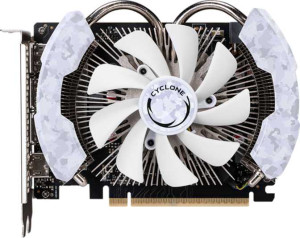
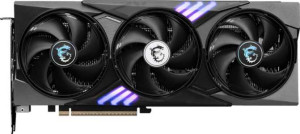
MSI GeForce RTX 5060 Ti Cyclone 8GB
MSI GeForce RTX 5060 Ti Gaming Trio 16GB

MSI GeForce RTX 5060 Ti Cyclone 8GB MSI GeForce RTX 5060 Ti Gaming Trio 16GB

Overview

Welcome to our in-depth comparison of the MSI GeForce RTX 5060 Ti Cyclone 8GB and the MSI GeForce RTX 5060 Ti Gaming Trio 16GB. Both cards share the same Blackwell architecture and identical core performance metrics, making the choice between them far from obvious. The real battlegrounds in this matchup are VRAM capacity, physical size, and aesthetics — factors that can significantly impact your build and workload suitability.

Common Features

  • Both products share the same GPU clock speed of 2407 MHz.
  • Both products share the same GPU turbo speed of 2572 MHz.
  • Both products deliver a pixel rate of 123.5 GPixel/s.
  • Both products offer a floating-point performance of 23.7 TFLOPS.
  • Both products share a texture rate of 370.4 GTexels/s.
  • Both products have a GPU memory speed of 1750 MHz.
  • Both products include 4608 shading units.
  • Both products include 144 texture mapping units (TMUs).
  • Both products have an effective memory speed of 28000 MHz.
  • Both products provide a maximum memory bandwidth of 448 GB/s.
  • Both products use GDDR7 memory.
  • Both products feature a 128-bit memory bus width.
  • ECC memory is supported on both products.
  • Both products support DirectX 12 Ultimate.
  • Both products support OpenGL version 4.6.
  • Both products support OpenCL version 3.
  • Multi-display technology is supported on both products.
  • Ray tracing is supported on both products.
  • 3D support is available on both products.
  • DLSS is supported on both products.
  • XeSS (XMX) is not available on either product.
  • Both products include one HDMI output running HDMI 2.1b.
  • Both products offer 3 DisplayPort outputs.
  • Neither product includes USB-C ports, DVI outputs, or mini DisplayPort outputs.
  • Both products are built on the Blackwell GPU architecture.
  • Both products have a Thermal Design Power (TDP) of 180W.
  • Both products use PCIe version 5.
  • Both products are manufactured on a 5 nm semiconductor process.
  • Both products feature 21900 million transistors.
  • Air-water cooling is not available on either product.
  • Both products share the same height of 125 mm.

Main Differences

  • VRAM is 8GB on MSI GeForce RTX 5060 Ti Cyclone 8GB and 16GB on MSI GeForce RTX 5060 Ti Gaming Trio 16GB.
  • RGB lighting is present on MSI GeForce RTX 5060 Ti Gaming Trio 16GB but not available on MSI GeForce RTX 5060 Ti Cyclone 8GB.
  • Width is 161 mm on MSI GeForce RTX 5060 Ti Cyclone 8GB and 300 mm on MSI GeForce RTX 5060 Ti Gaming Trio 16GB.
Specs Comparison
MSI GeForce RTX 5060 Ti Cyclone 8GB

MSI GeForce RTX 5060 Ti Cyclone 8GB

MSI GeForce RTX 5060 Ti Gaming Trio 16GB

MSI GeForce RTX 5060 Ti Gaming Trio 16GB

Performance:
GPU clock speed 2407 MHz 2407 MHz
GPU turbo 2572 MHz 2572 MHz
pixel rate 123.5 GPixel/s 123.5 GPixel/s
floating-point performance 23.7 TFLOPS 23.7 TFLOPS
texture rate 370.4 GTexels/s 370.4 GTexels/s
GPU memory speed 1750 MHz 1750 MHz
shading units 4608 4608
texture mapping units (TMUs) 144 144
render output units (ROPs) 48 48
Has Double Precision Floating Point (DPFP)

When it comes to raw GPU performance, the MSI RTX 5060 Ti Cyclone 8GB and the MSI RTX 5060 Ti Gaming Trio 16GB are built on an identical silicon foundation. Both cards share the exact same core configuration: 4608 shading units, 144 TMUs, and 48 ROPs, running at the same base and boost clocks of 2407 MHz / 2572 MHz. This translates to an identical 23.7 TFLOPS of floating-point throughput and a texture fill rate of 370.4 GTexels/s — figures that place both cards in the same performance tier for rasterization workloads.

The practical implication is significant: in GPU-bound scenarios such as gaming at high framerates or running compute tasks that stress the shader cores, both cards will deliver essentially the same results. The memory bus also operates at the same 1750 MHz speed, meaning raw memory bandwidth per transfer cycle is equal. Neither card has a clock speed advantage that would translate to a measurable performance delta in this category.

For the Performance group specifically, this is a clear tie. No advantage exists between the Cyclone 8GB and the Gaming Trio 16GB at the GPU compute level — the differentiation between these two models lies entirely outside of core performance metrics, in areas such as memory capacity, cooling design, or power delivery. A buyer choosing purely on processing power has no reason to favor one over the other.

Memory:
effective memory speed 28000 MHz 28000 MHz
maximum memory bandwidth 448 GB/s 448 GB/s
VRAM 8GB 16GB
GDDR version GDDR7 GDDR7
memory bus width 128-bit 128-bit
Supports ECC memory

The memory subsystem is where these two otherwise identical cards finally diverge in a meaningful way. Both the Cyclone 8GB and the Gaming Trio 16GB use GDDR7 memory running at an effective speed of 28000 MHz across a 128-bit bus, yielding the same peak bandwidth of 448 GB/s. That bandwidth figure is respectable for this bus width, largely thanks to GDDR7's efficiency gains over its predecessor. So in terms of how fast data moves between the GPU and its memory, both cards are perfectly equal.

Where the Gaming Trio 16GB pulls ahead is capacity: 16GB of VRAM versus 8GB on the Cyclone. This distinction matters more than it might seem at first glance. As game assets, texture packs, and AI-assisted rendering workloads grow in memory demand, the 8GB card can hit a ceiling where assets spill over into system RAM — a transition that causes significant performance drops. The 16GB card sidesteps this bottleneck entirely, offering a more future-proof headroom for high-resolution textures, large open-world environments, and multi-monitor setups.

The Gaming Trio 16GB holds a clear advantage in this category. Bandwidth and memory type being equal, the doubled VRAM capacity is the deciding factor — it directly extends the range of workloads the card can handle without performance degradation, making it the stronger choice for users pushing demanding titles or creative applications.

Features:
DirectX version DirectX 12 Ultimate DirectX 12 Ultimate
OpenGL version 4.6 4.6
OpenCL version 3 3
Supports multi-display technology
supports ray tracing
Supports 3D
supports DLSS
has XeSS (XMX)
AMD SAM / Intel Resizable BAR Intel Resizable BAR Intel Resizable BAR
has LHR
has RGB lighting
supported displays 4 4

Across the feature set that actually drives purchasing decisions — DirectX 12 Ultimate, ray tracing, DLSS, and support for up to 4 displays — the Cyclone 8GB and the Gaming Trio 16GB are functionally identical. Both benefit from Intel Resizable BAR for improved CPU-to-GPU data throughput, and neither carries an LHR limiter. For gamers and professionals evaluating software compatibility or API support, there is nothing to separate the two cards here.

The only concrete differentiator in this group is RGB lighting: the Gaming Trio 16GB includes it, while the Cyclone 8GB does not. This is purely an aesthetic feature with no bearing on rendering performance, compute capability, or display output. Its relevance depends entirely on whether the buyer is building a system where visual presentation inside the case matters.

On functional features, this is a tie. The Gaming Trio 16GB edges ahead only on aesthetics with its RGB lighting — a factor that is significant for some buyers and irrelevant for others. Users prioritizing a clean, no-frills build may actually prefer the Cyclone's absence of lighting, while those assembling a themed system will favor the Gaming Trio. Neither card has a meaningful technical advantage in this category.

Ports:
has an HDMI output
HDMI ports 1 1
HDMI version HDMI 2.1b HDMI 2.1b
DisplayPort outputs 3 3
USB-C ports 0 0
DVI outputs 0 0
mini DisplayPort outputs 0 0

Both the Cyclone 8GB and the Gaming Trio 16GB offer an identical port configuration: 1x HDMI 2.1b and 3x DisplayPort, totaling four outputs — which aligns with their shared support for up to four simultaneous displays noted in the Features group. The inclusion of HDMI 2.1b is noteworthy, as it supports the bandwidth required for 4K at high refresh rates and 8K output, making either card ready for current high-end display standards without the need for an adapter.

The absence of USB-C and legacy DVI outputs is consistent with where the market has moved — neither omission represents a practical disadvantage for the vast majority of users. The three DisplayPort outputs further reinforce multi-monitor utility, giving users flexible options for mixing display types across a workstation or gaming setup.

This category is a complete tie. Port layout and display connectivity are carbon copies across both cards, meaning display compatibility, multi-monitor potential, and output quality are identical regardless of which model a buyer chooses.

General info:
GPU architecture Blackwell Blackwell
release date June 2025 April 2025
Thermal Design Power (TDP) 180W 180W
PCI Express (PCIe) version 5 5
semiconductor size 5 nm 5 nm
number of transistors 21900 million 21900 million
Has air-water cooling
width 161 mm 300 mm
height 125 mm 125 mm

At the architectural level, these two cards are cut from the same cloth. Both are built on NVIDIA's Blackwell architecture using a 5nm process node with 21.9 billion transistors, and both carry a 180W TDP with PCIe 5.0 connectivity. This means power delivery requirements, motherboard compatibility, and thermal output are identical — a builder designing around either card faces the same system-level constraints.

The one specification that genuinely separates them in this group is physical size. The Cyclone 8GB measures just 161mm in length, while the Gaming Trio 16GB stretches to 300mm — nearly double the card length. This is a substantial real-world difference. The Cyclone's compact footprint makes it a strong candidate for smaller form-factor cases or builds where airflow space is limited, whereas the Gaming Trio's 300mm length demands a full-size ATX case with adequate GPU clearance and may conflict with certain drive cages or front-panel components.

For this group, the advantage depends entirely on the buyer's use case. The Gaming Trio 16GB's larger footprint likely accommodates a more expansive cooling solution, but the Cyclone 8GB holds a clear edge in build flexibility and case compatibility. Buyers working with compact or mid-tower cases should verify clearance carefully before choosing the Gaming Trio, while small-build enthusiasts will find the Cyclone a far more accommodating option.

Comparison Summary & Verdict

After examining the full specification breakdown, it is clear that both the MSI GeForce RTX 5060 Ti Cyclone 8GB and the MSI GeForce RTX 5060 Ti Gaming Trio 16GB deliver identical raw GPU performance, including the same clock speeds, TFLOPS rating, and memory bandwidth. The defining differences lie elsewhere. The Gaming Trio 16GB doubles the VRAM to 16GB and adds RGB lighting, making it the stronger pick for demanding workloads, high-resolution gaming, and users who value visual flair in their build. However, its 300 mm width demands a spacious case. The Cyclone 8GB, at a compact 161 mm wide, is the smarter choice for smaller form-factor builds where space is at a premium and 8GB of VRAM is sufficient for your needs.

MSI GeForce RTX 5060 Ti Cyclone 8GB
Buy MSI GeForce RTX 5060 Ti Cyclone 8GB if...

Buy the MSI GeForce RTX 5060 Ti Cyclone 8GB if you are building a compact system with limited case clearance and 8GB of VRAM meets your gaming or workload requirements.

MSI GeForce RTX 5060 Ti Gaming Trio 16GB
Buy MSI GeForce RTX 5060 Ti Gaming Trio 16GB if...

Buy the MSI GeForce RTX 5060 Ti Gaming Trio 16GB if you need the extra headroom of 16GB VRAM for demanding games or creative workloads and want RGB lighting to complement your build.