MSI GeForce RTX 5060 Ti Gaming 16GB
Palit GeForce RTX 5060 Ti Infinity 3 16GB

MSI GeForce RTX 5060 Ti Gaming 16GB Palit GeForce RTX 5060 Ti Infinity 3 16GB

Overview

Welcome to our in-depth spec comparison between the MSI GeForce RTX 5060 Ti Gaming 16GB and the Palit GeForce RTX 5060 Ti Infinity 3 16GB. Both cards are built on the same Blackwell architecture and share an identical core configuration, yet they diverge in areas like physical dimensions and RGB aesthetics that can genuinely influence a buying decision. Read on to discover which card fits your build best.

Common Features

  • Both cards have a base GPU clock speed of 2407 MHz.
  • Both cards have a GPU turbo clock speed of 2572 MHz.
  • Both cards deliver a pixel rate of 123.5 GPixel/s.
  • Both cards offer 23.7 TFLOPS of floating-point performance.
  • Both cards have a texture rate of 370.4 GTexels/s.
  • Both cards feature 4608 shading units.
  • Both cards include 144 texture mapping units (TMUs).
  • Both cards have a GPU memory speed of 1750 MHz.
  • Both cards use GDDR7 memory.
  • Both cards come with 16GB of VRAM.
  • Both cards have an effective memory speed of 28000 MHz.
  • Both cards provide a maximum memory bandwidth of 448 GB/s.
  • Both cards use a 128-bit memory bus width.
  • ECC memory support is available on both cards.
  • Both cards support DirectX 12 Ultimate.
  • Both cards support OpenGL version 4.6.
  • Both cards support OpenCL version 3.
  • Multi-display technology is supported on both cards.
  • Ray tracing support is available on both cards.
  • DLSS support is available on both cards.
  • XeSS (XMX) support is not available on either card.
  • 3D support is available on both cards.
  • Both cards feature one HDMI 2.1b output.
  • Both cards include three DisplayPort outputs.
  • Neither card has USB-C, DVI, or mini DisplayPort outputs.
  • Both cards are based on the Blackwell GPU architecture.
  • Both cards have a Thermal Design Power (TDP) of 180W.
  • Both cards use PCIe version 5.
  • Both cards are manufactured on a 5 nm semiconductor process.
  • Both cards contain 21900 million transistors.
  • Neither card features air-water cooling.

Main Differences

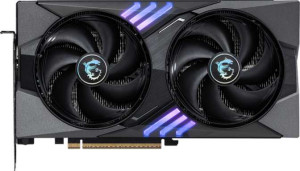
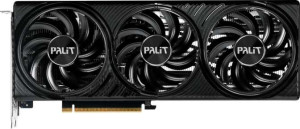
  • RGB lighting is present on the MSI GeForce RTX 5060 Ti Gaming 16GB but not available on the Palit GeForce RTX 5060 Ti Infinity 3 16GB.
  • Width is 247 mm on the MSI GeForce RTX 5060 Ti Gaming 16GB and 291.9 mm on the Palit GeForce RTX 5060 Ti Infinity 3 16GB.
  • Height is 135 mm on the MSI GeForce RTX 5060 Ti Gaming 16GB and 116.6 mm on the Palit GeForce RTX 5060 Ti Infinity 3 16GB.
Specs Comparison
MSI GeForce RTX 5060 Ti Gaming 16GB

MSI GeForce RTX 5060 Ti Gaming 16GB

Palit GeForce RTX 5060 Ti Infinity 3 16GB

Palit GeForce RTX 5060 Ti Infinity 3 16GB

Performance:
GPU clock speed 2407 MHz 2407 MHz
GPU turbo 2572 MHz 2572 MHz
pixel rate 123.5 GPixel/s 123.5 GPixel/s
floating-point performance 23.7 TFLOPS 23.7 TFLOPS
texture rate 370.4 GTexels/s 370.4 GTexels/s
GPU memory speed 1750 MHz 1750 MHz
shading units 4608 4608
texture mapping units (TMUs) 144 144
render output units (ROPs) 48 48
Has Double Precision Floating Point (DPFP)

In terms of raw performance, the MSI GeForce RTX 5060 Ti Gaming 16GB and the Palit GeForce RTX 5060 Ti Infinity 3 16GB are an exact match across every measurable metric in this group. Both cards share an identical base clock of 2407 MHz and a boost clock of 2572 MHz, meaning neither card has a factory overclock advantage out of the box. Their compute throughput — 23.7 TFLOPS of floating-point performance — and their fill rates (123.5 GPixel/s pixel rate and 370.4 GTexels/s texture rate) are perfectly aligned, pointing to the same underlying GPU silicon running at the same target frequencies.

Digging deeper into the shader architecture, both cards feature 4608 shading units, 144 TMUs, and 48 ROPs. This unit count directly influences how well the GPU handles parallel workloads, texture detail, and render output throughput in games and creative applications — and since they are identical, neither card gains any architectural edge. Memory speed is also locked at 1750 MHz on both, so bandwidth characteristics will behave the same under load. Both also support Double Precision Floating Point (DPFP), which is relevant for compute-oriented or scientific workloads, though less so for typical gaming scenarios.

The verdict for this group is a complete tie. Every single performance specification is identical between the two cards. Any real-world performance difference — if one exists — would have to come from factors outside these specs, such as cooling efficiency affecting sustained boost clocks under thermal pressure. For a purchasing decision based purely on performance metrics, neither card has an advantage here.

Memory:
effective memory speed 28000 MHz 28000 MHz
maximum memory bandwidth 448 GB/s 448 GB/s
VRAM 16GB 16GB
GDDR version GDDR7 GDDR7
memory bus width 128-bit 128-bit
Supports ECC memory

The memory configuration on both the MSI RTX 5060 Ti Gaming and the Palit RTX 5060 Ti Infinity 3 is built around GDDR7, the latest generation of graphics memory, running at an effective speed of 28000 MHz. This translates to a peak bandwidth of 448 GB/s — a figure that matters greatly in bandwidth-hungry scenarios like high-resolution texture streaming, ray tracing, and AI-accelerated workloads. For a mid-range card operating on a 128-bit bus, GDDR7 is what makes that bandwidth figure competitive; the same bus width with older GDDR6X would yield considerably less throughput.

Both cards carry 16GB of VRAM, which is a meaningful amount at this performance tier. It provides comfortable headroom for modern titles with high-resolution texture packs, and gives creators using the GPU for inference or light compute tasks a usable working set. The shared support for ECC memory is a notable inclusion — error-correcting memory is typically associated with professional or workstation cards, and its presence here adds a degree of data integrity assurance for compute-oriented use cases, even if most gamers will never need it.

Much like the performance group, this is a complete tie. Every memory specification — capacity, speed, bandwidth, bus width, memory type, and ECC support — is identical across both cards. The memory subsystem will behave indistinguishably between the two in any real-world workload, so this category offers no basis for choosing one over the other.
Features:
DirectX version DirectX 12 Ultimate DirectX 12 Ultimate
OpenGL version 4.6 4.6
OpenCL version 3 3
Supports multi-display technology
supports ray tracing
Supports 3D
supports DLSS
has XeSS (XMX)
AMD SAM / Intel Resizable BAR Intel Resizable BAR Intel Resizable BAR
has LHR
has RGB lighting
supported displays 4 4

Functionally, these two cards are nearly inseparable. Both support DirectX 12 Ultimate, ray tracing, and DLSS — the three pillars of modern NVIDIA feature support that matter most to gamers. DirectX 12 Ultimate ensures compatibility with the full suite of current-gen rendering features, while DLSS provides AI-driven upscaling that can meaningfully boost frame rates with minimal visual cost. Support for up to 4 simultaneous displays and multi-display technology rounds out a feature set that covers everything from competitive gaming to productivity multi-monitor setups.

The one concrete differentiator in this group is RGB lighting: the MSI RTX 5060 Ti Gaming includes it, while the Palit RTX 5060 Ti Infinity 3 does not. This has no bearing on gaming or compute performance whatsoever, but it is a relevant consideration for builders who care about aesthetics or system theme consistency. For those building a visually coordinated rig, the MSI card offers that flexibility; for those indifferent to lighting, the absence on the Palit is a non-issue.

Based strictly on the provided specs, the MSI RTX 5060 Ti Gaming holds a narrow edge in this group solely due to its RGB lighting support. Every other feature — software API support, upscaling, ray tracing, display count — is identical. The edge is purely cosmetic, so buyers who have no interest in RGB will find both cards equally matched here.

Ports:
has an HDMI output
HDMI ports 1 1
HDMI version HDMI 2.1b HDMI 2.1b
DisplayPort outputs 3 3
USB-C ports 0 0
DVI outputs 0 0
mini DisplayPort outputs 0 0

Both the MSI RTX 5060 Ti Gaming and the Palit RTX 5060 Ti Infinity 3 offer the same port layout: 3 DisplayPort outputs and 1 HDMI 2.1b port, totaling four display connections — consistent with the four-display limit noted in the Features group. This configuration is well-suited for the vast majority of users, whether running a single high-refresh-rate monitor or a multi-display setup.

The HDMI version deserves attention here. HDMI 2.1b is the latest revision of the standard, supporting very high bandwidth that accommodates 4K at high refresh rates and 8K output — relevant for users connecting to modern televisions or high-end monitors over HDMI. The three DisplayPort outputs, meanwhile, make it straightforward to drive a triple-monitor gaming or productivity arrangement without adapters. The absence of USB-C and legacy DVI is unremarkable at this tier, as both have largely exited mainstream GPU design.

This group is a complete tie. The port selection, count, and specifications are identical on both cards down to the HDMI version. Connectivity will not be a differentiating factor between these two products for any user.

General info:
GPU architecture Blackwell Blackwell
release date April 2025 April 2025
Thermal Design Power (TDP) 180W 180W
PCI Express (PCIe) version 5 5
semiconductor size 5 nm 5 nm
number of transistors 21900 million 21900 million
Has air-water cooling
width 247 mm 291.9 mm
height 135 mm 116.6 mm

At their core, these two cards are built on identical foundations. Both use NVIDIA's Blackwell architecture on a 5nm process node, packing 21,900 million transistors into the die. They share the same 180W TDP and connect via PCIe 5.0, meaning power delivery requirements and motherboard compatibility are the same across both. For system builders, this translates to no surprises: the same PSU headroom and the same slot compatibility apply to either card.

Where these cards diverge is in their physical dimensions. The MSI RTX 5060 Ti Gaming measures 247 mm long and 135 mm tall, while the Palit RTX 5060 Ti Infinity 3 is notably longer at 291.9 mm but shorter in height at 116.6 mm. In practical terms, the Palit card demands more clearance along the length of the case — nearly 45mm more — which could be a real constraint in compact or mid-tower builds with drive cages or other obstructions near the PCIe slot. The MSI card, being shorter in length, is the more accommodating choice for tighter chassis. Conversely, the Palit's reduced height may offer slightly better clearance in cases with low-profile restrictions near the motherboard edge.

For this group, the MSI RTX 5060 Ti Gaming has a practical edge for case compatibility due to its shorter length, which is typically the more limiting dimension in most standard ATX and mATX builds. All other general specifications — architecture, TDP, process node, and interface — are a complete tie. Buyers with a spacious full-tower have nothing to consider here, but those working with a smaller build should measure carefully before committing to the Palit.

Comparison Summary & Verdict

After a thorough comparison, it is clear that the MSI GeForce RTX 5060 Ti Gaming 16GB and the Palit GeForce RTX 5060 Ti Infinity 3 16GB are essentially equal in every performance and feature metric that matters most, sharing identical clock speeds, 16GB GDDR7 memory, a 180W TDP, and full support for ray tracing and DLSS. The real differentiators come down to form and style. The MSI card is notably more compact in width at 247 mm, making it the stronger candidate for smaller chassis builds, and it adds RGB lighting for those who value aesthetics. The Palit card, at 291.9 mm wide but only 116.6 mm tall, suits cases where vertical clearance is tight but horizontal space is available. Choose based on your case dimensions and personal preference for lighting rather than any performance consideration.

MSI GeForce RTX 5060 Ti Gaming 16GB
Buy MSI GeForce RTX 5060 Ti Gaming 16GB if...

Buy the MSI GeForce RTX 5060 Ti Gaming 16GB if you want a more compact card in terms of width and appreciate RGB lighting to complement your build aesthetics.

Palit GeForce RTX 5060 Ti Infinity 3 16GB
Buy Palit GeForce RTX 5060 Ti Infinity 3 16GB if...

Buy the Palit GeForce RTX 5060 Ti Infinity 3 16GB if your case has limited vertical clearance and you have no need for RGB lighting on your GPU.