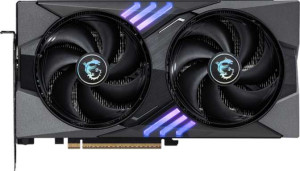
MSI GeForce RTX 5060 Ti Gaming OC 16GB
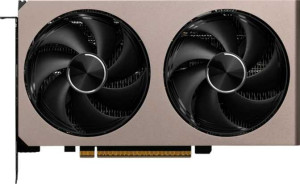
MSI GeForce RTX 5060 Ti Inspire 2X OC 16GB

MSI GeForce RTX 5060 Ti Gaming OC 16GB MSI GeForce RTX 5060 Ti Inspire 2X OC 16GB

Overview

Welcome to this detailed specification face-off between the MSI GeForce RTX 5060 Ti Gaming OC 16GB and the MSI GeForce RTX 5060 Ti Inspire 2X OC 16GB. Both cards share the same Blackwell architecture, 16GB of GDDR7 memory, and a 180W TDP, yet they differ in key areas such as GPU turbo clock speeds, raw performance figures, physical dimensions, and aesthetics. Read on to find out which of these two cards best suits your needs.

Common Features

  • Both products have a base GPU clock speed of 2407 MHz.
  • Both products have a GPU memory speed of 1750 MHz.
  • Both products feature 4608 shading units.
  • Both products have 144 texture mapping units (TMUs).
  • Both products have 48 render output units (ROPs).
  • Double Precision Floating Point (DPFP) is supported on both products.
  • Both products have an effective memory speed of 28000 MHz.
  • Both products offer a maximum memory bandwidth of 448 GB/s.
  • Both products come with 16GB of VRAM.
  • Both products use GDDR7 memory.
  • Both products have a 128-bit memory bus width.
  • ECC memory is supported on both products.
  • Both products support DirectX 12 Ultimate.
  • Both products support OpenGL version 4.6.
  • Both products support OpenCL version 3.
  • Multi-display technology is supported on both products.
  • Ray tracing is supported on both products.
  • DLSS is supported on both products.
  • 3D support is available on both products.
  • XeSS (XMX) support is not available on either product.
  • Both products include one HDMI 2.1b output.
  • Both products have three DisplayPort outputs and no USB-C, DVI, or mini DisplayPort outputs.
  • Both products are built on the Blackwell GPU architecture.
  • Both products have a Thermal Design Power (TDP) of 180W.
  • Both products use PCIe version 5.
  • Both products are manufactured on a 5 nm semiconductor process.
  • Both products contain 21900 million transistors.
  • Air-water cooling is not available on either product.

Main Differences

  • GPU turbo clock speed is 2647 MHz on the MSI GeForce RTX 5060 Ti Gaming OC 16GB and 2617 MHz on the MSI GeForce RTX 5060 Ti Inspire 2X OC 16GB.
  • Pixel rate is 127.1 GPixel/s on the MSI GeForce RTX 5060 Ti Gaming OC 16GB and 125.6 GPixel/s on the MSI GeForce RTX 5060 Ti Inspire 2X OC 16GB.
  • Floating-point performance is 24.39 TFLOPS on the MSI GeForce RTX 5060 Ti Gaming OC 16GB and 24.12 TFLOPS on the MSI GeForce RTX 5060 Ti Inspire 2X OC 16GB.
  • Texture rate is 381.2 GTexels/s on the MSI GeForce RTX 5060 Ti Gaming OC 16GB and 376.8 GTexels/s on the MSI GeForce RTX 5060 Ti Inspire 2X OC 16GB.
  • RGB lighting is present on the MSI GeForce RTX 5060 Ti Gaming OC 16GB but not available on the MSI GeForce RTX 5060 Ti Inspire 2X OC 16GB.
  • Width is 247 mm on the MSI GeForce RTX 5060 Ti Gaming OC 16GB and 204 mm on the MSI GeForce RTX 5060 Ti Inspire 2X OC 16GB.
  • Height is 135 mm on the MSI GeForce RTX 5060 Ti Gaming OC 16GB and 117 mm on the MSI GeForce RTX 5060 Ti Inspire 2X OC 16GB.
Specs Comparison
MSI GeForce RTX 5060 Ti Gaming OC 16GB

MSI GeForce RTX 5060 Ti Gaming OC 16GB

MSI GeForce RTX 5060 Ti Inspire 2X OC 16GB

MSI GeForce RTX 5060 Ti Inspire 2X OC 16GB

Performance:
GPU clock speed 2407 MHz 2407 MHz
GPU turbo 2647 MHz 2617 MHz
pixel rate 127.1 GPixel/s 125.6 GPixel/s
floating-point performance 24.39 TFLOPS 24.12 TFLOPS
texture rate 381.2 GTexels/s 376.8 GTexels/s
GPU memory speed 1750 MHz 1750 MHz
shading units 4608 4608
texture mapping units (TMUs) 144 144
render output units (ROPs) 48 48
Has Double Precision Floating Point (DPFP)

At their core, the MSI RTX 5060 Ti Gaming OC and the MSI RTX 5060 Ti Inspire 2X OC share identical architectural foundations: the same 2407 MHz base clock, 4608 shading units, 144 TMUs, 48 ROPs, and 1750 MHz memory speed. This means the vast majority of their compute pipeline is equivalent, and both support Double Precision Floating Point — a feature relevant for GPU-accelerated workloads beyond gaming.

The only performance differentiator lies in the GPU boost clock. The Gaming OC reaches a turbo of 2647 MHz versus the Inspire 2X OC's 2617 MHz — a 30 MHz gap. This translates directly into the downstream metrics: the Gaming OC edges ahead with 24.39 TFLOPS of floating-point throughput versus 24.12 TFLOPS, a 381.2 GTexels/s texture rate versus 376.8 GTexels/s, and a 127.1 GPixel/s pixel rate versus 125.6 GPixel/s. In practice, these are roughly 1–1.1% differences — imperceptible in real-world frame rates and unlikely to be measurable outside of a controlled benchmark.

The Gaming OC holds a technical edge in this group strictly by the numbers, courtesy of its slightly higher factory boost clock. However, the margin is so slim that it will have no meaningful impact on gaming or compute performance in day-to-day use. Buyers should weigh other factors — cooling design, acoustics, price, and form factor — far more heavily than this negligible performance delta when choosing between the two.

Memory:
effective memory speed 28000 MHz 28000 MHz
maximum memory bandwidth 448 GB/s 448 GB/s
VRAM 16GB 16GB
GDDR version GDDR7 GDDR7
memory bus width 128-bit 128-bit
Supports ECC memory

When it comes to memory, these two cards are carbon copies of each other. Both the Gaming OC and the Inspire 2X OC are equipped with 16GB of GDDR7 VRAM running at an effective 28000 MHz across a 128-bit bus, delivering 448 GB/s of memory bandwidth. There is not a single differentiating data point in this entire category.

That said, the specs themselves tell an interesting story about where this GPU sits in the market. GDDR7 is a meaningful generational leap over GDDR6X — it achieves that 448 GB/s bandwidth figure despite the relatively narrow 128-bit bus, a bus width that on previous generations would have been a notable bottleneck. This matters for texture-heavy workloads, high-resolution gaming, and AI inference tasks where VRAM throughput directly affects performance. The 16GB capacity also positions both cards comfortably for 1440p and even entry-level 4K workloads, as well as locally-run AI models that are increasingly VRAM-hungry. ECC memory support is a bonus for users doing GPU compute or professional workloads where data integrity matters.

This group is a complete tie. Memory configuration is clearly determined at the GPU model level here, not by MSI's individual board variants. No buyer should factor memory specs into their decision between these two cards — they are identical in every measurable way.

Features:
DirectX version DirectX 12 Ultimate DirectX 12 Ultimate
OpenGL version 4.6 4.6
OpenCL version 3 3
Supports multi-display technology
supports ray tracing
Supports 3D
supports DLSS
has XeSS (XMX)
AMD SAM / Intel Resizable BAR Intel Resizable BAR Intel Resizable BAR
has LHR
has RGB lighting
supported displays 4 4

Functionally, the Gaming OC and the Inspire 2X OC are feature-identical where it counts most. Both support DirectX 12 Ultimate and ray tracing, which are the foundational requirements for modern visually-demanding titles. DLSS support is present on both, enabling AI-driven upscaling that can significantly boost frame rates with minimal visual quality trade-off — a particularly valuable feature at this performance tier. Multi-display support across up to 4 simultaneous outputs and Intel Resizable BAR compatibility round out a strong shared feature set.

The sole differentiator in this group is RGB lighting: the Gaming OC includes it, the Inspire 2X OC does not. This is purely an aesthetic consideration with zero impact on gaming performance, thermals, or compatibility. For builders who invest in a themed or illuminated system, the Gaming OC's RGB integration may matter; for those who prioritize a cleaner or more understated look — or simply don't care — the Inspire 2X OC's omission of RGB is a non-issue.

The Gaming OC has the technical edge in this group by virtue of its RGB lighting, though calling it an ″advantage″ depends entirely on personal preference. Anyone building an aesthetically coordinated RGB setup will favor the Gaming OC; everyone else can treat this category as a tie.

Ports:
has an HDMI output
HDMI ports 1 1
HDMI version HDMI 2.1b HDMI 2.1b
DisplayPort outputs 3 3
USB-C ports 0 0
DVI outputs 0 0
mini DisplayPort outputs 0 0

Port configuration is identical across both cards. Each offers 3 DisplayPort outputs and 1 HDMI 2.1b port, totalling four display connections — consistent with the four-display limit noted in the Features group. Neither card includes USB-C, DVI, or mini DisplayPort outputs.

The specs that matter most here are the versions, not just the counts. HDMI 2.1b supports up to 10K resolution and high refresh rates at 4K, making it future-proof for next-generation displays and living-room setups. The DisplayPort outputs, while their version is not explicitly stated in the provided data, paired with the card's overall spec tier, make this a well-equipped connectivity suite for multi-monitor workstations or high-refresh gaming displays.

This group is a complete tie. Port layout and display connectivity are determined at the GPU model level, and MSI has made no distinction whatsoever between the Gaming OC and the Inspire 2X OC here. Connectivity should play no role in choosing between these two cards.

General info:
GPU architecture Blackwell Blackwell
release date April 2025 April 2025
Thermal Design Power (TDP) 180W 180W
PCI Express (PCIe) version 5 5
semiconductor size 5 nm 5 nm
number of transistors 21900 million 21900 million
Has air-water cooling
width 247 mm 204 mm
height 135 mm 117 mm

The MSI GeForce RTX 5060 Ti Gaming OC 16GB and MSI GeForce RTX 5060 Ti Inspire 2X OC 16GB are built on the same GPU architecture, Blackwell, and feature identical thermal design power (TDP) of 180W. Both cards use the same PCI Express (PCIe) version 5 and have a semiconductor size of 5 nm, with 21,900 million transistors. Neither card includes air-water cooling, making them rely on traditional cooling solutions.

The primary difference between the two models lies in their physical dimensions. The Gaming OC is larger, measuring 247 mm in width and 135 mm in height, while the Inspire 2X OC is more compact, with a width of 204 mm and a height of 117 mm. Despite these size differences, both cards share the same core specifications in terms of architecture, power consumption, and manufacturing process.

Comparison Summary & Verdict

After examining every specification, it is clear that both cards are closely matched at their core, sharing the same 16GB GDDR7 memory, 128-bit bus, 448 GB/s bandwidth, and identical port configurations. Where they diverge is telling: the MSI GeForce RTX 5060 Ti Gaming OC 16GB pulls ahead with a higher GPU turbo clock of 2647 MHz, a pixel rate of 127.1 GPixel/s, 24.39 TFLOPS, and adds RGB lighting, making it the stronger choice for enthusiasts who want every last drop of performance and a more striking visual presence. The MSI GeForce RTX 5060 Ti Inspire 2X OC 16GB, being notably more compact at 204 x 117 mm versus 247 x 135 mm, is the smarter pick for builders working with smaller cases or tighter clearances, while still delivering very competitive performance at 2617 MHz turbo and 24.12 TFLOPS.

MSI GeForce RTX 5060 Ti Gaming OC 16GB
Buy MSI GeForce RTX 5060 Ti Gaming OC 16GB if...

Buy the MSI GeForce RTX 5060 Ti Gaming OC 16GB if you want the highest turbo clock speed, peak floating-point performance, and RGB lighting in your build.

MSI GeForce RTX 5060 Ti Inspire 2X OC 16GB
Buy MSI GeForce RTX 5060 Ti Inspire 2X OC 16GB if...

Buy the MSI GeForce RTX 5060 Ti Inspire 2X OC 16GB if you need a more compact card that fits smaller cases, without sacrificing the same core memory and connectivity features.