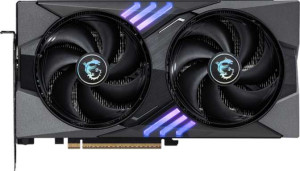
MSI GeForce RTX 5060 Ti Gaming OC 16GB
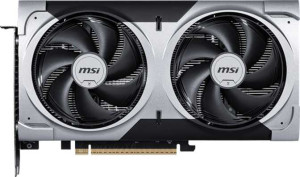
MSI GeForce RTX 5060 Ti Ventus 2X Plus 16GB

MSI GeForce RTX 5060 Ti Gaming OC 16GB MSI GeForce RTX 5060 Ti Ventus 2X Plus 16GB

Overview

Welcome to our in-depth specification comparison between the MSI GeForce RTX 5060 Ti Gaming OC 16GB and the MSI GeForce RTX 5060 Ti Ventus 2X Plus 16GB. Both cards share the same Blackwell architecture and 16GB of GDDR7 memory, yet they differ in areas that matter to different buyers — including GPU boost clocks, overall compute performance, physical dimensions, and aesthetic features. Read on to find out which of these two RTX 5060 Ti variants best fits your needs.

Common Features

  • Both cards share a base GPU clock speed of 2407 MHz.
  • Both cards have a GPU memory speed of 1750 MHz.
  • Both cards feature 4608 shading units.
  • Both cards have 144 texture mapping units (TMUs).
  • Both cards have 48 render output units (ROPs).
  • Double Precision Floating Point (DPFP) is supported on both cards.
  • Both cards have an effective memory speed of 28000 MHz.
  • Both cards offer a maximum memory bandwidth of 448 GB/s.
  • Both cards come with 16GB of VRAM.
  • Both cards use GDDR7 memory.
  • Both cards have a 128-bit memory bus width.
  • ECC memory support is available on both cards.
  • Both cards support DirectX 12 Ultimate.
  • Both cards support OpenGL version 4.6.
  • Both cards support OpenCL version 3.
  • Multi-display technology is supported on both cards.
  • Ray tracing is supported on both cards.
  • 3D support is available on both cards.
  • DLSS support is available on both cards.
  • XeSS (XMX) support is not available on either card.
  • Both cards include one HDMI 2.1b output.
  • Both cards feature three DisplayPort outputs.
  • Neither card has USB-C or DVI outputs.
  • Both cards are based on the Blackwell GPU architecture.
  • Both cards have a Thermal Design Power (TDP) of 180W.
  • Both cards use PCIe version 5.
  • Both cards are manufactured on a 5 nm semiconductor process.
  • Both cards contain 21900 million transistors.
  • Neither card features air-water cooling.

Main Differences

  • GPU turbo clock is 2647 MHz on MSI GeForce RTX 5060 Ti Gaming OC 16GB and 2572 MHz on MSI GeForce RTX 5060 Ti Ventus 2X Plus 16GB.
  • Pixel rate is 127.1 GPixel/s on MSI GeForce RTX 5060 Ti Gaming OC 16GB and 123.5 GPixel/s on MSI GeForce RTX 5060 Ti Ventus 2X Plus 16GB.
  • Floating-point performance is 24.39 TFLOPS on MSI GeForce RTX 5060 Ti Gaming OC 16GB and 23.7 TFLOPS on MSI GeForce RTX 5060 Ti Ventus 2X Plus 16GB.
  • Texture rate is 381.2 GTexels/s on MSI GeForce RTX 5060 Ti Gaming OC 16GB and 370.4 GTexels/s on MSI GeForce RTX 5060 Ti Ventus 2X Plus 16GB.
  • RGB lighting is present on MSI GeForce RTX 5060 Ti Gaming OC 16GB but not available on MSI GeForce RTX 5060 Ti Ventus 2X Plus 16GB.
  • Width is 247 mm on MSI GeForce RTX 5060 Ti Gaming OC 16GB and 227 mm on MSI GeForce RTX 5060 Ti Ventus 2X Plus 16GB.
  • Height is 135 mm on MSI GeForce RTX 5060 Ti Gaming OC 16GB and 127 mm on MSI GeForce RTX 5060 Ti Ventus 2X Plus 16GB.
Specs Comparison
MSI GeForce RTX 5060 Ti Gaming OC 16GB

MSI GeForce RTX 5060 Ti Gaming OC 16GB

MSI GeForce RTX 5060 Ti Ventus 2X Plus 16GB

MSI GeForce RTX 5060 Ti Ventus 2X Plus 16GB

Performance:
GPU clock speed 2407 MHz 2407 MHz
GPU turbo 2647 MHz 2572 MHz
pixel rate 127.1 GPixel/s 123.5 GPixel/s
floating-point performance 24.39 TFLOPS 23.7 TFLOPS
texture rate 381.2 GTexels/s 370.4 GTexels/s
GPU memory speed 1750 MHz 1750 MHz
shading units 4608 4608
texture mapping units (TMUs) 144 144
render output units (ROPs) 48 48
Has Double Precision Floating Point (DPFP)

At their core, both the Gaming OC and the Ventus 2X Plus share identical silicon foundations: the same 4608 shading units, 144 TMUs, 48 ROPs, and a base clock of 2407 MHz. This means neither card has a structural hardware advantage — any performance gap between them comes down entirely to how aggressively each is factory-overclocked.

That gap is real, though modest. The Gaming OC boosts to 2647 MHz versus the Ventus 2X Plus's 2572 MHz — a difference of 75 MHz, or roughly 3%. This flows directly into every throughput metric: the Gaming OC delivers 24.39 TFLOPS of floating-point performance against 23.7 TFLOPS, a 127.1 GPixel/s pixel fill rate versus 123.5 GPixel/s, and a texture rate of 381.2 GTexels/s compared to 370.4 GTexels/s. In practice, a ~3% clock advantage translates to frame rates that are statistically indistinguishable in most titles — you are unlikely to feel it without a benchmark tool.

The Gaming OC holds a clear, if narrow, performance edge in this group purely on the strength of its higher factory boost clock. For users who want every last MHz out of the box without manual overclocking, it is the logical choice. However, given that both cards share the same memory subsystem speed (1750 MHz) and the same shader/ROP configuration, the Ventus 2X Plus is essentially the same GPU running at a slightly more conservative target — making the real-world delta between them negligible for the vast majority of workloads.
Memory:
effective memory speed 28000 MHz 28000 MHz
maximum memory bandwidth 448 GB/s 448 GB/s
VRAM 16GB 16GB
GDDR version GDDR7 GDDR7
memory bus width 128-bit 128-bit
Supports ECC memory

Memory is one area where neither card holds any advantage whatsoever — every single specification is a perfect match. Both carry 16GB of GDDR7 running at an effective 28000 MHz across a 128-bit bus, yielding 448 GB/s of bandwidth. This is a complete tie, by design: MSI uses the same memory configuration on both cards because they are built on the same PCB and silicon.

The specs themselves tell an important story about where this GPU generation sits. GDDR7 is a significant generational leap over GDDR6X, and the 448 GB/s bandwidth figure punches well above what a 128-bit bus traditionally delivered in prior generations — historically, that bus width would be considered a constraint, but GDDR7's speed largely compensates. The 16GB frame buffer is also a meaningful step up for a mid-range card, providing headroom for high-resolution texture packs, AI-accelerated workloads, and future titles with increasingly aggressive VRAM demands.

Since every memory specification is identical across both products, this group is a complete tie. Whichever card you choose, you get exactly the same memory subsystem, the same bandwidth ceiling, and the same VRAM capacity. Memory performance will not be a differentiating factor between the Gaming OC and the Ventus 2X Plus under any workload.

Features:
DirectX version DirectX 12 Ultimate DirectX 12 Ultimate
OpenGL version 4.6 4.6
OpenCL version 3 3
Supports multi-display technology
supports ray tracing
Supports 3D
supports DLSS
has XeSS (XMX)
AMD SAM / Intel Resizable BAR Intel Resizable BAR Intel Resizable BAR
has LHR
has RGB lighting
supported displays 4 4

Functionally, these two cards are virtually identical in this category. Both support DirectX 12 Ultimate, ray tracing, and DLSS — the three pillars that define a modern NVIDIA gaming GPU's feature set. Ray tracing enables real-time lighting and shadow fidelity in supported titles, while DLSS uses AI upscaling to recover frame rates lost to that added workload. Intel Resizable BAR support is also shared, allowing the CPU to access the full GPU frame buffer simultaneously, which can yield measurable performance gains in compatible systems. None of these features distinguish one card from the other.

The sole differentiator in this group is RGB lighting: the Gaming OC includes it, the Ventus 2X Plus does not. This is purely an aesthetic consideration with zero impact on rendering performance or compatibility. For builders assembling a themed system or a windowed case where visual cohesion matters, the Gaming OC's RGB gives it an advantage. For those indifferent to lighting — or who actively prefer a cleaner, understated look — the Ventus 2X Plus's omission of RGB is a non-issue.

On functional features alone, this group is a complete tie. The Gaming OC has a marginal edge only if RGB lighting matters to the buyer; otherwise, both cards deliver an identical software and API feature set across gaming, compute, and multi-display use cases.

Ports:
has an HDMI output
HDMI ports 1 1
HDMI version HDMI 2.1b HDMI 2.1b
DisplayPort outputs 3 3
USB-C ports 0 0
DVI outputs 0 0
mini DisplayPort outputs 0 0

Port selection is identical across both cards: one HDMI 2.1b output and three DisplayPort outputs, for a total of four simultaneous display connections — which aligns with the four supported displays noted in their feature specs. The absence of USB-C and legacy DVI outputs is consistent with where the industry has moved, and neither card bucks that trend.

The version details here matter more than the port count. HDMI 2.1b is the latest revision of the standard, supporting up to 10K resolution, high frame rate output at 4K, and features like Variable Refresh Rate — relevant for anyone connecting to a modern TV or high-end monitor via HDMI. The three DisplayPort outputs provide flexibility for multi-monitor productivity setups or high-refresh gaming arrays without needing adapters.

This group is a complete tie — every port, version, and count is mirrored exactly between the Gaming OC and the Ventus 2X Plus. Display connectivity will not factor into a purchasing decision between these two cards in any way.

General info:
GPU architecture Blackwell Blackwell
release date April 2025 April 2025
Thermal Design Power (TDP) 180W 180W
PCI Express (PCIe) version 5 5
semiconductor size 5 nm 5 nm
number of transistors 21900 million 21900 million
Has air-water cooling
width 247 mm 227 mm
height 135 mm 127 mm

Underneath, both cards are the same chip: NVIDIA's Blackwell architecture, fabbed on a 5nm process with 21.9 billion transistors, running at an identical 180W TDP over PCIe 5.0. The shared power envelope is worth noting — 180W is a relatively efficient target for a card at this performance tier, and since both models draw the same amount, neither will stress a system's power delivery more than the other.

Where they diverge is physical footprint. The Gaming OC measures 247 × 135 mm while the Ventus 2X Plus is noticeably more compact at 227 × 127 mm — a difference of 20mm in length and 8mm in height. That 20mm length gap is practically significant: in smaller mid-tower or micro-ATX builds where clearance between the GPU and front fans or drive cages is tight, the Ventus 2X Plus is simply the easier card to fit. The Gaming OC's larger dimensions are likely a consequence of its more elaborate cooling solution, which ties back to its higher factory overclock.

For this group, the Ventus 2X Plus holds a clear advantage for space-constrained builds, while the Gaming OC demands more case real estate. Users in full-tower systems with ample room will find this a non-issue, but for compact builds, the Ventus 2X Plus's smaller footprint is a genuine, practical benefit — and it achieves this while drawing the exact same power from the same underlying silicon.

Comparison Summary & Verdict

After examining every specification, it is clear that both cards are built on the same strong foundation: identical 16GB GDDR7 memory, a 128-bit bus, 448 GB/s bandwidth, and full support for ray tracing and DLSS. The key differentiator lies in performance headroom and presentation. The MSI GeForce RTX 5060 Ti Gaming OC 16GB pulls ahead with a higher GPU turbo clock of 2647 MHz, 24.39 TFLOPS of floating-point performance, and RGB lighting, making it the stronger choice for enthusiasts who want every last frame and a visually striking build. The MSI GeForce RTX 5060 Ti Ventus 2X Plus 16GB, on the other hand, offers a more compact and understated design at 227 mm wide, making it ideal for smaller cases or budget-conscious buyers who do not need the extra clock speed margin or lighting effects.

MSI GeForce RTX 5060 Ti Gaming OC 16GB
Buy MSI GeForce RTX 5060 Ti Gaming OC 16GB if...

Buy the MSI GeForce RTX 5060 Ti Gaming OC 16GB if you want the highest boost clock speed and floating-point performance of the two, and you appreciate RGB lighting in your build.

MSI GeForce RTX 5060 Ti Ventus 2X Plus 16GB
Buy MSI GeForce RTX 5060 Ti Ventus 2X Plus 16GB if...

Buy the MSI GeForce RTX 5060 Ti Ventus 2X Plus 16GB if you need a more compact card that fits tighter cases, and you have no need for RGB lighting or the extra performance headroom of the OC model.