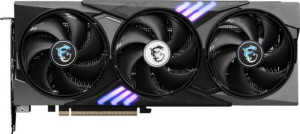
MSI GeForce RTX 5060 Ti Gaming Trio OC 16GB
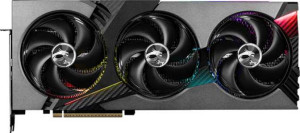
MSI GeForce RTX 5060 Ti Vanguard SOC 16GB

MSI GeForce RTX 5060 Ti Gaming Trio OC 16GB MSI GeForce RTX 5060 Ti Vanguard SOC 16GB

Overview

When choosing between the MSI GeForce RTX 5060 Ti Gaming Trio OC 16GB and the MSI GeForce RTX 5060 Ti Vanguard SOC 16GB, both cards share the same Blackwell architecture, 16GB of GDDR7 memory, and a 180W TDP — making the decision come down to finer details. In this comparison, we examine the key battlegrounds of GPU boost clock performance and physical card dimensions to help you determine the right fit for your build.

Common Features

  • Both cards share a base GPU clock speed of 2407 MHz.
  • Both cards have a GPU memory speed of 1750 MHz.
  • Both cards feature 4608 shading units.
  • Both cards have 144 texture mapping units (TMUs).
  • Both cards have 48 render output units (ROPs).
  • Double Precision Floating Point (DPFP) is supported on both cards.
  • Both cards have an effective memory speed of 28000 MHz.
  • Both cards offer a maximum memory bandwidth of 448 GB/s.
  • Both cards come with 16GB of VRAM.
  • Both cards use GDDR7 memory.
  • Both cards have a 128-bit memory bus width.
  • ECC memory is supported on both cards.
  • Both cards support DirectX 12 Ultimate.
  • Both cards support OpenGL version 4.6.
  • Both cards support OpenCL version 3.
  • Multi-display technology is supported on both cards.
  • Ray tracing is supported on both cards.
  • DLSS is supported on both cards.
  • 3D support is available on both cards.
  • XeSS (XMX) support is not available on either card.
  • Both cards have one HDMI 2.1b output.
  • Both cards feature three DisplayPort outputs.
  • Neither card has USB-C or DVI outputs.
  • Both cards are based on the Blackwell GPU architecture.
  • Both cards have a Thermal Design Power (TDP) of 180W.
  • Both cards use PCIe version 5.
  • Both cards are manufactured on a 5 nm semiconductor process.
  • Both cards contain 21900 million transistors.
  • Air-water cooling is not available on either card.

Main Differences

  • GPU turbo clock speed is 2647 MHz on the MSI GeForce RTX 5060 Ti Gaming Trio OC 16GB and 2692 MHz on the MSI GeForce RTX 5060 Ti Vanguard SOC 16GB.
  • Pixel rate is 127.1 GPixel/s on the MSI GeForce RTX 5060 Ti Gaming Trio OC 16GB and 129.2 GPixel/s on the MSI GeForce RTX 5060 Ti Vanguard SOC 16GB.
  • Floating-point performance is 24.39 TFLOPS on the MSI GeForce RTX 5060 Ti Gaming Trio OC 16GB and 24.81 TFLOPS on the MSI GeForce RTX 5060 Ti Vanguard SOC 16GB.
  • Texture rate is 381.2 GTexels/s on the MSI GeForce RTX 5060 Ti Gaming Trio OC 16GB and 387.6 GTexels/s on the MSI GeForce RTX 5060 Ti Vanguard SOC 16GB.
  • Card width is 300 mm on the MSI GeForce RTX 5060 Ti Gaming Trio OC 16GB and 337 mm on the MSI GeForce RTX 5060 Ti Vanguard SOC 16GB.
  • Card height is 125 mm on the MSI GeForce RTX 5060 Ti Gaming Trio OC 16GB and 140 mm on the MSI GeForce RTX 5060 Ti Vanguard SOC 16GB.
Specs Comparison
MSI GeForce RTX 5060 Ti Gaming Trio OC 16GB

MSI GeForce RTX 5060 Ti Gaming Trio OC 16GB

MSI GeForce RTX 5060 Ti Vanguard SOC 16GB

MSI GeForce RTX 5060 Ti Vanguard SOC 16GB

Performance:
GPU clock speed 2407 MHz 2407 MHz
GPU turbo 2647 MHz 2692 MHz
pixel rate 127.1 GPixel/s 129.2 GPixel/s
floating-point performance 24.39 TFLOPS 24.81 TFLOPS
texture rate 381.2 GTexels/s 387.6 GTexels/s
GPU memory speed 1750 MHz 1750 MHz
shading units 4608 4608
texture mapping units (TMUs) 144 144
render output units (ROPs) 48 48
Has Double Precision Floating Point (DPFP)

At their core, both cards share an identical foundation: the same 2407 MHz base clock, 4608 shading units, 144 TMUs, 48 ROPs, and 1750 MHz memory speed. This means their out-of-the-box rendering pipelines are structurally equivalent, and neither holds an architectural advantage over the other. The real divergence emerges only at boost frequencies.

The Vanguard SOC pulls ahead with a higher GPU turbo of 2692 MHz versus the Gaming Trio OC's 2647 MHz — a 45 MHz gap. While that difference may sound modest in isolation, it cascades into measurable throughput advantages: the Vanguard SOC delivers 24.81 TFLOPS of floating-point performance against the Gaming Trio OC's 24.39 TFLOPS, and leads in both texture rate (387.6 vs 381.2 GTexels/s) and pixel fill rate (129.2 vs 127.1 GPixel/s). In practice, these margins translate to a consistent, if slim, edge in compute-heavy workloads and GPU-limited gaming scenarios.

The Vanguard SOC holds a clear — though narrow — performance advantage in this group, driven entirely by its higher sustained boost clock. For users prioritizing peak throughput out of the box without manual overclocking, the Vanguard SOC is the stronger pick. The Gaming Trio OC, however, closes much of that gap at the hardware level, and the real-world difference will be marginal in most gaming scenarios.

Memory:
effective memory speed 28000 MHz 28000 MHz
maximum memory bandwidth 448 GB/s 448 GB/s
VRAM 16GB 16GB
GDDR version GDDR7 GDDR7
memory bus width 128-bit 128-bit
Supports ECC memory

Memory is one area where choosing between these two cards becomes straightforward: every single spec is identical. Both feature 16GB of GDDR7 VRAM running at an effective 28000 MHz across a 128-bit bus, delivering 448 GB/s of bandwidth. That combination of modern GDDR7 with a 128-bit interface is a notable design choice — GDDR7's significantly higher per-pin bandwidth allows it to compensate for the narrower bus compared to older GDDR6X implementations on wider 192-bit or 256-bit configurations.

The 16GB frame buffer is a genuinely future-facing asset for a card in this tier, providing ample headroom for high-resolution texture packs, large AI model inference tasks, and content creation workloads that can rapidly exhaust smaller VRAM pools. ECC memory support, shared by both, adds a layer of data integrity relevant to professional and compute use cases, though it has negligible impact in standard gaming.

This group is a complete tie. There is no differentiator whatsoever between the Gaming Trio OC and the Vanguard SOC in memory configuration — buyers should look to other spec groups to make their decision.

Features:
DirectX version DirectX 12 Ultimate DirectX 12 Ultimate
OpenGL version 4.6 4.6
OpenCL version 3 3
Supports multi-display technology
supports ray tracing
Supports 3D
supports DLSS
has XeSS (XMX)
AMD SAM / Intel Resizable BAR Intel Resizable BAR Intel Resizable BAR
has LHR
has RGB lighting
supported displays 4 4

Feature parity continues to define this comparison. Both cards run on DirectX 12 Ultimate, which is the relevant baseline for modern gaming — unlocking hardware-accelerated ray tracing, mesh shaders, and variable rate shading in supported titles. Paired with DLSS support, users get access to NVIDIA's AI-driven upscaling and frame generation pipeline, which is arguably the most impactful real-world feature on this list, capable of dramatically boosting effective frame rates at a fraction of the native rendering cost.

Ray tracing support is present on both, though its value is entirely dependent on per-game implementation quality. More practically, the ability to drive up to 4 simultaneous displays gives either card genuine versatility for multi-monitor productivity setups without needing additional hardware. Intel Resizable BAR support — shared by both — allows the CPU to access the full GPU frame buffer at once, offering modest performance improvements in compatible systems with minimal configuration effort.

Much like the memory group, there is no basis for differentiation here — this is a complete tie across every feature spec. Neither card offers a capability the other lacks, so the Features group contributes nothing to the buying decision between these two models.

Ports:
has an HDMI output
HDMI ports 1 1
HDMI version HDMI 2.1b HDMI 2.1b
DisplayPort outputs 3 3
USB-C ports 0 0
DVI outputs 0 0
mini DisplayPort outputs 0 0

Connector layouts are identical on both cards: one HDMI 2.1b port and three DisplayPort outputs, totaling four display connections — matching the maximum supported display count noted in the Features group. HDMI 2.1b is the current-generation standard, supporting up to 4K at high refresh rates and 8K output, making it well-suited for both gaming monitors and modern TVs without requiring an adapter.

The three DisplayPort outputs comfortably accommodate multi-monitor productivity setups or high-refresh-rate gaming arrays. The absence of USB-C is worth noting for users who rely on that connector for display output to certain ultrawide or portable monitors, though this limitation applies equally to both cards and is not a differentiating factor between them.

No differentiation exists here — the Ports group is a complete tie. Connectivity choices will not factor into the decision between the Gaming Trio OC and the Vanguard SOC.

General info:
GPU architecture Blackwell Blackwell
release date April 2025 April 2025
Thermal Design Power (TDP) 180W 180W
PCI Express (PCIe) version 5 5
semiconductor size 5 nm 5 nm
number of transistors 21900 million 21900 million
Has air-water cooling
width 300 mm 337 mm
height 125 mm 140 mm

Underneath their different branding, these two cards are built on an identical silicon foundation: the same Blackwell architecture, manufactured on a 5 nm process with 21.9 billion transistors, running at a 180W TDP over PCIe 5.0. That shared DNA means identical power supply requirements, the same motherboard compatibility, and equivalent thermal output to manage — the cooling solutions differ in design, but they are working against the same heat load.

Where this group does produce a meaningful difference is physical footprint. The Gaming Trio OC measures 300 × 125 mm, while the Vanguard SOC is noticeably larger at 337 × 140 mm — 37 mm longer and 15 mm taller. For builders working with compact mid-tower or small form factor cases, that gap is non-trivial and could determine whether the Vanguard SOC physically fits at all. The larger cooler on the Vanguard SOC may contribute to its marginally higher boost clocks seen in the Performance group, but that is a trade-off against case compatibility.

The Gaming Trio OC holds a clear advantage for space-constrained builds, while the Vanguard SOC's larger footprint is a real installation consideration buyers must verify against their case clearance specs before purchasing.

Comparison Summary & Verdict

Both the MSI GeForce RTX 5060 Ti Gaming Trio OC 16GB and the MSI GeForce RTX 5060 Ti Vanguard SOC 16GB are built on the same Blackwell architecture with identical memory configurations — 16GB of GDDR7 at 448 GB/s bandwidth — and share a full feature set including ray tracing and DLSS support. The key differentiator is the GPU turbo clock speed, where the Vanguard SOC leads at 2692 MHz versus 2647 MHz, yielding slightly higher floating-point performance of 24.81 TFLOPS against 24.39 TFLOPS. On the other hand, the Gaming Trio OC is the more compact option at 300 x 125 mm compared to the Vanguard SOC at 337 x 140 mm. If maximizing peak compute output is your priority, the Vanguard SOC has the edge; if physical fit within a smaller chassis matters most, the Gaming Trio OC is the more practical choice.

MSI GeForce RTX 5060 Ti Gaming Trio OC 16GB
Buy MSI GeForce RTX 5060 Ti Gaming Trio OC 16GB if...

Buy the MSI GeForce RTX 5060 Ti Gaming Trio OC 16GB if you need a more compact card for space-constrained builds, as its smaller 300 x 125 mm footprint offers greater case compatibility.

MSI GeForce RTX 5060 Ti Vanguard SOC 16GB
Buy MSI GeForce RTX 5060 Ti Vanguard SOC 16GB if...

Buy the MSI GeForce RTX 5060 Ti Vanguard SOC 16GB if you want the highest available performance from this pairing, thanks to its faster 2692 MHz GPU turbo clock and 24.81 TFLOPS of floating-point performance.