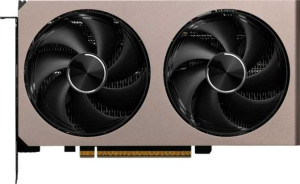
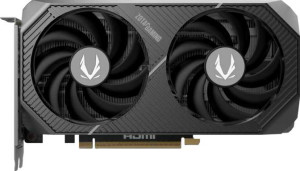
The memory subsystem is where these two otherwise identical cards part ways in a meaningful way. Both use GDDR7 running at an effective speed of 28000 MHz over a 128-bit bus, yielding the same 448 GB/s of peak bandwidth. That bandwidth figure is respectable for this tier and ensures neither card is starved for data throughput in typical gaming workloads. However, the MSI Inspire carries 16GB of VRAM while the Zotac Twin Edge ships with just 8GB — a difference that has direct, tangible consequences.
VRAM capacity dictates how much texture data, frame buffers, and scene geometry a GPU can hold locally before it must fetch from system memory, which is far slower. At 1080p and 1440p today, 8GB is often sufficient, but modern titles with high-resolution texture packs and features like ray tracing or path tracing can push well beyond that threshold. At 4K, 8GB can become a hard bottleneck in demanding games, causing stutters and frame drops that no amount of raw compute power can compensate for. The MSI Inspire′s 16GB provides a substantial buffer against these scenarios and meaningfully extends the card′s useful lifespan as game engines grow more memory-hungry.
The memory group winner is unambiguously the MSI Inspire 16GB. Since bandwidth, bus width, and memory type are equal, the doubled VRAM capacity is the sole differentiator here — and it is a significant one for users targeting high-fidelity settings, modded games, or any workload that taxes local memory capacity.