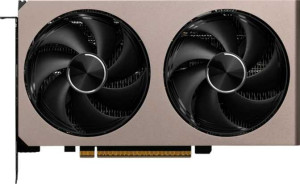
MSI GeForce RTX 5060 Ti Inspire 2X OC 16GB
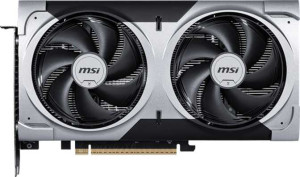
MSI GeForce RTX 5060 Ti Ventus 2X Plus 16GB

MSI GeForce RTX 5060 Ti Inspire 2X OC 16GB MSI GeForce RTX 5060 Ti Ventus 2X Plus 16GB

Overview

When choosing between the MSI GeForce RTX 5060 Ti Inspire 2X OC 16GB and the MSI GeForce RTX 5060 Ti Ventus 2X Plus 16GB, buyers are looking at two cards built on the same Blackwell foundation yet diverging in key areas. This comparison examines their GPU turbo clock speeds, real-world throughput metrics, and physical dimensions to help you decide which variant best suits your build and performance expectations.

Common Features

  • Both cards share a base GPU clock speed of 2407 MHz.
  • Both cards have a GPU memory speed of 1750 MHz.
  • Both cards feature 4608 shading units.
  • Both cards have 144 texture mapping units (TMUs).
  • Both cards have 48 render output units (ROPs).
  • Double Precision Floating Point (DPFP) is supported on both cards.
  • Both cards have an effective memory speed of 28000 MHz.
  • Both cards offer a maximum memory bandwidth of 448 GB/s.
  • Both cards come with 16GB of VRAM.
  • Both cards use GDDR7 memory.
  • Both cards have a 128-bit memory bus width.
  • ECC memory is supported on both cards.
  • Both cards support DirectX 12 Ultimate.
  • Both cards support OpenGL version 4.6.
  • Both cards support OpenCL version 3.
  • Multi-display technology is supported on both cards.
  • Ray tracing is supported on both cards.
  • DLSS is supported on both cards.
  • 3D support is available on both cards.
  • XeSS (XMX) is not available on either card.
  • Both cards have one HDMI 2.1b output and three DisplayPort outputs.
  • Neither card has USB-C or DVI outputs.
  • Both cards are based on the Blackwell GPU architecture.
  • Both cards have a Thermal Design Power (TDP) of 180W.
  • Both cards use PCIe version 5.
  • Both cards are manufactured on a 5 nm process with 21900 million transistors.
  • Air-water cooling is not available on either card.

Main Differences

  • GPU turbo clock speed is 2617 MHz on MSI GeForce RTX 5060 Ti Inspire 2X OC 16GB and 2572 MHz on MSI GeForce RTX 5060 Ti Ventus 2X Plus 16GB.
  • Pixel rate is 125.6 GPixel/s on MSI GeForce RTX 5060 Ti Inspire 2X OC 16GB and 123.5 GPixel/s on MSI GeForce RTX 5060 Ti Ventus 2X Plus 16GB.
  • Floating-point performance is 24.12 TFLOPS on MSI GeForce RTX 5060 Ti Inspire 2X OC 16GB and 23.7 TFLOPS on MSI GeForce RTX 5060 Ti Ventus 2X Plus 16GB.
  • Texture rate is 376.8 GTexels/s on MSI GeForce RTX 5060 Ti Inspire 2X OC 16GB and 370.4 GTexels/s on MSI GeForce RTX 5060 Ti Ventus 2X Plus 16GB.
  • Card width is 204 mm on MSI GeForce RTX 5060 Ti Inspire 2X OC 16GB and 227 mm on MSI GeForce RTX 5060 Ti Ventus 2X Plus 16GB.
  • Card height is 117 mm on MSI GeForce RTX 5060 Ti Inspire 2X OC 16GB and 127 mm on MSI GeForce RTX 5060 Ti Ventus 2X Plus 16GB.
Specs Comparison
MSI GeForce RTX 5060 Ti Inspire 2X OC 16GB

MSI GeForce RTX 5060 Ti Inspire 2X OC 16GB

MSI GeForce RTX 5060 Ti Ventus 2X Plus 16GB

MSI GeForce RTX 5060 Ti Ventus 2X Plus 16GB

Performance:
GPU clock speed 2407 MHz 2407 MHz
GPU turbo 2617 MHz 2572 MHz
pixel rate 125.6 GPixel/s 123.5 GPixel/s
floating-point performance 24.12 TFLOPS 23.7 TFLOPS
texture rate 376.8 GTexels/s 370.4 GTexels/s
GPU memory speed 1750 MHz 1750 MHz
shading units 4608 4608
texture mapping units (TMUs) 144 144
render output units (ROPs) 48 48
Has Double Precision Floating Point (DPFP)

At their core, both the Inspire 2X OC and the Ventus 2X Plus share the same fundamental silicon: identical base clocks of 2407 MHz, the same 4608 shading units, 144 TMUs, 48 ROPs, and matching memory speeds of 1750 MHz. This means both cards draw from the same underlying GPU architecture and will behave identically under light or steady-state workloads before boost clocks kick in.

The real differentiator lives in the boost (turbo) clock. The Inspire 2X OC reaches 2617 MHz versus the Ventus 2X Plus at 2572 MHz — a gap of 45 MHz, or roughly 1.75%. This factory overclock cascades directly into every derived throughput metric: floating-point performance lands at 24.12 TFLOPS versus 23.7 TFLOPS, texture fill rate at 376.8 GTexels/s versus 370.4 GTexels/s, and pixel rate at 125.6 GPixel/s versus 123.5 GPixel/s. In practice, this translates to a consistent but modest ~1.7–1.8% performance uplift in GPU-bound scenarios such as high-resolution gaming, 3D rendering, and compute tasks.

The Inspire 2X OC holds a clear, if narrow, performance edge in this group — entirely due to its higher factory boost clock. For users who prioritize squeezing every last frame without manual overclocking, it is the stronger choice. However, given the sub-2% gap, real-world frame rate differences will rarely be perceptible, and the Ventus 2X Plus remains a near-equivalent performer for the vast majority of workloads.

Memory:
effective memory speed 28000 MHz 28000 MHz
maximum memory bandwidth 448 GB/s 448 GB/s
VRAM 16GB 16GB
GDDR version GDDR7 GDDR7
memory bus width 128-bit 128-bit
Supports ECC memory

When it comes to memory, these two cards are completely identical across every measurable dimension. Both feature 16GB of GDDR7 VRAM running over a 128-bit bus at an effective speed of 28000 MHz, delivering a maximum bandwidth of 448 GB/s. GDDR7 is a significant generational step forward in memory technology, and that bandwidth figure reflects it — 448 GB/s is substantially higher than what GDDR6X achieved on comparable bus widths, which directly benefits texture streaming, large asset loading, and GPU compute workloads.

The 16GB capacity is a meaningful practical advantage for modern use cases: it comfortably accommodates high-resolution texture packs, large AI inference models, and multi-monitor or high-refresh gaming scenarios that can push VRAM limits on cards with less headroom. The ECC memory support, while rarely relevant in gaming, adds value for users deploying these cards in light professional or creative workflows where data integrity matters.

This group is a complete tie. There is not a single memory-related differentiator between the Inspire 2X OC and the Ventus 2X Plus — both will deliver identical memory performance in every real-world scenario. Buying decisions between these two cards should rest entirely on other specification groups.

Features:
DirectX version DirectX 12 Ultimate DirectX 12 Ultimate
OpenGL version 4.6 4.6
OpenCL version 3 3
Supports multi-display technology
supports ray tracing
Supports 3D
supports DLSS
has XeSS (XMX)
AMD SAM / Intel Resizable BAR Intel Resizable BAR Intel Resizable BAR
has LHR
has RGB lighting
supported displays 4 4

Feature parity is total between these two cards. Both support DirectX 12 Ultimate, which is the current gold standard for gaming APIs, enabling hardware-accelerated ray tracing, mesh shaders, and variable-rate shading in supported titles. Alongside this, both cards support ray tracing and DLSS — NVIDIA's AI-driven upscaling technology that allows games to render at lower resolutions and reconstruct higher-quality frames, effectively boosting frame rates with minimal visual compromise.

On the connectivity side, support for up to 4 simultaneous displays and multi-display technology makes either card a capable choice for productivity-oriented multi-monitor setups or immersive gaming rigs. Intel Resizable BAR support on both cards allows the CPU to access the full GPU frame buffer at once, which can yield modest performance gains in certain titles compared to older BAR implementations.

Much like the memory group, the features category offers no basis for differentiation whatsoever between the Inspire 2X OC and the Ventus 2X Plus. Every software capability, API version, and feature flag is identical. Users who were hoping to find a functional or ecosystem advantage here will need to look elsewhere — specifically at performance headroom or physical design characteristics — to make their choice.

Ports:
has an HDMI output
HDMI ports 1 1
HDMI version HDMI 2.1b HDMI 2.1b
DisplayPort outputs 3 3
USB-C ports 0 0
DVI outputs 0 0
mini DisplayPort outputs 0 0

Both cards ship with an identical port configuration: 3 DisplayPort outputs and 1 HDMI 2.1b port, for a total of four display outputs — consistent with the four-display limit noted in the Features group. HDMI 2.1b is the latest revision of the standard, capable of handling 4K at high refresh rates and 8K output, making either card well-suited for connection to modern high-performance monitors or televisions without any adapter required.

The three DisplayPort outputs are the workhorses of a multi-monitor setup, and having three of them means users can drive a full triple-display configuration while still reserving the HDMI port for a fourth screen or a living-room display. The absence of USB-C is worth noting for users who own USB-C or Thunderbolt-connected monitors, as an adapter would be needed — but this is equally true for both cards.

Port selection is another complete tie. The Inspire 2X OC and the Ventus 2X Plus offer precisely the same connectivity options with no variation in port count, type, or version. Display compatibility and setup flexibility will be identical regardless of which card a buyer chooses.

General info:
GPU architecture Blackwell Blackwell
release date April 2025 April 2025
Thermal Design Power (TDP) 180W 180W
PCI Express (PCIe) version 5 5
semiconductor size 5 nm 5 nm
number of transistors 21900 million 21900 million
Has air-water cooling
width 204 mm 227 mm
height 117 mm 127 mm

Sharing the same Blackwell architecture, 5 nm fabrication process, and 21,900 million transistors, both cards are built from identical silicon at the foundry level. A 180W TDP and PCIe 5.0 interface are likewise shared, meaning power supply requirements and motherboard compatibility are the same across both — any modern mid-range PSU and current-generation motherboard will serve either card equally well.

The only meaningful divergence in this group is physical size. The Inspire 2X OC measures 204 mm × 117 mm, while the Ventus 2X Plus is noticeably larger at 227 mm × 127 mm — a difference of 23 mm in length and 10 mm in height. That 23 mm length gap is practically significant: in compact Mid-Tower or Micro-ATX cases with tight GPU clearance limits, the Inspire 2X OC has a real installation advantage. Builders working in small form factor or space-constrained enclosures should verify their case's maximum GPU length before committing to the Ventus 2X Plus.

For users building into full-size ATX towers where clearance is not a concern, this group is functionally a tie — the underlying platform specs are identical. But for anyone working with a compact case, the Inspire 2X OC earns a clear edge here solely by virtue of its smaller footprint.

Comparison Summary & Verdict

Both cards share an identical core specification set: 16GB of GDDR7 memory, a 128-bit bus delivering 448 GB/s bandwidth, a 180W TDP, and full support for ray tracing and DLSS. The distinction comes down to clock speeds and size. The MSI GeForce RTX 5060 Ti Inspire 2X OC 16GB edges ahead with a higher turbo clock of 2617 MHz, a pixel rate of 125.6 GPixel/s, and 24.12 TFLOPS of floating-point performance, while also being the more compact card at 204 x 117 mm. The MSI GeForce RTX 5060 Ti Ventus 2X Plus 16GB delivers slightly lower peak clocks at 2572 MHz but occupies a larger 227 x 127 mm footprint. Choose the Inspire 2X OC if you want the highest out-of-box clocks in a smaller form factor; opt for the Ventus 2X Plus if its cooler design fits your build preferences and the small performance delta is not a priority.

MSI GeForce RTX 5060 Ti Inspire 2X OC 16GB
Buy MSI GeForce RTX 5060 Ti Inspire 2X OC 16GB if...

Buy the MSI GeForce RTX 5060 Ti Inspire 2X OC 16GB if you want the highest turbo clock speed and best throughput figures in a more compact card that fits smaller cases.

MSI GeForce RTX 5060 Ti Ventus 2X Plus 16GB
Buy MSI GeForce RTX 5060 Ti Ventus 2X Plus 16GB if...

Buy the MSI GeForce RTX 5060 Ti Ventus 2X Plus 16GB if case clearance is not a concern and you are comfortable with a slightly larger cooler design in exchange for a marginally lower clock speed.