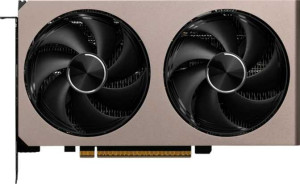
MSI GeForce RTX 5060 Ti Inspire 2X OC 16GB
MSI GeForce RTX 5070 Ti Inspire 3X OC Plus

MSI GeForce RTX 5060 Ti Inspire 2X OC 16GB MSI GeForce RTX 5070 Ti Inspire 3X OC Plus

Overview

Welcome to our in-depth specification comparison between the MSI GeForce RTX 5060 Ti Inspire 2X OC 16GB and the MSI GeForce RTX 5070 Ti Inspire 3X OC Plus. Both cards share the same Blackwell architecture, GDDR7 memory, and a matching 16GB VRAM pool, making this a fascinating head-to-head. The key battlegrounds lie in raw compute power, memory bandwidth, transistor count, and thermal footprint — read on to see how they stack up.

Common Features

  • Both cards share the same GPU memory speed of 1750 MHz.
  • Double Precision Floating Point (DPFP) support is available on both products.
  • Both cards feature an effective memory speed of 28000 MHz.
  • Both cards come with 16GB of VRAM.
  • Both cards use GDDR7 memory.
  • ECC memory support is available on both products.
  • Both cards support DirectX 12 Ultimate.
  • Both cards support OpenGL version 4.6.
  • Both cards support OpenCL version 3.
  • Multi-display technology support is available on both products.
  • Ray tracing support is available on both products.
  • 3D support is available on both products.
  • DLSS support is available on both products.
  • XeSS (XMX) support is not available on either product.
  • Both cards include one HDMI 2.1b output.
  • Both cards include three DisplayPort outputs.
  • Neither card includes USB-C, DVI, or mini DisplayPort outputs.
  • Both cards are built on the Blackwell GPU architecture.
  • Both cards use PCIe version 5.
  • Both cards are manufactured using a 5 nm semiconductor process.
  • Air-water cooling is not available on either product.

Main Differences

  • GPU clock speed is 2407 MHz on MSI GeForce RTX 5060 Ti Inspire 2X OC 16GB and 2295 MHz on MSI GeForce RTX 5070 Ti Inspire 3X OC Plus.
  • GPU turbo clock speed is 2617 MHz on MSI GeForce RTX 5060 Ti Inspire 2X OC 16GB and 2482 MHz on MSI GeForce RTX 5070 Ti Inspire 3X OC Plus.
  • Pixel rate is 125.6 GPixel/s on MSI GeForce RTX 5060 Ti Inspire 2X OC 16GB and 238.3 GPixel/s on MSI GeForce RTX 5070 Ti Inspire 3X OC Plus.
  • Floating-point performance is 24.12 TFLOPS on MSI GeForce RTX 5060 Ti Inspire 2X OC 16GB and 44.48 TFLOPS on MSI GeForce RTX 5070 Ti Inspire 3X OC Plus.
  • Texture rate is 376.8 GTexels/s on MSI GeForce RTX 5060 Ti Inspire 2X OC 16GB and 695 GTexels/s on MSI GeForce RTX 5070 Ti Inspire 3X OC Plus.
  • Shading units total 4608 on MSI GeForce RTX 5060 Ti Inspire 2X OC 16GB and 8960 on MSI GeForce RTX 5070 Ti Inspire 3X OC Plus.
  • Texture mapping units (TMUs) number 144 on MSI GeForce RTX 5060 Ti Inspire 2X OC 16GB and 280 on MSI GeForce RTX 5070 Ti Inspire 3X OC Plus.
  • Render output units (ROPs) total 48 on MSI GeForce RTX 5060 Ti Inspire 2X OC 16GB and 96 on MSI GeForce RTX 5070 Ti Inspire 3X OC Plus.
  • Maximum memory bandwidth is 448 GB/s on MSI GeForce RTX 5060 Ti Inspire 2X OC 16GB and 896 GB/s on MSI GeForce RTX 5070 Ti Inspire 3X OC Plus.
  • Memory bus width is 128-bit on MSI GeForce RTX 5060 Ti Inspire 2X OC 16GB and 256-bit on MSI GeForce RTX 5070 Ti Inspire 3X OC Plus.
  • Thermal Design Power (TDP) is 180W on MSI GeForce RTX 5060 Ti Inspire 2X OC 16GB and 300W on MSI GeForce RTX 5070 Ti Inspire 3X OC Plus.
  • The number of transistors is 21900 million on MSI GeForce RTX 5060 Ti Inspire 2X OC 16GB and 45600 million on MSI GeForce RTX 5070 Ti Inspire 3X OC Plus.
  • Card width is 204 mm on MSI GeForce RTX 5060 Ti Inspire 2X OC 16GB and 288 mm on MSI GeForce RTX 5070 Ti Inspire 3X OC Plus.
  • Card height is 117 mm on MSI GeForce RTX 5060 Ti Inspire 2X OC 16GB and 112 mm on MSI GeForce RTX 5070 Ti Inspire 3X OC Plus.
Specs Comparison
MSI GeForce RTX 5060 Ti Inspire 2X OC 16GB

MSI GeForce RTX 5060 Ti Inspire 2X OC 16GB

MSI GeForce RTX 5070 Ti Inspire 3X OC Plus

MSI GeForce RTX 5070 Ti Inspire 3X OC Plus

Performance:
GPU clock speed 2407 MHz 2295 MHz
GPU turbo 2617 MHz 2482 MHz
pixel rate 125.6 GPixel/s 238.3 GPixel/s
floating-point performance 24.12 TFLOPS 44.48 TFLOPS
texture rate 376.8 GTexels/s 695 GTexels/s
GPU memory speed 1750 MHz 1750 MHz
shading units 4608 8960
texture mapping units (TMUs) 144 280
render output units (ROPs) 48 96
Has Double Precision Floating Point (DPFP)

On raw clock speeds, the RTX 5060 Ti actually runs faster, with a base clock of 2407 MHz and a turbo of 2617 MHz compared to the RTX 5070 Ti's 2295 MHz / 2482 MHz. However, clock speed alone is a poor proxy for GPU performance — what matters is how many execution units are running at those speeds. The 5070 Ti nearly doubles the shading unit count at 8960 vs. 4608, and its TMU and ROP counts follow the same pattern. This means the 5070 Ti does far more work per clock cycle, making its lower frequency largely irrelevant.

The downstream impact of that hardware gap is stark. The 5070 Ti delivers 44.48 TFLOPS of floating-point throughput versus 24.12 TFLOPS on the 5060 Ti — an 84% advantage that directly translates to faster shader execution, more complex geometry, and heavier compute workloads in real games. Its pixel rate of 238.3 GPixel/s versus 125.6 GPixel/s means it can push roughly twice as many pixels per second, which matters significantly at higher resolutions like 4K. The texture fill rate gap — 695 GTexels/s vs. 376.8 GTexels/s — similarly favors the 5070 Ti for rendering detailed surfaces. Memory speed is identical at 1750 MHz on both cards, and both support Double Precision Floating Point, making those two specs a wash.

The RTX 5070 Ti Inspire 3X OC Plus holds a clear and commanding performance advantage in this group. Across every execution-side metric — compute throughput, pixel output, and texture throughput — it outpaces the 5060 Ti by roughly 80–85%. The 5060 Ti's slightly higher clock speeds are a minor footnote that does nothing to close the structural gap created by its significantly smaller shader array. For users targeting high-resolution or computationally demanding workloads, the 5070 Ti is the decisive choice here.
Memory:
effective memory speed 28000 MHz 28000 MHz
maximum memory bandwidth 448 GB/s 896 GB/s
VRAM 16GB 16GB
GDDR version GDDR7 GDDR7
memory bus width 128-bit 256-bit
Supports ECC memory

Both cards carry 16GB of GDDR7 VRAM and run at an identical effective memory speed of 28000 MHz, so on the surface they look evenly matched. The critical differentiator, however, lies in the memory bus: the RTX 5070 Ti uses a 256-bit interface while the RTX 5060 Ti is limited to 128-bit. Think of the bus width as the number of lanes on a highway — the same speed limit means nothing if one road has half the lanes. That wider bus is precisely why the 5070 Ti achieves 896 GB/s of memory bandwidth against the 5060 Ti's 448 GB/s, an exact 2× advantage.

In practice, memory bandwidth is the resource that feeds the GPU's shader array with data. Given that the 5070 Ti already has roughly twice the shading hardware, it critically needs twice the bandwidth to keep those units from starving. The 5060 Ti's 128-bit bus is well-matched to its own execution resources, but it would become a meaningful bottleneck under the 5070 Ti's workload — particularly at high resolutions, with texture-heavy scenes, or when running AI-accelerated features that place heavy demands on memory throughput. Both cards support ECC memory, a shared feature relevant mostly to professional or compute use cases.

The RTX 5070 Ti Inspire 3X OC Plus holds a decisive edge in this group. Equal VRAM capacity and memory speed make the comparison look close at first glance, but the doubled bandwidth enabled by its 256-bit bus is a fundamental architectural advantage — one that scales directly with demanding workloads and complements its larger compute engine.

Features:
DirectX version DirectX 12 Ultimate DirectX 12 Ultimate
OpenGL version 4.6 4.6
OpenCL version 3 3
Supports multi-display technology
supports ray tracing
Supports 3D
supports DLSS
has XeSS (XMX)
AMD SAM / Intel Resizable BAR Intel Resizable BAR Intel Resizable BAR
has LHR
has RGB lighting
supported displays 4 4

Across every feature listed in this group, the two cards are in complete lockstep. Both support DirectX 12 Ultimate, ray tracing, and DLSS — the trio of modern GPU features that matter most to PC gamers today. DirectX 12 Ultimate ensures compatibility with the full suite of current-generation rendering techniques, while DLSS provides AI-driven upscaling that can significantly boost frame rates with minimal visual cost, a particularly valuable tool in ray-traced workloads.

Neither card supports XeSS, and both implement Intel Resizable BAR for CPU-to-GPU data transfer optimization. Multi-monitor users will find identical flexibility on either card, with support for up to 4 simultaneous displays. The absence of LHR (Lite Hash Rate) limiters on both is a shared characteristic, and neither card includes RGB lighting — a cosmetic note that may matter to some builders.

This group is an unambiguous tie. The feature sets are identical in every measurable dimension provided, meaning a buyer's decision here cannot be swayed by software capabilities or API support. The differentiation between these two cards lies entirely in the performance and memory groups — not here.

Ports:
has an HDMI output
HDMI ports 1 1
HDMI version HDMI 2.1b HDMI 2.1b
DisplayPort outputs 3 3
USB-C ports 0 0
DVI outputs 0 0
mini DisplayPort outputs 0 0

Port selection is identical on both cards: one HDMI 2.1b output and three DisplayPort outputs, totaling four display connections — which aligns with the four-display limit noted in the Features group. HDMI 2.1b is the latest revision of the standard, supporting high refresh rates at 4K and beyond, making both cards well-equipped for modern monitors and TVs alike. The three DisplayPort outputs add flexibility for multi-monitor desktop setups or daisy-chaining compatible displays.

Neither card offers USB-C, mini DisplayPort, or DVI outputs. The absence of USB-C is worth noting for users who own newer monitors that use USB-C or DisplayPort Alt Mode connections, as an adapter would be required on either card. That said, this is a shared limitation, not a differentiator.

Another clear tie. The port configuration is a carbon copy across both products, so connectivity plays no role in separating the RTX 5060 Ti Inspire 2X OC 16GB from the RTX 5070 Ti Inspire 3X OC Plus. Buyers with specific display connectivity needs will face the same options — and the same constraints — regardless of which card they choose.

General info:
GPU architecture Blackwell Blackwell
release date April 2025 February 2025
Thermal Design Power (TDP) 180W 300W
PCI Express (PCIe) version 5 5
semiconductor size 5 nm 5 nm
number of transistors 21900 million 45600 million
Has air-water cooling
width 204 mm 288 mm
height 117 mm 112 mm

Sharing the same Blackwell architecture, 5 nm process node, and PCIe 5.0 interface, these two cards are built from the same generational blueprint — but at very different scales. The transistor count tells that story plainly: the RTX 5070 Ti packs 45,600 million transistors against the RTX 5060 Ti's 21,900 million, a ratio of roughly 2:1 that directly explains the performance gap seen in the compute and memory groups. More transistors mean more functional units, larger caches, and a more complex execution pipeline — all on the same manufacturing process.

The power envelope follows the same proportion. The 5070 Ti carries a 300W TDP versus the 5060 Ti's notably more modest 180W. That 120W difference has real system-level implications: the 5070 Ti will demand a higher-wattage power supply and will generate meaningfully more heat under sustained load. Case airflow and PSU headroom are more critical considerations for the 5070 Ti build. The 5060 Ti, by contrast, is a considerably easier card to accommodate in a wider range of systems.

Physical size also diverges. The RTX 5060 Ti at 204 mm long is a significantly more compact card than the RTX 5070 Ti at 288 mm — an 84 mm difference that can matter in smaller mid-tower or compact cases. Neither card uses liquid cooling. Overall, the 5060 Ti has a practical edge for system builders working within tighter power or space constraints, while the 5070 Ti's larger silicon investment is what underpins its commanding performance lead.

Comparison Summary & Verdict

After examining every specification, a clear picture emerges for each card. The MSI GeForce RTX 5060 Ti Inspire 2X OC 16GB stands out for its higher base and boost clock speeds, its significantly lower 180W TDP, and its more compact 204 mm width — making it an excellent choice for builders who value energy efficiency and a smaller form factor without sacrificing a generous 16GB VRAM pool. On the other hand, the MSI GeForce RTX 5070 Ti Inspire 3X OC Plus dominates in every raw performance metric: it nearly doubles the floating-point performance at 44.48 TFLOPS, offers twice the memory bandwidth at 896 GB/s via a 256-bit bus, and packs 8960 shading units — making it the clear pick for users who demand maximum rendering throughput, whether for high-resolution gaming or GPU-accelerated workloads.

MSI GeForce RTX 5060 Ti Inspire 2X OC 16GB
Buy MSI GeForce RTX 5060 Ti Inspire 2X OC 16GB if...

Buy the MSI GeForce RTX 5060 Ti Inspire 2X OC 16GB if you want a power-efficient card with a lower 180W TDP and a more compact build, while still enjoying 16GB of GDDR7 memory and higher GPU clock speeds.

MSI GeForce RTX 5070 Ti Inspire 3X OC Plus
Buy MSI GeForce RTX 5070 Ti Inspire 3X OC Plus if...

Buy the MSI GeForce RTX 5070 Ti Inspire 3X OC Plus if you need maximum performance, as it delivers nearly double the floating-point throughput, twice the memory bandwidth, and significantly more shading units for demanding workloads.