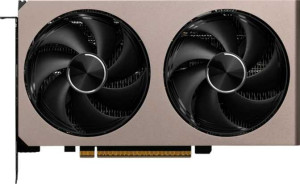
MSI GeForce RTX 5060 Ti Inspire 2X OC 16GB
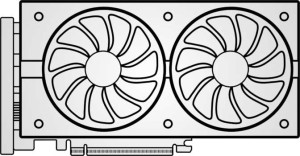
Nvidia GeForce RTX 5060 Ti 16GB

MSI GeForce RTX 5060 Ti Inspire 2X OC 16GB Nvidia GeForce RTX 5060 Ti 16GB

Overview

Welcome to our in-depth specification comparison between the MSI GeForce RTX 5060 Ti Inspire 2X OC 16GB and the Nvidia GeForce RTX 5060 Ti 16GB. Both cards share the same Blackwell architecture, 16GB of GDDR7 memory, and a 180W TDP, yet key battlegrounds emerge around boost clock speeds, raw compute throughput, and physical dimensions — factors that can meaningfully influence your buying decision.

Common Features

  • Both cards share a GPU memory speed of 1750 MHz.
  • Both cards feature 4608 shading units.
  • Both cards include 144 texture mapping units (TMUs).
  • Both cards include 48 render output units (ROPs).
  • Double Precision Floating Point (DPFP) is supported on both cards.
  • Both cards have an effective memory speed of 28000 MHz.
  • Both cards offer a maximum memory bandwidth of 448 GB/s.
  • Both cards come with 16GB of VRAM.
  • Both cards use GDDR7 memory.
  • Both cards use a 128-bit memory bus width.
  • ECC memory is supported on both cards.
  • Both cards support DirectX 12 Ultimate.
  • Both cards support OpenGL version 4.6.
  • Both cards support OpenCL version 3.
  • Multi-display technology is supported on both cards.
  • Ray tracing is supported on both cards.
  • 3D support is available on both cards.
  • DLSS is supported on both cards.
  • XeSS (XMX) is not available on either card.
  • Both cards include one HDMI 2.1b output and three DisplayPort outputs, with no USB-C or DVI outputs.
  • Both cards are built on the Blackwell GPU architecture.
  • Both cards have a Thermal Design Power (TDP) of 180W.
  • Both cards use PCIe version 5.
  • Both cards are manufactured on a 5 nm semiconductor process.
  • Both cards feature 21,900 million transistors.
  • Air-water cooling is not available on either card.

Main Differences

  • GPU base clock speed is 2407 MHz on MSI GeForce RTX 5060 Ti Inspire 2X OC 16GB and 2410 MHz on Nvidia GeForce RTX 5060 Ti 16GB.
  • GPU turbo clock speed is 2617 MHz on MSI GeForce RTX 5060 Ti Inspire 2X OC 16GB and 2570 MHz on Nvidia GeForce RTX 5060 Ti 16GB.
  • Pixel rate is 125.6 GPixel/s on MSI GeForce RTX 5060 Ti Inspire 2X OC 16GB and 123.4 GPixel/s on Nvidia GeForce RTX 5060 Ti 16GB.
  • Floating-point performance is 24.12 TFLOPS on MSI GeForce RTX 5060 Ti Inspire 2X OC 16GB and 23.69 TFLOPS on Nvidia GeForce RTX 5060 Ti 16GB.
  • Texture rate is 376.8 GTexels/s on MSI GeForce RTX 5060 Ti Inspire 2X OC 16GB and 370.1 GTexels/s on Nvidia GeForce RTX 5060 Ti 16GB.
  • Card width is 204 mm on MSI GeForce RTX 5060 Ti Inspire 2X OC 16GB and 241 mm on Nvidia GeForce RTX 5060 Ti 16GB.
  • Card height is 117 mm on MSI GeForce RTX 5060 Ti Inspire 2X OC 16GB and 111 mm on Nvidia GeForce RTX 5060 Ti 16GB.
Specs Comparison
MSI GeForce RTX 5060 Ti Inspire 2X OC 16GB

MSI GeForce RTX 5060 Ti Inspire 2X OC 16GB

Nvidia GeForce RTX 5060 Ti 16GB

Nvidia GeForce RTX 5060 Ti 16GB

Performance:
GPU clock speed 2407 MHz 2410 MHz
GPU turbo 2617 MHz 2570 MHz
pixel rate 125.6 GPixel/s 123.4 GPixel/s
floating-point performance 24.12 TFLOPS 23.69 TFLOPS
texture rate 376.8 GTexels/s 370.1 GTexels/s
GPU memory speed 1750 MHz 1750 MHz
shading units 4608 4608
texture mapping units (TMUs) 144 144
render output units (ROPs) 48 48
Has Double Precision Floating Point (DPFP)

At their core, both the MSI Inspire 2X OC and the Nvidia RTX 5060 Ti share identical silicon foundations: the same 4608 shading units, 144 TMUs, 48 ROPs, and 1750 MHz memory speed. This means their theoretical ceilings are shaped by the same architecture, and neither card has a structural advantage in parallelism or memory bandwidth.

The real differentiator lies in the boost clock. The MSI OC variant reaches a turbo of 2617 MHz versus the reference Nvidia card's 2570 MHz — a gap of 47 MHz, or roughly 1.8%. This factory overclock is what directly explains why the MSI edges ahead in every throughput metric: 24.12 TFLOPS versus 23.69 TFLOPS in floating-point performance, and 376.8 GTexels/s versus 370.1 GTexels/s in texture fill rate. In practice, these margins are unlikely to produce noticeable differences in most gaming workloads, but in sustained compute tasks or heavily shader-bound scenarios, the MSI's higher sustained clock gives it a consistent, if slim, throughput lead.

Overall, the MSI Inspire 2X OC holds a modest but clear performance edge in this group, driven entirely by its higher factory boost clock. The Nvidia reference card is not meaningfully slower — the gap is narrow enough that real-world frame rates will rarely diverge — but on pure numbers, the MSI wins every throughput metric here.

Memory:
effective memory speed 28000 MHz 28000 MHz
maximum memory bandwidth 448 GB/s 448 GB/s
VRAM 16GB 16GB
GDDR version GDDR7 GDDR7
memory bus width 128-bit 128-bit
Supports ECC memory

Memory is one area where these two cards are in complete lockstep. Both carry 16GB of GDDR7 over a 128-bit bus, running at an effective 28000 MHz to deliver 448 GB/s of bandwidth. That bandwidth figure is particularly significant: GDDR7 extracts considerably more throughput from a 128-bit bus than GDDR6X could, meaning the narrow bus width is far less of a constraint than it would have been on prior generations.

The 16GB VRAM capacity is a meaningful generational step for this GPU tier, comfortably accommodating high-resolution texture packs, large AI model buffers, and modern titles that increasingly push beyond the 8–12GB range. ECC memory support on both cards is a bonus for users running compute or professional workloads alongside gaming, as it provides error-correction that protects data integrity under sustained loads.

This group is a straightforward tie. Every memory specification — capacity, speed, bandwidth, bus width, and ECC support — is identical between the MSI Inspire 2X OC and the Nvidia reference card. Memory subsystem performance will be indistinguishable between the two in any real-world scenario.

Features:
DirectX version DirectX 12 Ultimate DirectX 12 Ultimate
OpenGL version 4.6 4.6
OpenCL version 3 3
Supports multi-display technology
supports ray tracing
Supports 3D
supports DLSS
has XeSS (XMX)
AMD SAM / Intel Resizable BAR Intel Resizable BAR Intel Resizable BAR
has LHR
has RGB lighting
supported displays 4 4

From a feature standpoint, the MSI Inspire 2X OC and the Nvidia RTX 5060 Ti are carbon copies of one another. Both support DirectX 12 Ultimate and ray tracing, which are the two most relevant checkboxes for modern gaming — DX12 Ultimate ensures compatibility with the full suite of current rendering features, while hardware ray tracing support means neither card is left out of lighting and reflection effects in titles that implement them.

DLSS support on both cards is a practical advantage worth highlighting: Nvidia's upscaling and frame generation technology can meaningfully boost effective frame rates in supported titles, partially compensating for raw rasterization limits. Intel Resizable BAR support is also shared, allowing the CPU full access to GPU memory and providing modest performance gains in compatible systems. The absence of LHR on either card is a non-issue for gaming-focused buyers and simply reflects how that feature has been phased out.

With every feature — API support, display outputs, upscaling, and compute compatibility — identical across both cards, this group is an unambiguous tie. A buyer's decision here cannot be swayed by feature differentiation; both cards offer the exact same software and API ecosystem.

Ports:
has an HDMI output
HDMI ports 1 1
HDMI version HDMI 2.1b HDMI 2.1b
DisplayPort outputs 3 3
USB-C ports 0 0
DVI outputs 0 0
mini DisplayPort outputs 0 0

Both cards offer an identical port layout: one HDMI 2.1b output and three DisplayPorts, totaling four physical outputs — matching the four-display limit noted in the features group. HDMI 2.1b is the latest revision of the standard, bringing support for very high refresh rates at 4K and beyond, as well as improved variable refresh rate signaling, which matters for users connecting to high-end gaming monitors or modern TVs.

The three DisplayPort outputs comfortably cover multi-monitor setups, and the complete absence of legacy connectors like DVI or mini-DisplayPort keeps the bracket clean without sacrificing anything relevant to current display ecosystems. The lack of a USB-C port is worth noting for users who rely on that connector for display output or daisy-chaining, though neither card offers it, so it is a shared limitation rather than a point of differentiation.

This group is a clean tie. The MSI Inspire 2X OC and the Nvidia RTX 5060 Ti have identical port configurations in every respect — same count, same standards, same version. Connectivity cannot factor into a buying decision between these two cards.

General info:
GPU architecture Blackwell Blackwell
release date April 2025 April 2025
Thermal Design Power (TDP) 180W 180W
PCI Express (PCIe) version 5 5
semiconductor size 5 nm 5 nm
number of transistors 21900 million 21900 million
Has air-water cooling
width 204 mm 241 mm
height 117 mm 111 mm

Underneath, both cards are built on the same foundation: the Blackwell architecture on a 5nm process with 21.9 billion transistors, a shared 180W TDP, and PCIe 5.0 connectivity. The identical TDP means neither card demands more from a power supply than the other, and PCIe 5.0 ensures neither will face interface bandwidth bottlenecks on current or near-future platforms.

Where these cards genuinely diverge is in physical size. The MSI Inspire 2X OC measures 204 mm in length, while the Nvidia reference card stretches to 241 mm — a 37mm difference that is practically significant. The shorter MSI card will fit more easily into compact mid-tower and small-form-factor cases where clearance between the GPU and drive cages or front panels is limited. The Nvidia card is taller at 111 mm versus the MSI's 117 mm, but that 6mm height difference is rarely the binding constraint in most cases.

For most standard ATX builds, neither card's dimensions will pose a problem, but the MSI Inspire 2X OC holds a clear advantage in this group for anyone working with a space-constrained case. All other general specifications being equal, physical footprint is the one factor here that could genuinely influence a buying decision.

Comparison Summary & Verdict

After examining every specification, the two cards are remarkably close siblings. The MSI GeForce RTX 5060 Ti Inspire 2X OC 16GB pulls ahead in pure compute metrics, delivering a higher GPU turbo clock of 2617 MHz, a stronger floating-point performance of 24.12 TFLOPS, and superior pixel and texture rates — making it the better pick for users who want every last frame squeezed out of the hardware. It is also the more compact card at just 204 mm wide, which suits smaller chassis builds. The Nvidia GeForce RTX 5060 Ti 16GB, on the other hand, holds a marginally higher base clock and a lower profile at 111 mm tall, which may suit certain case layouts better. For the majority of buyers, the MSI variant offers a tangible — if modest — performance edge right out of the box.

MSI GeForce RTX 5060 Ti Inspire 2X OC 16GB
Buy MSI GeForce RTX 5060 Ti Inspire 2X OC 16GB if...

Buy the MSI GeForce RTX 5060 Ti Inspire 2X OC 16GB if you want a higher boost clock, greater floating-point performance, and a more compact card width that fits smaller PC builds.

Nvidia GeForce RTX 5060 Ti 16GB
Buy Nvidia GeForce RTX 5060 Ti 16GB if...

Buy the Nvidia GeForce RTX 5060 Ti 16GB if you prefer a slightly higher base clock speed and a shorter card height that may better suit specific case configurations.