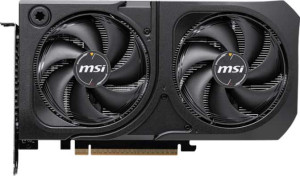
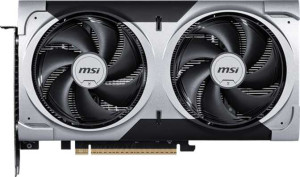
At their core, the Shadow 2X Plus and the Ventus 2X OC Plus share identical architectural foundations: the same 2407 MHz base clock, 4608 shading units, 144 TMUs, 48 ROPs, and 1750 MHz memory speed. This means both cards are drawing from the same fundamental compute resources, and the performance gap between them comes down entirely to one variable: the factory-set boost clock target.
The Ventus 2X OC Plus holds a 30 MHz turbo clock advantage — 2602 MHz versus the Shadow's 2572 MHz — and that gap flows directly into every throughput metric. The Ventus edges ahead in floating-point performance (23.98 vs 23.7 TFLOPS), texture rate (374.7 vs 370.4 GTexels/s), and pixel rate (124.9 vs 123.5 GPixel/s). In practice, these differences amount to roughly a 1.2% performance uplift — meaningful on paper, but essentially imperceptible in real-world gaming framerates or rendering workloads, where the margin falls well within benchmark noise.
For this performance group, the Ventus 2X OC Plus holds a technical edge strictly by the numbers, courtesy of its higher out-of-box boost clock. However, the advantage is marginal enough that it would be undetectable without instrumentation. Both cards equally support Double Precision Floating Point, which matters for compute-oriented tasks. A buyer prioritizing peak specification should lean toward the Ventus, but neither card is meaningfully faster in any scenario a real-world user would encounter.