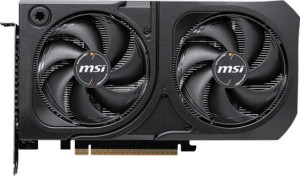
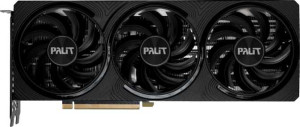
The power efficiency story here is one of the most striking contrasts in this entire comparison. The MSI RTX 5060 Ti is built on the newer Blackwell architecture and draws just 180W TDP, while the Palit RTX 4070 Ti Super's Ada Lovelace architecture demands 285W — a 58% higher power requirement. For the end user, this translates directly to lower electricity consumption, less heat output, quieter fans, and compatibility with less powerful PSUs. The 5060 Ti's efficiency credentials are a genuine practical advantage, particularly for users with thermally constrained cases or modest power supplies.
The transistor count tells an interesting engineering story: the 4070 Ti Super packs 76,300 million transistors against the 5060 Ti's 21,900 million, despite both being manufactured on a 5 nm process node. The 4070 Ti Super's die is simply much larger, which is a direct reflection of its wider execution units seen in the Performance group. The 5060 Ti's smaller die contributes to its lower power draw and its notably more compact footprint — 226 mm long versus 294 mm — making it significantly easier to fit in mid-tower and smaller form-factor cases where the 4070 Ti Super may not physically clear.
The 5060 Ti also steps forward to PCIe 5.0 versus the 4070 Ti Super's PCIe 4.0, though both are backward compatible and GPU workloads rarely saturate even PCIe 4.0 bandwidth today. On balance, the MSI RTX 5060 Ti holds a clear advantage in this group: its dramatically lower TDP, smaller physical size, and newer platform make it the more practical and system-friendly card, even if those gains come alongside a smaller silicon die.