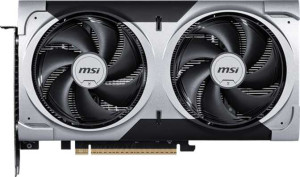
MSI GeForce RTX 5060 Ti Ventus 2X OC Plus 16GB
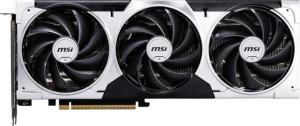
MSI GeForce RTX 5060 Ti Ventus 3X OC 16GB

MSI GeForce RTX 5060 Ti Ventus 2X OC Plus 16GB MSI GeForce RTX 5060 Ti Ventus 3X OC 16GB

Overview

Welcome to our detailed specification comparison between the MSI GeForce RTX 5060 Ti Ventus 2X OC Plus 16GB and the MSI GeForce RTX 5060 Ti Ventus 3X OC 16GB. Both cards are built on the same Blackwell architecture and share an extensive list of features, yet they differ in a key area that could matter depending on your build: physical dimensions. Read on to see exactly where these two cards align and where they part ways.

Common Features

  • Both products have a GPU clock speed of 2407 MHz.
  • Both products have a GPU turbo speed of 2602 MHz.
  • Both products deliver a pixel rate of 124.9 GPixel/s.
  • Both products offer a floating-point performance of 23.98 TFLOPS.
  • Both products have a texture rate of 374.7 GTexels/s.
  • Both products have a GPU memory speed of 1750 MHz.
  • Both products include 4608 shading units.
  • Both products feature 144 texture mapping units (TMUs).
  • Both products have an effective memory speed of 28000 MHz.
  • Both products offer a maximum memory bandwidth of 448 GB/s.
  • Both products come with 16GB of GDDR7 VRAM.
  • Both products use a 128-bit memory bus width.
  • ECC memory support is available on both products.
  • Both products support DirectX 12 Ultimate.
  • Both products support OpenGL version 4.6 and OpenCL version 3.
  • Multi-display technology support is available on both products.
  • Ray tracing support is available on both products.
  • DLSS support is available on both products.
  • XeSS (XMX) support is not available on either product.
  • Both products include 1 HDMI 2.1b port and 3 DisplayPort outputs, with no USB-C, DVI, or mini DisplayPort outputs.
  • Both products are built on the Blackwell GPU architecture using a 5 nm semiconductor process.
  • Both products have a Thermal Design Power (TDP) of 180W.
  • Both products use PCIe version 5.
  • Both products feature 21900 million transistors.
  • Air-water cooling is not available on either product.

Main Differences

  • Width is 227 mm on MSI GeForce RTX 5060 Ti Ventus 2X OC Plus 16GB and 306 mm on MSI GeForce RTX 5060 Ti Ventus 3X OC 16GB.
  • Height is 127 mm on MSI GeForce RTX 5060 Ti Ventus 2X OC Plus 16GB and 121 mm on MSI GeForce RTX 5060 Ti Ventus 3X OC 16GB.
Specs Comparison
MSI GeForce RTX 5060 Ti Ventus 2X OC Plus 16GB

MSI GeForce RTX 5060 Ti Ventus 2X OC Plus 16GB

MSI GeForce RTX 5060 Ti Ventus 3X OC 16GB

MSI GeForce RTX 5060 Ti Ventus 3X OC 16GB

Performance:
GPU clock speed 2407 MHz 2407 MHz
GPU turbo 2602 MHz 2602 MHz
pixel rate 124.9 GPixel/s 124.9 GPixel/s
floating-point performance 23.98 TFLOPS 23.98 TFLOPS
texture rate 374.7 GTexels/s 374.7 GTexels/s
GPU memory speed 1750 MHz 1750 MHz
shading units 4608 4608
texture mapping units (TMUs) 144 144
render output units (ROPs) 48 48
Has Double Precision Floating Point (DPFP)

In the Performance category, the MSI GeForce RTX 5060 Ti Ventus 2X OC Plus 16GB and the MSI GeForce RTX 5060 Ti Ventus 3X OC 16GB are built on an identical silicon foundation. Every core performance metric is a perfect match: both cards run at a base clock of 2407 MHz and boost to 2602 MHz, delivering the same 23.98 TFLOPS of floating-point throughput, 124.9 GPixel/s pixel fill rate, and 374.7 GTexels/s texture rate. The internal GPU architecture is also completely identical, with 4608 shading units, 144 TMUs, 48 ROPs, and 1750 MHz memory speed across both cards.

What this means in practice is that, at the GPU level, neither card has any compute, rendering, or memory bandwidth advantage over the other. Frame rates in games, performance in creative workloads, and AI inference throughput will be statistically indistinguishable between these two models. Both also support Double Precision Floating Point (DPFP), which is relevant for scientific or professional compute tasks that require 64-bit precision.

For this performance group, the verdict is an absolute tie. MSI has used the same GPU configuration for both cards, meaning the Ventus 2X OC Plus and Ventus 3X OC are differentiated entirely by factors outside raw compute performance — such as cooling design or power delivery — and not by any difference in GPU horsepower.

Memory:
effective memory speed 28000 MHz 28000 MHz
maximum memory bandwidth 448 GB/s 448 GB/s
VRAM 16GB 16GB
GDDR version GDDR7 GDDR7
memory bus width 128-bit 128-bit
Supports ECC memory

The memory subsystem on both cards is completely identical across every measurable dimension. Both the Ventus 2X OC Plus and Ventus 3X OC feature 16GB of GDDR7 VRAM running at an effective speed of 28000 MHz over a 128-bit bus, yielding a maximum bandwidth of 448 GB/s. GDDR7 is the latest generation of graphics memory, and its efficiency gains over GDDR6X mean that the 128-bit bus width — which might look narrow on paper — delivers bandwidth competitive with wider GDDR6 implementations.

The 16GB frame buffer is a meaningful advantage for this GPU tier, comfortably handling high-resolution texture packs, large generative AI models running locally, and 4K asset pipelines without spilling to system RAM. Both cards also support ECC (Error-Correcting Code) memory, a feature typically associated with professional and workstation GPUs that detects and corrects single-bit memory errors — useful for users running compute, simulation, or any workload where data integrity is critical.

As with the performance group, this is a complete tie. There is no memory-related reason to choose one card over the other — the bandwidth, capacity, technology generation, and reliability features are point-for-point identical on both models.

Features:
DirectX version DirectX 12 Ultimate DirectX 12 Ultimate
OpenGL version 4.6 4.6
OpenCL version 3 3
Supports multi-display technology
supports ray tracing
Supports 3D
supports DLSS
has XeSS (XMX)
AMD SAM / Intel Resizable BAR Intel Resizable BAR Intel Resizable BAR
has LHR
has RGB lighting
supported displays 4 4

Feature parity continues across both cards. The Ventus 2X OC Plus and Ventus 3X OC both run on DirectX 12 Ultimate, which is the current gold standard for gaming APIs, enabling hardware-accelerated ray tracing, mesh shaders, and variable rate shading in supported titles. Paired with full ray tracing support and DLSS, these cards are well-equipped for modern rendering pipelines — DLSS in particular is a significant practical advantage, using AI-based upscaling to recover frame rates lost to demanding ray tracing workloads.

Multi-monitor users are equally served by both models, with support for up to 4 simultaneous displays. The inclusion of Intel Resizable BAR is also worth noting — this allows the CPU to access the full GPU frame buffer at once rather than in small chunks, which can yield measurable performance improvements in certain games and workloads. Neither card carries an LHR limiter or RGB lighting, keeping the feature set clean and workload-focused.

Once again, this group produces a definitive tie. Every software capability, API version, and technology support flag is identical between the two models. The feature set is strong for the GPU class, but it offers no basis for differentiation between the Ventus 2X OC Plus and the Ventus 3X OC.

Ports:
has an HDMI output
HDMI ports 1 1
HDMI version HDMI 2.1b HDMI 2.1b
DisplayPort outputs 3 3
USB-C ports 0 0
DVI outputs 0 0
mini DisplayPort outputs 0 0

Both the Ventus 2X OC Plus and Ventus 3X OC offer the same physical output configuration: 3 DisplayPort outputs and 1 HDMI 2.1b port, totaling four display connections — which aligns with their shared support for up to 4 simultaneous displays noted in the Features group. HDMI 2.1b is the latest revision of the HDMI standard, supporting up to 4K at high refresh rates and 8K output, making it future-proof for both gaming monitors and high-end TVs.

The absence of USB-C and legacy DVI outputs is consistent with modern mid-to-high-end GPU design. DisplayPort remains the preferred interface for high-refresh-rate gaming monitors, while the single HDMI port covers TV and home theater use cases cleanly. The port layout on both cards is practical and well-suited for multi-monitor gaming or productivity setups without requiring adapters for most current display hardware.

This group is another tie — the port selection, versions, and quantities are completely mirrored across both models. Connectivity offers no advantage to either card, and users can expect an identical display setup experience regardless of which Ventus variant they choose.

General info:
GPU architecture Blackwell Blackwell
release date April 2025 April 2025
Thermal Design Power (TDP) 180W 180W
PCI Express (PCIe) version 5 5
semiconductor size 5 nm 5 nm
number of transistors 21900 million 21900 million
Has air-water cooling
width 227 mm 306 mm
height 127 mm 121 mm

Sharing the same Blackwell architecture, 5nm fabrication process, and 21,900 million transistors, both cards are built from identical silicon. The 180W TDP and PCIe 5.0 interface are also matched, meaning power supply requirements and motherboard compatibility are the same across both models. At 180W, these are relatively efficient cards for their performance tier, and PCIe 5.0 ensures maximum forward compatibility with current and next-generation platforms.

The one meaningful difference in this group is physical size. The Ventus 2X OC Plus measures 227mm in length, while the Ventus 3X OC stretches to 306mm — a difference of nearly 80mm. That extra length on the 3X OC accommodates its third fan, which has implications for thermal headroom, but from a pure fitment perspective the 2X OC Plus is significantly more compact. The Ventus 3X OC is also slightly taller at 127mm versus 121mm on the 2X OC Plus, though that difference is minor in practice.

For this group, the Ventus 2X OC Plus holds a clear advantage for smaller builds. Users with compact mid-tower or mini-ITX-adjacent cases will find the 227mm card far easier to accommodate, while the 306mm Ventus 3X OC demands a full-size case with ample GPU clearance. If case space is not a constraint, this group is otherwise a tie — the underlying platform specs are identical.

Comparison Summary & Verdict

After a thorough side-by-side review, it is clear that the MSI GeForce RTX 5060 Ti Ventus 2X OC Plus 16GB and the MSI GeForce RTX 5060 Ti Ventus 3X OC 16GB are virtually identical in every performance metric, including their 2602 MHz boost clock, 16GB GDDR7 VRAM, 180W TDP, and full support for ray tracing and DLSS. The only measurable distinction lies in their physical footprint: the 2X OC Plus is notably shorter in length at 227 mm, making it the smarter pick for compact or mini-ITX cases where space is at a premium. The 3X OC, at 306 mm in length, is better suited to full-size builds where a larger card poses no installation challenge. Neither card holds a performance advantage over the other, so your decision should come down entirely to case compatibility and physical fit.

MSI GeForce RTX 5060 Ti Ventus 2X OC Plus 16GB
Buy MSI GeForce RTX 5060 Ti Ventus 2X OC Plus 16GB if...

Buy the MSI GeForce RTX 5060 Ti Ventus 2X OC Plus 16GB if you have a compact or space-constrained case, as its shorter 227 mm length makes it the easier fit without sacrificing any performance.

MSI GeForce RTX 5060 Ti Ventus 3X OC 16GB
Buy MSI GeForce RTX 5060 Ti Ventus 3X OC 16GB if...

Buy the MSI GeForce RTX 5060 Ti Ventus 3X OC 16GB if you are building in a full-size case where the larger 306 mm length is not an issue and a slightly lower profile height of 121 mm is a minor advantage.