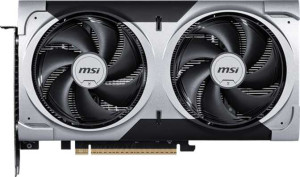
MSI GeForce RTX 5060 Ti Ventus 2X OC Plus 16GB
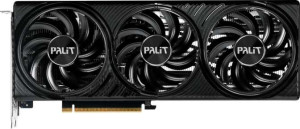
Palit GeForce RTX 5060 Ti Infinity 3 16GB

MSI GeForce RTX 5060 Ti Ventus 2X OC Plus 16GB Palit GeForce RTX 5060 Ti Infinity 3 16GB

Overview

Welcome to this detailed specification comparison between the MSI GeForce RTX 5060 Ti Ventus 2X OC Plus 16GB and the Palit GeForce RTX 5060 Ti Infinity 3 16GB. Both cards share the same Blackwell architecture and 16GB GDDR7 memory, yet they differ in key areas such as GPU boost clocks, floating-point performance, and physical dimensions. Read on to find out which card best suits your needs.

Common Features

  • Both cards share a base GPU clock speed of 2407 MHz.
  • Both cards have a GPU memory speed of 1750 MHz.
  • Both cards feature 4608 shading units.
  • Both cards include 144 texture mapping units (TMUs).
  • Both cards have 48 render output units (ROPs).
  • Double Precision Floating Point (DPFP) is supported on both cards.
  • Both cards have an effective memory speed of 28000 MHz.
  • Both cards offer a maximum memory bandwidth of 448 GB/s.
  • Both cards come with 16GB of VRAM.
  • Both cards use GDDR7 memory.
  • Both cards have a 128-bit memory bus width.
  • ECC memory is supported on both cards.
  • Both cards support DirectX 12 Ultimate.
  • Both cards support OpenGL version 4.6.
  • Both cards support OpenCL version 3.
  • Multi-display technology is supported on both cards.
  • Ray tracing is supported on both cards.
  • 3D support is available on both cards.
  • DLSS is supported on both cards.
  • XeSS (XMX) support is not available on either card.
  • Both cards feature one HDMI 2.1b output.
  • Both cards include three DisplayPort outputs.
  • Neither card has USB-C or DVI outputs.
  • Both cards are based on the Blackwell GPU architecture.
  • Both cards have a Thermal Design Power (TDP) of 180W.
  • Both cards use PCIe version 5.
  • Both cards are built on a 5 nm semiconductor process.
  • Both cards contain 21900 million transistors.
  • Neither card features air-water cooling.

Main Differences

  • GPU turbo clock speed is 2602 MHz on MSI GeForce RTX 5060 Ti Ventus 2X OC Plus 16GB and 2572 MHz on Palit GeForce RTX 5060 Ti Infinity 3 16GB.
  • Pixel rate is 124.9 GPixel/s on MSI GeForce RTX 5060 Ti Ventus 2X OC Plus 16GB and 123.5 GPixel/s on Palit GeForce RTX 5060 Ti Infinity 3 16GB.
  • Floating-point performance is 23.98 TFLOPS on MSI GeForce RTX 5060 Ti Ventus 2X OC Plus 16GB and 23.7 TFLOPS on Palit GeForce RTX 5060 Ti Infinity 3 16GB.
  • Texture rate is 374.7 GTexels/s on MSI GeForce RTX 5060 Ti Ventus 2X OC Plus 16GB and 370.4 GTexels/s on Palit GeForce RTX 5060 Ti Infinity 3 16GB.
  • Card width is 227 mm on MSI GeForce RTX 5060 Ti Ventus 2X OC Plus 16GB and 291.9 mm on Palit GeForce RTX 5060 Ti Infinity 3 16GB.
  • Card height is 127 mm on MSI GeForce RTX 5060 Ti Ventus 2X OC Plus 16GB and 116.6 mm on Palit GeForce RTX 5060 Ti Infinity 3 16GB.
Specs Comparison
MSI GeForce RTX 5060 Ti Ventus 2X OC Plus 16GB

MSI GeForce RTX 5060 Ti Ventus 2X OC Plus 16GB

Palit GeForce RTX 5060 Ti Infinity 3 16GB

Palit GeForce RTX 5060 Ti Infinity 3 16GB

Performance:
GPU clock speed 2407 MHz 2407 MHz
GPU turbo 2602 MHz 2572 MHz
pixel rate 124.9 GPixel/s 123.5 GPixel/s
floating-point performance 23.98 TFLOPS 23.7 TFLOPS
texture rate 374.7 GTexels/s 370.4 GTexels/s
GPU memory speed 1750 MHz 1750 MHz
shading units 4608 4608
texture mapping units (TMUs) 144 144
render output units (ROPs) 48 48
Has Double Precision Floating Point (DPFP)

Both the MSI Ventus 2X OC Plus and the Palit Infinity 3 are built on identical silicon foundations: the same 4608 shading units, 144 TMUs, 48 ROPs, and 1750 MHz memory speed. This means their architectural throughput ceilings are the same, and any performance delta between them comes entirely from how aggressively each card boosts its GPU clock.

That difference is real, if modest. The MSI card holds a 30 MHz advantage in boost clock (2602 MHz vs. 2572 MHz), which cascades directly into its higher derived metrics: a floating-point performance of 23.98 TFLOPS versus 23.7 TFLOPS, a texture rate of 374.7 GTexels/s versus 370.4 GTexels/s, and a pixel rate of 124.9 GPixel/s versus 123.5 GPixel/s. In practice, a ~1.2% clock advantage translates to a difference that is measurable in benchmarks but imperceptible in real gameplay framerate.

The edge in this group goes to the MSI GeForce RTX 5060 Ti Ventus 2X OC Plus, purely on the strength of its higher factory overclock. However, this is a marginal lead — both cards share the exact same compute architecture, and the Palit Infinity 3 is not meaningfully slower in any real-world workload. A buyer prioritizing raw out-of-box clock speed will prefer the MSI, but the Palit closes the gap entirely if manually overclocked.

Memory:
effective memory speed 28000 MHz 28000 MHz
maximum memory bandwidth 448 GB/s 448 GB/s
VRAM 16GB 16GB
GDDR version GDDR7 GDDR7
memory bus width 128-bit 128-bit
Supports ECC memory

On the memory front, these two cards are a perfect mirror of each other. Both ship with 16GB of GDDR7 over a 128-bit bus at an effective speed of 28000 MHz, delivering 448 GB/s of memory bandwidth. That bandwidth figure deserves attention: GDDR7 extracts significantly more throughput from a 128-bit bus than its GDDR6X predecessor could, making the narrow bus width far less of a concern than it would have been on older architectures.

The 16GB VRAM buffer is a meaningful generational step for this tier, comfortably handling high-resolution texture packs, large AI model workloads, and 4K asset streaming without the memory pressure that plagued 8GB cards in demanding titles. ECC memory support on both cards is also worth noting for users running compute or professional workloads alongside gaming, as it enables error correction at the hardware level.

This group is an unambiguous tie. Every single memory specification — capacity, speed, bandwidth, bus width, and ECC support — is identical between the MSI Ventus 2X OC Plus and the Palit Infinity 3. Memory performance will not be a differentiating factor between these two cards in any real-world scenario.

Features:
DirectX version DirectX 12 Ultimate DirectX 12 Ultimate
OpenGL version 4.6 4.6
OpenCL version 3 3
Supports multi-display technology
supports ray tracing
Supports 3D
supports DLSS
has XeSS (XMX)
AMD SAM / Intel Resizable BAR Intel Resizable BAR Intel Resizable BAR
has LHR
has RGB lighting
supported displays 4 4

Feature parity between these two cards is total. Both support DirectX 12 Ultimate — the full suite including hardware ray tracing, mesh shaders, and variable rate shading — alongside DLSS, NVIDIA's AI-driven upscaling technology that remains one of the most impactful frame-rate multipliers available to gamers today. Ray tracing support is present on both, and with DLSS available to recover performance overhead, it is a genuinely usable combination rather than a marketing checkbox.

Multi-monitor users will find both cards equally capable, with support for up to 4 simultaneous displays and Intel Resizable BAR enabled on both — a feature that allows the CPU to access the full GPU frame buffer at once, offering small but real performance gains in supported titles. Neither card carries LHR restrictions or RGB lighting, keeping the feature set clean and workload-focused.

With every feature — API support, upscaling, ray tracing, display count, and BAR compatibility — landing identically on both sides, this group is a complete tie. The choice between the MSI Ventus 2X OC Plus and the Palit Infinity 3 will not hinge on software or feature support in any meaningful way.

Ports:
has an HDMI output
HDMI ports 1 1
HDMI version HDMI 2.1b HDMI 2.1b
DisplayPort outputs 3 3
USB-C ports 0 0
DVI outputs 0 0
mini DisplayPort outputs 0 0

Connectivity is identical across both cards. Each offers 3 DisplayPort outputs and 1 HDMI 2.1b port, totaling four physical outputs — consistent with the four-display limit noted in the Features group. HDMI 2.1b is the most current HDMI specification, capable of driving 4K at high refresh rates or 8K displays, making it a genuinely future-proof connector for high-end monitor and TV setups alike.

The absence of USB-C on both cards is worth flagging for users who rely on that connector for VR headsets or newer displays that use DisplayPort Alt Mode over USB-C. Neither card accommodates that use case, so affected buyers should factor in an active adapter. DVI is also absent on both, though this is expected at this product tier and generation.

No differentiator exists here — the MSI Ventus 2X OC Plus and the Palit Infinity 3 offer an identical port layout, and this group is a straightforward tie. Display connectivity will play no role in separating these two cards.

General info:
GPU architecture Blackwell Blackwell
release date April 2025 April 2025
Thermal Design Power (TDP) 180W 180W
PCI Express (PCIe) version 5 5
semiconductor size 5 nm 5 nm
number of transistors 21900 million 21900 million
Has air-water cooling
width 227 mm 291.9 mm
height 127 mm 116.6 mm

Underneath, these two cards are built from the same cloth: identical Blackwell architecture on a 5nm process with 21.9 billion transistors, a shared 180W TDP, and PCIe 5.0 connectivity. The 180W power envelope is notably modest for a card at this performance tier, meaning standard mid-range PSUs in the 650–750W range will handle either card comfortably without requiring exotic power delivery hardware.

Where this group surfaces a real difference is physical dimensions. The MSI Ventus 2X OC Plus measures 227mm in length — a genuinely compact footprint for a card of this class. The Palit Infinity 3, by contrast, stretches to 291.9mm, nearly 65mm longer, though it is slightly slimmer in height at 116.6mm versus 127mm. That length gap matters concretely: smaller cases with GPU clearances under 300mm will typically fit the MSI with ease but may reject the Palit entirely, while the MSI's extra height could interfere with long motherboard heatsinks or PCIe slot spacing in tighter builds.

The edge in this group goes to the MSI Ventus 2X OC Plus for case compatibility. Its significantly shorter length makes it the more versatile option across a wider range of enclosures, which is a tangible practical advantage for buyers working with compact or mid-tower cases with restricted GPU clearance. All other general specifications are identical.

Comparison Summary & Verdict

After examining every specification, these two cards are remarkably close siblings. Both deliver identical 16GB GDDR7 memory with 448 GB/s bandwidth, the same 180W TDP, and full support for ray tracing and DLSS. Where they diverge is in clock speeds and size: the MSI GeForce RTX 5060 Ti Ventus 2X OC Plus 16GB holds a slight edge with a higher GPU turbo of 2602 MHz and 23.98 TFLOPS of floating-point performance, while also being significantly narrower at 227 mm. The Palit GeForce RTX 5060 Ti Infinity 3 16GB is wider at 291.9 mm but shorter in height, which may suit certain chassis layouts. For users who want the highest peak clocks and a more compact card, the MSI is the stronger pick. For those whose case accommodates a wider but shorter cooler design, the Palit remains a competitive alternative at near-identical performance levels.

MSI GeForce RTX 5060 Ti Ventus 2X OC Plus 16GB
Buy MSI GeForce RTX 5060 Ti Ventus 2X OC Plus 16GB if...

Buy the MSI GeForce RTX 5060 Ti Ventus 2X OC Plus 16GB if you want the higher GPU turbo clock of 2602 MHz, slightly better floating-point performance, and a more compact 227 mm width that fits smaller cases more easily.

Palit GeForce RTX 5060 Ti Infinity 3 16GB
Buy Palit GeForce RTX 5060 Ti Infinity 3 16GB if...

Buy the Palit GeForce RTX 5060 Ti Infinity 3 16GB if your PC case accommodates a wider card and you are comfortable trading a small performance margin for the Palit"s lower 116.6 mm height profile.