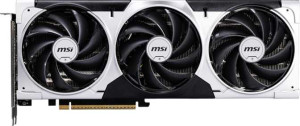
MSI GeForce RTX 5060 Ti Ventus 3X 16GB
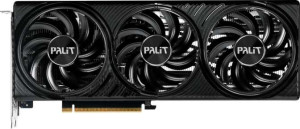
Palit GeForce RTX 5060 Ti Infinity 3 OC 16GB

MSI GeForce RTX 5060 Ti Ventus 3X 16GB Palit GeForce RTX 5060 Ti Infinity 3 OC 16GB

Overview

Welcome to our in-depth specification comparison between the MSI GeForce RTX 5060 Ti Ventus 3X 16GB and the Palit GeForce RTX 5060 Ti Infinity 3 OC 16GB. Both cards are built on the same Blackwell architecture and share an identical memory configuration, yet they differ in key areas such as boost clock speeds, raw compute throughput, and physical dimensions. Read on to find out which of these RTX 5060 Ti variants best suits your needs.

Common Features

  • Both cards share a base GPU clock speed of 2407 MHz.
  • Both cards have a GPU memory speed of 1750 MHz.
  • Both cards feature 4608 shading units.
  • Both cards have 144 texture mapping units (TMUs).
  • Both cards have 48 render output units (ROPs).
  • Double Precision Floating Point (DPFP) is supported on both cards.
  • Both cards have an effective memory speed of 28000 MHz.
  • Both cards offer a maximum memory bandwidth of 448 GB/s.
  • Both cards come with 16GB of VRAM.
  • Both cards use GDDR7 memory.
  • Both cards have a 128-bit memory bus width.
  • ECC memory is supported on both cards.
  • Both cards support DirectX 12 Ultimate.
  • Both cards support OpenGL version 4.6.
  • Both cards support OpenCL version 3.
  • Multi-display technology is supported on both cards.
  • Ray tracing is supported on both cards.
  • DLSS is supported on both cards.
  • 3D support is available on both cards.
  • XeSS (XMX) is not available on either card.
  • Both cards include 1 HDMI 2.1b port and 3 DisplayPort outputs, with no USB-C or DVI outputs.
  • Both cards are built on the Blackwell GPU architecture.
  • Both cards have a Thermal Design Power (TDP) of 180W.
  • Both cards use PCIe version 5.
  • Both cards are manufactured on a 5 nm semiconductor process.
  • Both cards feature 21900 million transistors.
  • Air-water cooling is not available on either card.

Main Differences

  • GPU turbo clock speed is 2572 MHz on MSI GeForce RTX 5060 Ti Ventus 3X 16GB and 2662 MHz on Palit GeForce RTX 5060 Ti Infinity 3 OC 16GB.
  • Pixel rate is 123.5 GPixel/s on MSI GeForce RTX 5060 Ti Ventus 3X 16GB and 127.8 GPixel/s on Palit GeForce RTX 5060 Ti Infinity 3 OC 16GB.
  • Floating-point performance is 23.7 TFLOPS on MSI GeForce RTX 5060 Ti Ventus 3X 16GB and 24.53 TFLOPS on Palit GeForce RTX 5060 Ti Infinity 3 OC 16GB.
  • Texture rate is 370.4 GTexels/s on MSI GeForce RTX 5060 Ti Ventus 3X 16GB and 383.3 GTexels/s on Palit GeForce RTX 5060 Ti Infinity 3 OC 16GB.
  • Card width is 306 mm on MSI GeForce RTX 5060 Ti Ventus 3X 16GB and 291.9 mm on Palit GeForce RTX 5060 Ti Infinity 3 OC 16GB.
  • Card height is 121 mm on MSI GeForce RTX 5060 Ti Ventus 3X 16GB and 116.6 mm on Palit GeForce RTX 5060 Ti Infinity 3 OC 16GB.
Specs Comparison
MSI GeForce RTX 5060 Ti Ventus 3X 16GB

MSI GeForce RTX 5060 Ti Ventus 3X 16GB

Palit GeForce RTX 5060 Ti Infinity 3 OC 16GB

Palit GeForce RTX 5060 Ti Infinity 3 OC 16GB

Performance:
GPU clock speed 2407 MHz 2407 MHz
GPU turbo 2572 MHz 2662 MHz
pixel rate 123.5 GPixel/s 127.8 GPixel/s
floating-point performance 23.7 TFLOPS 24.53 TFLOPS
texture rate 370.4 GTexels/s 383.3 GTexels/s
GPU memory speed 1750 MHz 1750 MHz
shading units 4608 4608
texture mapping units (TMUs) 144 144
render output units (ROPs) 48 48
Has Double Precision Floating Point (DPFP)

Both cards share identical foundations: the same base clock of 2407 MHz, the same 4608 shading units, 144 TMUs, 48 ROPs, and identical memory speeds. This means any difference in real-world compute throughput comes entirely from one variable — the GPU turbo (boost) clock.

That is where the Palit RTX 5060 Ti Infinity 3 OC pulls ahead. Its boost clock reaches 2662 MHz versus 2572 MHz on the MSI Ventus 3X — a gap of 90 MHz, or roughly 3.5%. Because pixel rate, texture rate, and floating-point throughput are all direct multipliers of that clock, the Palit scores measurably higher across every derived metric: 24.53 TFLOPS versus 23.7 TFLOPS, and 383.3 GTexels/s versus 370.4 GTexels/s. In practice, this margin is unlikely to be felt in a single benchmark run, but in sustained workloads — compute tasks, AI inference, or prolonged gaming sessions — the Palit's factory overclock gives it a consistent, if modest, throughput advantage.

The Performance edge belongs to the Palit Infinity 3 OC. Its higher turbo clock translates directly into higher compute and texturing throughput across the board. The MSI Ventus 3X is not a slow card by any measure, but at the spec level it is the slower of the two, making the Palit the stronger choice for users who want to extract every available frame or FLOP from this GPU generation without manual overclocking.

Memory:
effective memory speed 28000 MHz 28000 MHz
maximum memory bandwidth 448 GB/s 448 GB/s
VRAM 16GB 16GB
GDDR version GDDR7 GDDR7
memory bus width 128-bit 128-bit
Supports ECC memory

On memory, these two cards are carbon copies of each other. Both carry 16GB of GDDR7 across a 128-bit bus, running at an effective speed of 28000 MHz for a peak bandwidth of 448 GB/s. There is no differentiator to find here — every figure is identical down to ECC memory support, which allows error correction in precision-sensitive workloads like AI inference or professional compute tasks.

Worth contextualizing: GDDR7 with a 128-bit bus delivering 448 GB/s is a strong result for this class of GPU. The generational leap in memory speed largely compensates for the relatively narrow bus width, keeping texture streaming and frame buffer access competitive. The 16GB allocation is also meaningfully generous for a mid-range card, providing headroom for high-resolution texture packs, large AI models, and content creation workloads that would pressure an 8GB or 12GB card.

This group is a complete tie. Neither the MSI Ventus 3X nor the Palit Infinity 3 OC holds any memory advantage whatsoever — buyers can disregard this category entirely when choosing between the two.

Features:
DirectX version DirectX 12 Ultimate DirectX 12 Ultimate
OpenGL version 4.6 4.6
OpenCL version 3 3
Supports multi-display technology
supports ray tracing
Supports 3D
supports DLSS
has XeSS (XMX)
AMD SAM / Intel Resizable BAR Intel Resizable BAR Intel Resizable BAR
has LHR
has RGB lighting
supported displays 4 4

Feature parity is total between these two cards. Both run DirectX 12 Ultimate — the current gold standard for gaming APIs, enabling hardware-accelerated ray tracing, mesh shaders, and variable rate shading in supported titles. Alongside that, both support ray tracing and DLSS, which is particularly significant: DLSS uses AI-based upscaling to recover frame rates lost to ray tracing overhead, making these two features highly complementary in real-world gaming.

Practical flexibility is also identical: each card drives up to 4 displays simultaneously and supports Intel Resizable BAR, which allows the CPU to access the full GPU frame buffer at once rather than in chunks — a feature that can yield meaningful frame rate improvements in CPU-bound scenarios. Neither card carries an LHR limiter, which is relevant to users who run compute or mining workloads alongside gaming.

Much like the memory category, features result in a complete tie. There is no software or capability angle that separates the MSI Ventus 3X from the Palit Infinity 3 OC — both deliver an identical feature set, and this group should carry no weight in the buying decision.

Ports:
has an HDMI output
HDMI ports 1 1
HDMI version HDMI 2.1b HDMI 2.1b
DisplayPort outputs 3 3
USB-C ports 0 0
DVI outputs 0 0
mini DisplayPort outputs 0 0

Connector layouts are identical on both cards: one HDMI 2.1b port and three DisplayPort outputs, for a total of four usable display connections — consistent with the four-display limit noted in the Features group. HDMI 2.1b is the current top-tier HDMI standard, supporting 4K at high refresh rates and 8K output, making it well-suited for modern gaming monitors and home theater setups alike.

The triple DisplayPort configuration is the more noteworthy detail for multi-monitor users. Three DisplayPort outputs allow a high-refresh-rate primary gaming display plus two secondary monitors to be driven simultaneously without any port-type compromises. The absence of USB-C is worth noting for users who own USB-C or Thunderbolt-based monitors, as they would need an active adapter — but this is a shared limitation, not a differentiator.

Ports are another complete tie. The MSI Ventus 3X and Palit Infinity 3 OC offer an identical connectivity layout, and neither card holds any advantage in this category.

General info:
GPU architecture Blackwell Blackwell
release date April 2025 April 2025
Thermal Design Power (TDP) 180W 180W
PCI Express (PCIe) version 5 5
semiconductor size 5 nm 5 nm
number of transistors 21900 million 21900 million
Has air-water cooling
width 306 mm 291.9 mm
height 121 mm 116.6 mm

At the silicon level, these two cards are built from the same foundation: identical Blackwell architecture, the same 5nm process node, and the same transistor count of 21.9 billion. Their 180W TDP and PCIe 5.0 interface are equally matched, meaning power supply requirements and motherboard compatibility are non-issues when choosing between them.

The only concrete differentiator in this group is physical size. The MSI Ventus 3X measures 306 mm × 121 mm, while the Palit Infinity 3 OC comes in at 291.9 mm × 116.6 mm — roughly 14mm shorter in length and 4mm shorter in height. That gap matters in compact mid-tower or mini-ITX cases where clearance is tight, and the Palit's smaller footprint gives it a meaningful installation advantage in constrained builds.

For general info, the Palit Infinity 3 OC holds a modest edge strictly due to its smaller dimensions — useful for space-constrained cases. For standard mid- or full-tower setups, both cards are effectively equivalent in this category, sharing the same architecture, power envelope, and platform requirements.

Comparison Summary & Verdict

After examining every specification, it is clear that these two cards share a remarkably strong common foundation: identical 16GB GDDR7 memory, a 180W TDP, the same base GPU clock, and full support for ray tracing and DLSS. The differences come down to factory overclocking and physical size. The Palit GeForce RTX 5060 Ti Infinity 3 OC 16GB holds a consistent edge in GPU turbo clock speed (2662 MHz vs 2572 MHz), translating into higher pixel rate, texture rate, and floating-point performance. Meanwhile, the MSI GeForce RTX 5060 Ti Ventus 3X 16GB is the larger card at 306 mm wide and 121 mm tall. Choose the Palit if squeezing out every last frame matters most; choose the MSI if availability or brand preference guides your decision, knowing the core experience remains nearly identical.

MSI GeForce RTX 5060 Ti Ventus 3X 16GB
Buy MSI GeForce RTX 5060 Ti Ventus 3X 16GB if...

Buy the MSI GeForce RTX 5060 Ti Ventus 3X 16GB if you are comfortable with a slightly larger card and the performance difference versus the Palit model is not a deciding factor for you.

Palit GeForce RTX 5060 Ti Infinity 3 OC 16GB
Buy Palit GeForce RTX 5060 Ti Infinity 3 OC 16GB if...

Buy the Palit GeForce RTX 5060 Ti Infinity 3 OC 16GB if you want a higher factory boost clock, greater compute throughput, and a more compact physical footprint compared to the MSI model.