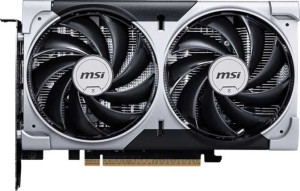
MSI GeForce RTX 5060 Ventus 2X OC
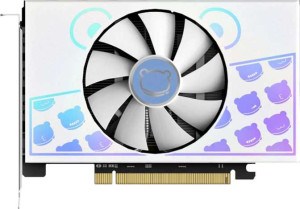
Yeston Cute Pet GeForce RTX 5060

MSI GeForce RTX 5060 Ventus 2X OC Yeston Cute Pet GeForce RTX 5060

Overview

When it comes to picking the right GeForce RTX 5060 variant, the devil is in the details. This comparison pits the MSI GeForce RTX 5060 Ventus 2X OC against the Yeston Cute Pet GeForce RTX 5060, two cards built on the same Blackwell foundation yet differing in areas like boost clock speeds, physical dimensions, and aesthetic features. Read on to see exactly where these two cards agree and where they part ways.

Common Features

  • Both cards share a base GPU clock speed of 2280 MHz.
  • Both cards have a GPU memory speed of 1750 MHz.
  • Both cards feature 3840 shading units.
  • Both cards include 120 texture mapping units (TMUs).
  • Both cards have 48 render output units (ROPs).
  • Double Precision Floating Point (DPFP) is supported on both cards.
  • Both cards have an effective memory speed of 28000 MHz.
  • Both cards offer a maximum memory bandwidth of 448 GB/s.
  • Both cards come with 8GB of VRAM.
  • Both cards use GDDR7 memory.
  • Both cards have a 128-bit memory bus width.
  • ECC memory is supported on both cards.
  • Both cards support DirectX 12 Ultimate.
  • Both cards support OpenGL version 4.6.
  • Both cards support OpenCL version 3.
  • Multi-display technology is supported on both cards.
  • Ray tracing is supported on both cards.
  • 3D support is available on both cards.
  • DLSS is supported on both cards.
  • XeSS (XMX) is not available on either card.
  • Both cards include one HDMI 2.1b output.
  • Both cards feature three DisplayPort outputs.
  • Neither card has USB-C, DVI, or mini DisplayPort outputs.
  • Both cards are based on the Blackwell GPU architecture.
  • Both cards have a Thermal Design Power (TDP) of 145W.
  • Both cards use PCIe version 5.
  • Both cards are manufactured on a 5 nm process.
  • Both cards contain 21,900 million transistors.
  • Neither card uses air-water cooling.

Main Differences

  • GPU turbo clock speed is 2527 MHz on MSI GeForce RTX 5060 Ventus 2X OC and 2497 MHz on Yeston Cute Pet GeForce RTX 5060.
  • Pixel rate is 121.3 GPixel/s on MSI GeForce RTX 5060 Ventus 2X OC and 119.9 GPixel/s on Yeston Cute Pet GeForce RTX 5060.
  • Floating-point performance is 19.41 TFLOPS on MSI GeForce RTX 5060 Ventus 2X OC and 19.18 TFLOPS on Yeston Cute Pet GeForce RTX 5060.
  • Texture rate is 303.2 GTexels/s on MSI GeForce RTX 5060 Ventus 2X OC and 299.6 GTexels/s on Yeston Cute Pet GeForce RTX 5060.
  • RGB lighting is present on Yeston Cute Pet GeForce RTX 5060 but not available on MSI GeForce RTX 5060 Ventus 2X OC.
  • Card width is 197 mm on MSI GeForce RTX 5060 Ventus 2X OC and 185 mm on Yeston Cute Pet GeForce RTX 5060.
  • Card height is 120 mm on MSI GeForce RTX 5060 Ventus 2X OC and 129 mm on Yeston Cute Pet GeForce RTX 5060.
Specs Comparison
MSI GeForce RTX 5060 Ventus 2X OC

MSI GeForce RTX 5060 Ventus 2X OC

Yeston Cute Pet GeForce RTX 5060

Yeston Cute Pet GeForce RTX 5060

Performance:
GPU clock speed 2280 MHz 2280 MHz
GPU turbo 2527 MHz 2497 MHz
pixel rate 121.3 GPixel/s 119.9 GPixel/s
floating-point performance 19.41 TFLOPS 19.18 TFLOPS
texture rate 303.2 GTexels/s 299.6 GTexels/s
GPU memory speed 1750 MHz 1750 MHz
shading units 3840 3840
texture mapping units (TMUs) 120 120
render output units (ROPs) 48 48
Has Double Precision Floating Point (DPFP)

Both the MSI Ventus 2X OC and the Yeston Cute Pet share an identical foundation: the same 2280 MHz base clock, 3840 shading units, 120 TMUs, 48 ROPs, and 1750 MHz memory speed. This means any performance gap between them is driven entirely by how aggressively each card boosts beyond that base — not by any architectural difference.

The MSI card reaches a GPU turbo of 2527 MHz versus the Yeston's 2497 MHz, a 30 MHz advantage. While that sounds modest, it cascades across every derived metric: the MSI edges ahead with 19.41 TFLOPS of floating-point throughput against 19.18 TFLOPS, and posts a slightly higher texture rate (303.2 GTexels/s vs 299.6 GTexels/s) and pixel rate (121.3 GPixel/s vs 119.9 GPixel/s). In practice, a ~1.5% compute lead of this kind is unlikely to be perceptible in gaming frame rates, but it can matter at the margins in sustained compute workloads or when running at the very limit of the GPU's headroom.

The MSI Ventus 2X OC holds a narrow but consistent performance edge in this group, attributable solely to its higher boost clock. The Yeston Cute Pet is not meaningfully slower — the real-world difference will fall well within benchmark noise for most users. For buyers who prioritize raw peak throughput, the MSI has the technical advantage; for everyone else, the two cards are effectively tied on performance.

Memory:
effective memory speed 28000 MHz 28000 MHz
maximum memory bandwidth 448 GB/s 448 GB/s
VRAM 8GB 8GB
GDDR version GDDR7 GDDR7
memory bus width 128-bit 128-bit
Supports ECC memory

On memory, these two cards are indistinguishable. Both carry 8GB of GDDR7 over a 128-bit bus, running at an effective 28000 MHz for a peak bandwidth of 448 GB/s. The move to GDDR7 is significant context here: compared to the GDDR6X found on previous-generation mid-range cards, GDDR7 delivers substantially higher bandwidth per pin, which helps offset the relatively narrow 128-bit bus width at this tier.

That 448 GB/s of bandwidth is the number that matters most in practice. It directly influences how quickly the GPU can feed its shader cores with texture data and frame buffer information — a bottleneck that becomes especially relevant at higher resolutions or when using memory-intensive features like ray tracing. The 8GB capacity, while sufficient for most current titles at 1080p and 1440p, is worth monitoring as game asset sizes continue to grow. Both cards also support ECC memory, a feature more relevant to compute and professional workloads than gaming, but it signals that the underlying memory subsystem is built to a higher reliability standard.

This group is an absolute tie. Every memory specification — capacity, type, speed, bandwidth, bus width, and ECC support — is identical across the MSI Ventus 2X OC and the Yeston Cute Pet. Memory performance will have zero influence on choosing between these two cards.

Features:
DirectX version DirectX 12 Ultimate DirectX 12 Ultimate
OpenGL version 4.6 4.6
OpenCL version 3 3
Supports multi-display technology
supports ray tracing
Supports 3D
supports DLSS
has XeSS (XMX)
AMD SAM / Intel Resizable BAR Intel Resizable BAR Intel Resizable BAR
has LHR
has RGB lighting
supported displays 4 4

Functionally, these two cards are identical in every meaningful feature category. Both support DirectX 12 Ultimate, ray tracing, and DLSS — the three pillars that define a modern GeForce experience. DirectX 12 Ultimate ensures compatibility with the full suite of current rendering techniques, while DLSS provides AI-accelerated upscaling that can significantly boost frame rates with minimal visual cost. Neither card supports XeSS, which is expected given that feature is associated with Intel's GPU ecosystem.

Both also support Intel Resizable BAR, which allows the CPU to access the full GPU frame buffer at once rather than in small chunks, offering a measurable performance uplift in titles that are optimized for it. Multi-display support up to 4 screens is shared across both cards, making either a capable choice for productivity or multi-monitor gaming setups.

The sole differentiator in this group is RGB lighting — the Yeston Cute Pet has it, the MSI Ventus 2X OC does not. This is purely an aesthetic consideration with no bearing on performance or compatibility, but for users building a system with a themed lighting setup, the Yeston holds a cosmetic advantage. On every functional and software feature, the two cards are tied.

Ports:
has an HDMI output
HDMI ports 1 1
HDMI version HDMI 2.1b HDMI 2.1b
DisplayPort outputs 3 3
USB-C ports 0 0
DVI outputs 0 0
mini DisplayPort outputs 0 0

Port selection is identical on both cards: one HDMI 2.1b output and three DisplayPort outputs, for a total of four display connections — matching the maximum supported display count noted in the Features group. The absence of USB-C, DVI, or mini-DisplayPort outputs is the same on both, so neither card offers any connectivity advantage over the other.

The HDMI 2.1b specification is worth highlighting as a shared strength. It supports up to 10K resolution, high frame rate modes at 4K and beyond, and Variable Refresh Rate — making it well-suited for connection to modern gaming monitors and TVs alike. The three DisplayPort outputs round out a flexible multi-display configuration that covers the vast majority of current monitor ecosystems without requiring adapters.

This group is a complete tie. Every port type, count, and version is mirrored exactly between the MSI Ventus 2X OC and the Yeston Cute Pet, meaning display connectivity will play no role in differentiating these two cards for any buyer.

General info:
GPU architecture Blackwell Blackwell
release date May 2025 June 2025
Thermal Design Power (TDP) 145W 145W
PCI Express (PCIe) version 5 5
semiconductor size 5 nm 5 nm
number of transistors 21900 million 21900 million
Has air-water cooling
width 197 mm 185 mm
height 120 mm 129 mm

At the architectural level, these two cards are cut from the same cloth: both are built on the Blackwell architecture using a 5 nm process node, pack 21.9 billion transistors, and draw a 145W TDP. That shared power envelope is practically significant — it means both cards place the same demand on your power supply and cooling setup, and neither has a thermal efficiency advantage over the other.

Where they diverge is physical dimensions. The MSI Ventus 2X OC measures 197 mm wide by 120 mm tall, while the Yeston Cute Pet comes in at 185 mm wide by 129 mm tall. The Yeston is noticeably shorter in length — a 12 mm difference that can matter in compact ITX or mATX cases with tight GPU clearance limits. The MSI, however, is slimmer in height, which could be relevant for cases with restricted vertical card clearance or for users concerned about adjacent PCIe slot obstruction. Neither footprint is strictly more case-friendly in all scenarios; it depends on the specific build constraints.

For this group, the two cards are evenly matched on everything that affects compatibility and system requirements — power draw, architecture, and process node. The only practical differentiator is form factor, where the Yeston Cute Pet's shorter length gives it a situational advantage in length-constrained builds, while the MSI's lower height may suit certain slim or slot-restricted configurations better. Buyers with a compact case should measure both dimensions carefully before deciding.
Comparison Summary & Verdict

At their core, the MSI GeForce RTX 5060 Ventus 2X OC and the Yeston Cute Pet GeForce RTX 5060 are remarkably alike, sharing identical 8GB GDDR7 memory, a 128-bit bus, 448 GB/s bandwidth, a 145W TDP, and the same port configuration. The differences are targeted but meaningful. The MSI card holds a slight edge in raw throughput, with a higher GPU turbo of 2527 MHz, a pixel rate of 121.3 GPixel/s, and floating-point performance of 19.41 TFLOPS, making it the stronger choice for users who want to squeeze out every last frame. The Yeston counters with RGB lighting for those who care about build aesthetics, and a narrower 185 mm width that may better suit tighter cases. Both are equally matched in memory, features, and connectivity, so your decision ultimately comes down to performance headroom versus visual flair and physical fit.

MSI GeForce RTX 5060 Ventus 2X OC
Buy MSI GeForce RTX 5060 Ventus 2X OC if...

Buy the MSI GeForce RTX 5060 Ventus 2X OC if you prioritize the highest possible boost clock and slightly stronger pixel rate and floating-point performance, and RGB lighting is not a concern.

Yeston Cute Pet GeForce RTX 5060
Buy Yeston Cute Pet GeForce RTX 5060 if...

Choose the Yeston Cute Pet GeForce RTX 5060 if you want RGB lighting in your build or need a narrower card at 185 mm to fit your case.