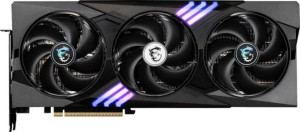
MSI GeForce RTX 5070 Gaming Trio OC
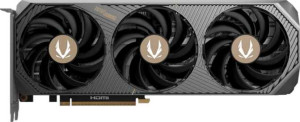
Zotac Gaming GeForce RTX 5070 Solid

MSI GeForce RTX 5070 Gaming Trio OC Zotac Gaming GeForce RTX 5070 Solid

Overview

When choosing between the MSI GeForce RTX 5070 Gaming Trio OC and the Zotac Gaming GeForce RTX 5070 Solid, both cards are rooted in the same Blackwell architecture and share an identical 12GB GDDR7 memory configuration — yet meaningful differences exist that could influence your buying decision. This comparison dives into their respective boost clocks, raw throughput figures, and physical dimensions, giving you a clear picture of where each card stands and which one best suits your specific build requirements.

Common Features

  • Both cards share a base GPU clock speed of 2325 MHz.
  • Both cards have a GPU memory speed of 1750 MHz.
  • Both cards feature 6144 shading units.
  • Both cards include 192 texture mapping units (TMUs).
  • Both cards have 80 render output units (ROPs).
  • Double Precision Floating Point (DPFP) is supported on both cards.
  • Both cards have an effective memory speed of 28000 MHz.
  • Both cards offer a maximum memory bandwidth of 672 GB/s.
  • Both cards are equipped with 12GB of VRAM.
  • Both cards use GDDR7 memory.
  • Both cards have a 192-bit memory bus width.
  • ECC memory is supported on both cards.
  • Both cards support DirectX 12 Ultimate.
  • Both cards support OpenGL version 4.6.
  • Both cards support OpenCL version 3.
  • Multi-display technology is supported on both cards.
  • Ray tracing is supported on both cards.
  • 3D technology is supported on both cards.
  • DLSS is supported on both cards.
  • XeSS (XMX) support is not available on either card.
  • Both cards include one HDMI 2.1b output.
  • Both cards feature three DisplayPort outputs.
  • Neither card includes a USB-C port, DVI output, or mini DisplayPort output.
  • Both cards are built on the Blackwell GPU architecture.
  • Both cards have a Thermal Design Power (TDP) of 250W.
  • Both cards use PCIe version 5.
  • Both cards are manufactured on a 5 nm semiconductor process.
  • Both cards contain 31,100 million transistors.
  • Neither card features air-water cooling.

Main Differences

  • GPU turbo clock speed is 2610 MHz on the MSI GeForce RTX 5070 Gaming Trio OC and 2512 MHz on the Zotac Gaming GeForce RTX 5070 Solid.
  • Pixel rate is 208.8 GPixel/s on the MSI GeForce RTX 5070 Gaming Trio OC and 201 GPixel/s on the Zotac Gaming GeForce RTX 5070 Solid.
  • Floating-point performance is 32.07 TFLOPS on the MSI GeForce RTX 5070 Gaming Trio OC and 30.87 TFLOPS on the Zotac Gaming GeForce RTX 5070 Solid.
  • Texture rate is 501.1 GTexels/s on the MSI GeForce RTX 5070 Gaming Trio OC and 482.3 GTexels/s on the Zotac Gaming GeForce RTX 5070 Solid.
  • Card width is 338 mm on the MSI GeForce RTX 5070 Gaming Trio OC and 304.4 mm on the Zotac Gaming GeForce RTX 5070 Solid.
  • Card height is 140 mm on the MSI GeForce RTX 5070 Gaming Trio OC and 115.8 mm on the Zotac Gaming GeForce RTX 5070 Solid.
Specs Comparison
MSI GeForce RTX 5070 Gaming Trio OC

MSI GeForce RTX 5070 Gaming Trio OC

Zotac Gaming GeForce RTX 5070 Solid

Zotac Gaming GeForce RTX 5070 Solid

Performance:
GPU clock speed 2325 MHz 2325 MHz
GPU turbo 2610 MHz 2512 MHz
pixel rate 208.8 GPixel/s 201 GPixel/s
floating-point performance 32.07 TFLOPS 30.87 TFLOPS
texture rate 501.1 GTexels/s 482.3 GTexels/s
GPU memory speed 1750 MHz 1750 MHz
shading units 6144 6144
texture mapping units (TMUs) 192 192
render output units (ROPs) 80 80
Has Double Precision Floating Point (DPFP)

Both cards share an identical foundation: the same 2325 MHz base clock, 6144 shading units, 192 TMUs, 80 ROPs, and 1750 MHz memory speed. This means their theoretical throughput ceiling is defined entirely by how aggressively each card boosts under load — making the turbo clock the single most important differentiator in this group.

That is where the MSI GeForce RTX 5070 Gaming Trio OC pulls ahead. Its 2610 MHz turbo outpaces the Zotac Gaming GeForce RTX 5070 Solid's 2512 MHz — a roughly 4% advantage. While 4% may sound modest, it compounds directly into every derived performance metric: the MSI delivers 32.07 TFLOPS of floating-point throughput versus 30.87 TFLOPS on the Zotac, a 208.8 GPixel/s pixel fill rate against 201 GPixel/s, and a 501.1 GTexels/s texture rate compared to 482.3 GTexels/s. In practice, this gap translates to a measurable but not transformative edge in sustained GPU-bound workloads — think rendering, compute tasks, and heavily tessellated scenes.

The MSI Gaming Trio OC holds a clear, consistent performance advantage across every throughput metric in this group, driven solely by its higher factory overclock on the boost clock. The Zotac Solid is not a slow card — it is the same GPU at reference-class boost speeds — but buyers prioritizing peak out-of-the-box performance will find the MSI the stronger choice here.

Memory:
effective memory speed 28000 MHz 28000 MHz
maximum memory bandwidth 672 GB/s 672 GB/s
VRAM 12GB 12GB
GDDR version GDDR7 GDDR7
memory bus width 192-bit 192-bit
Supports ECC memory

The MSI GeForce RTX 5070 Gaming Trio OC and the Zotac Gaming GeForce RTX 5070 Solid share identical specifications in terms of memory. Both models feature an effective memory speed of 28000 MHz, a maximum memory bandwidth of 672 GB/s, and 12GB of VRAM.

Additionally, both products are equipped with GDDR7 memory and have a memory bus width of 192-bit.

Both the MSI and Zotac models also support ECC memory, ensuring error correction for more reliable performance.

Features:
DirectX version DirectX 12 Ultimate DirectX 12 Ultimate
OpenGL version 4.6 4.6
OpenCL version 3 3
Supports multi-display technology
supports ray tracing
Supports 3D
supports DLSS
has XeSS (XMX)
AMD SAM / Intel Resizable BAR Intel Resizable BAR Intel Resizable BAR
has LHR
has RGB lighting
supported displays 4 4

The MSI GeForce RTX 5070 Gaming Trio OC and the Zotac Gaming GeForce RTX 5070 Solid are identical in terms of their feature set. Both products support DirectX 12 Ultimate, OpenGL 4.6, and OpenCL 3. Additionally, both cards support multi-display technology, ray tracing, and 3D, along with DLSS.

Neither product includes XeSS (XMX) support, and both are compatible with Intel's Resizable BAR technology. Both also lack LHR (Lite Hash Rate) features.

Both models feature RGB lighting and support up to four displays.

Ports:
has an HDMI output
HDMI ports 1 1
HDMI version HDMI 2.1b HDMI 2.1b
DisplayPort outputs 3 3
USB-C ports 0 0
DVI outputs 0 0
mini DisplayPort outputs 0 0

Both the MSI GeForce RTX 5070 Gaming Trio OC and the Zotac Gaming GeForce RTX 5070 Solid are equipped with an HDMI output. Each model has 1 HDMI port, which supports HDMI 2.1b. Additionally, both cards offer 3 DisplayPort outputs, but neither includes USB-C ports, DVI outputs, or mini DisplayPort outputs.

The port configurations of both products are identical across the board, with no differences between the two models.

General info:
GPU architecture Blackwell Blackwell
release date January 2025 March 2025
Thermal Design Power (TDP) 250W 250W
PCI Express (PCIe) version 5 5
semiconductor size 5 nm 5 nm
number of transistors 31100 million 31100 million
Has air-water cooling
width 338 mm 304.4 mm
height 140 mm 115.8 mm

Both the MSI GeForce RTX 5070 Gaming Trio OC and the Zotac Gaming GeForce RTX 5070 Solid feature the same GPU architecture, Blackwell, and are built using a 5 nm semiconductor size. They also both have the same number of transistors, 31,100 million, and share a Thermal Design Power (TDP) of 250W.

Both models support PCI Express (PCIe) version 5 and do not include air-water cooling. However, the two products differ in physical size: the MSI model has a width of 338 mm and a height of 140 mm, while the Zotac model is smaller, with a width of 304.4 mm and a height of 115.8 mm.

Comparison Summary & Verdict

At their core, the MSI GeForce RTX 5070 Gaming Trio OC and the Zotac Gaming GeForce RTX 5070 Solid are remarkably alike: both deliver 12GB of GDDR7 memory on a 192-bit bus, share a 250W TDP, and offer full support for ray tracing and DLSS. The divergence emerges in two key areas. On the performance front, the MSI card pulls ahead with a GPU turbo of 2610 MHz versus 2512 MHz, translating into a higher pixel rate, a stronger 32.07 TFLOPS floating-point output, and a faster texture rate — advantages that enthusiasts chasing peak frame rates will appreciate. On the physical side, the Zotac is the clear winner for tight builds, measuring a notably more compact 304.4 x 115.8 mm compared to the MSI's 338 x 140 mm footprint. Choose the MSI if overclocked performance headroom is your priority; opt for the Zotac if a compact form factor is what your system demands.

MSI GeForce RTX 5070 Gaming Trio OC
Buy MSI GeForce RTX 5070 Gaming Trio OC if...

Buy the MSI GeForce RTX 5070 Gaming Trio OC if you want the highest out-of-the-box performance, as it offers a superior GPU turbo clock, better pixel rate, and stronger floating-point throughput than the Zotac.

Zotac Gaming GeForce RTX 5070 Solid
Buy Zotac Gaming GeForce RTX 5070 Solid if...

Choose the Zotac Gaming GeForce RTX 5070 Solid if you are building in a compact or space-constrained case, as its smaller 304.4 x 115.8 mm dimensions make it significantly easier to fit without giving up core RTX 5070 capabilities.